La Platilleria occupies a corner of Sants-Montjuïc that most visitors circling the Barri Gòtic never reach, placing it outside Barcelona's conventional bar circuit. Where the city's better-known cocktail addresses lean on heritage branding or molecular theatre, this address in the Carrer del Roser corridor works from a quieter register — one that rewards the kind of patron who arrives with a neighbourhood map rather than a reservation app.
 Discover on Pearl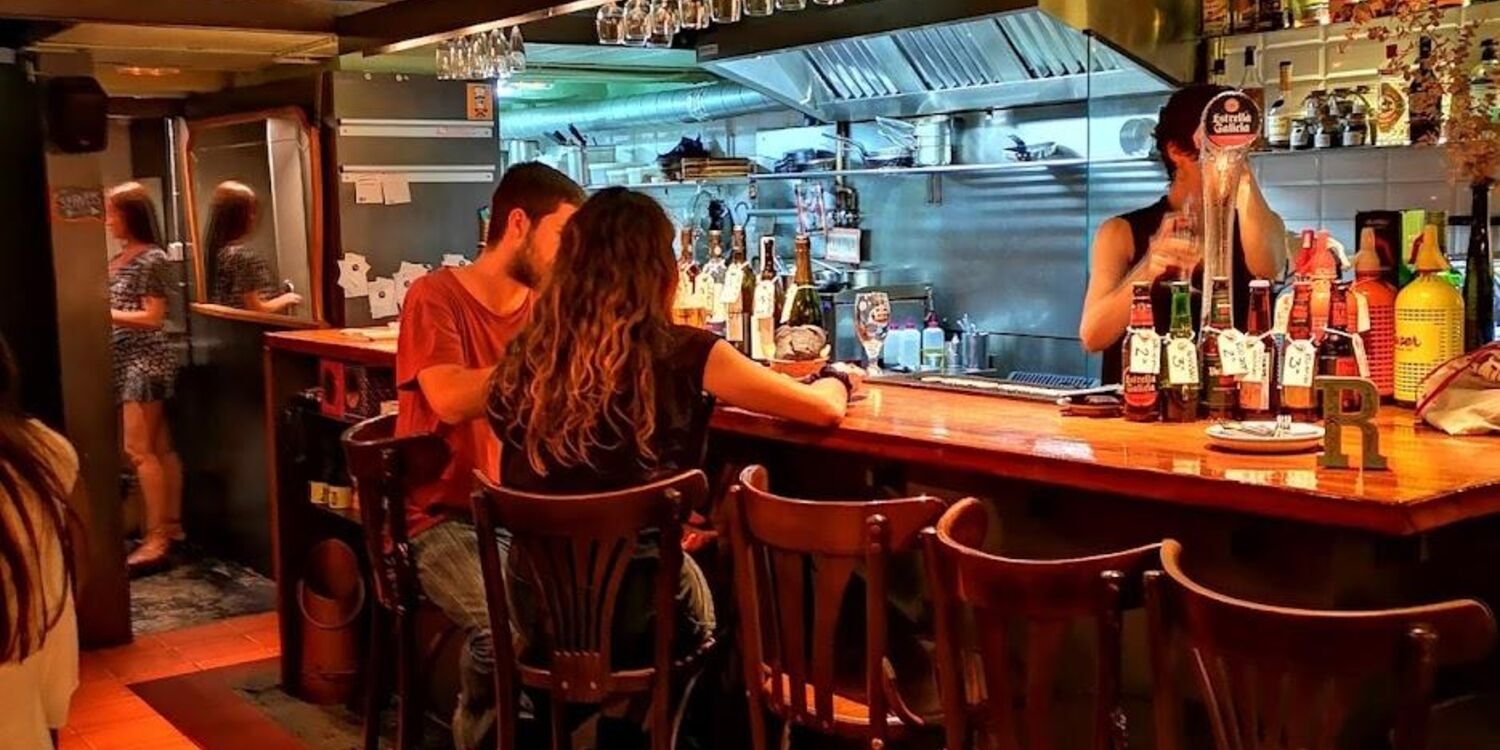
Sants-Montjuïc and the Other Barcelona Bar Scene
Barcelona's cocktail conversation tends to begin and end in the same postal codes. Boadas anchors the old guard at the leading of La Rambla; Dr. Stravinsky and Dry Martini hold the design-forward and classic-technique corners of Eixample respectively. The result is a mental map of the city's drinking culture that barely acknowledges anything south of Paral·lel, leaving a second tier of neighbourhood addresses largely invisible to the international press cycle. La Platilleria, on Carrer del Roser in Sants-Montjuïc, operates within that gap — a bar serving a mixed local and in-the-know visitor crowd at a remove from the venues that have become shorthand for Barcelona cocktail culture.
That geographic distance from the centre is not incidental. The Sants-Montjuïc district has long functioned as a working-class residential area rather than a tourist corridor, which shapes the character of its bars in ways that Gràcia or El Born cannot replicate. The drinking here tends toward the more casual end of the format range, with neighbourhood loyalty counting for more than international coverage. Addresses that survive in this environment do so because they have earned repeat custom from locals, not because they have optimised for the glossy press moment.
The shortlist, unlocked.
Hard-to-book tables, cellar releases, and concierge-planned trips.
Get Exclusive Access →A Shifting Format in a Shifting District
Understanding La Platilleria in 2024 means understanding how the broader Sants bar scene has evolved over the past decade. The district's relationship with the craft beverage movement arrived later and more gradually than in Eixample or El Raval, and it registered differently: less as a sudden design overhaul and more as a slow absorption of technique into existing neighbourhood formats. Bars that had operated as traditional platilleria-style addresses — the small-plate-and-drink model that once defined much of urban Catalan socialising , found themselves at a crossroads between the legacy format and the expectations of a younger, more cocktail-literate clientele.
The platilleria model itself is worth a moment's attention, because it sits at the centre of what La Platilleria's name signals. Historically, the platilleria format meant a bar where you ordered drinks alongside small plates, the food and the drinking inseparable rather than staged into discrete courses. That tradition, which connects Barcelona's bar culture to its broader Catalan and Spanish tapas lineage, has been both eroded and selectively revived over the past fifteen years. Where some addresses have abandoned the format entirely in favour of a pure cocktail-bar identity, others have folded it into a more contemporary proposition.
La Platilleria's position on Carrer del Roser places it within a cluster of bars that have collectively tracked this evolution. The street and its immediate surroundings represent a neighbourhood betting on incremental change rather than wholesale repositioning , a slower arc than the one that transformed El Born, but arguably more durable for it.
What the Address Signals
Carrer del Roser runs through a part of Sants-Montjuïc that sits between the commercial bustle of Carrer del Parlament to the north and the quieter residential blocks closer to the hill itself. It is walking distance from the Sant Antoni market area, which has functioned as a low-key anchor for the neighbourhood's bar renaissance over the past several years, drawing foot traffic that gravitates outward into surrounding streets. La Platilleria's placement on this street puts it inside that radius without putting it on the main circuit , a distinction that matters when you are trying to read what kind of crowd a bar is built for.
Visitors arriving from the centre should factor in a fifteen-to-twenty-minute walk from Paral·lel metro station, or a shorter ride from Sant Antoni. The journey through the back streets of Sants-Montjuïc is itself an orientation in the district's residential character: narrower pavements, fewer tourist-facing shopfronts, a different rhythm than the routes between Passeig de Gràcia and the waterfront. That transition is part of the experience of bars in this part of the city , you arrive having already left the conventional Barcelona bar trail behind. For comparable neighbourhood-anchored bar culture at a similar distance from the tourist circuit, Spanish cities offer useful parallels: Angelita in Madrid operates on a related principle of neighbourhood credibility over press visibility, while Moonlight Experimental Bar in Zaragoza shows how second-city addresses can build serious programs outside the dominant capital conversation.
The Broader Peer Set
Positioning La Platilleria against its peers requires looking beyond Barcelona's headline cocktail addresses. The more relevant comparison set is the collection of neighbourhood bars across Spain's secondary and tertiary cities that have absorbed craft-drink principles without abandoning their local-facing identity. Burgundi in Palma de Mallorca and Echezo in Ibiza both operate in tourist-adjacent markets while maintaining a local core customer base , a balance that Sants-Montjuïc addresses have to strike in a different but structurally similar way. Closer to home, HiBoU Sitges and Le Bar de Vins in Valencia demonstrate how the wine-and-small-plates format has found a stable audience across the western Mediterranean, suggesting that the platilleria model has contemporary relevance well beyond its Catalan origin point.
Within Barcelona itself, Foco offers a useful point of comparison for how the city's newer generation of bars is handling the tension between neighbourhood identity and broader ambition. The divergence in approach between Foco's model and what Sants-Montjuïc addresses like La Platilleria represent tells you something about how Barcelona's bar scene has fragmented into genuinely distinct sub-cultures rather than converging on a single dominant format. Further afield, Bar Leather Apron in Honolulu provides an instructive example of how a bar can build a serious technical reputation in a market not traditionally associated with cocktail culture , a trajectory that neighbourhood bars in overlooked Barcelona districts are quietly attempting on a smaller scale.
Planning Your Visit
The practical information available for La Platilleria is limited: no booking platform is publicly confirmed, no fixed hours are on record, and the venue's digital presence is minimal. This is consistent with the neighbourhood bar model, where walk-in custom remains the norm and the absence of an online profile is not a signal of decline but of a different operational logic. The address , Carrer del Roser, 82, Sants-Montjuïc , is confirmed. Visiting on a weekday evening rather than a weekend will give you the clearest read on the bar's regular clientele and format. For a fuller orientation to where La Platilleria sits within Barcelona's drinking culture, our full Barcelona restaurants guide maps the city's bar and restaurant scene across neighbourhoods and price points.
Frequently Asked Questions
- What is the defining thing about La Platilleria?
- La Platilleria sits in Sants-Montjuïc, well outside the Barcelona neighbourhoods that dominate the city's cocktail coverage. Its defining characteristic is its position as a neighbourhood-facing address in a district that has evolved gradually rather than dramatically, making it a more accurate read of local Barcelona bar culture than the Eixample or El Born venues that attract international attention.
- What is the signature drink at La Platilleria?
- Specific menu details for La Platilleria are not publicly confirmed. The bar's name references the platilleria tradition , drinks served alongside small plates , which suggests that the food-and-drink pairing format is central to the experience rather than cocktails as a standalone program. Arriving with an appetite for both is a reasonable approach.
- Should I book La Platilleria in advance?
- No confirmed booking system is on record for La Platilleria, which is consistent with the neighbourhood bar format common in Sants-Montjuïc. Walk-in visits are likely the standard approach. Given the bar's position outside the main tourist circuit, availability on weekday evenings is likely to be more relaxed than at the city's headline addresses.
- Who tends to like La Platilleria most?
- The bar's location in Sants-Montjuïc rather than the tourist-dense centre means it draws a primarily local crowd. Visitors who are already comfortable with Barcelona's neighbourhood geography and who are looking for a bar experience that reflects the city's residential character rather than its international reputation are well placed for it.
- Is La Platilleria worth the prices?
- No confirmed pricing data is publicly available for La Platilleria. Neighbourhood bars in Sants-Montjuïc generally price below the headline cocktail venues in Eixample and the Born, reflecting both the local customer base and the operational costs of a non-tourist-facing address. That pricing gap, where it exists, tends to favour the visitor who has made the effort to get there.
- How does La Platilleria connect to Catalan drinking traditions?
- The platilleria format , small plates ordered alongside drinks as a single continuous social ritual rather than a staged meal , is one of Barcelona's most durable bar traditions, predating the craft cocktail era by several decades. La Platilleria's name directly signals that lineage, placing it in a category of bars that are as much about eating as drinking. For visitors interested in how Catalan bar culture differs from the broader Spanish tapas tradition, this format is one of the clearest expressions of that distinction.
The Minimal Set
A small peer set for context; details vary by what’s recorded in our database.
| Venue | Notes | Price |
|---|---|---|
| La Platilleria | This venue | |
| Boadas | ||
| Dr. Stravinsky | ||
| Dry Martini | ||
| Mutis | ||
| Paradiso |
Need a Table?
Our members enjoy priority alerts and concierge-led booking support for the world's most difficult bars and lounges.
Get Exclusive AccessThe shortlist, unlocked.
Hard-to-book tables, cellar releases, and concierge-planned trips.
Get Exclusive Access →