Crowbar Cafe & Saloon
A roadside saloon on Old State Highway 127, Crowbar Cafe & Saloon is the kind of stop that defines high-desert California hospitality — unglamorous, direct, and genuinely useful. Positioned along the route toward Death Valley National Park, it functions as the social anchor for Shoshone's small permanent population and as a first or last drink for thousands of desert travelers each year.
Pearl is the En Primeur Club membership app — saves, bookings, and concierge access live there. Same editors, same standards.
- Address
- Old State Hwy 127, Shoshone, CA 92384
- Phone
- +1 760 237 4134
- Website
- shoshonevillage.com
- Directions
- Get directions
 Saves & bookings on Pearl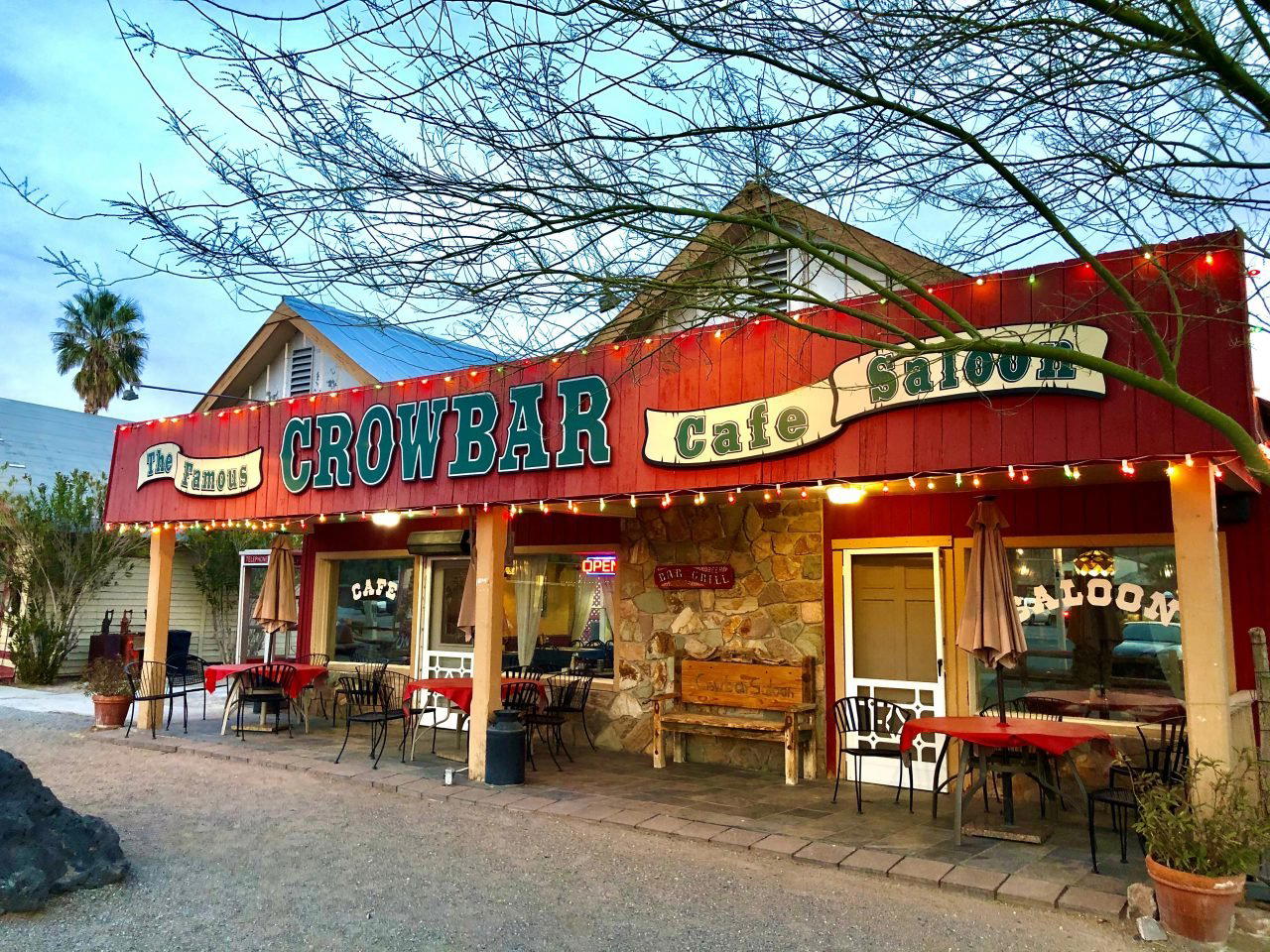
Where the Mojave Meets the Bar Rail
Out on Old State Highway 127, between Baker and the Nevada line, the built environment thins to almost nothing. Shoshone's population hovers around 30 year-round residents, and the town's handful of structures — a small inn, a museum, a general store — sit in the kind of flat, alkaline quiet that makes any lit window feel significant after dark. Crowbar Cafe & Saloon is one of those windows. Approaching on 127 at dusk, with the Amargosa Range catching the last light to the east, the saloon reads less like a destination and more like a geographic fact: this is where people stop.
That position on the Death Valley corridor gives the Crowbar a character that urban bars work hard to fabricate. The transience is built in. On any given evening the room might hold a mix of park rangers, long-haul motorcyclists, geologists, and the occasional traveler who underestimated fuel distances and pulled over out of necessity. What starts as a logistical stop tends to extend. The high desert has a way of slowing people down once they're off the road.
The Drink in Context
California's bar culture in 2024 runs a wide spectrum: from the hyper-technical clarified-cocktail programs at places like ABV in San Francisco to the narrative-driven menus at Allegory in Washington, D.C. At the opposite end of that spectrum sits the desert saloon, a format that predates the craft movement by about a century and has no particular interest in catching up. That is not a criticism. The saloon model operates on different logic: availability, familiarity, cold temperature, and the social function of having a drink in a place where there are very few other options for miles in any direction.
In this format, the cocktail program is not the draw, the place itself is the draw. Bars like Julep in Houston or Kumiko in Chicago have built their identities around technique-forward drink making, with menus that reward repeat study. The Crowbar's identity is built around something older: the fact of being there at all. A cold beer or a whiskey served in a room that has absorbed decades of desert travelers carries a different kind of value. It doesn't need a rotating seasonal menu to justify itself.
That said, the saloon-cafe hybrid format common in the rural American West does typically maintain a workable spirits range alongside draft and bottled beer. Travelers coming off the Death Valley corridor in summer heat have immediate, specific needs, and a well-stocked back bar is the practical response. The drink most associated with this type of stop tends to be the one that travels fastest: a straight pour, a cold bottle, something direct after a long drive. Visitors asking about cocktail recommendations at the Crowbar should calibrate expectations to the format: this is a saloon, not a cocktail bar, and the honest pleasure of the place lives in that distinction.
The Role It Plays in Shoshone
Small desert towns in California's eastern corridor occupy a particular niche in the state's travel geography. Shoshone sits at the southern entrance to Death Valley National Park, roughly 60 miles from Furnace Creek and about 90 miles from Las Vegas. For travelers running the park's southern routes, it functions as the last services stop before conditions become seriously remote. The Crowbar is part of that infrastructure in the way that certain bars in gateway towns always are: it provides a social room, a meal option, and a place to slow down before or after the more demanding stretch of road ahead.
This gateway-town bar model appears across the American West, and the venues that last in these spots do so because they serve the community as consistently as they serve the transient traffic. The permanent population of Shoshone depends on a handful of businesses, and a saloon that functions as a community room carries a different weight than it would in a city with dozens of alternatives. That dual role, local anchor and traveler waypoint, is part of what makes these places difficult to replicate in urban environments, regardless of the design effort applied.
For more on the broader dining and drinking scene in the area, see our full Shoshone restaurants guide.
Where It Sits Among Desert Bar Formats
The premium end of American bar culture has bifurcated sharply over the past decade. Venues like Bar Leather Apron in Honolulu, Jewel of the South in New Orleans, and Canon in Seattle operate with extensive spirits libraries, credentialed bar teams, and programs built for serious engagement. At the other end of the spectrum, the roadside saloon has held its ground precisely because it makes no claim to compete on those terms. Bitter & Twisted in Phoenix represents the ambitious urban cocktail bar of the Southwest; the Crowbar represents something that predates that ambition and will likely outlast several cycles of it.
The durability of the desert saloon format is worth taking seriously. It survives not through awards or critical attention but through geographic necessity and consistent execution of a narrow, well-understood function. Bars like Superbueno in New York City, Bar Kaiju in Miami, and The Parlour in Frankfurt compete for attention in dense, competitive markets where differentiation demands constant program investment. The Crowbar competes with the nearest alternative, which is nothing, for about 30 miles.
Planning a Stop
Shoshone is accessible via California State Route 127, which connects Interstate 15 near Baker to the south with Death Valley Junction to the north. The drive from Las Vegas runs approximately 90 miles; from Los Angeles, allow three to three and a half hours depending on the I-15 corridor. Travelers running the park's southern entrance via Badwater Road will pass through Shoshone on the way in or out. Fuel options in the area are limited, and the same practical calculus that applies to gas applies to food and drink: plan on Shoshone as a stop rather than assuming something better is around the next bend.
The desert climate creates sharp seasonal conditions. Summer temperatures in the valley floor regularly exceed 110°F, and late afternoon is not the time to discover your water situation is inadequate. Autumn through spring is the primary visitor window for Death Valley, and Shoshone's businesses see corresponding traffic from October through April. Winter evenings in the high desert drop quickly below 50°F, which changes the character of a stop at the Crowbar considerably from the midday heat experience.
Continue exploring
More in Shoshone
Restaurants in Shoshone
Browse all →
At a Glance
- Rustic
- Classic
- Cozy
- Casual Hangout
- Historic Building
- Seated Bar
- Classic Cocktails
Current opening hours
- Monday
- 8 AM–9:30 PM
- Tuesday
- 8 AM–9:30 PM
- Wednesday
- 8 AM–9:30 PM
- Thursday
- 8 AM–9:30 PM
- Friday
- 8 AM–9:30 PM
- Saturday
- 8 AM–9:30 PM
- Sunday
- 8 AM–9:30 PM
Hours can change for holidays and private events. Last verified .
Friendly, relaxed small-town western atmosphere with simple decor and air-conditioned comfort.
Know Before You Go
- Getting there
- Old State Hwy 127, Shoshone, CA 92384