Blueberry Hill
A University City institution on the Delmar Loop, Blueberry Hill has anchored St. Louis bar culture for decades with a deep spirits program, live music in the Duck Room, and a setting dense with pop culture memorabilia. It sits at the intersection of neighborhood bar and genuine collection venue, drawing a crowd that ranges from Washington University students to serious whiskey drinkers.

Pearl is the En Primeur Club membership app — saves, bookings, and concierge access live there. Same editors, same standards.
- Address
- 6504 Delmar Blvd, University City, MO 63130
- Phone
- (314) 727-4444
- Hours
- Mon–Tue 11 AM–12 AMWed–Sat 11 AM–1:30 AMSun 11 AM–12 AM
- Website
- blueberryhill.com
- Directions
- Get directions
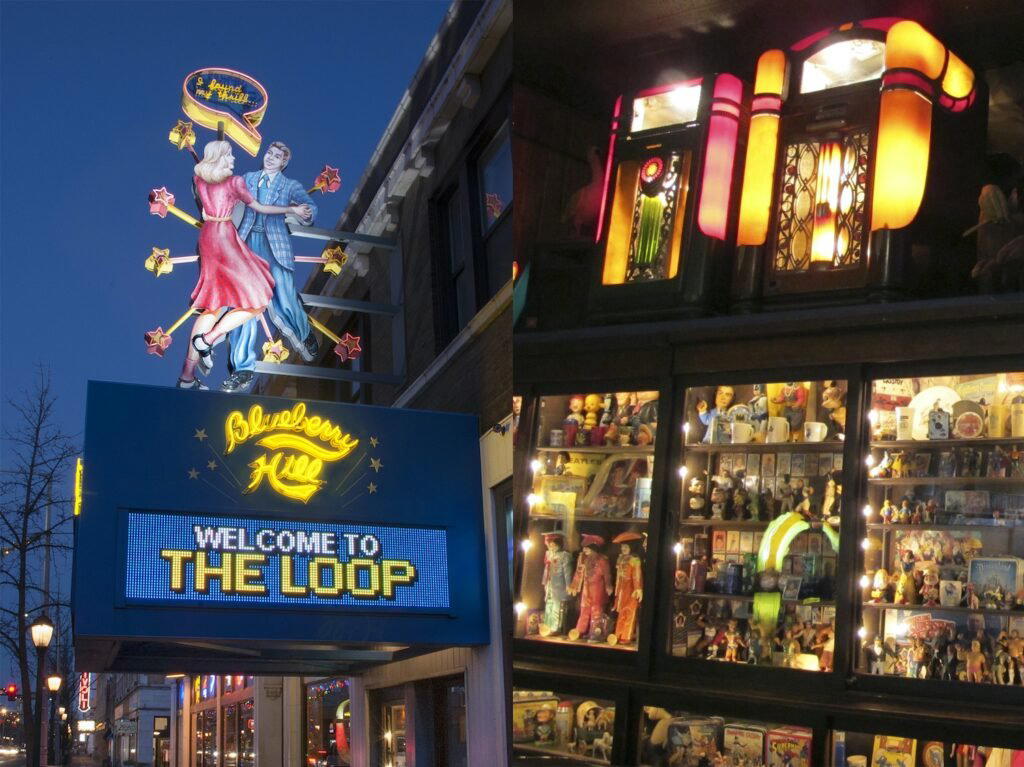
The Delmar Loop and the Bar That Defined It
The Delmar Boulevard strip in University City functions as one of St. Louis's most consistent entertainment corridors, a stretch where independent venues have held ground against the broader homogenization of American bar culture. Blueberry Hill, at 6504 Delmar Blvd, sits at the center of that resistance. It has operated long enough that it now belongs to the same category as the street itself: part of the physical memory of the area, rather than a tenant of it. The exterior gives little away. Inside, the density of collected objects, vintage signage, jukeboxes, and memorabilia signals immediately that curation is the operative philosophy here, applied to the room as much as to the back bar.
The Loop has historically attracted a mixed demographic, from Washington University and Saint Louis University students to longtime St. Louis residents who treat the strip as their regular beat. Blueberry Hill sits in the middle of that range without fully belonging to either end, which is part of what has sustained it. It is neither a student dive nor a sterile cocktail destination, and that positioning gives the spirits program room to operate with more seriousness than the setting might initially suggest.
The Back Bar as Curatorial Statement
American bar culture has increasingly split into two modes: the high-concept cocktail bar built around a seasonal menu and a lead bartender's credentials, and the collection bar, where depth of bottles, range of categories, and institutional knowledge of the back bar define the experience. Blueberry Hill belongs to the second mode. The spirits program reflects the kind of accumulation that happens over years rather than the kind assembled for an opening night press release.
Whiskey is the natural anchor for any serious Midwest spirits program, and Blueberry Hill's back bar reflects that regional weight. The American whiskey category in the Midwest carries genuine historical gravity: bourbon and rye production corridors run through the surrounding states, and a bar operating on the Delmar Loop for as long as Blueberry Hill has had access to allocation cycles, limited releases, and older stock that newer operations simply cannot replicate. The distinction between a bar that has collected bottles over decades and one that has ordered a curated opening selection is meaningful to anyone who drinks seriously.
Bar Leather Apron in Honolulu and Kumiko in Chicago both operate with program depth and curation discipline that rewards repeat visits and deliberate ordering. ABV in San Francisco and Allegory in Washington, D.C. sit in the high-concept cocktail tier rather than the collection tier, which is a different proposition. Julep in Houston and Jewel of the South in New Orleans occupy a middle register, where classical technique and deep spirits knowledge intersect. Blueberry Hill sits closer to the institutional-collection end of that spectrum, with the added layer of a live music venue operating within the same walls.
What to Drink and How to Think About It
At a bar defined by the depth and range of its spirits holdings, the ordering approach matters. Rather than defaulting to a cocktail menu designed to showcase a bartender's technique, the more productive move is to treat the back bar as the primary text. Ask what is poured neat that would not appear at a standard bar. In the American whiskey category specifically, age-stated bourbons, single-barrel picks, and limited allocations from distilleries in Kentucky and Tennessee represent the most direct path to what differentiates a collection bar from a conventional one.
The Midwest corridor also gives Blueberry Hill natural proximity to regional craft distilleries in Missouri and Illinois, a category that has expanded considerably over the past fifteen years. Craft Missouri whiskey and local gin producers have built enough of a track record that they now merit serious consideration alongside national allocations rather than being treated as novelty pours. Pairing regional spirits with the institutional depth of an older back bar is one of the more interesting tensions available to a drinker willing to ask the right questions.
For comparison across the national bar tier, Superbueno in New York City and Bar Kaiju in Miami both push into specific spirit categories with program depth, while The Parlour in Frankfurt on the Main demonstrates how the collection-bar model translates internationally. Each of these venues rewards a drinker who arrives with a specific category interest rather than a casual preference for something cold.
The Duck Room and the Live Music Layer
Blueberry Hill contains one of St. Louis's most consistent small live music venues in the Duck Room, a basement-level space that has hosted a documented roster of performers over the years, including Chuck Berry, who played there regularly for decades. That historical association gives the venue a layer of cultural weight that most bars in the American Midwest cannot claim through the spirits program alone. The combination of a serious back bar and a functioning music venue within the same building is uncommon at this scale and in this neighborhood tier.
The practical implication for visitors is that the experience at Blueberry Hill is legible on at least two registers simultaneously: as a spirits-forward bar worth visiting during quiet hours for deliberate drinking, and as a live music destination where the bar becomes secondary context for a performance. Both modes are valid, but they call for different approaches to the visit.
University City Context and Nearby Venues
The Delmar Loop supports enough density of independent food and drink venues that a single evening can move across several registers. Nobu's and Salt + Smoke both operate within the same corridor and offer different anchors for a longer evening. Salt + Smoke in particular represents the Missouri barbecue tradition with enough seriousness to function as a food destination in its own right, which means the strip can support a full evening itinerary rather than a single-stop visit.
For broader University City and St. Louis area context, the full University City restaurants guide covers the Delmar Loop in more detail, including venue categories and neighborhood-level navigation that puts Blueberry Hill in its proper geographic frame.
Planning a Visit
Blueberry Hill occupies a position on Delmar Boulevard that is walkable from Washington University's campus and accessible by MetroLink, with the Delmar Loop station placing the venue a short walk from the address. Given the dual nature of the space, timing matters: arriving before a Duck Room show begins allows for a more deliberate approach to the back bar, while arriving mid-show means operating within a louder, more compressed environment. Neither is the wrong choice, but they represent different visits. The venue operates within the standard Loop hours for an established bar-and-music destination; checking current showtimes before arrival is the practical step that determines which version of the visit you are actually booking.
Price Lens
Comparable venues nearby, for context on price, style, and recognition.
| Venue | Cuisine | Price |
|---|---|---|
| Blueberry HillThis venue — the venue you are viewing | Delmar Loop, pub | $20–30 |
| Nobu's | Delmar Loop, lounge | Not listed |
Continue exploring
More in University City
Bars in University City
Browse all →
Restaurants in University City
Browse all →
Details
- Lively
- Well Known
- Energetic
- Classic
- Casual Hangout
- Group Outing
- Late Night
- Live Music
- Historic Building
- Seated Bar
- Booth Seating
- Craft Beer
Current opening hours
- Monday
- 11 AM–12 AM
- Tuesday
- 11 AM–12 AM
- Wednesday
- 11 AM–1:30 AM
- Thursday
- 11 AM–1:30 AM
- Friday
- 11 AM–1:30 AM
- Saturday
- 11 AM–1:30 AM
- Sunday
- 11 AM–12 AM
Hours can change for holidays and private events. Last verified .
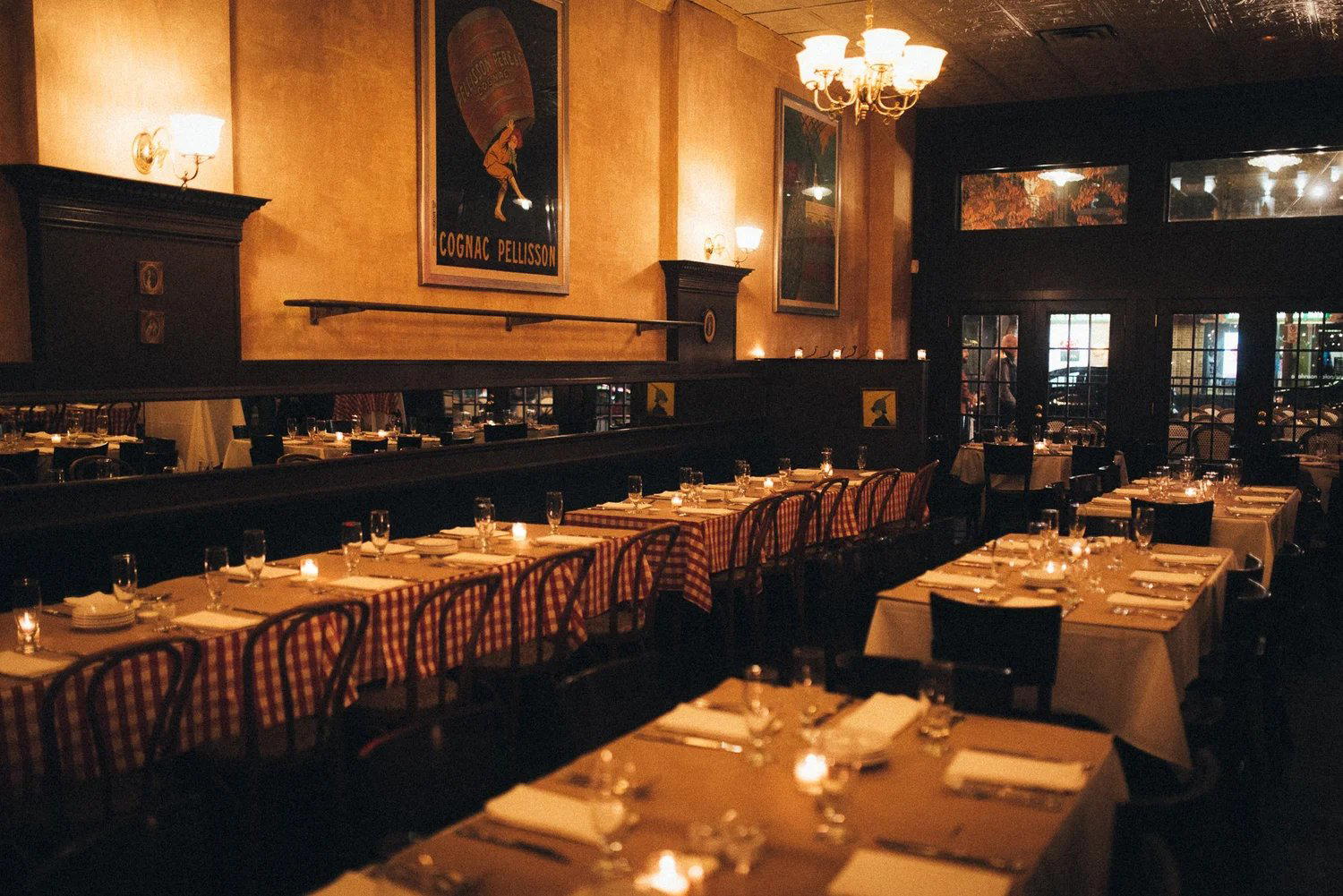
Eclectic and nostalgic atmosphere filled with glowing pop culture memorabilia displays across multiple themed rooms, creating a lively museum-like music club vibe.