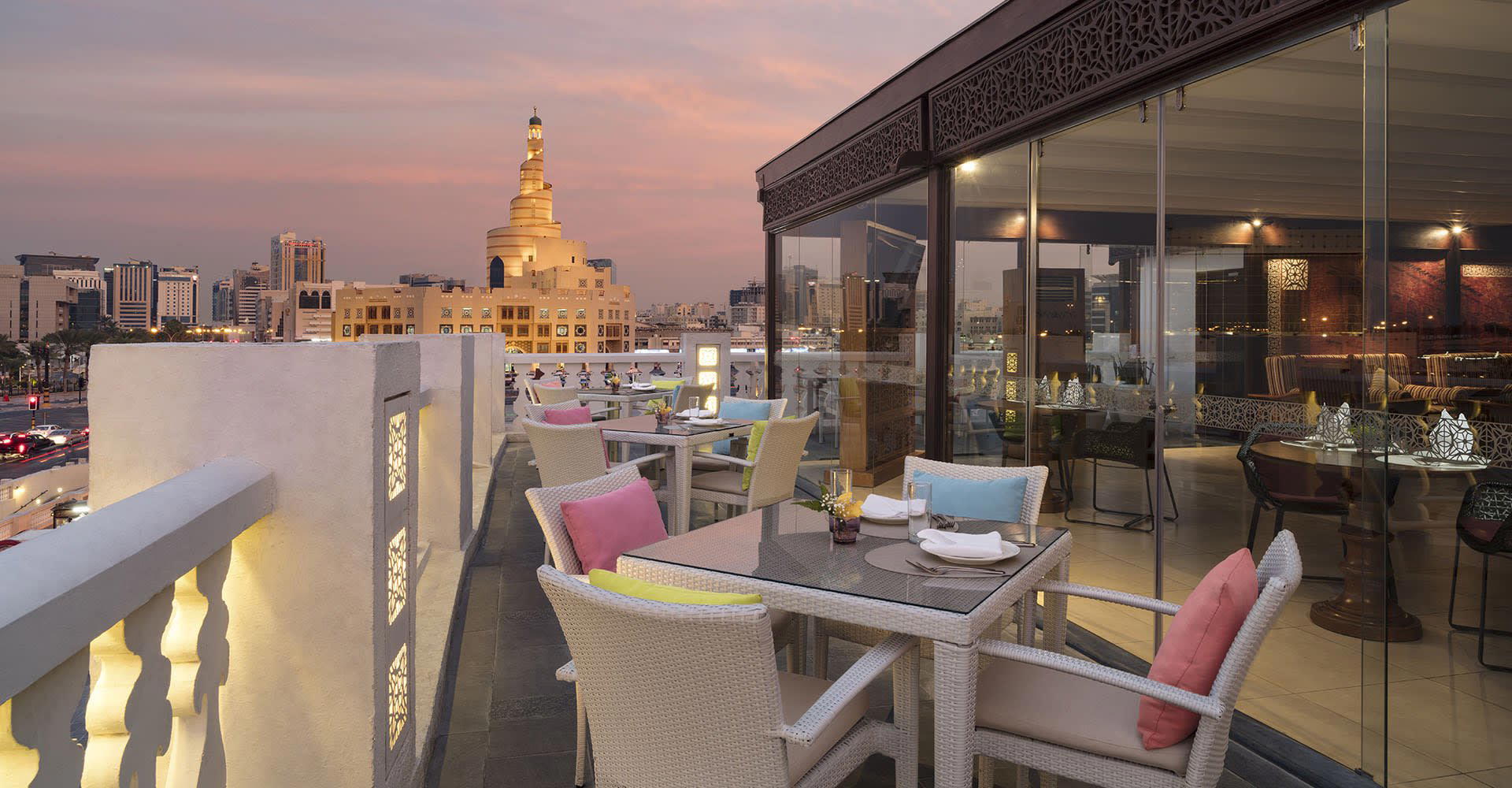
A Balcony Over Souq Waqif Doha's bar and lounge scene divides along a familiar axis: the international luxury tier, anchored by properties like Nobu Doha, and a smaller, harder-to-find stratum of venues that draw their identity from the city's own architectural and cultural fabric. Al Shurfa Arabic Lounge sits firmly in the second category. Located on the upper level of the Al Jomrok Boutique Hotel inside Souq Waqif, the lounge takes its name from the Arabic word for balcony, and that physical fact shapes everything about what the space delivers: an refined vantage point over one of the few corners of Doha where the pre-oil city remains readable in the stonework, the lantern-lit alleyways, and the movement of people below. Approaching from the souq's ground level, the experience of reaching the lounge carries weight on its own. Souq Waqif was substantially restored in the mid-2000s, with earthen plaster facades and wind towers reinstated to approximate the market's 19th-century form. The Al Jomrok property sits within that restored fabric, which places Al Shurfa in a context that most of Doha's luxury lounges, however polished, cannot replicate: a genuine historic district rather than a purpose-built waterfront development. For anyone tracking how Gulf cities have handled the tension between rapid modernisation and heritage preservation, this particular block of Souq Waqif is instructive ground. The Arabic Lounge Format and What It Actually Means The "Arabic lounge" designation signals a specific format that differs from the cocktail-bar model dominant in Western cities and increasingly in Doha's luxury hotels. Where venues like The Cellar and Ambar operate within more internationally legible frameworks, the Arabic lounge tradition prioritises extended hospitality, the ritual of Arabic coffee and dates, shisha as a social anchor, and a pace that resists the transactional model of ordering, consuming, and departing. The shurfa format amplifies this: a balcony is inherently a place of watching and settling, not passing through. In cities where premium experiences split between high-volume spectacle and low-capacity, atmosphere-led formats, the Arabic lounge occupies a distinct niche. The measure of quality in this format is not the length of a cocktail menu or the technique behind a clarified drink, but the calibre of the tea and coffee service, the quality of the shisha blend, and the degree to which the physical setting earns the time a guest invests in sitting there. By those measures, Al Shurfa's position above Souq Waqif is a material asset. Globally, bars that build around a specific cultural framework, whether Café La Trova in Miami with its Cuban son tradition, Jewel of the South in New Orleans with its cocktail history roots, or Kumiko in Chicago with its Japanese ingredient philosophy, tend to hold their audience more durably than concept-neutral venues. Al Shurfa applies the same logic to the Arabic lounge tradition: the specificity of the format is the point, not a limitation. The Drink Programme in Context Qatar's licensing framework means that Al Shurfa, operating within a souq-district boutique hotel, operates without alcohol, which is standard across much of Souq Waqif's hospitality inventory. This is not a constraint that diminishes the lounge's relevance; it defines its character. The drink programme in this format is built around Arabic coffee (qahwa), a lightly roasted, cardamom-infused preparation served in small handle-less cups alongside dates, and a range of herbal and fruit-based teas that reflect Gulf and wider Arab tradition. Fresh juice preparations and mocktail formats have become standard in Doha's non-licensed venues, particularly post-2020 as international visitor numbers have grown and the expectation of sophisticated non-alcoholic options has risen. The benchmark for this kind of programme is the ceremony around service as much as the contents of the cup. Arabic coffee service is a hospitality gesture with deep social coding: the host pours, the guest accepts, and the interaction acknowledges a relationship. Venues that compress that ritual into a perfunctory delivery miss the point. The shurfa format, with its built-in encouragement to sit and stay, creates the right conditions for the ritual to carry its intended weight. For visitors accustomed to the technically precise non-alcoholic programmes at places like Bar Leather Apron in Honolulu or Superbueno in New York City, the Arabic lounge offers a different register entirely: cultural depth rather than technical invention, and slowness as a deliberate value. Shisha remains a central element of the lounge experience for those who use it. The quality of the blend and the preparation of the device are the relevant metrics here, and in a souq-district venue where this is core to the offering rather than an afterthought, the standard is generally higher than in hotel bars that add it as a peripheral amenity. Timing, Access, and the Souq Waqif Context Souq Waqif operates on Gulf hours: it comes alive in the late afternoon and remains busy until well past midnight, particularly in the cooler months between October and April when outdoor and semi-outdoor settings become comfortable. The shurfa setting means the lounge is at its finest during this window, when the market below is at full pitch and the air temperature permits balcony use. Summer visits, when Doha's heat can exceed 40°C, shift the calculation: the covered or interior portions of the lounge become the functional alternative. The location within Souq Waqif is walkable from the wider market area, and the souq is accessible by taxi or by the Doha Metro's Gold Line via Al Bidda Station. For visitors building an itinerary around Doha's heritage quarter rather than its waterfront districts, Al Shurfa functions as a natural pause point, sitting between the active market lanes and an evening at one of the souq's surrounding restaurants. Booking ahead is advisable during the high season and around major events; the boutique hotel format means capacity is limited relative to larger properties. For a full picture of where Al Shurfa sits within Doha's wider hospitality inventory, the EP Club Doha guide maps the city's bars and restaurants against their neighbourhood and format context. Separately, venues like Julep in Houston, The Parlour in Frankfurt, and Dear Irving in New York City each demonstrate how a bar's physical context, when genuinely specific, becomes the drink programme's most persuasive argument. Al Shurfa makes the same case from a balcony above one of the Gulf's most historically layered markets. Frequently Asked Questions What's the signature drink at Al Shurfa Arabic Lounge?Al Shurfa operates within Souq Waqif's non-licensed hospitality zone, so the programme centres on Arabic coffee (qahwa), herbal teas, and fruit-based preparations rather than a cocktail list. The qahwa service, cardamom-forward and served with dates according to Gulf tradition, is the reference point against which the lounge's hospitality standards should be read.What's the main draw of Al Shurfa Arabic Lounge?The balcony position above Souq Waqif is the primary reason to visit. Very few venues in Doha combine a historic district setting, an Arabic lounge format, and an refined sightline over an active market. The draw is situational and cultural rather than based on a particular award or critical accolade.Can I walk in to Al Shurfa Arabic Lounge?Walk-ins are likely possible outside peak periods, but the lounge's position within a boutique hotel and its limited footprint mean that capacity fills during Souq Waqif's busiest hours, typically weekend evenings and national holiday periods between October and April. Contacting the Al Jomrok Boutique Hotel directly to confirm availability ahead of a visit is advisable, particularly during high season.What's Al Shurfa Arabic Lounge a good pick for?The lounge is well-suited to visitors who want to experience Doha's heritage quarter at pace rather than in transit, and for those seeking a non-alcoholic, culturally grounded hospitality setting that reflects Gulf tradition rather than an international bar template. It is less suited to those looking for a conventional cocktail programme or a high-energy late-night venue.Is Al Shurfa Arabic Lounge actually as good as people say?The lounge's reputation rests on its setting rather than a formal award record: no Michelin recognition or major bar-industry accolades are attached to it, which is standard for Arabic lounge formats operating outside the licensed-alcohol tier that such rankings typically assess. The honest measure is whether the balcony view, the qahwa service, and the Souq Waqif context deliver on the specific promise of a heritage-grounded evening, and by those terms the location alone carries significant weight.Is Al Shurfa Arabic Lounge suitable for visitors unfamiliar with Arabic lounge culture?The Arabic lounge format is accessible to first-time visitors with no prior familiarity: the service conventions, including the qahwa ceremony and the rhythm of shisha preparation, are part of what the experience communicates rather than a prerequisite knowledge. Doha's position as a major international transit and conference hub means that Souq Waqif venues are accustomed to explaining the format to international guests. Arriving without strong expectations around a cocktail programme, and with time to sit rather than a tight itinerary, is the main practical adjustment visitors need to make.

Pearl is the En Primeur Club membership app — saves, bookings, and concierge access live there. Same editors, same standards.
- Address
- Al Jomrok Boutique Hotel Souq Waqif, Doha, Qatar
- Phone
- +974 7047 3687
- Hours
- Daily 12:30 PM–12 AM
- Website
- tivolihotels.com
- Directions
- Get directions
- Booking
- Book on the venue's website
A Balcony Over Souq Waqif
Doha's bar and lounge scene divides along a familiar axis: the international luxury tier, anchored by properties like Nobu Doha, and a smaller, harder-to-find stratum of venues that draw their identity from the city's own architectural and cultural fabric. Al Shurfa Arabic Lounge sits firmly in the second category. Located on the upper level of the Al Jomrok Boutique Hotel inside Souq Waqif, the lounge takes its name from the Arabic word for balcony, and that physical fact shapes everything about what the space delivers: an refined vantage point over one of the few corners of Doha where the pre-oil city remains readable in the stonework, the lantern-lit alleyways, and the movement of people below.
Approaching from the souq's ground level, the experience of reaching the lounge carries weight on its own. Souq Waqif was substantially restored in the mid-2000s, with earthen plaster facades and wind towers reinstated to approximate the market's 19th-century form. The Al Jomrok property sits within that restored fabric, which places Al Shurfa in a context that most of Doha's luxury lounges, however polished, cannot replicate: a genuine historic district rather than a purpose-built waterfront development. For anyone tracking how Gulf cities have handled the tension between rapid modernisation and heritage preservation, this particular block of Souq Waqif is instructive ground.
The Arabic Lounge Format and What It Actually Means
The "Arabic lounge" designation signals a specific format that differs from the cocktail-bar model dominant in Western cities and increasingly in Doha's luxury hotels. Where venues like The Cellar and Ambar operate within more internationally legible frameworks, the Arabic lounge tradition prioritises extended hospitality, the ritual of Arabic coffee and dates, shisha as a social anchor, and a pace that resists the transactional model of ordering, consuming, and departing. The shurfa format amplifies this: a balcony is inherently a place of watching and settling, not passing through.
In cities where premium experiences split between high-volume spectacle and low-capacity, atmosphere-led formats, the Arabic lounge occupies a distinct niche. The measure of quality in this format is not the length of a cocktail menu or the technique behind a clarified drink, but the calibre of the tea and coffee service, the quality of the shisha blend, and the degree to which the physical setting earns the time a guest invests in sitting there. By those measures, Al Shurfa's position above Souq Waqif is a material asset.
Globally, bars that build around a specific cultural framework, whether Café La Trova in Miami with its Cuban son tradition, Jewel of the South in New Orleans with its cocktail history roots, or Kumiko in Chicago with its Japanese ingredient philosophy, tend to hold their audience more durably than concept-neutral venues. Al Shurfa applies the same logic to the Arabic lounge tradition: the specificity of the format is the point, not a limitation.
The Drink Programme in Context
Qatar's licensing framework means that Al Shurfa, operating within a souq-district boutique hotel, operates without alcohol, which is standard across much of Souq Waqif's hospitality inventory. This is not a constraint that diminishes the lounge's relevance; it defines its character. The drink programme in this format is built around Arabic coffee (qahwa), a lightly roasted, cardamom-infused preparation served in small handle-less cups alongside dates, and a range of herbal and fruit-based teas that reflect Gulf and wider Arab tradition. Fresh juice preparations and mocktail formats have become standard in Doha's non-licensed venues, particularly post-2020 as international visitor numbers have grown and the expectation of sophisticated non-alcoholic options has risen.
The benchmark for this kind of programme is the ceremony around service as much as the contents of the cup. Arabic coffee service is a hospitality gesture with deep social coding: the host pours, the guest accepts, and the interaction acknowledges a relationship. Venues that compress that ritual into a perfunctory delivery miss the point. The shurfa format, with its built-in encouragement to sit and stay, creates the right conditions for the ritual to carry its intended weight. For visitors accustomed to the technically precise non-alcoholic programmes at places like Bar Leather Apron in Honolulu or Superbueno in New York City, the Arabic lounge offers a different register entirely: cultural depth rather than technical invention, and slowness as a deliberate value.
Shisha remains a central element of the lounge experience for those who use it. The quality of the blend and the preparation of the device are the relevant metrics here, and in a souq-district venue where this is core to the offering rather than an afterthought, the standard is generally higher than in hotel bars that add it as a peripheral amenity.
Timing, Access, and the Souq Waqif Context
Souq Waqif operates on Gulf hours: it comes alive in the late afternoon and remains busy until well past midnight, particularly in the cooler months between October and April when outdoor and semi-outdoor settings become comfortable. The shurfa setting means the lounge is at its finest during this window, when the market below is at full pitch and the air temperature permits balcony use. Summer visits, when Doha's heat can exceed 40°C, shift the calculation: the covered or interior portions of the lounge become the functional alternative.
The location within Souq Waqif is walkable from the wider market area, and the souq is accessible by taxi or by the Doha Metro's Gold Line via Al Bidda Station. For visitors building an itinerary around Doha's heritage quarter rather than its waterfront districts, Al Shurfa functions as a natural pause point, sitting between the active market lanes and an evening at one of the souq's surrounding restaurants. Booking ahead is advisable during the high season and around major events; the boutique hotel format means capacity is limited relative to larger properties.
For a full picture of where Al Shurfa sits within Doha's wider hospitality inventory, the EP Club Doha guide maps the city's bars and restaurants against their neighbourhood and format context. Separately, venues like Julep in Houston, The Parlour in Frankfurt, and Dear Irving in New York City each demonstrate how a bar's physical context, when genuinely specific, becomes the drink programme's most persuasive argument. Al Shurfa makes the same case from a balcony above one of the Gulf's most historically layered markets.
Continue exploring
More in Doha
Details
- Cozy
- Elegant
- Scenic
- Sophisticated
- Date Night
- Group Outing
- Casual Hangout
- Rooftop
- Terrace
- Panoramic View
- Waterfront
- Lounge Seating
- Outdoor Terrace
- Zero Proof
- Skyline
- Waterfront
- Street Scene
Current opening hours
- Monday
- 12:30 PM–12 AM
- Tuesday
- 12:30 PM–12 AM
- Wednesday
- 12:30 PM–12 AM
- Thursday
- 12:30 PM–12 AM
- Friday
- 12:30 PM–12 AM
- Saturday
- 12:30 PM–12 AM
- Sunday
- 12:30 PM–12 AM
Hours can change for holidays and private events. Last verified .
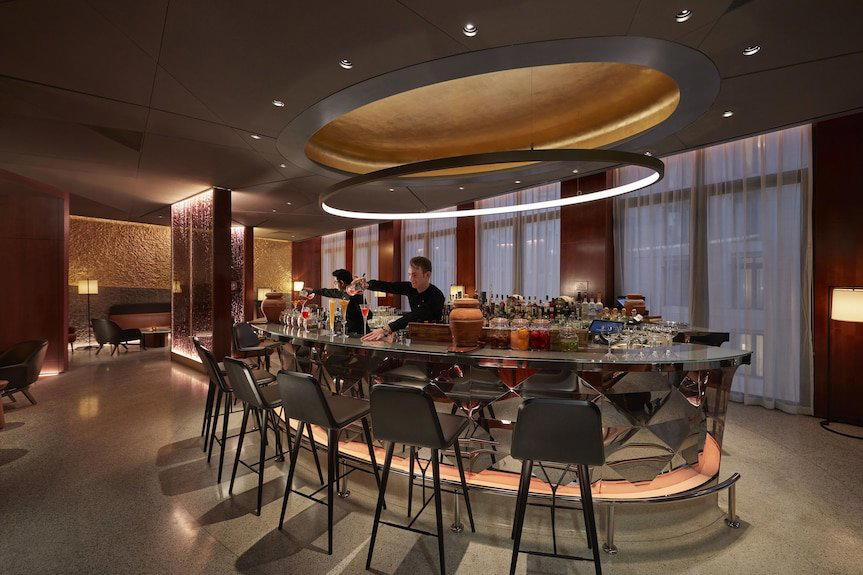
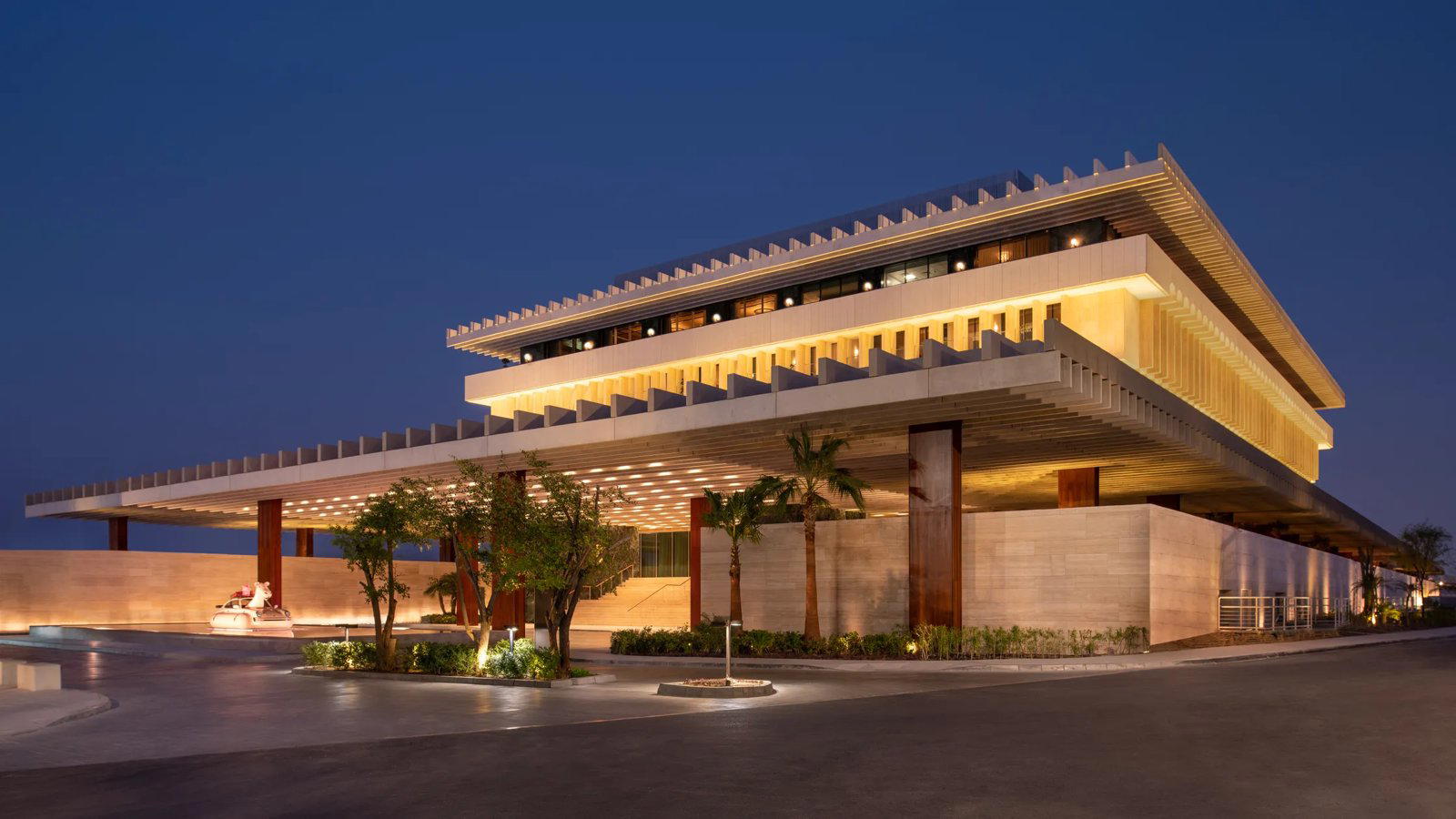
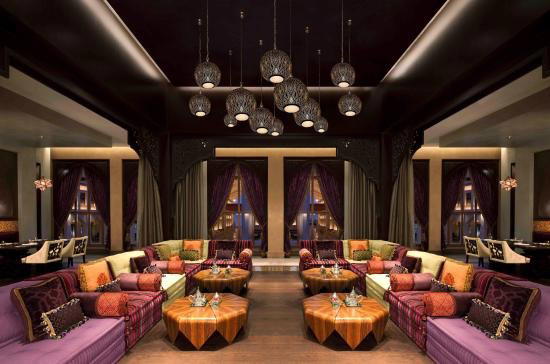
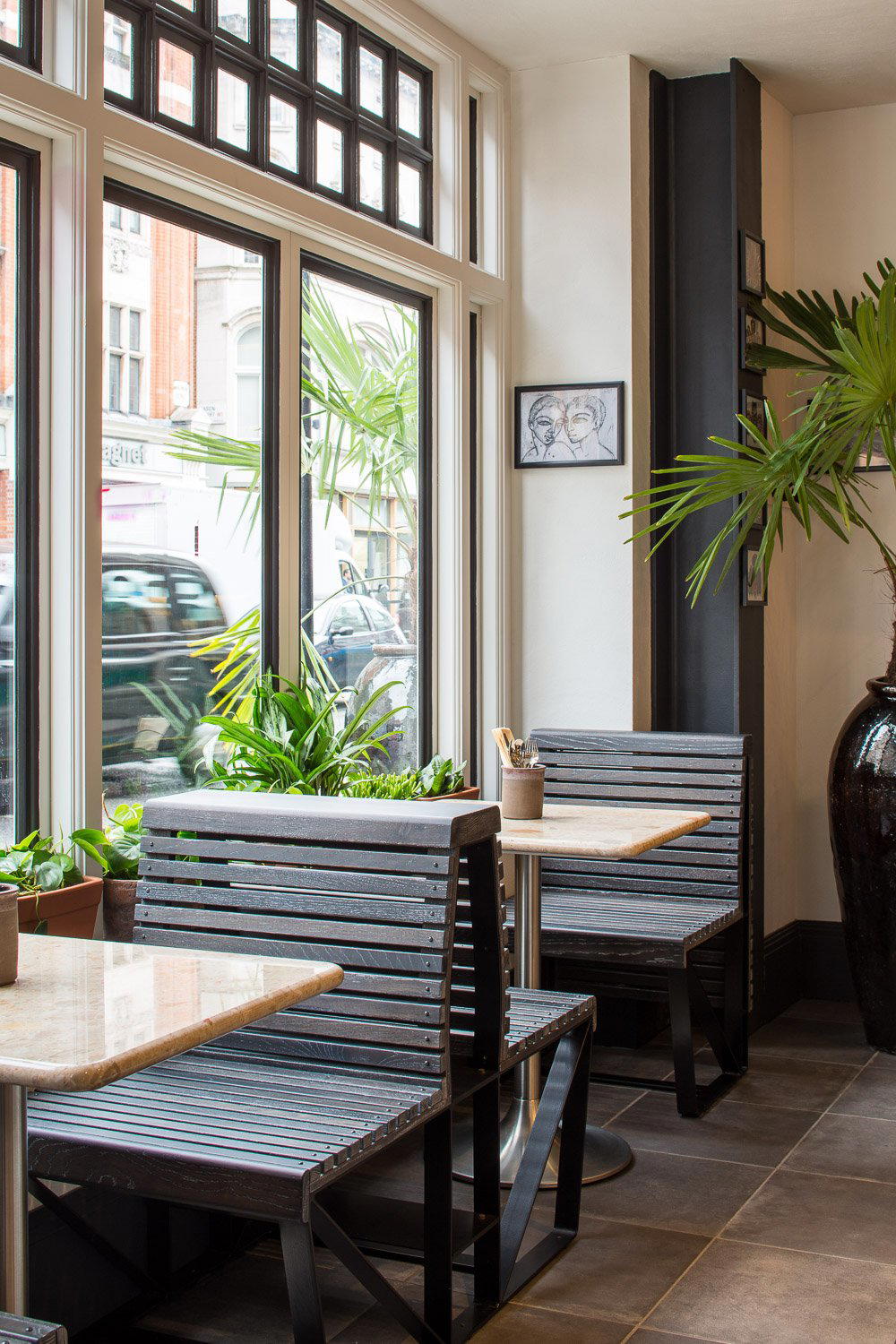
Laid-back luxurious atmosphere with warm lighting, cozy terrace seating, and dramatic city views.