
Falstaff Winery - 2 Stars
Weingut Alfred Fischer is a family-run Rosalia DAC producer in Stottera with roots dating to 1931 and a portfolio shaped by Blaufränkisch, Zweigelt, Merlot, Grüner Veltliner and Sauvignon Blanc. Its appeal lies in a direct cellar-door format, a broad red-white-rosé-sparkling range, and a cross-border identity that reaches toward Badacsony as well as Burgenland.

Pearl is the En Primeur Club membership app, where members save venues, book tables and use the concierge.
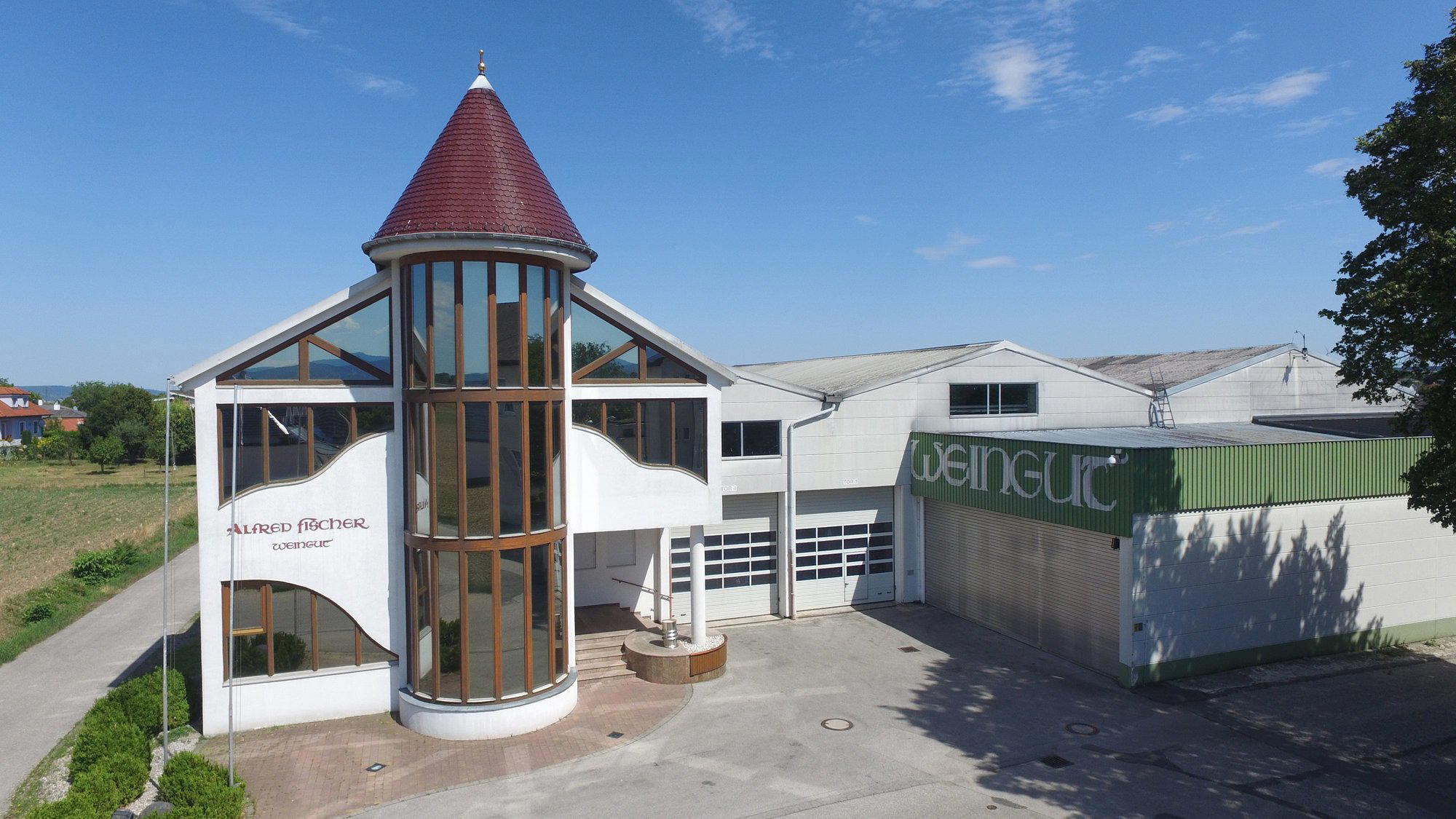
Stottera’s wine culture is quieter than Austria’s grand tasting-room circuits: less theatre, more cellar-door directness, and a closer view of how regional identity gets sold bottle by bottle. At Weingut Alfred Fischer, the atmosphere is described in modern-rustic terms, but the more interesting point is structural. This is not a luxury hospitality estate built around long lunches and architectural spectacle; it is a family-run producer where Rosalia DAC, direct sales, and a broad working portfolio do the heavy lifting.
The place-based story starts with Burgenland’s Rosalia DAC, an appellation that gives the winery a clear Austrian anchor. Rosalia’s public identity is particularly tied to red varieties and rosé, and Fischer’s range follows that logic: Blaufränkisch and Zweigelt sit alongside Merlot and Syrah, with rosé carrying visible weight in the portfolio. The house dates its heritage to 1931, a useful signal in a region where family continuity often matters as much as critical fashion.
Rosalia DAC through red varieties, rosé and cellar-door pragmatism
The portfolio reads as a map of Central European drinking habits rather than a narrow collector’s list. Blaufränkisch appears in both Rosalia DAC and Reserve form, Zweigelt appears across classic and more playful labels, and Merlot broadens the range beyond purely local reference points. Grüner Veltliner and Sauvignon Blanc add white-wine breadth, while sparkling and dessert styles keep the cellar from being reduced to a red-wine story.
That breadth matters because smaller Austrian wineries often compete through specificity, yet many local customers buy across occasions: dry whites for weekday drinking, rosé for warm-weather tables, reds for autumn and winter, and sweet wines for the end of a meal. Fischer’s range acknowledges that reality. It is a cellar built for use, not just for tasting notes.
The Rosalia DAC Rosé The Origin 2022 gives the portfolio its clearest recognition signal. Its award cluster includes Sieger Wein Burgenland Award 2023, Goldmedaille Frankfurt Weintrophy 2023, Sieger ÖGZ Rosé Verkostung 2023, and Goldmedaille Die Presse Frühjahrsverkostung 2023. Those accolades are useful not because medals automatically settle taste, but because they show where the winery’s public reputation has gathered force: rosé with regional identity, rather than an anonymous pale-pink export style.
The cross-border element adds another layer. The winery’s public positioning uses the line “Zwei Länder, Eine Philosophie,” and its portfolio references Badacsony near Lake Balaton in Hungary. That gives the operation a broader Central European frame: Austrian appellation discipline on one side, Hungarian-linked wine identity on the other. For drinkers used to thinking of Austria through Wachau Riesling or Kamptal Grüner Veltliner alone, this is a different read on the country’s wine map.
A family winery where technology supports tradition rather than replacing it
House language puts tradition, quality and technology in the same sentence, which is telling. In contemporary Austrian wine, modernity often shows up less as visual drama than as cellar control, cleaner releases, clearer product tiers and direct-to-consumer systems. Fischer’s stated character fits that pattern: family-run, technically minded, and rooted in a long operating history rather than a new-wave manifesto.
Thomas Fischer is named as winemaker, but the better editorial lens is not biography. The point is how a family operation in Rosalia DAC can use a broad portfolio to translate place across multiple formats. Reserve and limited labels suggest tiering, while the presence of dry whites, reds, rosé, sparkling wine and dessert wine gives visitors a fuller view of the cellar’s commercial range. The result is less about a single cult bottling and more about how a regional producer builds continuity across everyday and special-occasion drinking.
The winery’s conventional production philosophy also places it within a mainstream Austrian category rather than the natural-wine fringe. That distinction matters for travellers. Austria now has a wide split between minimal-intervention producers, polished export-facing estates, co-operatives, and family cellars whose appeal is directness and regional familiarity. Fischer belongs closer to the last category, with enough award recognition to lift its rosé above routine cellar-door browsing.
The setting is described as quiet, small in capacity, and suitable for guided or cellar tastings. That points to a slower wine-education format rather than a high-energy tasting bar. The audience is therefore easy to define: travellers who want to understand Rosalia DAC through the practical grammar of varieties, labels and regional categories, not visitors looking for a restaurant-style production.
How to place it within a Stottera wine itinerary
Stottera is a compact base, so the value of this stop lies in concentration. A visit here makes sense for drinkers building a Burgenland itinerary around Blaufränkisch, Zweigelt and rosé, especially those who prefer a cellar-door setting over a formal estate campus. The strongest editorial reason to include it is the combination of 1931 heritage, Rosalia DAC labeling, and a rosé bottling with multiple 2023 awards attached.
The winery is not framed around food pairing, outdoor seating or children’s programming. Its stated strengths are wine education, private tasting, group visits and cellar interaction. Casual dress fits the tone. The mood is low-key rather than high-energy, which suits solo exploration as much as a small group that wants to ask practical questions about grape varieties, regional designation and the difference between standard, Reserve and limited labels.
For broader planning in town, use Our full Stottera wineries guide alongside Our full Stottera restaurants guide, Our full Stottera hotels guide, Our full Stottera bars guide, and Our full Stottera experiences guide. Travellers mapping a wider Austrian or wine-focused route can also look at »der Steiner« Hans Steiner in Podersdorf am See, ®walzer in Gneixendorf Bei Krems, 1516 Brewing Company Distillery in Vienna, A-Nobis Sektkellerei in Zurndorf, Abfindungsbrennerei Franz in Leithaprodersdorf, Achs-Wendelin Weine in Gols, Aeijst Distillery in Sankt Nikolai im Sausal, Alexander Koppitsch in Neusiedl am See, & Handwein in Mannheim, and 00 Wines in Carlton.
Recognition history
Dated appearances from independent guides and award organizations, with the underlying list record or original source where available.
Falstaff Winery - 2 Stars
Falstaff
Continue exploring
More in Stottera
Wineries in Stottera
All wineries in Stottera →
Bars in Stottera
Browse all →
Restaurants in Stottera
Browse all →
![[aend] restaurant in Vienna](https://cdn.enprimeurclub.com/storage/v1/object/public/images/locations/recsVyRkMfzCxPmp0/hero2.jpg?width=3840&quality=75)


Details
- Modern
- Rustic
- Classic
- Cozy
- Wine Education
- Special Occasion
- Solo Exploration
- Group Outing
- Historic Building
- Private Tasting
- Vineyard
- Blaufränkisch
- Zweigelt
- Merlot
- Grüner Veltliner
- Sauvignon Blanc
- Still Red
- Still White
- Still Rosé
- Sparkling
- Dessert
- Cellar Tasting
- Guided Tasting
Modern, innovative winery atmosphere centered on tradition, quality, and technology, with a family-run feel and cellar-door sales.