
Falstaff Winery - Listed
Tenuta del Nicchio is a small Upper Maremma wine project in Bibbona, launched in 2018 by Lodovico and Sophia Antinori. Its argument is terroir rather than scale: Cabernet Franc from north-facing parcels, maritime influence from the Tyrrhenian side of Tuscany, and a tightly edited Toscana IGT range built for collectors who follow coastal Tuscan reds closely.

Pearl is the En Primeur Club membership app — saves, bookings, and concierge access live there. Same editors, same standards.
- Address
- Bibbona, Tuscany, Italien

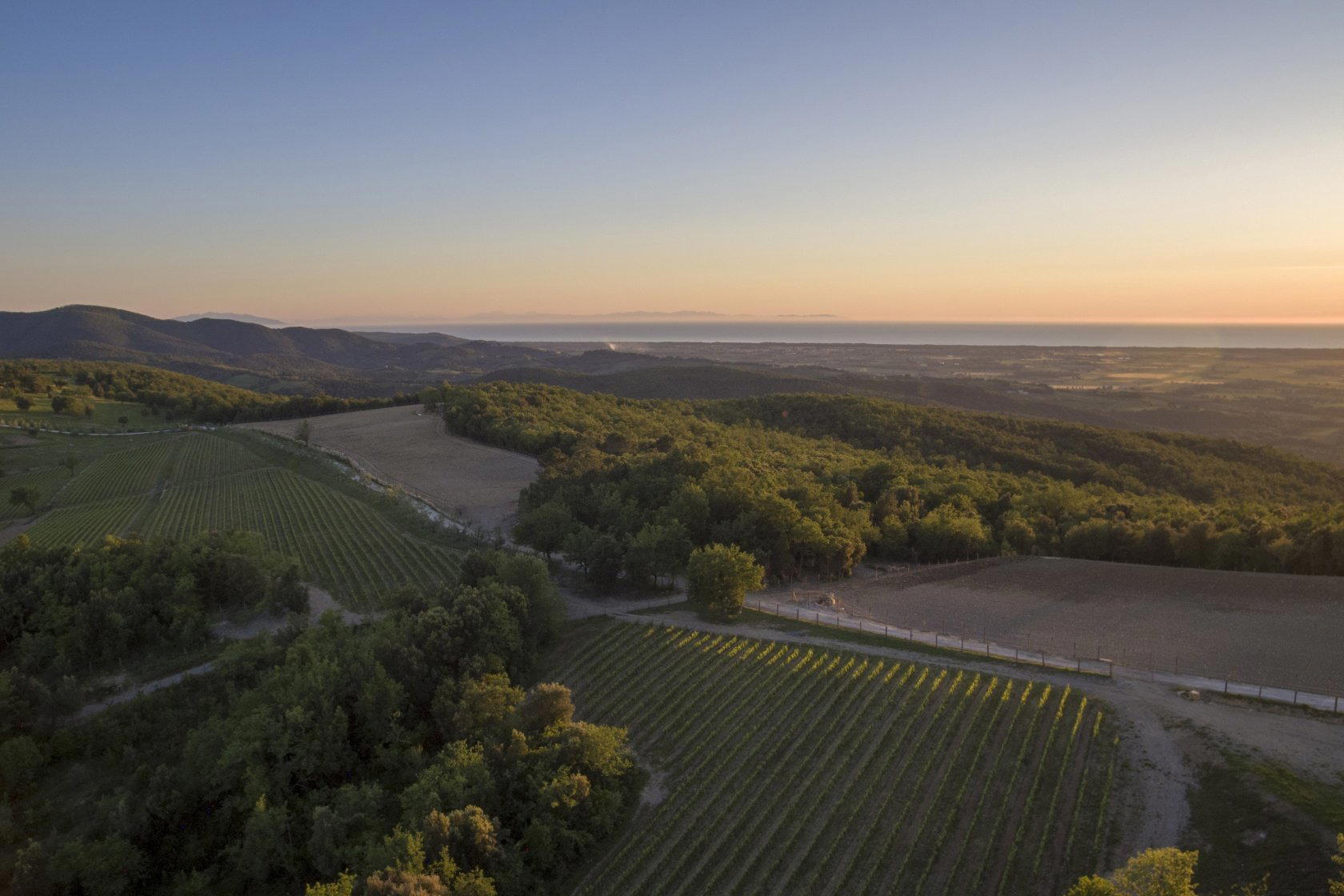
Approaching the Upper Maremma through Bibbona, the wine story changes from postcard Tuscany to something cooler, more coastal, and less dependent on the Sangiovese script. The air coming off the Tyrrhenian side, the woodland-framed parcels, and the chalk-and-clay complexity of the soils all matter here. Tenuta del Nicchio belongs to that more selective reading of coastal Tuscany: small parcels, Bordeaux-family varieties, and a clear bet that Cabernet Franc can carry the region’s identity when the site is chosen with discipline.
This is not the broad Tuscan estate model of long driveways, large hospitality spaces, and a wide ladder of labels. The project began in 2018 under Lodovico Antinori and Sophia Antinori, and its scale is part of the point. Twelve hectares are spread across Bolgheri, Bibbona, Castagneto Carducci, and Sassetta, with parcels typically running from one to three hectares. That fragmentation gives the estate a mosaic structure rather than a single-block identity, and it helps explain why the wines read as a focused argument about place rather than a commercial range designed to cover every occasion.
North-facing Cabernet Franc in a warming coastal Tuscany
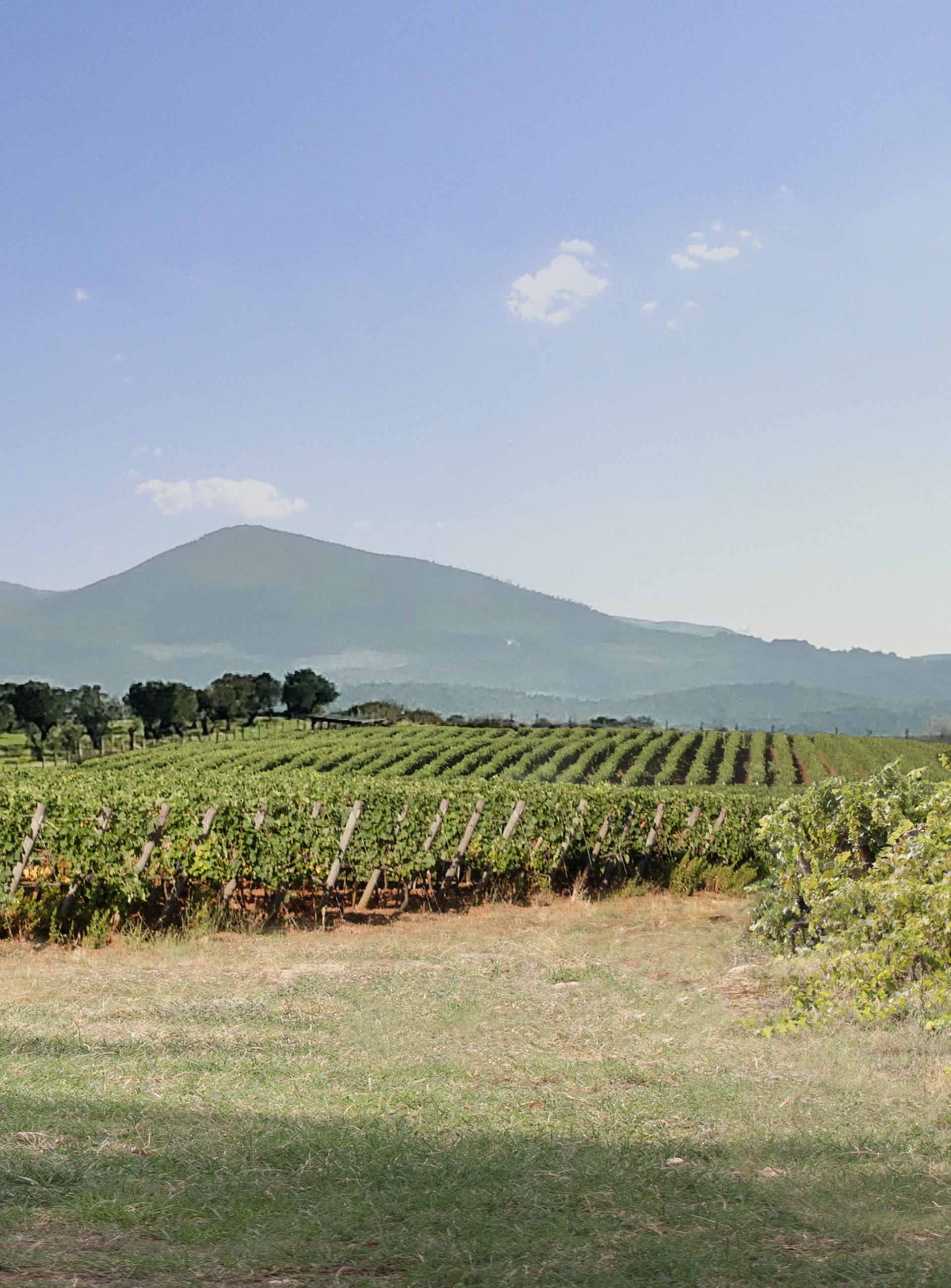
Coastal Tuscany has spent decades proving that international varieties can speak with a local accent, but the next question is climate: how to keep ripeness from becoming weight. Tenuta del Nicchio’s answer is unusually direct. Its vineyards are planted facing north, a choice that reads less like stylistic preference than agricultural strategy in a warmer era. For Cabernet Franc, that matters. The grape rewards precise ripening, but it has a narrow margin between green austerity and overbuilt fruit. North-facing exposure, maritime air, and the estate’s mixed soils of silt, alluvial sand, and clay give the project its technical foundation.
The varietal frame is compact. Cabernet Franc is the spine, Merlot adds breadth, Petit Verdot contributes structure, and Ciliegiolo brings a Tuscan counterpoint to the Bordeaux base. That last detail is important because it keeps the estate from reading as a transplanted French idea. In this part of Tuscany, where coastal influence and complex geology often favor Cabernet-family grapes over a conventional Sangiovese-led formula, the blend logic is regional rather than decorative.
The winemaking details reinforce the same restraint-led position. Il Nicchio 2021 spends 12 months in barrique and is released unfiltered. Lodovico 2021 is listed with 16 months of barrique maturation and no filtration. Le 2 Ville del Nicchio 2023 is matured in stainless steel and barrique for 16 months. Steel fermentation and wood aging place polish around the fruit without turning the wines into an exercise in oak. The point is not rustic minimalism; it is control, with enough transparency for site and vintage to remain legible.
A three-wine range with collector-level signals
Portfolio is tightly edited. Il Nicchio Toscana IGT is the central wine, first released from the 2020 vintage, with 2021 marking the first full-scale debut. The 2021 vintage received 96 points from Wine Advocate, 96 from Vinous, 94 from Wine Spectator, 99 from James Suckling, and 94 from Decanter. In a young estate, that combination of early critical attention and limited production immediately changes the conversation from curiosity to allocation-driven fine wine.
Lodovico Toscana IGT sits higher in the hierarchy. The 2021 wine is led by Cabernet Franc with Petit Verdot, and carries 97 points from Wine Advocate plus 98 from both James Suckling and Decanter. Bottle-level detail places the alcohol at 14.5% and gives a 5–7 year drinking window, which is useful context for collectors who are deciding whether this is a near-term coastal Tuscan red or a cellar candidate. It is positioned as the estate’s most serious bottling, but the more interesting point is how quickly it has entered the critical conversation for modern Maremma Cabernet Franc.
Le 2 Ville del Nicchio Toscana IGT 2023 broadens the frame without diluting it. The 2023 blend is listed as 40% Cabernet Franc, 40% Merlot, and 20% Ciliegiolo, with 90 points from Vinous. That makes it the wine to watch for how the estate translates its core idea into a more accessible register: still structured, still tied to coastal Tuscany, but with Ciliegiolo pulling the profile toward a more local register.
The Antinori name gives the project immediate historical weight, but it should not be read as a nostalgia exercise. Lodovico Antinori’s earlier work at Ornellaia, Masseto, and Biserno shaped the modern market for coastal Tuscan reds. Tenuta del Nicchio is smaller, quieter, and more narrowly argued. In Bibbona, that restraint is its editorial relevance: the estate shows how the luxury end of Maremma wine is shifting from scale and spectacle toward parcel logic, climatic adaptation, and Cabernet Franc precision.
How to read Bibbona around the glass
Bibbona rewards a different travel rhythm from the better-known Tuscan wine towns. The appeal is not only the glass in front of the visitor, but the way the surrounding territory explains it: woods around vineyard parcels, maritime coolness, and the nearby Tyrrhenian influence that separates Upper Maremma from inland Tuscany. Tenuta del Nicchio fits that pattern neatly. Its quiet register, small production scale, and vineyard-first identity suit travelers who want to understand why this coast has become a serious counterpoint to classic Tuscan red-wine assumptions.
For a wider read on the local wine circuit, place it alongside Bibbona producers such as Leopoldo I di Toscana and Tenuta Sette Cieli, then use Our full Bibbona wineries guide for the broader area. Dining and lodging shape the same trip, so the practical companion reads are Our full Bibbona restaurants guide, Our full Bibbona hotels guide, Our full Bibbona bars guide, and Our full Bibbona experiences guide. For a broader Italian winery map beyond Tuscany, compare regional formats through 3GP SRL in Treviso, 47 Anno Domini in Trebaseleghe, A Mano Wine in Noci, A Vida Portuguesa in Malfa, a6mani in Fragagnano, »der Steiner« Hans Steiner in Podersdorf am See, and & Handwein in Mannheim.
Recognition history
Dated appearances from independent guides and award organizations, with the underlying list record or original source where available.
Falstaff Winery - Listed
Falstaff
Continue exploring
More in Bibbona
Details
- Quiet
- Elegant
- Sophisticated
- Wine Education
- Solo Exploration
- Special Occasion
- Vineyard Tour
- Estate Grounds
- Private Tasting
- Vineyard
- Cabernet Franc
- Merlot
- Petit Verdot
- Ciliegiolo
- Still Red
- Tasting Room
- Private Tasting
Quiet, boutique, and restrained, with an emphasis on maritime coolness, chalky soils, and isolated vineyards surrounded by woods. The project is described as a new, more human-scale and elegant expression of Maremma rather than a glamorous estate.