Spier Wine Farm

One of the Stellenbosch wine corridor's most established farm estates, Spier Wine Farm holds a Pearl 3 Star Prestige rating (2025) and operates across wine production, hospitality, and a documented sustainability program that spans regenerative agriculture, energy management, and supply-chain ethics. Its position on Baden Powell Drive places it among the region's more accessible major estates for visitors arriving from Cape Town.
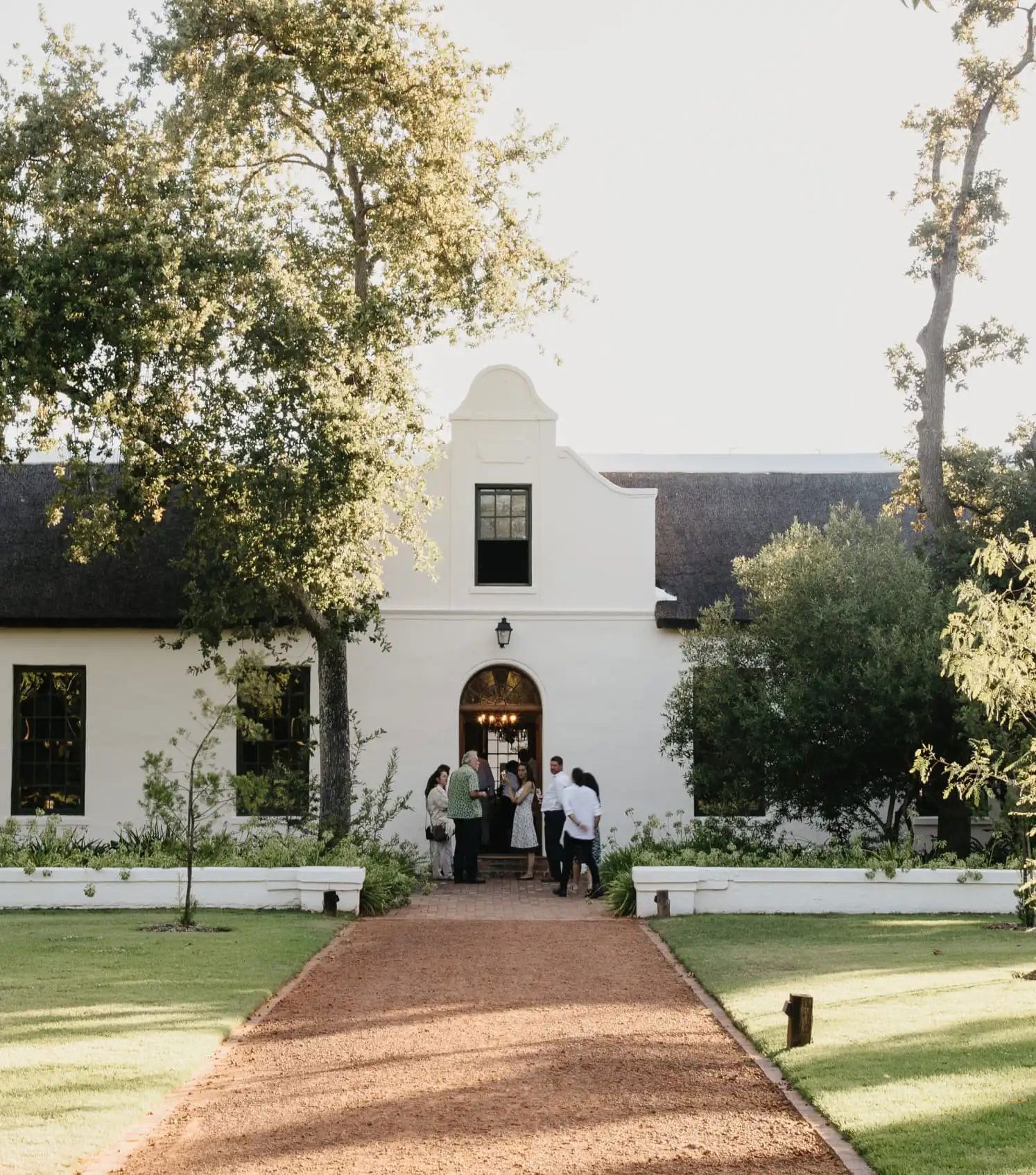
A Winelands Estate Where the Land Comes First
The approach to Spier along the R310 sets up the visit before you arrive at any tasting room or cellar door. Oak-lined drives, open fynbos corridors, and working farm infrastructure signal that this is an agricultural property that happens to welcome visitors, rather than the reverse. That distinction matters in Stellenbosch, where the spectrum runs from intimate boutique producers to large-scale hospitality operations that have drifted some distance from the vine. Spier sits closer to the latter in scale, but its 2025 Pearl 3 Star Prestige recognition places it within a peer tier where the wine program remains the anchor, not an afterthought.
Stellenbosch's farm estates occupy a specific position in the South African wine conversation. The region accounts for a disproportionate share of the country's premium Cabernet Sauvignon, Chenin Blanc, and Pinotage output, and larger multi-function estates have historically struggled to maintain wine quality when hospitality revenues dominate the business model. Spier's continued recognition within the Pearl awards framework suggests it has managed that tension more credibly than many comparably sized operations. For context, properties like Delaire Graff Estate and Tokara Winery operate at the higher-concept end of the Stellenbosch estate spectrum, while Alto Wine Estate and Neethlingshof Estate offer a different register of farm-scale character. Spier occupies its own territory: large enough to absorb significant visitor volume, focused enough on environmental practice to have built a recognisable institutional identity around it.
The Sustainability Architecture
Sustainability in South African wine has become a contested term. Many estates carry certification while making only surface-level operational changes. Spier's program is documented across multiple dimensions, which makes it a more instructive case study in what serious commitment to environmental practice actually involves at estate scale.
The farm operates a substantial composting and organic waste processing program that feeds back into vineyard soil management. Its energy program includes solar generation infrastructure that reduces dependence on Eskom's grid, a practical consideration given South Africa's ongoing load-shedding reality. Water stewardship at this scale, in a region that has experienced acute drought stress, involves both irrigation efficiency and wetland rehabilitation work on the property. These are not marketing gestures; they represent capital-intensive decisions with long payback periods that smaller estates would find difficult to replicate.
The ethical supply chain dimension is equally documented. Spier's Learning & Development programs and supplier transformation commitments have attracted attention from international sustainability frameworks, and the estate has been referenced in academic and industry literature on post-apartheid agricultural transformation in the Western Cape. This social dimension of sustainability, often absent from wine estate programs that focus narrowly on environmental metrics, is part of what gives Spier's position in the responsible-farming conversation a different texture from peers who hold certification without the institutional infrastructure.
For visitors who care about where their wine comes from in the fuller sense of that phrase, that background is worth understanding before arriving. It changes how you read the farm.
Wine at Pearl 3 Star Prestige Level
The Pearl award system provides a credentialed framework for assessing South African wine estates, and the 3 Star Prestige designation at Spier in 2025 positions the farm within the upper tier of the regional hierarchy. South Africa's wine scene has shifted considerably over the past decade, with Chenin Blanc gaining serious international attention as a world-benchmark variety from the Cape, and Cabernet-based blends from Stellenbosch commanding prices that make direct comparison with Bordeaux structurally coherent rather than aspirational.
Spier produces across a range of price points, which is characteristic of larger estates that need to serve both export volume and premium domestic segments simultaneously. The risk in that model is that the premium tier can become obscured by the commercial tier's visibility. The Pearl recognition indicates the estate's better wines are being assessed on their own terms and found to meet a prestige standard. That matters for visitors deciding whether to spend time with the cellar's upper-range offerings or move on to more specialist producers.
For a broader view of how Spier compares within Stellenbosch's winery offering, our full Stellenbosch wineries guide maps the region's estates across styles and price tiers. Nearby Asara Wine Estate provides an interesting stylistic contrast as another accessible multi-function estate on the corridor. Further afield, Babylonstoren in Franschhoek represents the farm-estate model taken to its most architecturally resolved expression, while Creation Wines in Hermanus demonstrates what a smaller-scale sustainability-focused producer looks like at the Hemel-en-Aarde end of the Cape Winelands spectrum.
The Estate as a Full-Day Visit
Spier is structured for longer visits than a single tasting flight. The property encompasses hotel accommodation, restaurant dining, outdoor spaces, and farm experiences that extend well beyond the cellar door. This positions it in a category that Cape Winelands visitors either find compelling or excessive, depending on what they came for. Guests looking for a contained, immersive farm experience over a full day or overnight stay will find the infrastructure here supports that. Those who prefer to cover multiple producers in a day may find the scale slightly harder to exit efficiently.
The Baden Powell Drive location, while slightly removed from the dense Stellenbosch town centre cluster, makes it workable as either a standalone destination or a route stop when travelling between Cape Town and the valley. Distance from Cape Town International Airport via the R310 is manageable, and the farm is signposted clearly enough that navigation from the N2 is not complicated.
For planning the wider Stellenbosch visit, our full Stellenbosch restaurants guide, our full Stellenbosch hotels guide, our full Stellenbosch bars guide, and our full Stellenbosch experiences guide cover the broader valley offering in detail.
Where It Sits in the Broader Cape Winelands Picture
Spier is not the only estate in the Cape that has built sustainability into its operating identity, but it is among the more systematically documented cases in Stellenbosch. As regional wine tourism grows and travellers become more deliberate about aligning their visits with producers whose practices they can verify, estates with this depth of environmental and social infrastructure have a different kind of appeal than those whose credentials rest primarily on ratings and design.
The comparison set extends beyond the valley. Constantia Glen in Cape Town offers an interesting counterpoint as a smaller-footprint producer operating within the Cape's oldest wine district. Internationally, properties like Abadía Retuerta in Sardón de Duero demonstrate how estate-scale operations in other wine regions integrate hospitality and production at comparable complexity. Even in a very different category, Aberlour in Aberlour illustrates how production heritage and visitor experience coexist at sites where the primary product defines the identity rather than the other way around.
Spier's Pearl 3 Star Prestige standing gives it a defensible position in that comparative frame. It is a large, multi-function estate that has maintained a credentialed wine identity while building an environmental program with institutional substance. That combination is less common than the marketing language across the Cape Winelands might suggest.
Planning Your Visit
Spier Wine Farm is located at Baden Powell Drive, Lynedoch, Stellenbosch, accessible from the R310. Given the estate's scale and range of activities, arriving with a clear priority, whether wine tasting, dining, farm experience, or accommodation, will shape a more focused visit. Advance reservations for dining and accommodation are advisable, particularly during the summer harvest season from January through March when the estate sees its highest visitor volumes. Tasting room visits during shoulder season, from April through June, typically offer a quieter experience and the opportunity to taste wines from the recently completed harvest. The estate's website and direct booking channels are the most reliable source for current pricing, availability, and any seasonal programming.
Frequently Asked Questions
What wines is Spier Wine Farm known for?
Spier produces across multiple price tiers, from accessible commercial releases to prestige-level wines recognised under the Pearl award framework. The estate's 2025 Pearl 3 Star Prestige designation positions its upper-range wines within the credentialed tier of Stellenbosch production. Like most large Cape Winelands estates, the range spans red and white varieties typical of the region, including styles that have brought South African Chenin Blanc and Cabernet-based wines international attention. For current vintage releases and tasting notes, the estate's direct channels provide the most accurate information. For regional context, see our full Stellenbosch wineries guide.
What is Spier Wine Farm known for?
Spier is one of Stellenbosch's most established multi-function farm estates, recognised for its wine production (Pearl 3 Star Prestige, 2025), its documented sustainability and social transformation programs, and its capacity to absorb extended visits across wine tasting, dining, accommodation, and farm experiences. Its position on the R310 corridor makes it one of the more accessible major estates for visitors arriving from Cape Town. Within Stellenbosch's wine scene it occupies a large-estate tier that also includes properties like Neethlingshof Estate and Asara Wine Estate, though its sustainability infrastructure is among the more thoroughly documented in the region.
Can I walk in to Spier Wine Farm?
As a large estate with multiple facilities, Spier generally accommodates walk-in visitors for wine tasting at the cellar door, though availability can vary by season and day. During peak summer and harvest periods, advance reservations for dining and specific experiences are strongly advisable to avoid disappointment. The estate's direct booking channels carry current availability and any access conditions that apply to specific facilities. Visitors without reservations are typically better served by arriving earlier in the day when walk-in capacity is most available. For a planned visit that makes full use of what the estate offers, booking ahead is the more reliable approach.
Where It Fits
A quick peer check to anchor this venue’s price and recognition.
| Venue | Classification | Awards | First Vintage | Notes |
|---|---|---|---|---|
| Spier Wine Farm | 1 awards | This venue | ||
| Delaire Graff Estate | World's 50 Best | |||
| Tokara Winery | World's 50 Best | |||
| Neethlingshof Estate | 1 awards | |||
| Alto Wine Estate | 1 awards | |||
| Asara Wine Estate | 1 awards |
Access the Cellar?
Our members enjoy exclusive access to private tastings and priority allocations from the world's most sought-after producers.
Access the Concierge