Glengyle (Kilkerran)

Glengyle distillery, operating under the Kilkerran single malt label, is Campbeltown's youngest working distillery and holds a Pearl 3 Star Prestige rating for 2025. Reopened in the early 2000s after more than a century of silence, it occupies a distinct position in Scotland's smallest whisky region, producing a style that rewards patience and direct comparison with its long-established Campbeltown neighbours.
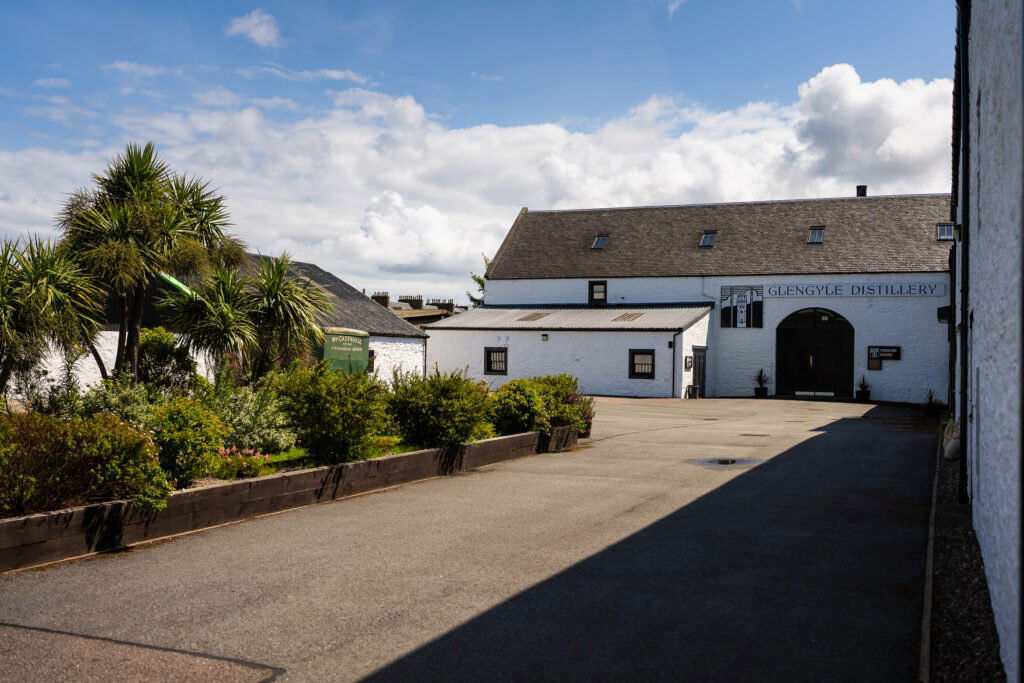
Campbeltown's Quiet Revival, Bottled
Scotland's whisky regions are defined less by geography than by character, and nowhere is that distinction more contested than in Campbeltown. At its peak in the late nineteenth century, the peninsula town on the southern tip of Kintyre operated more than thirty distilleries. By the mid-twentieth century, that number had collapsed to two. The reopening of Glengyle in 2004 did not restore Campbeltown to its Victorian scale, but it did something arguably more significant: it reaffirmed that the region's style, with its coastal salinity, faint peat, and pronounced dryness, was worth preserving through new production rather than legacy alone.
Glengyle releases its single malt under the Kilkerran name, a distinction that matters because the Glengyle trademark was already held by another producer. That separation of distillery and expression has given Kilkerran an identity built entirely on what is in the glass rather than on heritage branding. The 2025 Pearl 3 Star Prestige award reflects how far that identity has consolidated in little over two decades of production.
What Campbeltown Does to Whisky
To understand Kilkerran, it helps to understand what Campbeltown as a production environment actually does. The region sits on a narrow peninsula exposed to Atlantic weather from multiple directions. That exposure, combined with the local warehousing conditions and the style of spirit produced here, creates a profile that sits between the oily richness of Highland malts and the medicinal coastal intensity of the southern Islay distilleries. It is drier and more austere than most Scottish styles, and the leading Campbeltown expressions age into something that has been compared to a good fino sherry in its combination of saline freshness and structural grip.
That context places Kilkerran in an interesting competitive position. Springbank and Glen Scotia are Campbeltown's established names, each with decades of bottled expressions that give collectors and enthusiasts a long reference trail. Kilkerran, as the youngest of the three active distilleries, has had to build its comparative position quickly. The Work in Progress series, released annually over a decade, gave drinkers a front-row view of how the spirit developed across cask types and years, which is an unusual transparency for any Scotch producer and a shrewd way to build engagement without waiting for long aged statements.
The Philosophy Behind the Label
The editorial angle assigned to EA-WN-02 asks for framing through approach and vision, and Kilkerran's production philosophy is genuinely legible in the glass. The distillery works with a traditional worm tub condensing system, which retains more sulphur compounds in the new make spirit than shell-and-tube alternatives. That technical choice produces a heavier, meatier spirit that evolves more slowly in cask but develops greater complexity over time. It is the kind of decision that prioritises long-term character over short-term approachability, and it places Kilkerran firmly in the traditionalist camp of Scottish distilling, alongside producers like Balblair Distillery and Clynelish Distillery, both of which prioritise craft process over production efficiency.
Cask policy also signals intent. Kilkerran has worked across ex-bourbon, ex-sherry, and port wood, releasing expressions that allow direct comparison of how each cask type interacts with the same base spirit. That approach, methodical rather than speculative, reads as the work of a team that understands its new make well enough to let the cask conversation happen on its own terms. It contrasts with distilleries that reach for unusual wood finishes to mask a neutral spirit, a practice that has become common enough in the wider Scotch industry to be considered its own trend.
How Kilkerran Sits Among Scottish Peers
The Pearl 3 Star Prestige recognition for 2025 places Kilkerran in a tier that rewards consistency and provenance over novelty. Across the wider Scottish single malt space, that tier includes distilleries with very different production philosophies: Aberlour in Speyside with its sherry-dominant program, Auchentoshan Distillery with its triple-distilled Lowland style, Bladnoch Distillery in the southwest, and Deanston in the Highland fringe. That peer group spans regions and styles, which underscores that the award reflects production standard and expression quality rather than any single flavour preference.
For those building a comparative tasting framework across Scottish regions, Kilkerran makes a strong case for inclusion precisely because it represents a style with so few active practitioners. Campbeltown's three distilleries produce collectively far less whisky than a single large Speyside operation, which gives regional expressions a relative scarcity that is structural rather than manufactured. Ardnahoe in Port Askaig on Islay provides a useful adjacent reference, another relatively young distillery building its identity in a historically defined coastal region. Comparing the two highlights how strongly local production environment shapes spirit character even when distilleries are operating at similar scales and levels of maturity.
Further afield, producers like Abadía Retuerta in Castile demonstrate a parallel logic: estates or distilleries that prioritise terroir expression and production integrity over volume, accepting that their audience will be smaller but more committed. The comparison across spirits and wine categories is imprecise, but the underlying market position, defined by craft, place, and patience, reads similarly.
Visiting Glengyle and Planning Around Campbeltown
Campbeltown is a destination that requires commitment to reach. The town sits at the end of the Kintyre Peninsula, roughly a three-hour drive from Glasgow, and there is no direct rail link. That isolation is not incidental to its character: the town's whisky industry contracted partly because distance made distribution expensive, and that same distance now gives the region a sense of remove that shorter journeys cannot replicate. Visitors who make the trip find a compact working town where whisky is not a theme-park overlay but an actual local industry.
The address for Glengyle is 9 Bolgam Street, Campbeltown, Argyll, PA28 6HZ. Practical logistics for visiting, including current tour availability, hours, and booking arrangements, should be confirmed directly with the distillery before travel, as operational details for a production site of this scale can shift seasonally.
For those building a wider itinerary, our full Campbeltown wineries guide covers all three active distilleries and the broader regional context. Complementary planning resources include our full Campbeltown restaurants guide, our full Campbeltown hotels guide, our full Campbeltown bars guide, and our full Campbeltown experiences guide. A two-day visit that includes all three distilleries, a meal in town, and an evening at a local bar is the format most visitors find gives adequate time without rushing comparisons.
Frequently Asked Questions
What's the must-try expression at Glengyle (Kilkerran)?
The answer depends on which aspect of Campbeltown's regional character you are most interested in tracing. The core 12 Year Old provides the clearest view of what the distillery's Campbeltown-region spirit does with time in mixed cask, and it is the expression most often cited by enthusiasts building a regional comparison tasting. For those interested in cask-type variation, the individual wood expressions, ex-bourbon and ex-sherry released as comparative pairs, give the most direct read on how Kilkerran's new make spirit responds to different maturation environments. The Pearl 3 Star Prestige award for 2025 attaches to the distillery's overall production standard rather than a single bottling, which is worth noting when selecting across the range.
What is Glengyle (Kilkerran) leading at?
Within Campbeltown's three-distillery lineup, Kilkerran occupies a distinctive position as the youngest operation, which means its expressions offer a relatively unmediated view of the current production philosophy without the decades of stylistic evolution that shape the older houses. The distillery's methodical cask program and transparent release series have earned it recognition from spirits enthusiasts who value legibility: knowing why a whisky tastes the way it does, traced back to specific production decisions. The 2025 Pearl 3 Star Prestige rating confirms that the quality of execution at Glengyle has reached a standard that positions it alongside Scotland's more established craft producers, despite the short production timeline. For visitors to Campbeltown, it completes a regional picture that neither Springbank nor Glen Scotia alone can provide.
Price and Recognition
A quick peer list to put this venue’s basics in context.
| Venue | Classification | Awards | First Vintage | Notes |
|---|---|---|---|---|
| Glengyle (Kilkerran) | 1 awards | This venue | ||
| Glen Scotia | 1 awards | |||
| Ardnahoe | 1 awards | |||
| Auchentoshan Distillery | 1 awards | |||
| Balblair Distillery | 1 awards | |||
| Bladnoch Distillery | 1 awards |
Access the Cellar?
Our members enjoy exclusive access to private tastings and priority allocations from the world's most sought-after producers.
Access the Concierge