Feist

Feist belongs to Vila Nova de Gaia’s older Port culture: Douro fruit, fortified production, long aging, and a house identity dated to 1836. Its focus is classic Port rather than broad hospitality theatre, with Tawny, Ruby, Vintage and Colheita styles shaped by traditional varieties and a quiet, appointment-led format.

Pearl is the En Primeur Club membership app — saves, bookings, and concierge access live there. Same editors, same standards.

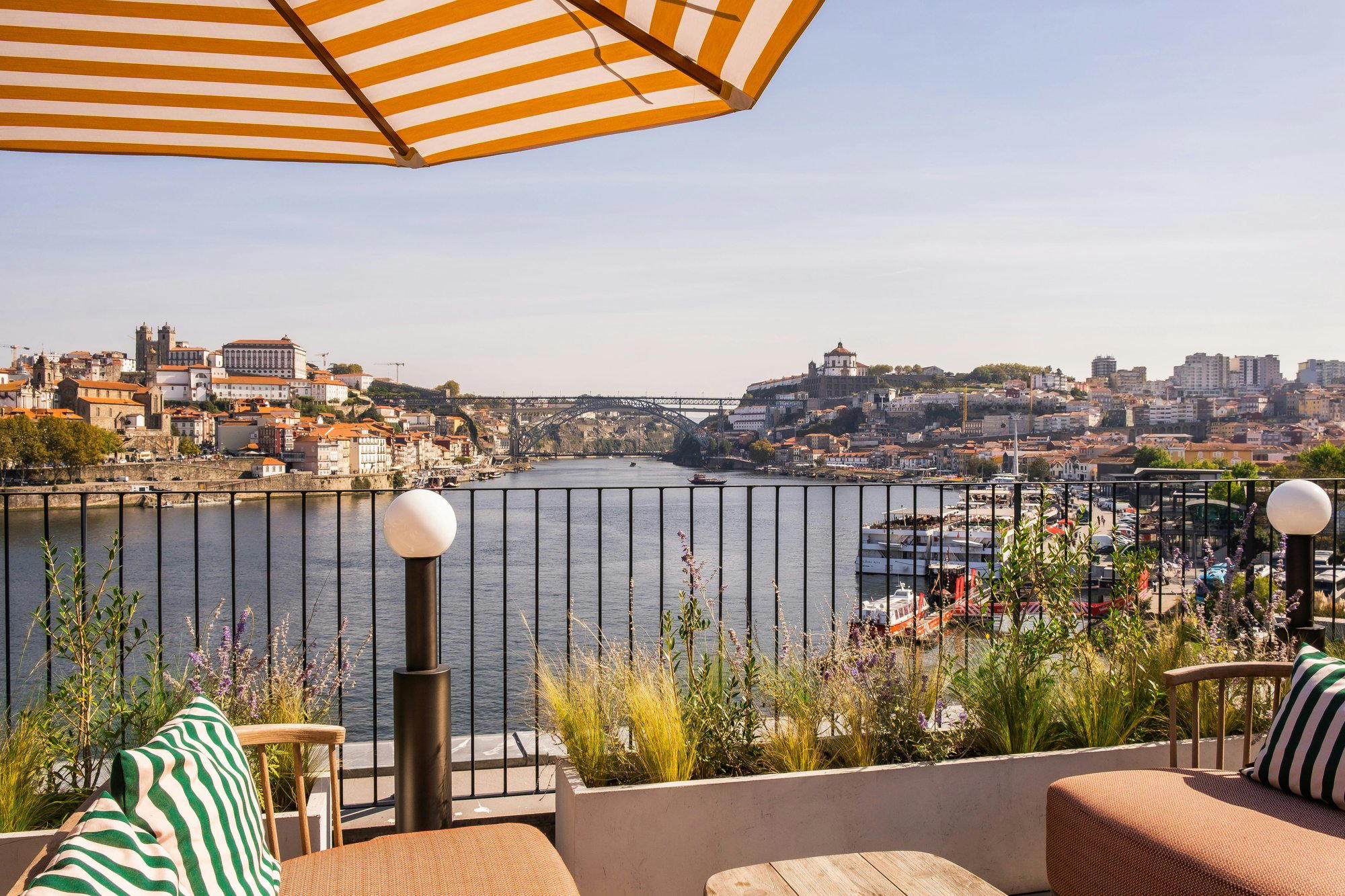
In Vila Nova de Gaia, Port is less a cellar-door accessory than the city’s operating language. The historic lodges, shaded warehouses and river-facing trade architecture all point back to the same system: grapes grown upriver in the Douro, wines fortified early, and years of maturation shaping the difference between fresh Ruby, oxidative Tawny, bottle-aged Vintage and single-harvest Colheita. Feist sits inside that tradition with a house history dated to 1836, which matters here because Port rewards continuity. A brand with nearly two centuries behind it is not competing on novelty; it is judged by how clearly it carries the Douro’s structure into fortified wine.
Douro grapes, Gaia aging and the logic of Port
The more useful way to read Feist is through geography. Port is a dual-place wine: the vineyards belong to the Douro Valley, while Vila Nova de Gaia has long acted as the aging and shipping centre. That split explains the character of the category. The Douro’s steep terraces favour handwork and a matrix of indigenous red grapes, while Gaia’s cellar culture turns young fortified wine into a hierarchy of age, oxygen and time.
Feist works with Douro varieties including Touriga Nacional, Touriga Franca, Tinta Roriz, Tinto Cão and Tinta Barroca. Those grapes are not decorative names on a back label; they form the structural grammar of Port, bringing colour, tannin, perfume, acidity and density in different measures. The house’s production identity follows the classic method: foot treading in lagares, controlled fermentation, and fortification with grape spirit to stop fermentation while preserving sweetness. In a wine world often distracted by technique as performance, this is technique as category law.
The stated sustainable viticulture and largely manual vineyard work also make sense in the Douro context. Mechanisation is difficult on steep, terraced ground, so farming is shaped by terrain rather than convenience. For a Port house, terroir is not expressed as a single vineyard tasting note in the Burgundy sense. It appears through concentration, ripeness, tannic architecture and the capacity to handle long aging.
Where the cellar breadth matters
Feist’s range is built around Tawny, Ruby, Vintage and Colheita Ports, which gives the house a useful spread across the category’s main drinking modes. Ruby styles preserve the directness of fruit and youth. Tawny moves toward oxidative aging, nut and caramel tones, and a different rhythm at the table. Vintage Port is built for bottle development, while Colheita narrows the lens to a single harvest aged in wood. The value of this portfolio is not variety for its own sake; it lets a drinker see how fortification, oxygen and time change the same regional vocabulary.
The age depth is the clearest signal. Feist lists Vintage years from 1937 through 2020, with further depth across Colheita releases including 1937, 1964, 1970, 1985, 2000, 2011, 2012 and 2020. That kind of spread matters in Port because older bottlings are not merely archival. They show how harvest character, cellar decisions and aging format diverge over decades. A documented Feist Colheita 2011, classified as Tawny Port at 20% alcohol, uses equal shares of Tinta Barroca, Tinta Roriz, Touriga Franca and Touriga Nacional, a concise example of the house’s classic blending logic.
Winemaker Jorge Manuel Pintão is the named production figure, but the stronger editorial point is institutional rather than biographical. Feist is associated with Sogevinus, a group structure familiar in Port, where heritage labels sit inside larger portfolios while maintaining their own house identity. That places the brand within a trade model common to Gaia: continuity, stock management, declared years and style fidelity carry more weight than chef-like authorship.
How to place Feist in a Gaia wine itinerary
This is a Port-focused, appointment-led house rather than a casual drop-in winery format. The mood implied by the format is quiet and specialist, better suited to wine education, solo exploration and focused tasting than to large group tourism. The price level sits in the accessible middle tier, but the more important cost calculation is attention: this is a house for drinkers who want to compare fortified styles, not simply add another stop to a riverfront circuit.
For broader context in the city, the wider Gaia wine scene can be mapped through Our full Vila Nova de Gaia wineries guide, with dining, hotel, bar and experience planning through Our full Vila Nova de Gaia restaurants guide, Our full Vila Nova de Gaia hotels guide, Our full Vila Nova de Gaia bars guide and Our full Vila Nova de Gaia experiences guide. Other producer pages in the wider EP Club index include Altano, Barros Almeida & Cia - Vinhos SA, Burmester, Casa Ferreirinha, Caves Messias, 1912Winemakers LDA in Porto, Adega Cartuxa (Fundação Eugénio de Almeida) in Évora, Adega Cooperativa de Borba in Borba, »der Steiner« Hans Steiner in Podersdorf am See and & Handwein in Mannheim.
The editorial case for Feist is narrow and solid: Douro varieties, traditional fortified production, a Gaia setting, and a cellar identity stretching from young styles to long-aged Vintage and Colheita releases. In a city where Port can be reduced to tourism shorthand, this is the kind of producer that brings the conversation back to land, time and category discipline.
Recognition history
Dated appearances from independent guides and award organizations, with the underlying list record or original source where available.
Falstaff Winery - Listed
Falstaff
Continue exploring
More in Vila Nova de Gaia
Wineries in Vila Nova de Gaia
Browse all →
Bars in Vila Nova de Gaia
Browse all →
Restaurants in Vila Nova de Gaia
Browse all →
At a Glance
- Classic
- Wine Education
- Solo Exploration
- Sustainable
- Douro / Port
- Touriga Nacional
- Touriga Franca
- Tinta Roriz
- Tinto Cão
- Tinta Barroca
- Fortified
- Dessert
- Port Focused Tasting
- Vintage Port Verticals