
Falstaff Winery - Listed
De Bortoli Wines is a Riverina estate with a rare combination of scale, family continuity and dessert-wine authority. The Bilbul base anchors a multi-regional Australian producer established in 1928, with Noble One, Black Noble and a broad cellar-door format giving visitors a clear read on how inland climate, botrytis and long maturation shaped the house reputation.

Pearl is the En Primeur Club membership app — saves, bookings, and concierge access live there. Same editors, same standards.
- Address
- Bilbul, Big Rivers, New South Wales, Australien
- Directions
- Get directions
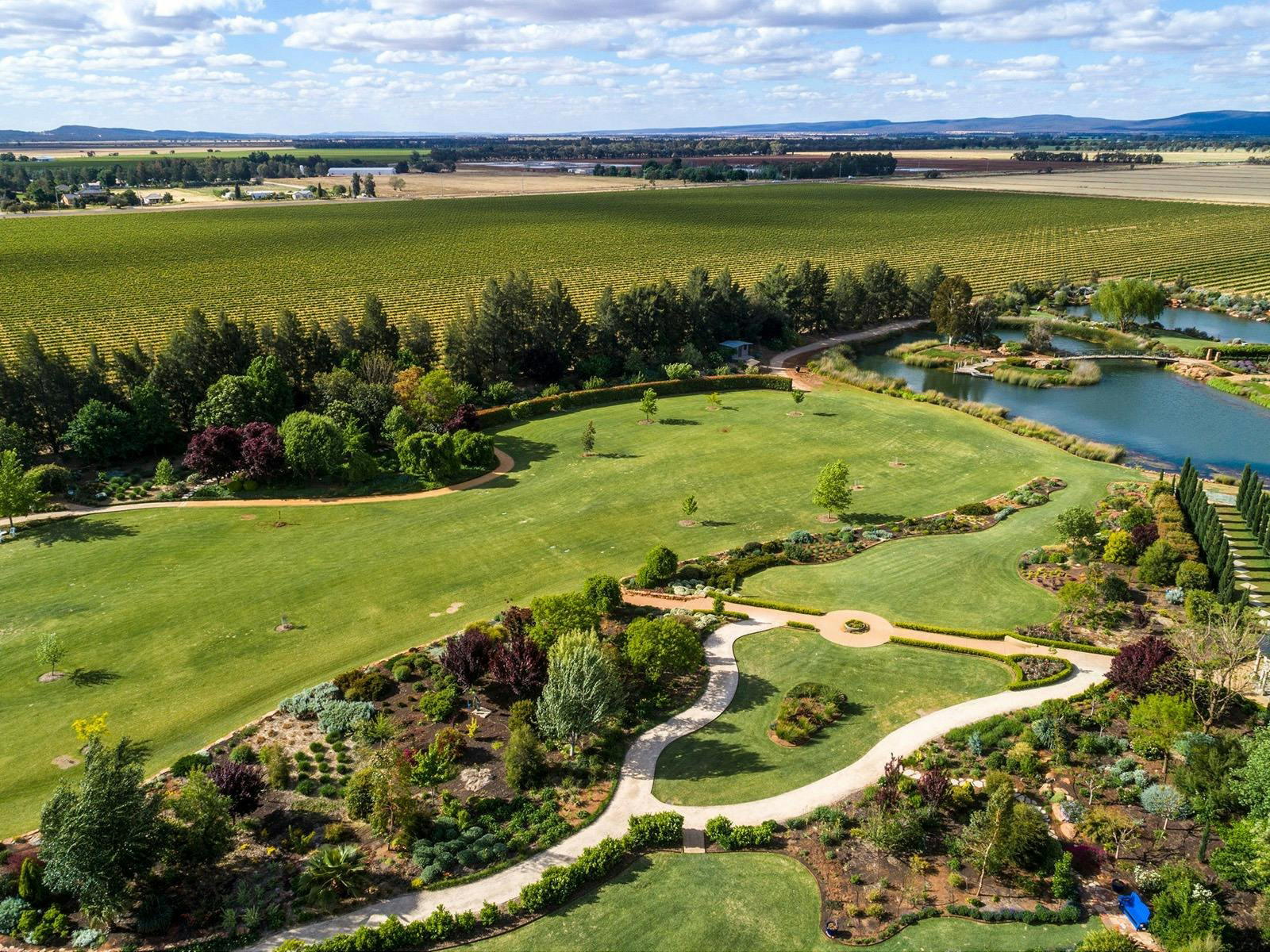
On the flat Riverina plains around Bilbul, wine country reads differently from the postcard slopes of cooler Australian regions. The sense here is agricultural scale: fertile red earth, open vineyard country and production infrastructure built for volume as well as hospitality. De Bortoli belongs to that inland Australian tradition, where warmth, irrigation and family-run farming created a wine economy capable of feeding national shelves while still producing bottles with a clear historical signature.
The estate’s importance is not just that it is old by Australian wine-company standards, though the 1928 founding date matters. Its sharper lesson is how the Riverina turned dessert wine into a serious Australian category. Noble One, the botrytized Semillon developed in the early 1980s, has accumulated 104 trophies, 352 gold medals and 113 international awards since release. Those numbers give the wine a status that goes beyond cellar-door nostalgia: they show how a warm inland region, often discussed in terms of commercial production, also produced one of Australia’s defining sweet-wine benchmarks.
Riverina warmth, botrytis and the sweet-wine argument
Bilbul sits in the Riverina, a region whose wine identity is tied to abundance rather than scarcity. That can make it easy to underestimate. The more useful reading is that scale and specialization have long sat side by side here. De Bortoli’s portfolio covers still red, still white, rosé, sparkling, fortified and dessert wines, with Semillon, Shiraz, Cabernet Sauvignon, Chardonnay, Pinot Noir and Gewurztraminer among the varietals in the wider house language. The cellar-door experience is therefore less about a single-vineyard thesis and more about seeing how a large Australian producer organizes many regional and stylistic lanes under one family name.
The strongest expression of place remains the botrytized and fortified work. Noble One depends on noble rot, a climatic and viticultural phenomenon that rewards patience and timing rather than simple ripeness. Black Noble takes that lineage into fortified territory: it is made from Noble One fruit affected by noble rot, fortified early in fermentation and aged through a solera system in used barrels. The blend averages about ten years of age, with a base dating to 1972. That method gives the house a continuity rarely visible in a quick tasting flight; the wine is built from accumulated seasons, not a single vintage snapshot.
This is where Bilbul’s cellar-door value becomes clearer. Many Australian winery visits are framed around vineyard views and limited-release bottles. Here, the stronger editorial reason to go is category education. Dessert and fortified wines can be difficult to understand from a retail shelf, especially when modern drinking culture tilts dry, pale and aperitif-friendly. A tasting across the range lets the Riverina’s warmer-climate identity sit beside the company’s cool-climate and multi-regional labels, including Yarra Valley estate-grown wines and King Valley Prosecco in the broader portfolio.
A family producer at national scale, not a boutique cellar door
Australian wine tourism often splits between small estate intimacy and large-brand efficiency. De Bortoli occupies a different middle ground: fourth-generation family ownership with national production weight. The company was ranked the seventh-largest wine producer in Australia in 2022 and sixth by total revenue, while its wines reach more than 70 countries. That scale changes the visit. This is not a tiny shed built around scarcity; it is a working headquarters for a family company with four wineries across Australian regions and vineyards extending through the Riverina, Hunter Valley, Yarra Valley, Rutherglen and King Valley.
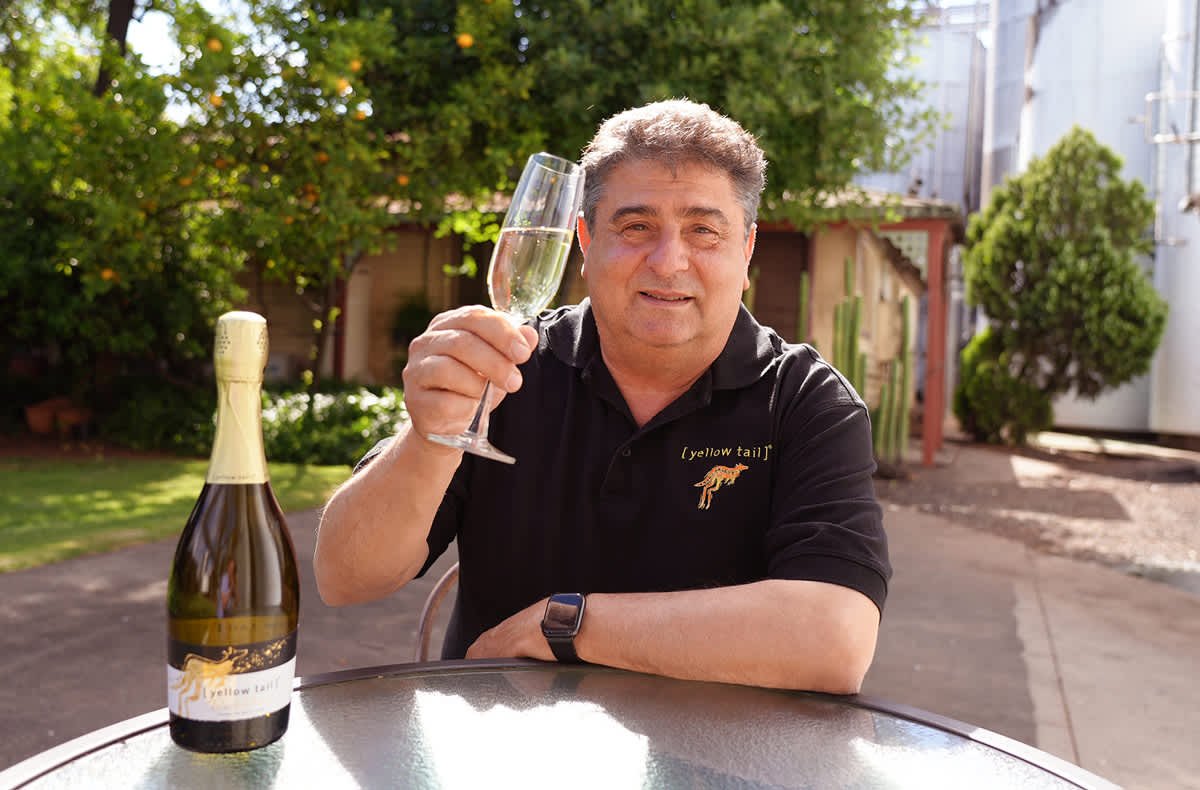
That breadth matters because it prevents the tasting from becoming a narrow Riverina exercise. The house range includes Noble One, Black Noble, King Valley Prosecco, Yarra Valley Estate Grown, La Bohème, Melba, Windy Peak, Woodfired, Deen and Emeri. For visitors, the useful move is to read those labels as an Australian wine map: inland Riverina fruit and botrytis at one pole, Victorian cool-climate and sparkling styles at another, fortified history running through the middle. Darren De Bortoli’s role as winemaker gives the continuity a family name, but the more interesting point is the operating model: heritage, volume and regional spread held together rather than separated into boutique and commercial identities.
Recognition has followed different parts of that model. Black Noble earned a gold medal in the Semillon category at the 2023 Fortified Masters. Rosé Rosé, introduced in 2018, won the Master title at the Global Rosé Masters 2023 for its 2022 vintage and was listed among the ten rosés of 2023 by The Drinks Business. Those details show that the company’s reputation is not frozen around a single historic dessert wine, even if Noble One remains the reference point.
How to read the visit in Bilbul
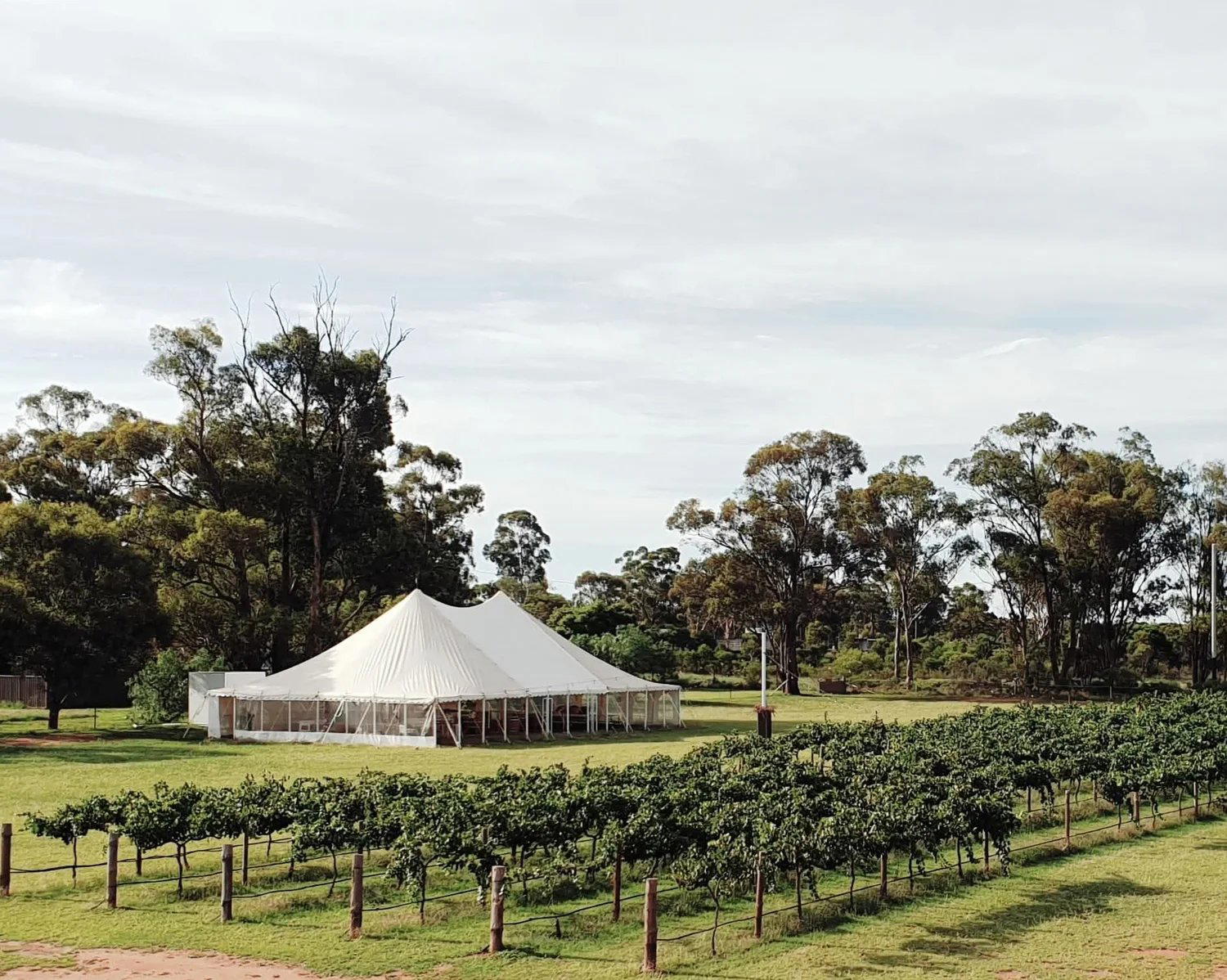
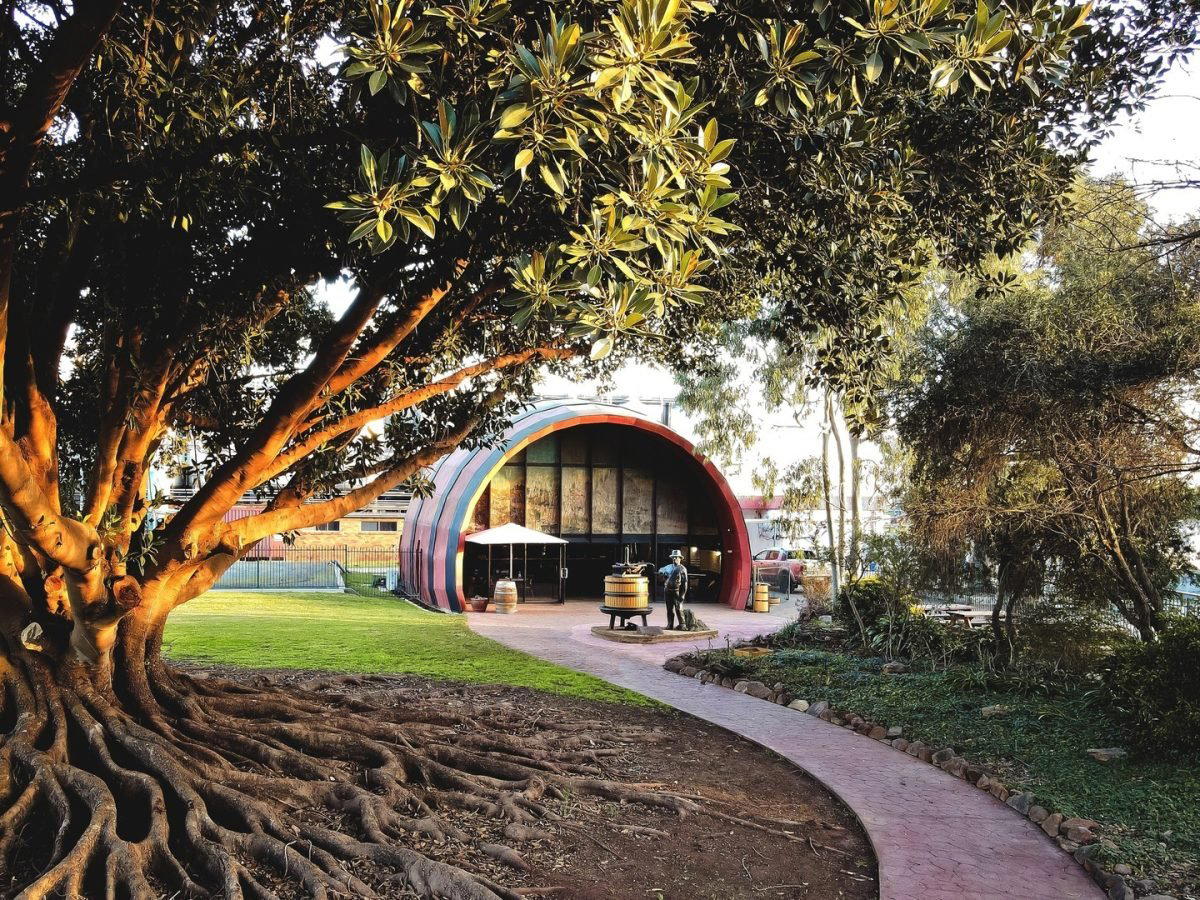
The hospitality style is country-facing rather than hushed or ceremonial: group-friendly, family-friendly, conversational and built around the idea of wine as something shared. The setting is a large estate winery with vineyard outlooks and production presence, so the rhythm suits visitors who want context rather than theatre. Tasting formats include bar tastings, group tastings and private tastings, with vineyard-tour and private-tasting experiences part of the broader offer. Food pairing is part of the format, and the estate is set up for groups, special occasions and corporate events as much as casual wine education.
Approach the visit with a theme rather than a checklist. Start with the Riverina and dessert-wine thread, then use the broader portfolio to understand how a family company moves across regions and styles. Sustainability also belongs in that reading: the company states an environmentally sustainable production philosophy and was a 2011 Drinks Business Green Awards winner. For a wider Bilbul itinerary, pair the winery with the city’s dining and lodging context through Our full Bilbul restaurants guide, Our full Bilbul hotels guide, Our full Bilbul bars guide, Our full Bilbul wineries guide and Our full Bilbul experiences guide.
Recognition history
Dated appearances from independent guides and award organizations, with the underlying list record or original source where available.
Falstaff Winery - Listed
Falstaff
Continue exploring
More in Bilbul
Details
- Classic
- Rustic
- Scenic
- Well Known
- Cozy
- Group Outing
- Family
- Wine Education
- Special Occasion
- Corporate Event
- Estate Grounds
- Vineyard Tour
- Private Tasting
- Sustainable
- Vineyard
- Semillon
- Shiraz
- Cabernet Sauvignon
- Chardonnay
- Pinot Noir
- Gewurztraminer
- Still Red
- Still White
- Still Rosé
- Sparkling
- Fortified
- Dessert
- Bar Tasting
- Group Tasting
- Private Tasting
- English
Warm country hospitality with a welcoming, family-owned atmosphere that reflects the winery’s Italian heritage, focusing on sharing good wine, good food and good times.