Château Mazeris

Falstaff Winery - Listed
Château Mazeris gives Canon-Fronsac a grounded, family-estate reading: Merlot-led reds from clay-limestone slopes, a historic 1769 château, and a quiet hillside setting in Saint Michel De Fronsac. The draw is not spectacle but terroir literacy, with sustainable farming, Jean de Cournuaud’s winemaking role, and a compact tasting format that keeps attention on Right Bank structure and freshness.

Pearl is the En Primeur Club membership app — saves, bookings, and concierge access live there. Same editors, same standards.
- Address
- Saint-Michel-de-Fronsac, Fronsac, Nouvelle-Aquitaine, Frankreich
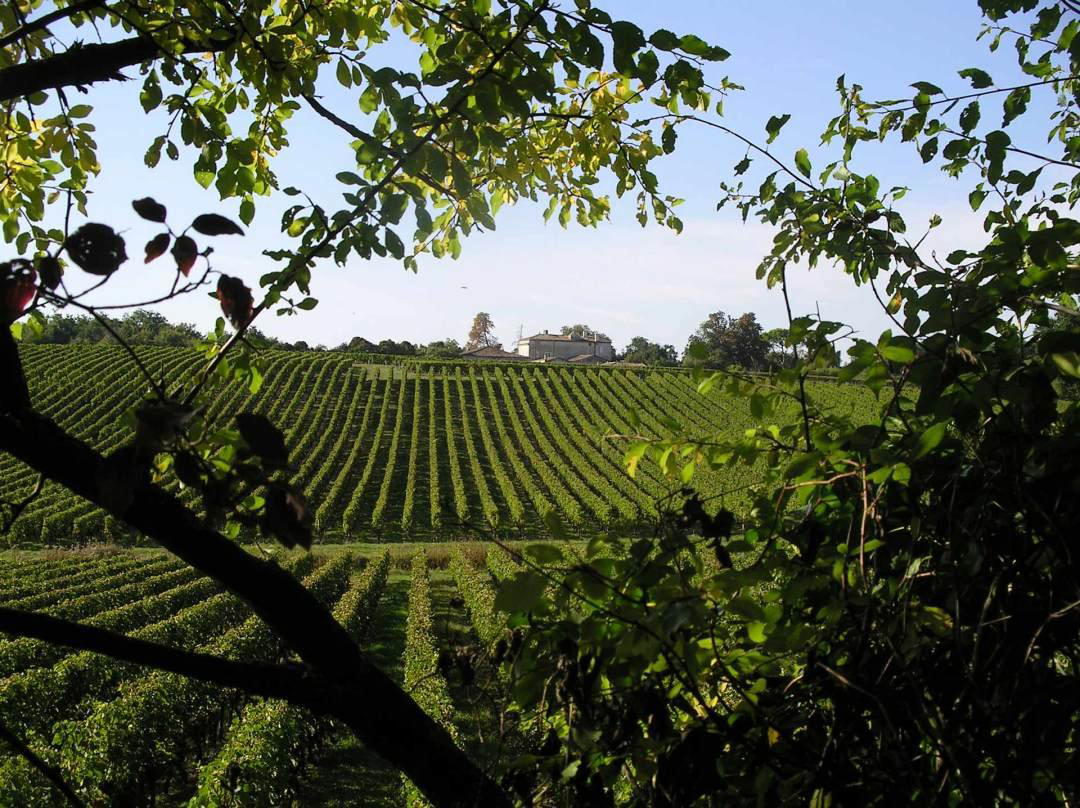
Approaching Château Mazeris means entering the quieter register of the Right Bank: hillside vines, limestone underfoot, and a château whose history predates the modern language of wine tourism. Saint Michel De Fronsac does not trade on the same volume of international traffic as the better-known names nearby, and that is part of its usefulness for serious drinkers. Here the lesson is not branding. It is how Merlot behaves when clay-limestone soils, river moderation, and family continuity shape the glass.
Canon-Fronsac through clay-limestone, Merlot and cool river nights
Canon-Fronsac has long been a Right Bank counterpoint to flashier appellations: structured, Merlot-led, often capable of ageing, and frequently less inflated by label politics. Château Mazeris sits inside that tradition with a vineyard profile that explains the wine before the tasting begins. The estate works 19 hectares, with 12 hectares on a south-facing chalk slope and 7 hectares on calcareous clay soils, a split that gives the wines both ripeness and line.
The planting follows a classic local grammar: 80 percent Merlot and 20 percent Cabernet Franc across the estate. That ratio matters because Canon-Fronsac depends on Merlot for its core, but Cabernet Franc is the detail work, bringing lift and aromatic edge when the site is handled with restraint. Average vine age is listed at 35 years, enough maturity to move the conversation beyond simple fruit and toward structure, texture, and soil signature.
The Dordogne and Isle rivers are not scenery in this part of Bordeaux; they are climate infrastructure. Their moderating influence helps preserve cooler nights, which slows ripening and protects freshness in Merlot. In warmer years, that can be the difference between a wine that feels broad and one that keeps its shape. The estate’s sustainable farming and minimal filtration approach fit the current Bordeaux shift away from extraction as a default setting, though the more interesting point is local rather than ideological: clay-limestone Canon-Fronsac is persuasive when freshness is treated as a structural element, not an afterthought.
A tenth-generation estate with three labels and a narrow hospitality lens
Château dates to 1769, and the property’s wine-producing line begins in 1805, when Jeanne-Modeste Couvrat brought the estate into the de Cournuaud family through marriage to Jean-Baptiste de Cournuaud. That continuity now runs to the tenth generation, with Jean de Cournuaud working as both viticulteur and œnologue. In Bordeaux, where ownership changes can redraw a wine’s identity in a single decade, that length of family stewardship is a material credential, not decorative history.
Portfolio is concise. Château Mazeris Canon-Fronsac is the main estate wine, drawn from chalk soils and shaped around Merlot with Cabernet Franc in support. Château Lafond Canon-Fronsac comes from younger vines and follows the same general cellar logic, while La Part des Anges is made only in selected vintages. The estate’s 2010 vintage received 88 points from Wine & Spirits, and Hachette has also featured the wine, useful external signals for a property whose reputation is more regional and cellar-door driven than trophy-led.
Hospitality mirrors that scale. The format is built around guided tasting and winery visit rather than resort-style programming. The visit window runs short to moderate, roughly 20 to 60 minutes, which suits travellers using Saint Michel De Fronsac as a focused wine stop rather than a full-day production. The atmosphere is quiet and family-run, with the historic building and vineyard setting doing the interpretive work. Dress is casual, groups are accommodated, children are allowed, and the mood is more educational than performative.
How to read this stop within a Saint Michel De Fronsac wine day
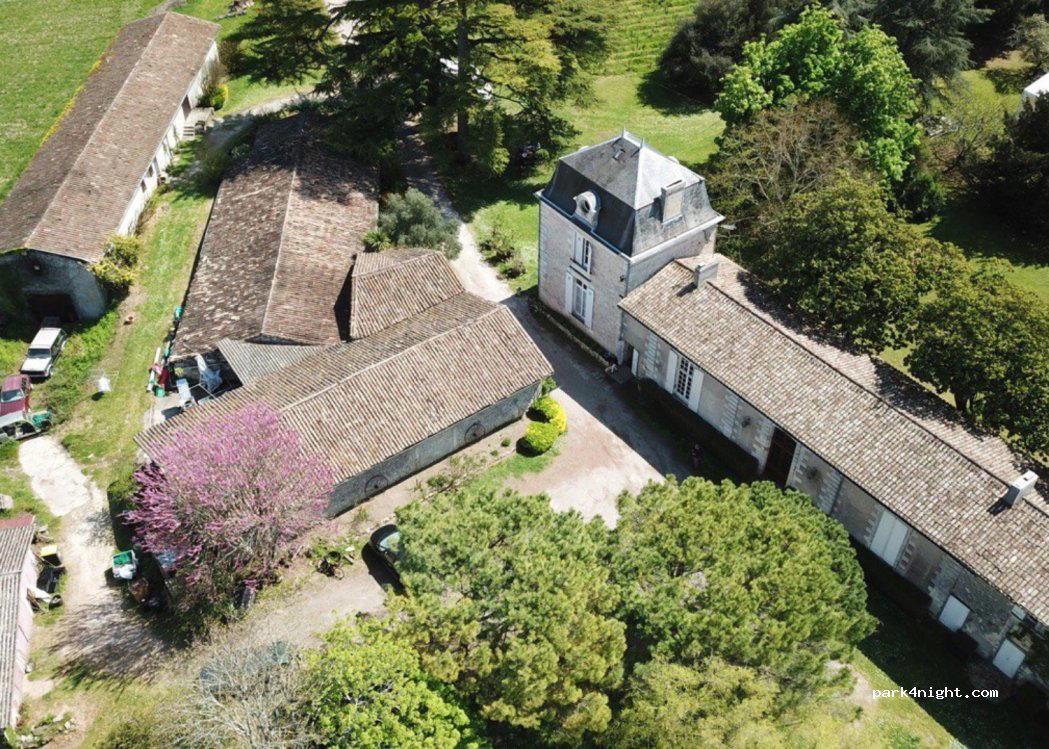
For travellers building a local circuit, the value of Château Mazeris is its clarity: historic estate, Merlot-dominant Canon-Fronsac, sustainable farming, and a compact tasting experience anchored in place. It pairs well with a wider look at the appellation through nearby EP Club winery pages such as Château Canon Pécresse, Château Cassagne Haut-Canon, Château Haut Ballet, and Jacques Antoine de Robert.
Saint Michel De Fronsac is small enough that the wider trip planning matters. Use our full Saint Michel De Fronsac wineries guide for the wine route, then match the rest of the day through our full Saint Michel De Fronsac restaurants guide, our full Saint Michel De Fronsac hotels guide, our full Saint Michel De Fronsac bars guide, and our full Saint Michel De Fronsac experiences guide. For broader wine-country context beyond Bordeaux, EP Club also covers A. Margaine in Villers-Marmery, Abbaye de Fontfroide in Narbonne, Abbotts & Delaunay in Marseillette, Advini in Saint Felix De Lodez, »der Steiner« Hans Steiner in Podersdorf am See, and & Handwein in Mannheim.
The editorial case is specific: choose this estate when the priority is understanding Canon-Fronsac through soil, slope, and family continuity rather than chasing a trophy label. Its strength is not scale. It is the way a medium-sized, tenth-generation property can make the Right Bank’s quieter limestone plateau feel legible in a single visit.
Recognition history
Dated appearances from independent guides and award organizations, with the underlying list record or original source where available.
Falstaff Winery - Listed
Falstaff
Continue exploring
More in Saint Michel De Fronsac

Details
- Classic
- Scenic
- Quiet
- Rustic
- Intimate
- Wine Education
- Family
- Special Occasion
- Solo Exploration
- Group Outing
- Historic Building
- Estate Grounds
- Private Tasting
- Design Destination
- Sustainable
- Vineyard
- Merlot
- Cabernet Franc
- Still Red
- Guided Tasting
- Winery Visit
- French
Authentic, family-run wine estate atmosphere in a historic hillside château setting, with an emphasis on terroir and traditional winemaking.