
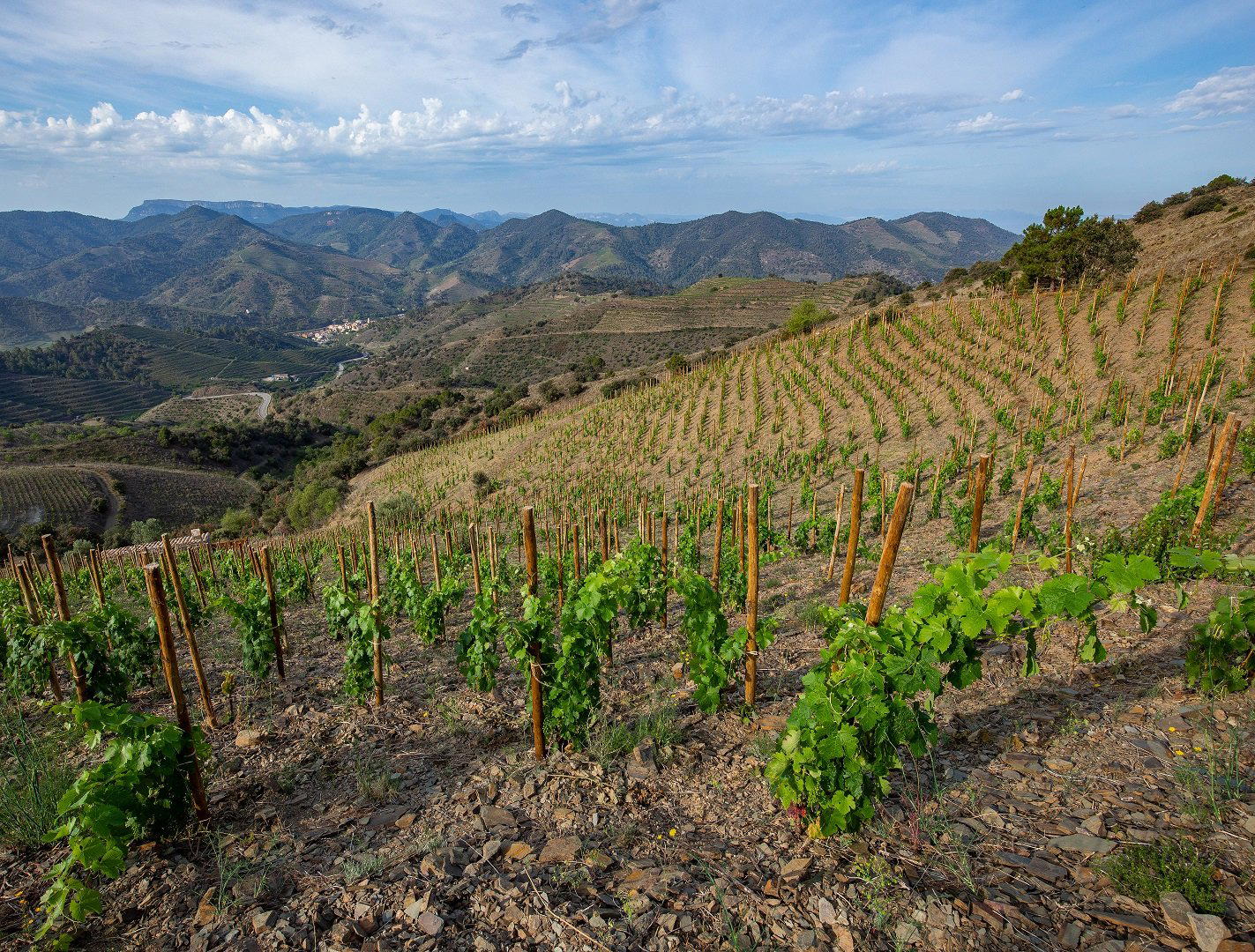
Celler de l’Encastell is a small family-run Priorat estate in Porrera, working old-vine Grenache and Carignan from slate soils into still reds with a clear sense of place. The townhouse cellar, rock-cut aging space and roughly 25,000–30,000-bottle annual production put the focus on craft rather than wine-tourism spectacle.
Pearl is the En Primeur Club membership app — saves, bookings, and concierge access live there. Same editors, same standards.
- Address
- Porrera, Priorat, Catalunya, Spanien
 Saves & bookings on Pearl
In Porrera, Celler de l’Encastell is best understood as a small, family-run boutique winery rather than a broad hospitality estate. The picture is compact and place-specific: a renovated historic townhouse in the center of Porrera, with production areas integrated into the old building and barrels aging below in a bedrock cellar. That combination gives the address a sense of being embedded in the village fabric, not set apart from it, and it keeps the focus on the working cellar rather than on a separate visitor-facing complex.
That physical arrangement is the strongest confirmed detail. The experience reads as intimate, traditional and rustic, with the building itself shaping the character of the cellar. In practical terms, the venue’s identity comes from the closeness between house, production space and underground aging area: the old structure is not just a backdrop, but part of how the winery is understood. Beyond that, specific claims about vineyards, grape varieties, annual production, named staff, visit formats, tastings, food service or formal programming are not confirmed here, so a reliable way to frame Celler de l’Encastell is as a working, family-scale winery rooted in its Porrera townhouse setting.
Old-building cellar character at family scale
Celler de l’Encastell’s identity rests on scale and setting. It is a small, family-run boutique winery in Porrera, housed in a renovated historic townhouse. Production is integrated into the old building rather than separated into a purpose-built visitor complex, which gives the place a close, practical relationship between architecture and wine work. The emphasis is not on breadth of facilities, but on the way a modest, historic structure can hold the essential functions of a cellar.
The bedrock cellar is the defining confirmed feature. Barrels age below the building, giving the winery a traditional, rustic feel and making the cellar itself central to how the venue is described. The detail matters because it anchors the winery’s character in something tangible: stone, depth, age and the quiet work of barrel aging beneath the townhouse. Without details on specific parcels, grape varieties or production numbers, it is better to avoid overstating the technical side and focus on what is known: a compact Porrera winery where the old townhouse and cellar structure shape the character of the place.
The price level is listed as $$$. That should be read simply as the venue’s confirmed cost tier, not as evidence of a particular tasting format, menu, pairing program or luxury hospitality model. It signals a general positioning, but it does not by itself confirm what a visitor will receive, how a visit is arranged or whether any additional services are available.
The townhouse cellar keeps the experience close to the craft
Most grounded way to understand the winery is through its building. A renovated historic townhouse contains the production areas, while barrels age in a bedrock cellar below. That arrangement gives the winery an intimate, traditional and rustic feel. It also keeps the experience close to the craft: the defining elements are the working areas, the old walls and the cellar beneath, rather than a large hospitality layer built around them.
Travellers considering a visit should treat the confirmed appeal as architectural and cellar-focused: a family-run winery in Porrera where the old building remains part of the working identity. Reliable expectation is a sense of small scale and rootedness, with the townhouse and bedrock cellar carrying much of the atmosphere.
It is also not confirmed here as a restaurant, bar or dining room. Any plans involving meals, dietary needs, private events or detailed tasting arrangements should be checked directly with the venue rather than inferred from the winery description. That caution is important, because the confirmed information supports a winery profile, not a broader hospitality guarantee.
How to place it within a Porrera wine day
For a Porrera-focused day, the winery fits as a small, traditional winery stop centered on a renovated townhouse and bedrock cellar. Its confirmed strengths are scale, family operation and rustic historic setting, not a documented restaurant program or large visitor complex. In that sense, it is best placed in an itinerary for its sense of place and cellar character, especially for travellers who value compact, working wineries over expansive destination estates.
When planning around it, compare it with other dining or wine options in Porrera generically rather than assuming a specific shared format. The reliable takeaway is simple: the winery is a compact family-run winery in Porrera with production integrated into an old townhouse and barrels aging in a bedrock cellar. Keep expectations focused on that confirmed identity, and let any more specific arrangements be directly before building the day around them.
Recognition history
Dated appearances from independent guides and award organizations, with the underlying list record or original source where available.
Falstaff Winery - 4 Stars
Falstaff
Continue exploring
More in Porrera

At a Glance
- Rustic
- Intimate
- Classic
- Scenic
- Solo Exploration
- Wine Education
- Group Outing
- Special Occasion
- Romantic Getaway
- Barrel Room
- Historic Building
- Dry Farmed
- Sustainable
- Vineyard
- Mountain
- DOQ Priorat
- Grenache
- Carignan (samsó)
- Syrah
- Cabernet Sauvignon
- Merlot
- Still Red
- Barrel Tasting
- Cellar Visit
Small, family-run boutique winery housed in a renovated historic townhouse in the center of Porrera, with production areas integrated into the old building and barrels aging in a bedrock cellar, giving an intimate, traditional and rustic feel focused on craftsmanship rather than tourism.