
Assuli gives Trapani’s wine scene a clear western Sicilian reading: organic farming, native grapes, vineyard immersion, and an 18th-century baglio restored with ecological materials. The draw is not spectacle but terroir literacy, with Perricone, Grillo, Zibibbo, Insolia, and Nero d’Avola used to explain how heat, wind, altitude, and mineral soils shape this corner of Sicily.

Pearl is the En Primeur Club membership app — saves, bookings, and concierge access live there. Same editors, same standards.
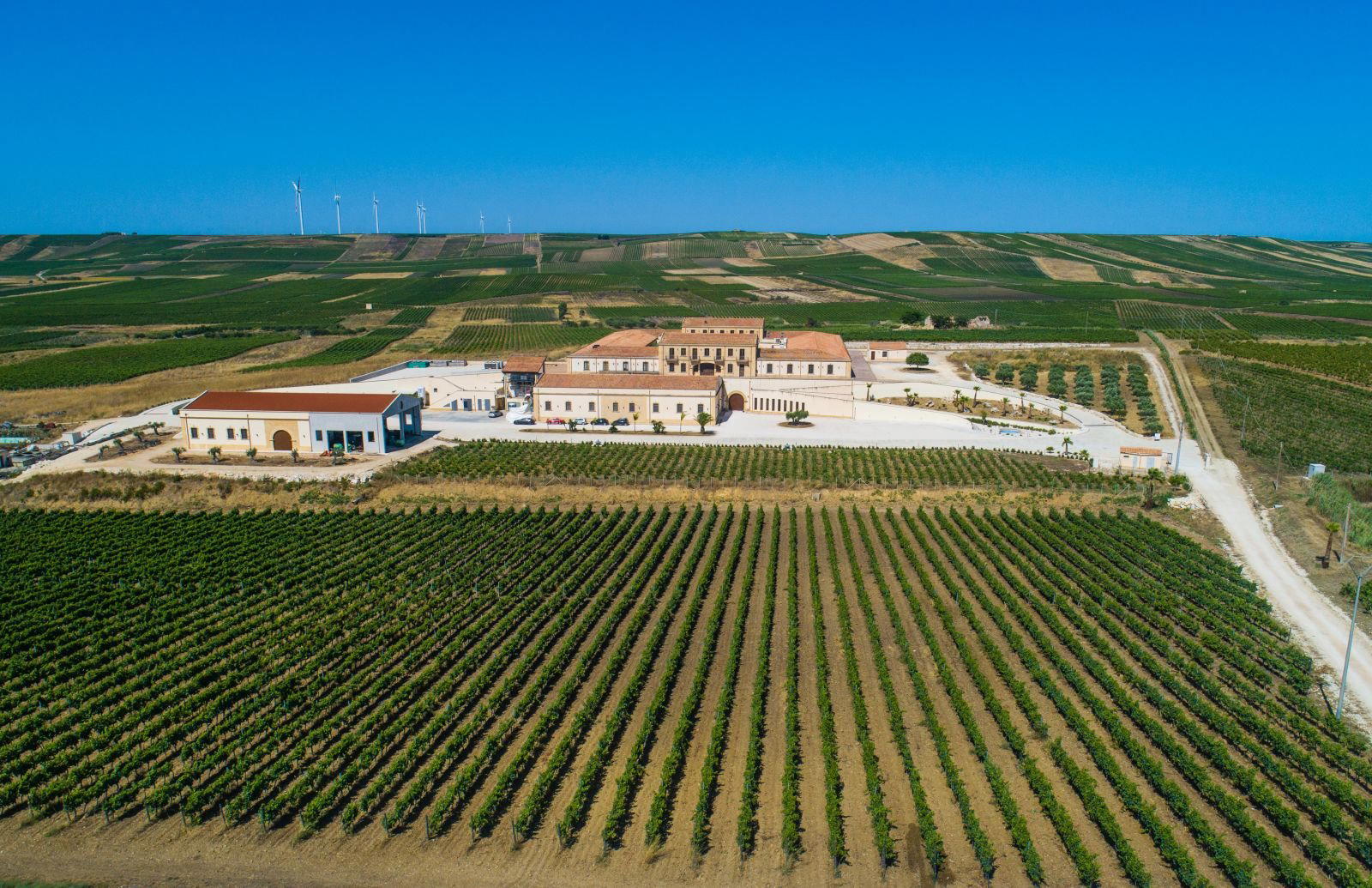
The approach to Assuli is framed by the vocabulary of western Sicily: vineyard rows, dry light, wind, and the mass of a restored 18th-century baglio. This is not the polished villa model of winery hospitality; it belongs to the older agricultural architecture of the island, where a courtyard complex once organized work, storage, and family life. In Trapani, that setting matters. Wine here is inseparable from sun exposure, sea influence, and the long agricultural corridor between Marsala and Mazara del Vallo.
Sicily’s contemporary wine reputation has moved well beyond volume and fortified history, but the western side of the island still rewards producers that can explain place without overcomplication. Assuli fits that conversation through organic viticulture, native varieties, and a hospitality format built around guided tasting rather than lifestyle staging. The estate works within Sicilia DOC and focuses on still reds, whites, rosé, and dessert wine, with Perricone, Nero d’Avola, Grillo, Zibibbo, and Insolia carrying much of the regional argument.
Western Sicilian terroir, read through native grapes
The stronger editorial reason to visit is the way the estate turns climate into structure. Western Sicily’s heat can make wine broad if handled bluntly; wind, altitude, and mineral soils are the counterweights. Assuli’s vineyards are spread across five plots on roughly 130 hectares, with elevations running from 100 to 600 meters. That range gives the tasting more range than a single-site visit, particularly when whites and Perricone-based wines are set beside each other.
Perricone is the useful lens here because it is less internationally legible than Nero d’Avola and less fashionable than Etna’s volcanic varieties. In a tasting context, it lets the conversation move toward Sicily’s own red-wine vocabulary rather than imported benchmarks. The estate’s named expressions include Furioso, a 100% Perricone aged for 12 months in large oak barrels, and Arcodace, a 100% Perricone aged in steel for 4 to 5 months. That contrast gives visitors a clean way to read vessel, texture, and grape character without turning the session into a technical seminar.
The white side keeps the discussion rooted in coastal Sicily. Grillo, Zibibbo, and Insolia are not background grapes here; they are part of the island’s modern correction, where freshness and salinity have become as important as ripeness. Fiordiligi Grillo DOC has received editorial attention as a Wine of the Week from The Chestertown Spy, while Fiordispina, a 100% Perricone rosé, has taken a silver medal at Concours Mondial de Bruxelles, a bronze at Vinitaly Design International Packaging Competition, and a 90-point Falstaff diploma. Those signals matter because they place the estate’s native-variety work in front of judges and critics beyond Sicily.
The baglio format makes the tasting feel agricultural rather than theatrical
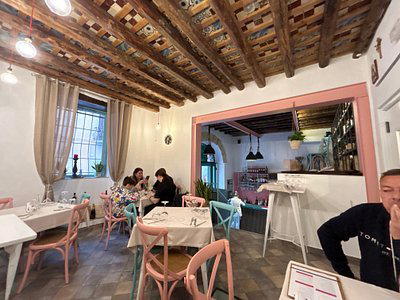
Winery hospitality in Italy often splits between cellar-tour repetition and resort-adjacent leisure. Assuli’s stronger format is closer to wine education: guided tasting, technical tasting, vineyard tour, and food pairing sit inside a restored ancient baglio rather than a purpose-built tasting lounge. The result is grounded. The building’s ecological renovation, using local and natural materials, reinforces the same argument as the farming: this is a producer using heritage architecture to frame contemporary organic wine.
The estate was established in 1993 by Roberto Caruso, with the Caruso family now tied to a three-generation narrative. That biography is useful only because it explains continuity. The more interesting point is the long-term commitment required for organic farming and native-grape positioning in a region where international varieties once carried commercial security. Winemaker Lorenzo Landi’s role sits inside that larger shift, helping shape a portfolio that gives equal editorial weight to place, grape, and farming method.
Assuli’s experimental work with relic vines adds another layer. The project has recovered 14 ancient varieties, including Cutrera, Recuno, Vitrarolo, Catanese Nero, Lucignola, and Rucignola, in collaboration with the Istituto Vite Vino di Marsala. The experimental vineyard covers 0.3 hectares with 600 grafts. For serious wine travelers, that is the detail that separates a pleasant countryside tasting from a conversation about Sicilian biodiversity and what the island may choose to revive next.
How to place Assuli in a Trapani wine itinerary
Trapani rewards travelers who give wine the same attention as seafood, salt pans, and Arab-Norman history. Assuli works well as the wine-education anchor of a western Sicily itinerary because the experience connects agricultural architecture, organic viticulture, and native varieties in one setting. It is especially suited to groups that want a guided format, visitors interested in Sicilian grapes beyond Nero d’Avola, and travelers who prefer a conversational tasting room over a high-gloss cellar production.
The practical posture is relaxed but organized: visits are by reservation, the dress code is casual, tours run in English and Italian, and the setting supports food pairing as part of the experience. The estate is also dog-friendly, has on-site parking, and lists wheelchair access and step-free entrance among its access features. This is a countryside winery visit rather than an urban drop-in, so it makes sense to treat it as a planned part of the day rather than a spare-hour stop.
For wider planning, use our full Trapani wineries guide alongside our full Trapani restaurants guide, our full Trapani hotels guide, our full Trapani bars guide, and our full Trapani experiences guide. For broader Italian winery context, see 3GP SRL in Treviso, 47 Anno Domini in Trebaseleghe, A Mano Wine in Noci, a6mani in Fragagnano, Abbadia Ardenga in Torrenieri, Abbazia di Crapolla in Neapel, Abbazia Monte Oliveto in Asciano, Abbazia Santa Anastasia in Castelbuono, »der Steiner« Hans Steiner in Podersdorf am See, and & Handwein in Mannheim.
Recognition history
Dated appearances from independent guides and award organizations, with the underlying list record or original source where available.
Falstaff Winery - Listed
Falstaff

At a Glance
- Scenic
- Rustic
- Cozy
- Group Outing
- Wine Education
- Special Occasion
- Historic Building
- Vineyard Tour
- Private Tasting
- Design Destination
- Organic
- Vineyard
- Sicilia DOC
- Nero D'avola
- Perricone
- Grillo
- Zibibbo
- Insolia
- Still Red
- Still White
- Still Rosé
- Dessert
- Guided Tasting
- Technical Tasting
- Food Pairing
Current opening hours
- Monday
- 8 AM–1 PM, 2–5 PM
- Tuesday
- 8 AM–1 PM, 2–5 PM
- Wednesday
- 8 AM–1 PM, 2–5 PM
- Thursday
- 8 AM–1 PM, 2–5 PM
- Friday
- 8 AM–1 PM, 2–5 PM
- Saturday
- Closed
- Sunday
- Closed
Hours can change for holidays and private events. Last verified .
An eco-friendly, airy Sicilian winery setting inside a restored 18th-century baglio, with a strong sense of place, vineyard immersion, and a warm, welcoming atmosphere.