
On Szewska, one of Wrocław's most historically loaded streets, Wrocławska holds a Michelin Plate (2025) for regional Polish cuisine at an accessible price point. A reliable reference point for anyone wanting to understand what Lower Silesian food actually tastes like.
Pearl is the En Primeur Club membership app — saves, bookings, and concierge access live there. Same editors, same standards.
- Address
- Szewska 59/60, 50-139 Wrocław, Poland
- Phone
- +48 71 305 12 28
- Website
- wroclawska.com.pl
- Directions
- Get directions
 Saves & bookings on Pearl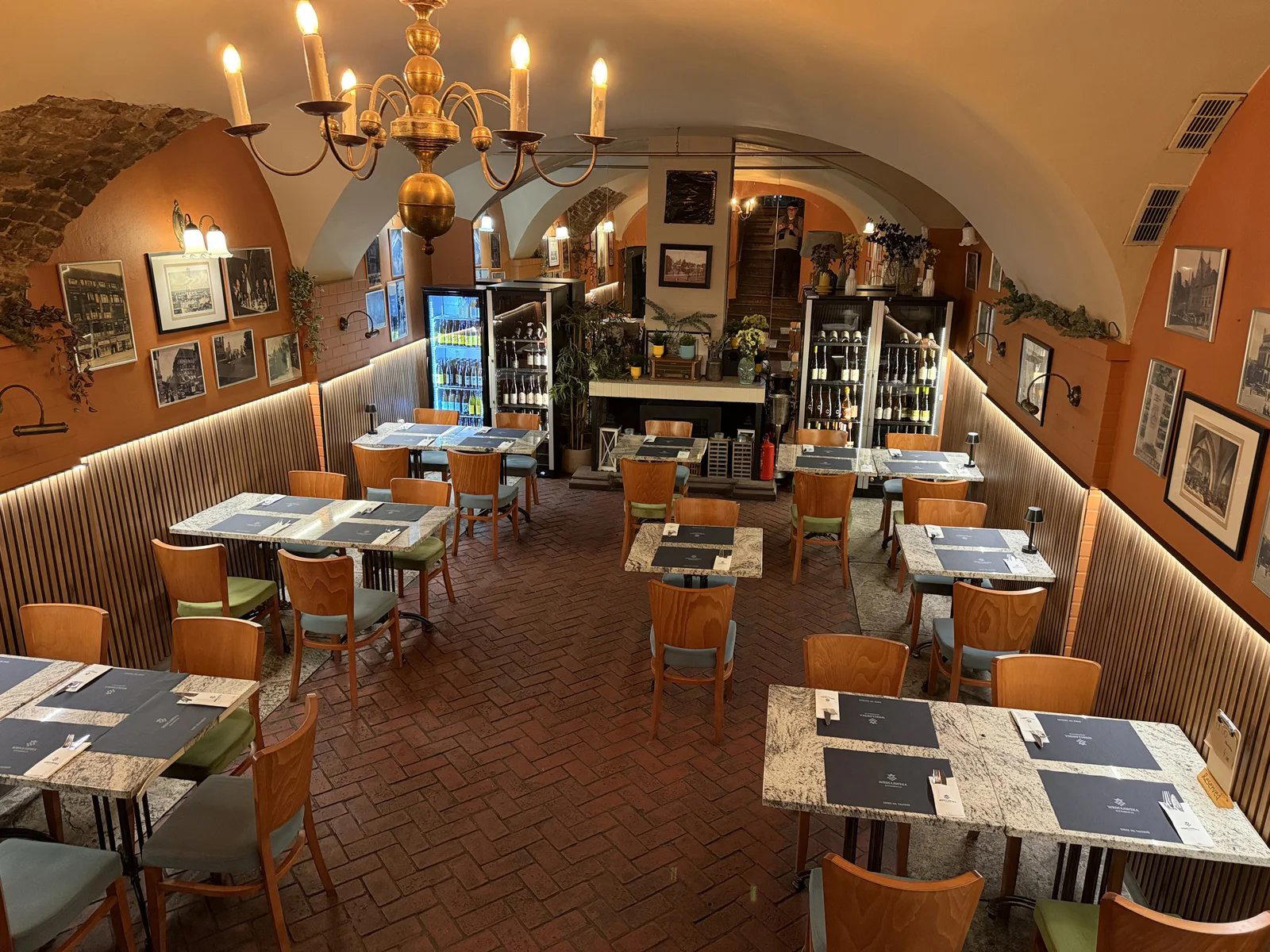
Szewska and What It Asks of a Restaurant
Szewska is not a quiet side street. Running through the heart of Wrocław's Old Town, it carries the weight of a city that has been German, Polish, and everything in between across four centuries. The buildings along it have been rebuilt, renamed, and reassigned so many times that the architecture functions almost as a geological record. For a restaurant to anchor itself to this address and call itself Wrocławska — essentially, The Wrocław One — is a declaration of intent about place and identity that most venues would avoid making.
That identity claim is backed by a Michelin Plate recognition in 2025, which the Guide awards to restaurants demonstrating good cooking without the full star apparatus. At a single euro-sign price tier, Wrocławska sits in the same accessible bracket as IDA kuchnia i wino, another regional-cuisine address in the city, and well below the outlay required at CAMPO Modern Grill or the Korean-focused BABA. The Michelin recognition at this price point is the more interesting signal: it suggests the cooking earns its place on merit rather than on spectacle or tasting-menu theatrics.
Regional Cuisine in a City With a Complicated Food History
Lower Silesia's culinary identity is genuinely complicated. The region was part of Prussia and then Germany until 1945, when its German-speaking population was expelled and replaced largely by Poles relocated from the eastern Kresy territories, areas that are now in Ukraine and Belarus. The food culture that emerged from that demographic rupture is a layered thing: Central European cooking techniques, ingredients sourced from the Sudeten foothills and the Odra valley, and a Polish culinary sensibility that arrived with transplanted communities carrying their own traditions.
Restaurants that call themselves regional in Wrocław are, consciously or not, engaging with that history. The dishes that define Lower Silesian tables, preparations involving freshwater fish from local rivers, mushrooms and game from the forests south of the city, and the bread and dairy traditions that survived the postwar resettlement, do not map neatly onto either classic Polish or German culinary categories. They occupy a space that is specifically Silesian, and it is a space that most Polish cities cannot replicate. That is the context in which Wrocławska operates, and the name it has chosen frames the ambition plainly.
Across Poland, the restaurants drawing the most sustained critical attention, Bottiglieria 1881 in Kraków, Arco by Paco Pérez in Gdańsk, Muga in Poznań, tend toward either modern technique or strong international influence. Wrocławska's positioning as a regional-cuisine address in the Michelin-recognised tier is comparatively rare and reflects a different kind of ambition: precision applied to inherited tradition rather than departure from it.
Volume and Credibility: Reading the Google Signal
The sample size matters: a restaurant collecting strong scores over thousands of visits is not having a lucky streak. It is maintaining a standard across different service teams, seasonal menu shifts, and the wide variance in diner expectations that a location on a busy Old Town street will produce.
That consistency, combined with the Michelin Plate, places Wrocławska in a readable position relative to its Wrocław peers. dinette and Acquario occupy the modern-cuisine end of the city's recognised restaurant tier; Wrocławska represents the traditional-and-regional pole, where the conversation is about fidelity to place rather than innovation.
Where It Fits in a Wrocław Itinerary
Szewska 59/60 is within the Old Town ring, which means Wrocławska is genuinely walkable from the Rynek and from most of the central accommodation that visitors book. The physical environment of the Old Town, with its Flemish-influenced facades and the Odra's network of islands visible from the bridges, reinforces what the menu is arguing about place.
For anyone building a broader Polish itinerary, the contrast between Wrocław's regional cooking and the more internationally inflected fine-dining scene in Warsaw, anchored by places like hub.praga, or the mountain-ingredient focus of a restaurant like Giewont in Kościelisko, illustrates how genuinely varied Polish regional food has become. Wrocław's Lower Silesian character is distinct from Małopolska, Mazovia, or the Baltic coast in ways that a single meal at a restaurant with Wrocławska's declared identity makes concrete.
For the rest of the city's dining, drinking, and staying options, the full Wrocław restaurants guide covers the current range. Those planning around hotels, bars, or other experiences can also use the Wrocław hotels guide, the Wrocław bars guide, the Wrocław wineries guide, and the Wrocław experiences guide to fill out an itinerary around it. For comparison against regional-cuisine addresses in other European settings, Fahr in Künten-Sulz and Gannerhof in Innervillgraten represent what the format looks like when applied to different Alpine traditions. And for a Baltic counterpoint within Poland, 1911 Restaurant in Sopot shows how a different coast-facing regional identity gets treated at the table.
Planning a Visit
Wrocławska is at Szewska 59/60, inside Wrocław's Old Town, easily reached on foot from the Rynek and from the main tram lines on Świdnicka and Piłsudskiego. At the single-euro price tier with a average across a high-volume review base, demand is demonstrably steady. A booking in advance is the sensible approach for dinner, particularly on weekends and during the summer tourist season when Old Town footfall peaks. As a Michelin Plate holder at an accessible price point, it draws both the informed visitor and regular local traffic, a combination that keeps covers consistently full.
Frequently Asked Questions
- What should I order at Wrocławska?
- Wrocławska holds a Michelin Plate for regional Polish cooking, which at a Lower Silesian address means the focus is on the ingredients and preparations native to the area: freshwater fish, game, mushrooms, and the dairy and grain traditions particular to Silesia. The Michelin recognition signals that this judgment is generally reliable. Comparable regional-cuisine thinking is visible at IDA kuchnia i wino, the other Wrocław address in this category.
- How far ahead should I book?
- At the single-euro price tier, Wrocławska does not carry the booking lead times of a starred tasting-menu restaurant. For a weekend dinner, booking a few days to a week ahead is prudent. For weekday lunch, same-day or next-day availability is plausible, though not guaranteed. As one of the more accessible Michelin-recognised addresses in Wrocław, it draws a wider range of diners than more expensive peers like CAMPO Modern Grill, which means the room turns over at different rhythms.
How Wrocławska Wrocław compares with similar nearby venues.
| Venue | Cuisine | Price | Awards |
|---|---|---|---|
| Wrocławska | Regional Cuisine | € | Michelin Plate (2025) |
| IDA kuchnia i wino | Regional Cuisine | € | Not listed |
| Schneider Stube | Regional Cuisine | €€ | Not listed |
| Pollak's Retzbacherhof | Regional Cuisine | €€ | Not listed |
| Esszimmer | Regional Cuisine | €€ | Not listed |
| Kurpfalz Weinstuben | Regional Cuisine | €€ | Not listed |
Recognition history
Dated appearances from independent guides and award organizations, with the underlying list record or original source where available.
Michelin Plate
Michelin
Continue exploring
More in Wrocław
Restaurants in Wrocław
Browse all →
Bars in Wrocław
Browse all →
Hotels in Wrocław
Browse all →
Wineries in Wrocław
Browse all →
At a Glance
- Classic
- Cozy
- Historic
- Family
- Casual Hangout
- Special Occasion
- Historic Building
- Local Sourcing
Current opening hours
- Monday
- 12–10 PM
- Tuesday
- 12–10 PM
- Wednesday
- 12–10 PM
- Thursday
- 12–10 PM
- Friday
- 12–10 PM
- Saturday
- 12–10 PM
- Sunday
- 12–10 PM
Hours can change for holidays and private events. Last verified .
Historic atmosphere evoking old Wrocław with cozy, small indoor spaces and a terrace; warmly lit with traditional Polish decor.
Know Before You Go
- Getting there
- Szewska 59/60, 50-139 Wrocław, Poland