Uncle Ray’s Chicken Rice


Grub Street Best Food of 2026 (So Far)
Our verdict
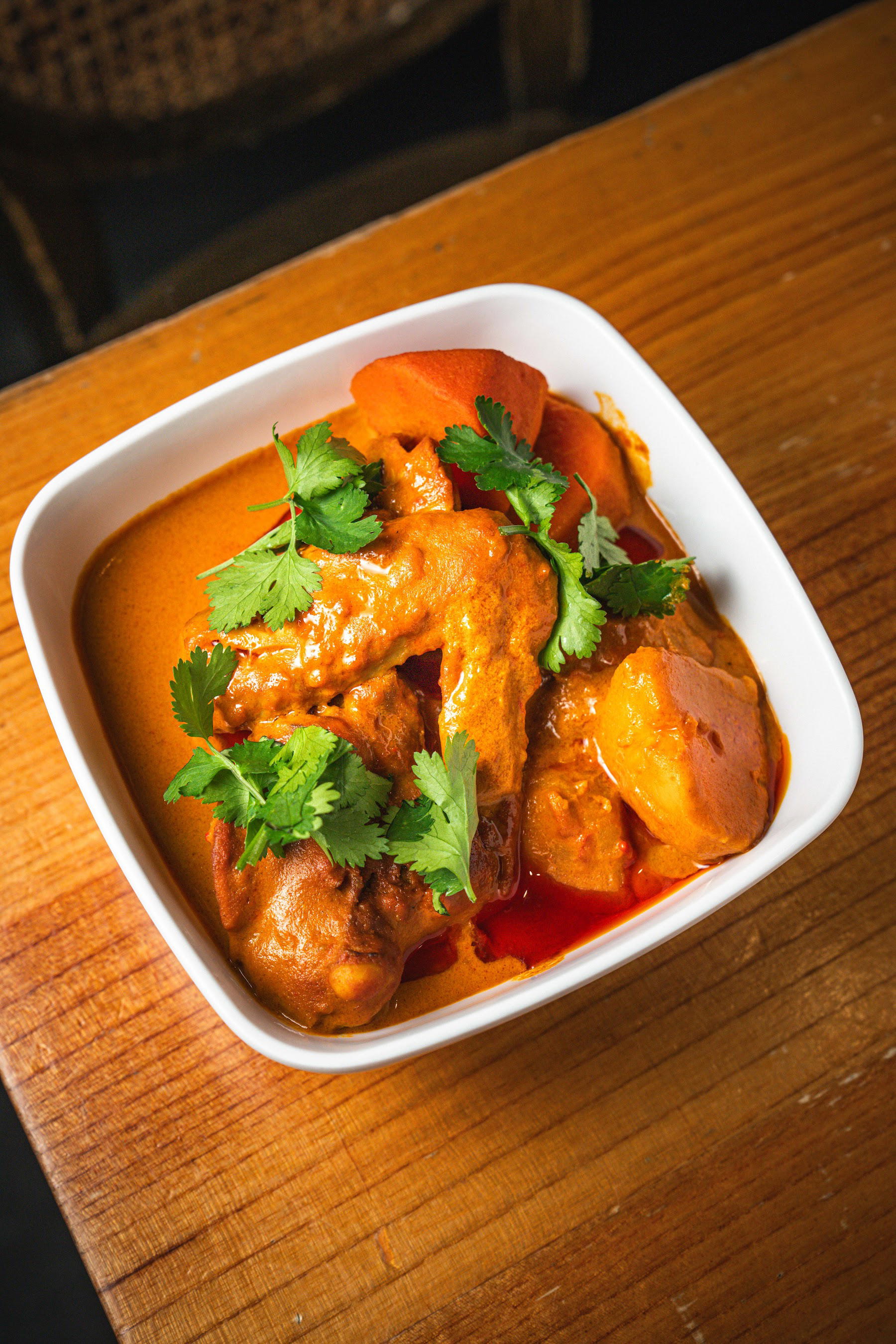
Uncle Ray’s Chicken Rice brings Singaporean chicken rice into New York’s casual Chinese dining register, with a lineage tied to the Chatterbox style introduced in Singapore in the 1970s. The point is not ceremony but precision: yielding meat, proper jelly under the skin, and rice charged with chicken broth and ginger.

Pearl is the En Primeur Club membership app, where members save venues, book tables and use the concierge.
The menu
What to order
- Hainanese poached chicken rice
- Roasted chicken rice
- Duo chicken rice combo
- Coffee pork ribs
In New York City, the storefront language is plain: quick-service rhythm, modest signage, a room built for eating rather than lingering. That suits chicken rice. Across East and Southeast Asian food traditions, the dish is often treated as something more exacting than its simple appearance suggests. The plate looks straightforward until it fails; then every shortcut is obvious.
Uncle Ray’s Chicken Rice belongs to the city’s useful countercurrent against overdesigned dining. New York has a talent for turning regional comfort food into either luxury theatre or delivery fodder. Chicken rice resists both when handled correctly. Its discipline sits in balance, texture, and the relationship between poultry, rice, and condiments. Its New York Times recognition gives this New York City version a clear reference point rather than a vague pan-Asian claim.
Chicken rice treated as craft, not garnish
The seriousness here begins with the rice. In weaker versions, rice becomes background starch, a neutral bed for sauce. In the Singaporean tradition, it carries the dish: grains that are expected to be flavorful, aromatic, and central rather than incidental. The New York Times recognition attached to this New York City restaurant helps frame the hierarchy correctly. Chicken rice is won or lost before sauce enters the conversation.
The dim sum comparison is useful, even if the format is different. Morning dim sum is judged through repetition: wrappers, steam control, seasoning restraint, service rhythm. Chicken rice asks for the same craft logic in a narrower frame. A bamboo steamer full of dumplings and a plate of chicken rice both punish impatience. Overwork the texture, rush the heat, or underseason the base, and the dish has nowhere to hide. New York diners who understand the pleasure of classic Chinese cooking will recognize the same kind of technical modesty here, only stripped down to poultry, rice, and condiments.
That makes the restaurant more interesting than its category suggests. Chinese and Singaporean cooking in New York often sits between neighborhood utility and destination dining, with the city more fluent in broader Chinese restaurant formats than in Singapore’s hawker grammar. Chicken rice brings a different standard: not abundance, not novelty, but calibration. The luxury is not a long menu. It is the feeling that plainness has been made deliberate.
Where New York's casual dining becomes more specific
The useful way to read Uncle Ray’s Chicken Rice is not as a small storefront punching above its weight, but as part of New York’s appetite for narrow-format specialists. The city has always absorbed immigrant food quickly, but the better casual openings often argue for focus: fewer categories, more repetition, less decorative fusion. In that context, a chicken rice counter has more in common with a serious dumpling shop than with a broad Chinese-American menu.
There is also a price-tier argument. At the lower end of New York dining, value usually means volume. Chicken rice shifts the equation toward execution. The dish is affordable in format, but unforgiving in technique; the meat, rice, and condiments all have to work together. That is why the New York Times listing matters as a trust signal. It anchors Uncle Ray’s Chicken Rice within a documented citywide restaurant guide, rather than leaving the diner to guess whether this is comfort food, adaptation, or branding.
For readers mapping the city by category, this restaurant belongs beside New York’s other specialist stops rather than its reservation-driven rooms. The broader restaurant map is useful for that calibration: Our full New York City restaurants guide covers the city’s wider spread, from formal counters to casual neighborhood formats and other focused dining rooms. Those are not direct peers; they show how far New York’s dining spectrum now runs between single-dish discipline and broader social restaurants.
A compact stop for diners who care about fundamentals
The case for coming here is strongest for diners who treat simplicity as a test. Singaporean chicken rice does not need a chef biography to justify itself, and none is necessary here. The craft is visible in the core structure: chicken, rice, and condiments arranged around a narrow promise rather than a sprawling menu. In a city where casual meals can be either chaotic or overexplained, that focus is the point.
Build the meal around the chicken rice and read the room accordingly: quick, plain, and practical. This is not the address for ceremony, long pacing, or a maximal menu. It is better understood as a precise stop in a day of eating, especially for diners moving through New York City and looking for a dish with a serious regional standard behind it. For broader trip planning, the city’s surrounding hospitality and nightlife layers sit in separate guides: Our full New York City hotels guide, Our full New York City bars guide, Our full New York City wineries guide, and Our full New York City experiences guide.
Readers tracking casual precision across other cities can place this in a national pattern of focused, ingredient-led formats rather than broad-service restaurants. The shared lesson is not sameness of cuisine. It is the value of restaurants that know exactly what they are trying to execute, whether the format is a counter, a compact storefront, or another tightly edited dining room built around a narrow promise.
Frequently asked questions
What cuisine category does Uncle Ray’s Chicken Rice fall under?
Uncle Ray’s Chicken Rice serves Chinese, Singaporean cuisine.
Is Uncle Ray’s Chicken Rice expensive?
Pricing at Uncle Ray’s Chicken Rice is listed as $.
What distinctions does Uncle Ray’s Chicken Rice have?
Uncle Ray’s Chicken Rice is recognized on the 2026 New York Times Best Restaurants in New York City list, where it is ranked No. 85.
What part of town is Uncle Ray’s Chicken Rice in?
Uncle Ray’s Chicken Rice is located in New York City.
Should I book Uncle Ray’s Chicken Rice in advance?
Pricing at Uncle Ray’s Chicken Rice is listed as $, but reservation policies are not specified here. Check directly before planning around a specific time.
What's the standout thing about Uncle Ray’s Chicken Rice?
Uncle Ray’s Chicken Rice is recognized by the New York Times in its 2026 Best Restaurants in New York City list. Its focus on chicken rice gives the restaurant a clear, specific place within New York City’s casual dining map.
How It Compares
Comparable venues nearby, for context on price, style, and recognition.
| Venue | Cuisine | Price | Awards | Notes |
|---|---|---|---|---|
| Uncle Ray’s Chicken RiceThis venue (the venue you are viewing) | Singaporean Hainanese Chicken Rice | $20–30 | Grub Street Best Food of 2026 (So Far) | Not listed |
| Jollibee | Filipino Fast Food | Not listed | Not listed | Woodside |
| Kelley & Ping | Pan-Asian Noodle Shop | Not listed | Not listed | Greenwich Village |
| Blank Street Coffee | Modern coffee & matcha cafe | $10–20 | Not listed | Greenwich Village |
| Empanada Mama Times Square (40th St) | Colombian Empanadas | $10–20 | Not listed | Midtown-Times Square |
| Bobwhite Counter | Southern Fried Chicken & Comfort Food | $10–20 | Not listed | East Village |
Recognition history
Dated appearances from independent guides and award organizations, with the underlying list record or original source where available.
Grub Street Best Food of 2026 (So Far)
Grub Street
New York Times Best Restaurants in New York City #85
New York Times
Continue exploring
More in New York City
Restaurants in New York City
All restaurants in New York City →
Bars in New York City
All bars in New York City →







Details
- Cozy
- Lively
- Solo
- Casual Hangout
- After Work
- Late Night
- Standalone
- A La Carte
- Counter Dining
A compact, 16-seat fast-casual storefront with simple décor, bright lighting, and an energetic, bustling feel reminiscent of a Singapore hawker stall.