Tijuanero By Tijuanazo - Little Italy
Tijuanero By Tijuanazo - Little Italy adds a border-facing counterpoint to a San Diego district better known for Italian dining rooms and polished coastal restaurants. Its value is contextual: in Little Italy, a Tijuana-leaning Mexican address shifts attention toward masa, grilled meat, salsa, and the cross-border habits that shape everyday eating in the city.
Pearl is the En Primeur Club membership app — saves, bookings, and concierge access live there. Same editors, same standards.
- Address
- 2102 India St, San Diego, CA 92101
- Directions
- Get directions
 Saves & bookings on Pearl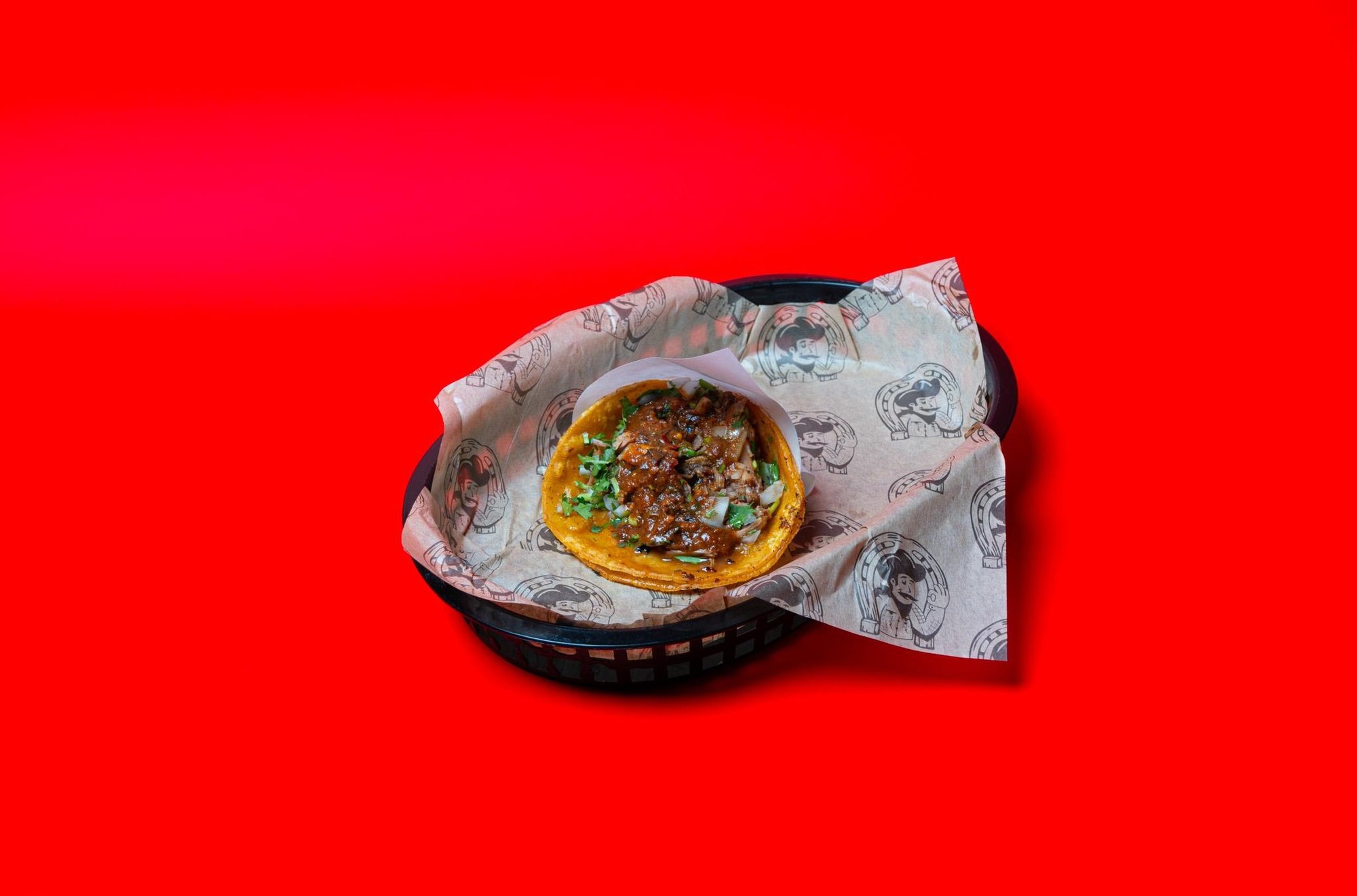
India Street has a particular rhythm: patio tables, airport-bound traffic, polished dining rooms, and the steady pull of Little Italy’s weekend crowds. Against that backdrop, Tijuanero By Tijuanazo - Little Italy reads less like another neighborhood add-on than a reminder that San Diego’s dining identity is not only coastal or Italian-American. The border is part of the city’s pantry. Tortillas, salsas, grilled meats, and quick-service Mexican formats are not side notes here; they are part of how San Diego eats.
Little Italy has spent years refining its restaurant identity around pasta rooms, wine bars, seafood counters, and high-design all-day venues. Nearby comparison points such as Puerto La Boca, Barra Oliba, Monello, Bencotto, and Lala show how the district rewards restaurants with clear genre signals. A Tijuana-coded Mexican address changes the frame. It places northern Baja influence inside a neighborhood whose public image is often shaped by European dining cues, and that tension is the interesting part.
Little Italy through a border-city lens
San Diego is a binational food city before it is a genre city. The drive, work, family, and dining patterns between San Diego and Tijuana have shaped local taste for decades, especially around beef, tortillas, salsas, seafood, and casual formats built for repeat visits rather than ceremony. In that context, Tijuanero By Tijuanazo - Little Italy belongs to a broader conversation about ingredient proximity. The point is not only what appears on the plate, but where those expectations come from: a region where northern Mexican cooking, Baja produce, California agriculture, and border commuting have long overlapped.
That matters in Little Italy because the neighborhood can flatten into a visitor-facing dining strip if judged only by reservations, patios, and weekend foot traffic. A Mexican format here adds a different kind of local intelligence. It speaks to San Diego diners who understand that the city’s strongest casual food culture often comes from repetition: the same order after work, the same salsa preference, the same debate over tortillas, meat, and heat. This is not the tasting-menu version of regional identity. It is the daily-use version.
The ingredient-sourcing angle is especially relevant in Southern California, where proximity does not automatically mean specificity. Restaurants can gesture vaguely toward Baja or Mexico without making the border feel present. The stronger San Diego Mexican addresses tend to make sourcing legible through format and expectation: masa as a foundation, grilled proteins as a point of comparison, acidity and chile as structure rather than decoration. With no public awards attached, the credibility here comes from placement and category clarity rather than trophy language.
What the setting says about San Diego's casual Mexican tier
San Diego’s premium dining coverage often tilts toward tasting menus, hotel restaurants, and chef-led rooms, but the city’s casual Mexican tier carries equal cultural weight. The difference is evaluation. A formal restaurant is judged by pacing, wine service, and menu architecture. A Tijuana-leaning counter or casual room is judged by repeatability: whether the food makes sense for lunch, late evening, families, solo diners, and groups moving through the neighborhood without turning the meal into an event.
That is where this address fits the district. Little Italy can be expensive and reservation-heavy, particularly around weekends and convention periods. A Mexican option with broad daily hours gives the neighborhood a different utility, especially for diners who want something more direct than a full sit-down Italian meal but more rooted in San Diego than generic quick service. The absence of a published chef narrative is not a weakness in this category. In many border-influenced Mexican formats, the more useful question is whether the restaurant understands the grammar of the food: heat, fat, tortilla, salsa, char, freshness, and speed.
For EP Club readers building a San Diego itinerary, the comparison is less about replacing the city’s polished rooms and more about reading the city correctly. A day might move from Balboa Park-adjacent dining such as 1450 El Prado to coastal or hotel dining such as 1500 Ocean, then back into neighborhood eating where Mexican formats carry the local accent. For broader planning, Our full San Diego restaurants guide gives the restaurant map, while Our full San Diego hotels guide, Our full San Diego bars guide, Our full San Diego wineries guide, and Our full San Diego experiences guide fill in the wider trip.
How to place it in a wider West Coast food itinerary
The West Coast rewards travelers who follow casual food traditions with the same attention usually reserved for tasting counters. Japanese drinking and snack culture appears in places such as Jōdo Saké Bar in Los Angeles and Onigiri Time in Pasadena. Mexican and Latin American casual formats take different shapes at ¿Por Qué No? in Portland and ¡Salud! in Los Angeles. Hawaiian and plant-forward regional cooking can be read through 'Ai Love Nalo in Waimanalo Beach, 'āina in San Francisco, and 'Ama 'Ama in Kapolei. Even a specialist Japanese beef format such as -Grilled beef Sukiyaki- KAMAKURA TANUKIAN 鎌倉 たぬき庵 in Kamakura makes the same editorial point from another angle: format tells the diner how a cuisine wants to be understood.
Within San Diego, that means Tijuanero By Tijuanazo - Little Italy is useful for readers who want the city’s border logic present in the itinerary, not only its waterfront and hotel polish. Other local listings, including 94th Aero Squadron, 94th Aero Squadron San Diego, and A L’Ouest (French-California), show different versions of the city’s hospitality range. This address belongs on the casual, ingredient-led side of that spectrum, where the signal is not formality but whether the food feels anchored to the region that produced it.
At-a-Glance Comparison
Comparable venues by cuisine and price in the same metro.
| Venue | Cuisine | Price | Notes |
|---|---|---|---|
| Tijuanero By Tijuanazo - Little ItalyThis venue — the venue you are viewing | Tijuana-style taco shop | $$ | Not listed |
| City Tacos | Modern Mexican Taqueria | $$ | North Park |
| King and Queen Cantina | Modern Mexican Fusion with Asian Influences | $$ | Downtown |
| Old Town Tequila Factory Restaurant & Cantina | Authentic Mexican Cantina | $$ | Old Town San Diego |
| Jimmy Carter's Mexican Café | Authentic Mexican Cafe | $$ | Uptown |
| La Fiesta | Mexican with Seafood | $$ | Downtown |
Continue exploring
More in San Diego
Restaurants in San Diego
Browse all →
Bars in San Diego
Browse all →
At a Glance
- Lively
- Energetic
- Casual
- Trendy
- Casual Hangout
- Date Night
- After Work
- Solo
- Live Music
- Standalone
- Street Scene
Current opening hours
- Monday
- 11 AM–10 PM
- Tuesday
- 11 AM–10 PM
- Wednesday
- 11 AM–10 PM
- Thursday
- 11 AM–10 PM
- Friday
- 11 AM–11 PM
- Saturday
- 11 AM–11 PM
- Sunday
- 11 AM–10 PM
Hours can change for holidays and private events. Last verified .