
World's Best Wine Lists Awards WBWL 2-Star
Our verdict
The Nai Harn Phuket sits at the quieter, southern end of the island in Rawai, holding a 2-Star accreditation from the World of Fine Wine & Lifestyle Awards. The property occupies a position in Phuket's hospitality tier where beach-access luxury meets relative seclusion, placing it closer to the island's slower, more residential south than the resort-dense strips further north.

Pearl is the En Primeur Club membership app — saves, bookings, and concierge access live there. Same editors, same standards.
The Southern Shore Setting
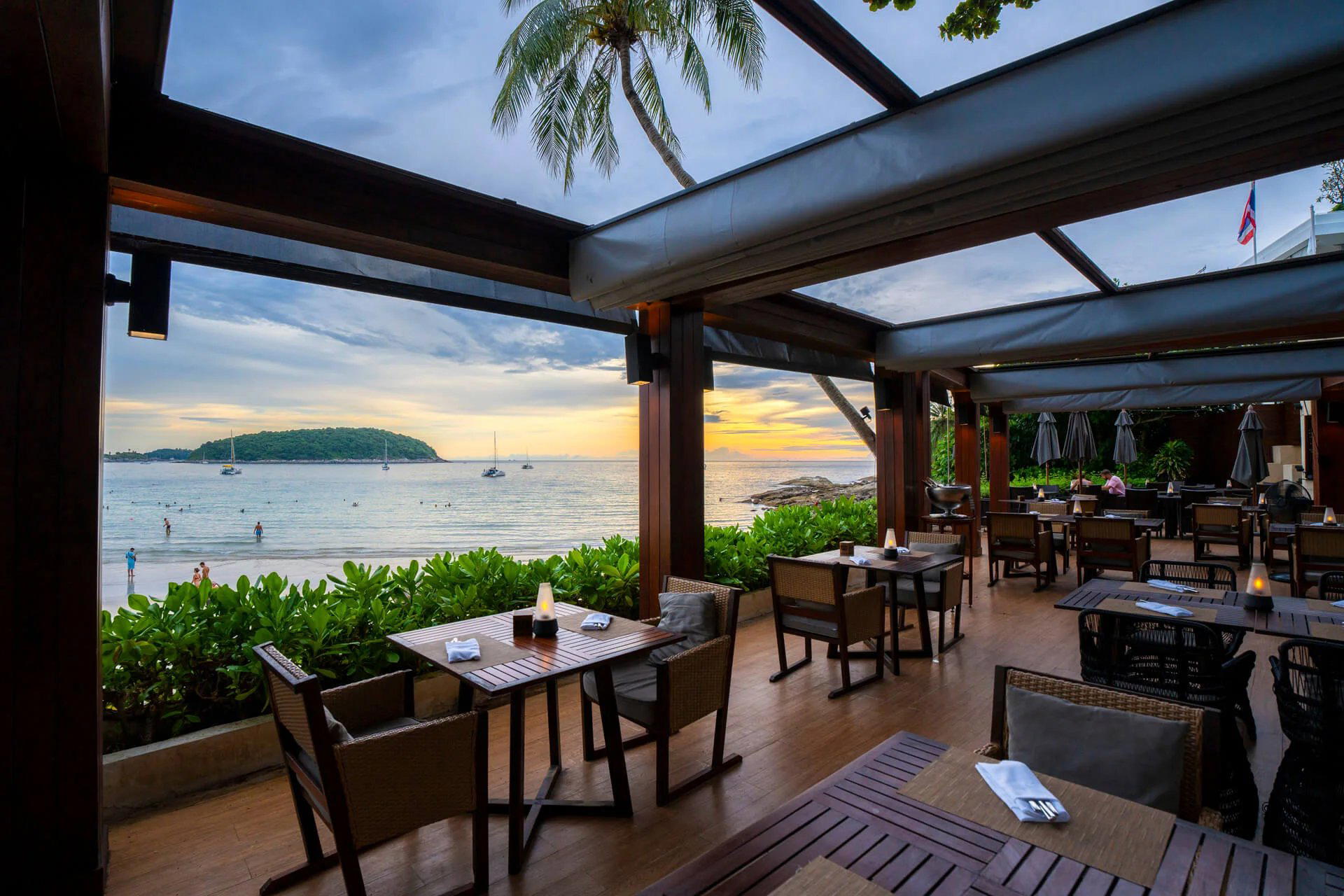
Phuket's hospitality geography has long divided along a north-south axis. The busier, more commercial hotel corridors cluster around Patong, Kamala, and Surin, while the island's southern promontory, anchored by Rawai and Nai Harn beach, operates on a different register: fewer megaproperties, more residential character, and a shoreline that draws those who have already done the busier version of Phuket and found it wanting. The Nai Harn Phuket occupies a direct position above Nai Harn bay, where the physical approach from Vises Road delivers an immediate sense of height and outlook rather than the enclosure typical of resort compounds tucked behind walls and motor courts. That separation from the island's commercial north is not incidental; it shapes who books here and what they expect when they arrive.
Within Rawai and the wider southern pocket, the competitive set for a property of this tier is thin. The area is not overbuilt, which means the Nai Harn sits less in direct competition with neighbouring hotels and more in conversation with the broader question of where to stay when the intent is a southern Phuket base rather than a resort-integrated experience. For broader context across the area's food, drink, and activity options, see our full Rawai hotels guide, our full Rawai restaurants guide, and our full Rawai experiences guide.
Where It Sits in Thailand's Award-Recognised Tier
Thailand's internationally recognised hospitality properties have expanded considerably over the past decade, with Bangkok leading in fine dining recognition and resort destinations like Phuket consolidating their credentials across multiple award frameworks. The Nai Harn Phuket holds a 2-Star Accreditation from the World of Fine Wine and Lifestyle Awards, a programme that evaluates properties against wine programme quality, hospitality standards, and overall guest experience. That accreditation places the property in a specific bracket: above the broad luxury resort category, and aligned with properties where the beverage and dining programme is considered a substantive part of the offer rather than an amenity afterthought.
For comparison, the award framework positions the Nai Harn within a peer group that takes food and wine provision seriously enough to have sought independent verification of its standards. In Thailand's dining scene, this kind of credentialled seriousness is concentrated in Bangkok, where restaurants like Sorn in Bangkok and PRU in Phuket represent the fine dining end of the market. A hotel property earning wine and lifestyle accreditation in a resort context signals that the food and beverage operation has been built to a standard that goes beyond the usual hotel restaurant calculus. Other well-regarded dining in Thailand's broader geography, from Aeeen in Chiang Mai to Anuwat in Phang Nga, shows how seriously the country's food culture takes provenance and craft, even outside the capital.
Ingredient Sourcing and the Southern Phuket Context
The sourcing argument for food in southern Thailand is more compelling than it might initially appear. Phuket sits at the top of the Malay Peninsula, with the Andaman Sea on one side and the Gulf of Thailand accessible from the east. That geography translates into access to seafood that moves from boat to kitchen on a short timeline, and to a market culture, particularly in Rawai and the adjacent fishing village economy, that keeps fresh product circulating daily. Properties operating at the accredited tier in this environment have an obvious incentive to connect their kitchens to those supply chains, since the alternative, importing protein or relying on centralised distributors, produces results that the setting itself contradicts.
Southern Thai cuisine, particularly in Phuket and the surrounding provinces, draws on Malay, Chinese Hokkien, and Indian trading influences that produce a kitchen tradition distinct from the central plains cooking that most international visitors associate with Thai food. The curries are richer and darker, the spice profiles more complex, and the seafood treatment more central. Hotels in this part of the island that commit to local sourcing are not just making a sustainability argument; they are accessing a culinary tradition that rewards proximity to its raw materials. Restaurants further afield in Thailand, like Nai Khlong Boat Noodles in Phra Nakhon Si Ayutthaya or AKKEE in Pak Kret, demonstrate how Thai culinary identity at its strongest is always rooted in a specific regional supply chain, not a generalised national one.
The broader Thai hotel dining conversation has shifted in recent years toward this kind of specificity. Properties that can articulate where their fish comes from, which morning market supplies their vegetables, and which regional producer supplies their fermented condiments are now winning credibility with guests who have travelled enough to know the difference. That shift is not unique to Thailand; it mirrors what has happened in fine dining globally, from the sourcing transparency at Le Bernardin in New York City to the farm-to-table frameworks that have reshaped hotel restaurants across Southeast Asia. What makes Phuket's southern corridor interesting is that the supply infrastructure for this kind of sourcing exists naturally, without having to be engineered from above.
Rawai as a Base: What to Expect Around the Property
Rawai is not a beach destination in the way that Karon or Kata are. The waterfront at Rawai is primarily a seafood market and longtail boat pier, oriented toward the working end of coastal life rather than sunbathing. Nai Harn beach itself, a short distance west, is where the swimming and beach time happens, and it is one of the island's less crowded bays even in high season. The area between those two points, including the road running up toward Phromthep Cape, is where restaurants, local coffee shops, and the residential expat community operate. Staying in this southern pocket means accepting more local texture and less resort infrastructure in the immediate surroundings, which is precisely the appeal for guests who want Phuket at a lower register. The Rawai bars scene and wineries options round out what is available locally for evenings. Accommodation at the Nai Harn is located at 23/3 Moo 1, Vises Road, Rawai, Muang District, Phuket 83130, placing it at the bay-facing end of the Nai Harn headland.
Timing matters in this part of Phuket. The Andaman coast's high season runs from approximately November through April, when the southwest monsoon has cleared and the sea between the island and the Phi Phi archipelago is accessible. From May onward, swell and rain increase from the southwest, and the bay at Nai Harn, while still swimmable on calm days, becomes more variable. Guests oriented toward diving or island-hopping should factor those weather patterns into their planning window. For dining further afield during a stay, properties like Baan Suan Lung Khai in Ko Samui or Baan Heng in Khon Kaen illustrate the range of regional Thai dining worth seeking out across the country during a longer trip.
Planning Your Stay
The property sits in the accredited tier of Phuket resort accommodation, which positions it above the mid-market beach hotel category and within the bracket where food and wine provision, service consistency, and physical setting are expected to justify the rate differential. Booking through the hotel's direct channel is the standard approach for this category of Thai resort property, where direct rates often include inclusions that third-party platforms exclude. For guests arriving in Phuket's high season (November to April), forward planning of at least six to eight weeks is prudent for preferred room categories at bay-facing properties in the southern part of the island, where the inventory is more limited than in the resort-dense north. Guests interested in the area's broader dining scene should use our Rawai restaurants guide to map options within reach of the property.
Frequently asked questions
Would The Nai Harn Phuket be comfortable with kids?
Rawai sits in the calmer southern arc of Phuket, away from the commercial beach strip of Patong, which makes the general environment less hectic for families. The Nai Harn bay area is one of the more sheltered beaches on the island. The property's 2-Star Wine and Lifestyle accreditation points to a food and beverage focus that skews toward a considered adult experience, though the setting itself is not exclusionary.
Is The Nai Harn Phuket better for a quiet night or a lively one?
The property is oriented firmly toward the quiet end of the spectrum. Rawai's waterfront runs as a working seafood market and longtail pier rather than a bar strip, and the 2-Star accreditation from the World of Fine Wine and Lifestyle Awards signals a programme built around considered dining rather than high-volume nightlife. Guests looking for late-night venues should plan to travel north toward Patong or Kata.
Does The Nai Harn Phuket have a Michelin star or similar recognition?
The Nai Harn Phuket has received recognition including: {"wbwl_source": {"slug": "the-nai-harn-phuket", "page_type": "star_accreditation", "category_slug": "2-star-accreditation", "award_result": "Accredited", "is_global_winner": "False"}, "scraped_details": {"hero_image": "
What do people recommend at The Nai Harn Phuket?
The food and beverage programme is the most independently validated part of the offering, carrying a 2-Star accreditation from the World of Fine Wine and Lifestyle Awards. Located at 23/3 Moo 1, Vises Road in Rawai, the property also draws attention for its position above Nai Harn bay, one of southern Phuket's more sheltered and less developed stretches of coastline.
Comparable Spots, Quickly
| Venue | Cuisine | Price | Awards | Notes |
|---|---|---|---|---|
| The Nai Harn PhuketThis venue (the venue you are viewing) | Modern Thai Beachfront Dining | $50–100 | World's Best Wine Lists Awards WBWL 2-Star | Not listed |
| Sorn | Southern Thai | Not listed | Michelin 3 Star | ฿฿฿฿ |
| Sühring | German | Not listed | Michelin 2 Star | ฿฿฿฿ |
| Baan Tepa | Thai contemporary | Not listed | Michelin 2 Star | ฿฿฿฿ |
| Gaa | Modern Indian, Indian | Not listed | Michelin 2 Star | ฿฿฿฿ |
| Le Du | Modern Thai, Thai contemporary | Not listed | Michelin 1 Star | ฿฿฿฿ |
Recognition history
Dated appearances from independent guides and award organizations, with the underlying list record or original source where available.
World's Best Wine Lists Awards WBWL 2-Star
World's Best Wine Lists Awards
Full recognition history (2 entries)
World's Best Wine Lists Awards WBWL 2-Star
World's Best Wine Lists Awards
The Nai Harn Phuket
The wine
- Wine program
- Curated wine list
- Craft cocktails
Details
- Elegant
- Scenic
- Sophisticated
- Date Night
- Special Occasion
- Brunch
- Waterfront
- Beachfront
- Rooftop
- Hotel Restaurant
- Craft Cocktails
- Local Sourcing
- Waterfront
- A La Carte
- Small Plates
- Craft Cocktails
- Vegetarian Friendly
- Vegan Options
Relaxed elegant atmosphere with beachside serenity, ocean views, and warm lighting.