Sushi Tadokoro
.png)

Sushi Tadokoro on San Diego Avenue has earned consecutive Opinionated About Dining recognition and a Michelin Plate across 2023, 2024, and 2025, placing it among the most consistently decorated Japanese counters in Southern California. Operating under chefs Takeaki Tadokoro and Tatsuro Tsuchiya, it occupies the mid-to-upper price tier of San Diego's sushi scene, where traditional Japanese technique meets a city still building its omakase identity.
 Discover on Pearl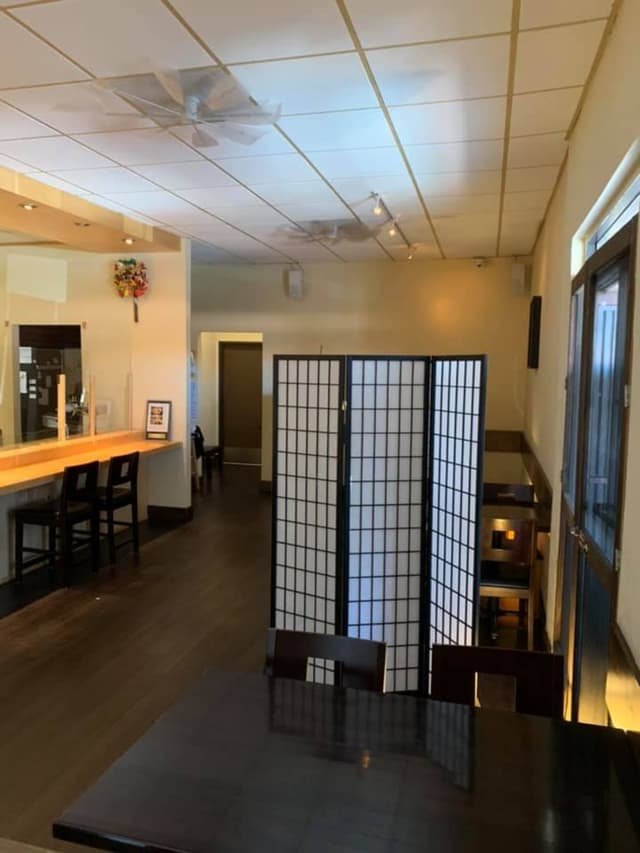
Old Town's Quiet Counter and What It Says About San Diego Sushi
San Diego Avenue runs through Old Town with the cadence of a neighbourhood that hasn't fully decided what it wants to be: tourism-facing taquerias on one block, locally oriented shops on the next. Against that backdrop, Sushi Tadokoro reads as a deliberate act of restraint. The room doesn't announce itself. There is no elaborate entrance ritual, no theatrical presentation designed to signal that serious sushi is served here. That understatement, in the context of American omakase culture's recent drift toward spectacle, is itself a statement.
The Japanese sushi counter tradition is, at its core, an exercise in reduction. The itamae works in plain view, the distance between raw material and finished piece measured in seconds, and the diner's role is to pay close attention rather than be entertained. A handful of American cities have developed sushi scenes dense enough to support multiple counters working within that tradition without compromise. San Diego is still finding that density, which makes the presence of a venue like this — earning independent critical recognition across three consecutive years — worth understanding in the context of what's around it.
The shortlist, unlocked.
Hard-to-book tables, cellar releases, and concierge-planned trips.
Get Exclusive Access →Where It Sits in the San Diego Dining Tier
San Diego's restaurant scene has matured considerably in the past decade, but it remains more decentralised than Los Angeles or San Francisco. The Michelin Guide arrived in Southern California and brought with it a sorting mechanism that the city's dining culture had largely operated without. Sushi Tadokoro's Michelin Plate in both 2024 and 2025 places it in a defined recognition tier: noted, assessed, and found competent by the Guide's inspectors without reaching the star categories where venues like Addison operate.
The more analytically useful recognition comes from Opinionated About Dining, which applies a data-aggregated methodology across a broader critic base. Sushi Tadokoro moved from "Recommended" in 2023 to a ranked position of #292 in 2024, then to #389 in 2025 across all of North America. Rank movements in OAD's system reflect the addition of new data points as much as absolute quality shifts, but a sustained presence in the top 400 across three years signals consistent performance rather than a single strong season. For comparison, that peer set on the OAD North America list includes counters from New York, Los Angeles, Chicago, and Vancouver , cities with longer-established sushi traditions and larger pools of Japanese-trained itamae. Appearing alongside venues like Masa in New York City or Sushi Masaki Saito in Toronto on a continental list says something about what's happening at the counter on San Diego Avenue.
Within San Diego itself, the closest point of comparison in the Japanese category is Soichi, which operates at the $$$$ price tier and has accumulated its own critical recognition. Tadokoro prices at $$$, placing it a tier below in terms of listed cost, which positions it differently for the diner weighing value against occasion. San Diego's broader dining tier , represented by venues like Animae for Asian-influenced cooking and Artifact at Mingei for a more international approach , reflects a city whose serious dining options are growing in range without yet clustering around a single dominant neighbourhood or cuisine type.
The Cultural Weight of the Edomae Tradition
Understanding what makes a sushi counter worth the attention of critics like OAD requires some grounding in what the form is actually trying to do. Edomae sushi, the Tokyo tradition that underpins most serious omakase practice, developed as a fast street food in the Edo period before being codified into a high-precision counter format across the twentieth century. The techniques that define it , the curing, the aging, the particular temperature and seasoning of the shari , are not innovations but refinements of a practice developed over generations. A skilled itamae is not improvising; they are executing a tradition with enough precision and sensitivity to raw material that execution itself becomes the art.
That distinction matters when reading the credentials attached to Sushi Tadokoro. Chefs Takeaki Tadokoro and Tatsuro Tsuchiya represent the kind of dual-kitchen model that serious Japanese restaurants in the United States sometimes adopt, where the demands of both lunch and dinner service benefit from distributed expertise rather than a single chef covering all sessions. Whether the kitchen operates on a strict omakase format or offers greater flexibility across its lunch and dinner services is not information available from the venue's public record, but the structure of service , lunch seatings at 11:30am closing around 1:40pm, dinner from 5pm through to 10pm, Tuesday through Saturday, with Monday and Sunday closed , suggests a schedule organised around focused service windows rather than extended all-day operations.
Planning a Visit
Sushi Tadokoro sits at 2244 San Diego Avenue, in Old Town San Diego, a neighbourhood more commonly associated with Mexican heritage tourism than with Japanese fine dining. That geographic displacement from the Gaslamp Quarter or Little Italy, where much of San Diego's restaurant attention concentrates, means first-time visitors should arrive with a deliberate plan rather than drifting in. Parking in Old Town is more accessible than in downtown neighbourhoods, which reduces one of the logistical friction points common to the city's more central dining destinations.
The lunch service, running Tuesday, Wednesday, Friday, and Saturday, is relatively rare among serious sushi counters in the United States, where dinner-only formats dominate at the credentialed level. That lunch availability creates an entry point at a timing that may suit visitors combining a meal with Old Town's cultural sites, including the Mingei International Museum nearby. For those exploring the full range of what San Diego's food and drink scene offers, the EP Club guides cover restaurants, hotels, bars, wineries, and experiences across the city. Visitors whose broader dining itinerary extends beyond San Diego might draw comparisons with the tasting-menu format at Lazy Bear in San Francisco or the precision-driven approach at The French Laundry in Napa, though both operate in different cuisine categories and at different price points. American fine dining more broadly, whether at Le Bernardin in New York City, Alinea in Chicago, Single Thread Farm in Healdsburg, or Emeril's in New Orleans, shares the critical infrastructure of awards and critic lists that gives Tadokoro's OAD placement its comparative meaning. The venue's Google rating of 4.7 across 769 reviews reflects a diner base that tracks closely with the critical assessment: sustained satisfaction over a meaningful sample size, not a spike driven by novelty.
For a city still consolidating its position as a serious dining destination, Sushi Tadokoro's consistency across three years of independent critical evaluation is the kind of signal that matters. The room may not announce itself from San Diego Avenue, but the record does.
2244 San Diego Ave, San Diego, CA 92110
(619) 297-0298
Comparable Spots, Quickly
A compact peer snapshot based on similar venues we track.
| Venue | Cuisine | Price | Awards | Notes |
|---|---|---|---|---|
| Sushi Tadokoro | Sushi, Japanese | $$$ | Opinionated About Dining Top Restaurants in North America Ranked #389 (2025); Mi… | This venue |
| Addison | French, Contemporary | $$$$ | Michelin 3 Star | French, Contemporary, $$$$ |
| Callie | Greek, Mediterranean Cuisine, Californian-Mediterranean | $$ | Greek, Mediterranean Cuisine, Californian-Mediterranean, $$ | |
| Trust | New American, American | $$$ | New American, American, $$$ | |
| Soichi | Japanese | $$$$ | Michelin 1 Star | Japanese, $$$$ |
| Cesarina | Italian | $$ | Italian, $$ |
Need a table?
Our members enjoy priority alerts and concierge-led booking support for the world's most difficult tables.
Get Exclusive AccessThe shortlist, unlocked.
Hard-to-book tables, cellar releases, and concierge-planned trips.
Get Exclusive Access →