Sushi Megumi

Tabelog 100 #22
Our verdict
Sushi Megumi places Tatebayashi in the conversation around serious regional sushi rather than Tokyo-centric counters. Its Tabelog Sushi EAST 100 selections in 2021, 2022, and 2025, compact counter format, private room, and fish-led positioning make it a useful address for diners tracking how high-grade sushi culture travels beyond major-city luxury districts.

Pearl is the En Primeur Club membership app, where members save venues, book tables and use the concierge.
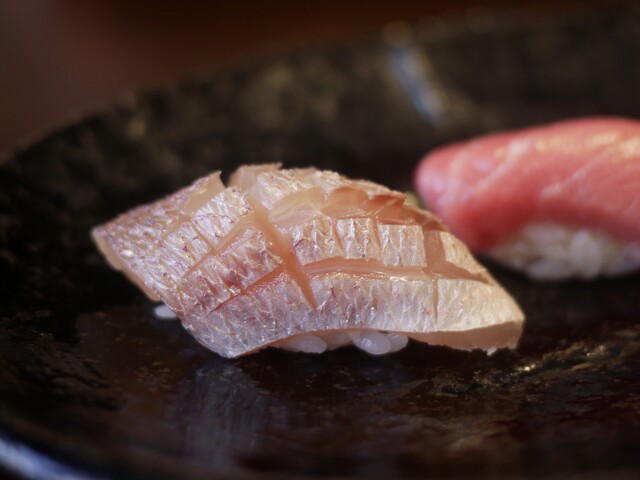
In Tatebayashi, sushi begins with a different set of signals than it does in Ginza or Akasaka. The approach is quieter, the urban theatre thinner, and the value of the meal depends less on postcode prestige than on procurement, discipline, and repeat local confidence. Sushi Megumi sits inside that regional register: a sushi restaurant in Tatebayashi, working with a fish-focused identity rather than the metropolitan grammar of lobby entrances, hotel concierges, and imported ceremony.
That matters because serious sushi in Japan is not only a capital-city story. Regional restaurants often operate with fewer international cues, but the essential questions remain the same: how fish is selected, how rice is handled, how the meal is paced, and whether the room can sustain concentration without turning stiff. Tatebayashi is not a destination built around luxury dining density, which makes a sushi restaurant with Tabelog Hyakumeiten recognition in 2025 a sharper marker of local ambition than another polished address in a larger city would be.
Fish-led sushi without the big-city performance layer
The useful lens here is sourcing. Sushi at this level is rarely about abundance for its own sake; it is about editing. Tabelog lists Sushi Megumi in the sushi category, which places the experience in a classic tradition where the meal is judged by ingredient condition, seasoning restraint, and rhythm rather than by menu theatrics. No named signature items are publicly listed here, and that absence is not a weakness. For sushi, the category often carries more meaning than the individual label: a meal built around fish selection asks diners to pay attention to sequence, temperature, cut, rice, and how seasoning supports salt, fat, and acidity.
The 2025 Tabelog Hyakumeiten selection gives Sushi Megumi a credential that matters in context. Tabelog’s recognition lists reward restaurants that have earned sustained diner attention within a competitive field, and this restaurant is listed with a 3.69 score and a dinner budget of JPY 15,000 - JPY 19,999. That is more informative than vague praise. It suggests a restaurant that has remained legible to serious sushi diners without relying on the international visibility that surrounds Tokyo counters.
Within Tatebayashi, the comparison set is small but telling. Sushi Obana (Sushi) gives the city another sushi reference point, while Fuku Yoshi and Kuruma help frame the broader local dining spread rather than the same exact category. The point is not that Tatebayashi has the concentration of a major food capital. It does not. The point is that a recognized sushi restaurant here changes the calculus for travelers who usually treat Gunma dining as an add-on to transit, hot springs, or family visits.
A focused room changes the stakes of the meal
Small sushi restaurants reward attentiveness. Without needing to borrow the language of luxury dining districts, the sushi format places the meal closer to craft supervision than to restaurant-floor choreography. The setting is not decoration in sushi culture; it is part of how the experience is read. The diner follows the cadence of preparation, the sequence of servings, and the adjustments that separate a serious sushi meal from a generic one. For anyone assessing technique and sourcing, that kind of focus is often the most revealing format.
The room also signals how Tatebayashi differs from a destination dining district. There is no need to project cosmopolitan glamour when the restaurant’s case rests on sushi, recognition, and local repeatability. The appeal is not built from a long list of amenities or a hotel-style arrival sequence; it comes from the focus implied by the sushi category and the credibility of the 2025 Tabelog Hyakumeiten listing. That combination is common in Japan outside the major luxury corridors: a place can be demanding in product and technique while remaining practical in how locals use it.
For travelers mapping a food day around the city, the better move is to treat sushi as the anchor and build lightly around it. The wider Tatebayashi directory is useful for that purpose: Our full Tatebayashi restaurants guide covers dining options, while Our full Tatebayashi hotels guide, Our full Tatebayashi bars guide, Our full Tatebayashi wineries guide, and Our full Tatebayashi experiences guide help separate a single meal from a coherent stay.
How to read its place in Japan's wider dining map
Sushi Megumi belongs to a broader Japanese pattern: specialist dining that gains authority through format and ingredients, not through brand sprawl. That pattern looks different across categories. Other focused restaurants in Japan may ask diners to judge a narrow craft area rather than a broad menu, whether the subject is a tightly edited local specialty or another clearly defined format. Sushi in Tatebayashi should be read the same way: depth over range.
That specialist logic also travels well beyond sushi. Across Japan, small dining rooms and tightly focused restaurants show how the country’s dining culture gives compact formats permission to be exacting. Abroad, the same appetite for focused Japanese food and drink appears in many cities, though the cultural setting and supply chain are different. The useful comparison is not a specific outside venue, but the shared idea that a narrow format can carry serious culinary intent.
The editorial case for Sushi Megumi is therefore not that it offers spectacle. It is that a regional sushi restaurant with 2025 Tabelog Hyakumeiten recognition gives Tatebayashi a serious fish-led address within a city better understood through local movement than destination hype. For diners already in Gunma, it is the kind of meal that can justify planning around sushi rather than treating dinner as an afterthought.
Frequently asked questions
Is Sushi Megumi suitable for children?
Sushi Megumi is a sushi restaurant in Tatebayashi, so suitability for children depends on the child’s comfort with a focused, seated sushi meal. Families should confirm current policies directly before visiting.
Is Sushi Megumi formal or casual?
It reads as formal-leaning rather than casual, thanks to its sushi focus and Tabelog Hyakumeiten 2025 recognition. The JPY 15,000 - JPY 19,999 price band places it in a serious dinner bracket for Tatebayashi.
Is Sushi Megumi expensive?
Pricing at Sushi Megumi is listed as JPY 15,000 - JPY 19,999.
What days is Sushi Megumi closed?
Specific regular closing days are not provided here. Confirm the current schedule directly with Sushi Megumi before planning a visit.
What's Sushi Megumi's location?
Tatebayashi.
In Context: Similar Options
Comparable venues by cuisine and price in the same metro.
| Venue | Cuisine | Price | Awards | Notes |
|---|---|---|---|---|
| Sushi MegumiThis venue (the venue you are viewing) | High-End Sushi Omakase | $100–150 | Tabelog 100 #22 | Not listed |
| Sushi Obana | Premium Edomae Omakase | $300–500 | Not listed | Tatebayashi |
| Kuruma | Modern Japanese Tempura | $150–200 | Tabelog Bronze #214 | Nobecho |
| Fuku Yoshi | Tonkatsu / Japanese Comfort Food | $10–20 | Tabelog 100 #93 | Tatebayashi |
| Tenzushi (天寿し 京町店) | Kyushu-mae Omakase Sushi | $300–500 | Not listed | Kokura Kita-ku |
| Himeshara | Hokkaido-influenced Edomae Sushi | $150–200 | Tabelog 100 #76 | Maruyama |
Recognition history
Dated appearances from independent guides and award organizations, with the underlying list record or original source where available.
Tabelog 100 #22 · No. 22
Tabelog · Tabelog 100 - Sushi - EAST - 2025
Continue exploring
More in Tatebayashi
Restaurants in Tatebayashi
All restaurants in Tatebayashi →
Hotels in Tatebayashi
Browse all →
Wineries in Tatebayashi
Browse all →
Details
- Intimate
- Cozy
- Classic
- Elegant
- Special Occasion
- Date Night
- Celebration
- Business Dinner
- Solo
- Chefs Counter
- Private Dining
- Standalone
- Sake Program
- Sustainable Seafood
- Omakase
- Counter Dining
- Tasting Menu
- Sake
- Shochu
- Pescatarian Friendly
Current opening hours
- Monday
- Closed
- Tuesday
- 5:30–10 PM
- Wednesday
- 11:30 AM–2 PM, 5:30–10 PM
- Thursday
- 11:30 AM–2 PM, 5:30–10 PM
- Friday
- 11:30 AM–2 PM, 5:30–10 PM
- Saturday
- 11:30 AM–2 PM, 5:30–10 PM
- Sunday
- Closed
Hours can change for holidays and private events. Hours as of .
A small, quiet house-restaurant with just nine counter seats and one private tatami room, offering a relaxed yet polished atmosphere focused on the chef’s craftsmanship and a leisurely, special-occasion sushi experience.