

Star Wine List · White Guide Sweden Restaurants - Very Fine Level
Our verdict
Every December 10, Stockholm's City Hall hosts the Nobel Banquet — one of the most ceremonially significant dinners in the world. Stadshuskällaren, situated within that same building, offers the closest public approximation of that experience year-round, serving the Nobel menu and operating from one of the most architecturally charged dining rooms in Scandinavia.

Pearl is the En Primeur Club membership app — saves, bookings, and concierge access live there. Same editors, same standards.
- Address
- Hantverkargatan 1, 111 52 Stockholm, Sweden
- Phone
- +46 8 586 218 30
- Hours
- Mon ClosedTue 11:30 AM–2 PMWed–Fri 11:30 AM–2 PM, 5–11 PMSat 5–11 PMSun Closed
- Website
- stadshuskallarensthlm.se
- Directions
- Get directions
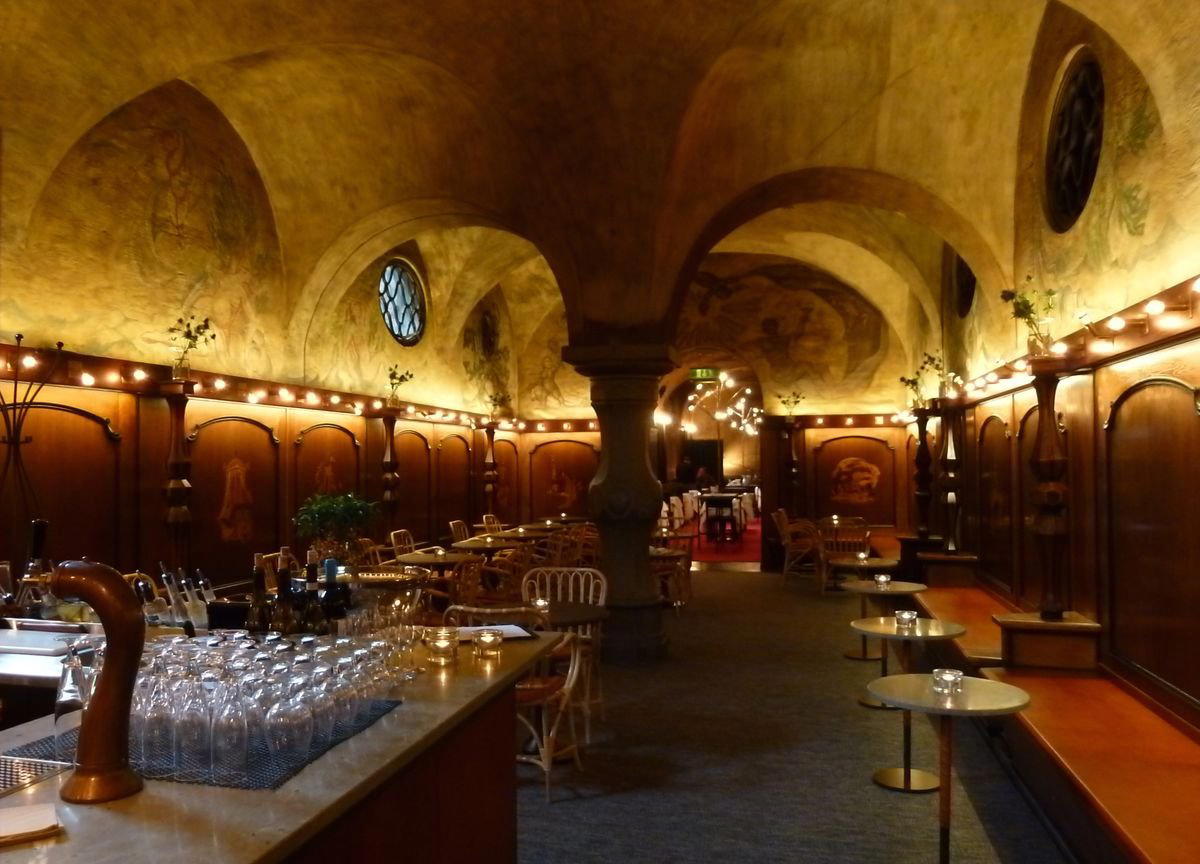
Dining Inside the Ceremony
Few dining rooms in Europe carry as much civic and ceremonial weight as the Blue Hall inside Stockholm's City Hall. Since 1930, the Nobel Banquet has taken place here each December 10 — the anniversary of Alfred Nobel's death — drawing laureates, royalty, and heads of state to a dinner watched by millions on Swedish television. Stadshuskällaren occupies the lower level of that same building, making it one of the rare restaurants in the world where the architecture above you is not incidental backdrop but living institutional history. The Romanesque brick arches, the soaring gallery walls, the sense of occasion pressed into every stone: these aren't design choices made for a restaurant. They preceded the restaurant by decades, and the restaurant has grown into them.
Stockholm's formal dining tier sits alongside peers such as Frantzén, Operakällaren, and AIRA, venues where the cooking is the primary draw. Stadshuskällaren operates differently. Here, the reason to come is not purely culinary ambition but access to a specific moment in Swedish cultural life, the Nobel tradition, filtered through a restaurant format that runs most of the year. That makes it a different kind of proposition from Aloë or Adam / Albin, where the creative programme is the draw. At Stadshuskällaren, the draw is the room and what it represents.
The Nobel Menu and What It Signals
Each year following the Nobel Banquet, Stadshuskällaren places the exact banquet menu on its public offering, allowing guests to eat what the laureates ate, prepared in the same kitchen, in the same building, at the same table configuration used for the ceremony. This is not a reconstruction or a tribute version. It is the menu, served to the public from the morning after the banquet through the weeks that follow, making December one of the most sought-after booking windows at any restaurant in Stockholm.
The Nobel Banquet menu itself is a set-piece production reviewed by food critics, debated by the Swedish public, and reported internationally each year. The format is formal: multiple courses with wines selected specifically to accompany each dish, served in one of the largest and most operatically staged dining rooms in Northern Europe. The Blue Hall holds over 1,300 guests on the night of the Banquet itself, which places it in a different register from the intimate counter formats that dominate Stockholm's Michelin-tier scene. For the rest of the year, Stadshuskällaren operates at a more domestic scale, but the spatial grandeur of the building remains constant.
The Cellar and the Wine Programme
Formal Swedish dining has traditionally maintained serious wine programmes, and Stadshuskällaren's position as the house restaurant of a building associated with the world's most scrutinised annual dinner means its cellar carries specific expectations. The Nobel Banquet wines are selected annually by a committee and announced publicly, they represent Swedish wine culture's most visible moment internationally, and the wines chosen have historically come from Champagne, Burgundy, and occasionally Germany, reflecting a conservative European classical orientation rather than the New World or natural wine movements.
For a restaurant operating in this tradition, the wine list functions as institutional memory as much as commercial offering. Sweden's on-trade wine culture operates under systembolaget constraints that make cellar-building more deliberate than in markets with open wholesale trade, which means the wines that do appear on serious Stockholm lists tend to be there by considered selection rather than volume purchasing. Peer restaurants at the top of Stockholm's formal tier, including Operakällaren with its well-documented cellar, have historically maintained lists weighted toward classic French appellations. Stadshuskällaren's programme, given its ceremonial context, aligns with that orientation. Visitors with serious interest in Swedish wine culture should note that the broader Scandinavian scene extends well beyond Stockholm: Vollmers in Malmö, VYN in Simrishamn, and ÄNG in Tvååker each maintain wine programmes with distinct regional perspectives worth comparing against Stockholm's more institutional approach.
Stockholm's Ceremonial Dining Tradition
The question of what a ceremonial restaurant is, as distinct from a gastronomically ambitious one, matters here. Internationally, the category has a handful of comparables: restaurants attached to cultural or civic institutions where the building, the occasion, and the historical resonance set the terms of the experience before a dish arrives. Le Bernardin in New York City represents one extreme of institutional seriousness grounded in culinary rigour. Emeril's in New Orleans represents another kind of cultural embeddedness, where the restaurant becomes inseparable from a city's identity. Stadshuskällaren operates at the intersection of monument and table, and that intersection is genuinely rare.
Sweden's broader fine dining circuit has developed considerable depth outside Stockholm in recent years. Signum in Mölnlycke, Knystaforsen in Rydöbruk, and PM & Vänner in Växjö have each accumulated critical recognition that places them in serious company with the capital's leading tables. But none of them operates from a building whose annual dinner is televised to a global audience. That specificity is what positions Stadshuskällaren apart from the broader Swedish restaurant scene rather than within it.
Planning Your Visit
Stadshuskällaren is located at Hantverkargatan 1, inside Stockholm's City Hall on Kungsholmen island, a short walk across the bridge from Gamla Stan. The most practical approach from the city centre is by foot or T-bana to Rådhuset station. December, when the Nobel menu is available following the December 10 Banquet, is the period of highest demand and should be booked as far in advance as possible; the window between the Banquet and year-end fills quickly. For the rest of the year, the restaurant operates its standard programme within the same setting, which remains architecturally compelling regardless of menu.
Visitors building a broader Stockholm dining itinerary can consult our full Stockholm restaurants guide for orientation across the city's tiers and neighbourhoods. For hotels, bars, experiences, and wineries, the complete city coverage is available through our Stockholm hotels guide, bars guide, experiences guide, and wineries guide.
Frequently asked questions
What's the signature dish at Stadshuskällaren?
What's the ideal way to book Stadshuskällaren?
What's the standout thing about Stadshuskällaren?
Do they accommodate allergies at Stadshuskällaren?
Budget and Context
Comparable venues nearby, for context on price, style, and recognition.
| Venue | Cuisine | Price | Awards | Notes |
|---|---|---|---|---|
| StadshuskällarenThis venue — the venue you are viewing | Classic Swedish Fine Dining | Not listed | Star Wine List · White Guide Sweden Restaurants - Very Fine Level | Not listed |
| Nybrogatan 38 | Swedish Neighborhood Bistro | $50–100 | Star Wine List | Östermalm, Swedish Neighborhood Bistro |
| DoMa | Modern Swedish Bistro | $50–100 | Star Wine List · White Guide Sweden Restaurants - Very Fine Level | Östermalm, Modern Swedish Bistro |
| Restaurant PA&Co | Traditional Swedish | Not listed | White Guide Sweden Restaurants - Very Fine Level | Östermalm, Traditional Swedish |
| Amalia | Nordic Seasonal Bistro with Global Influences | $50–100 | Star Wine List | Norrmalm, Nordic Seasonal Bistro with Global Influences |
| Chez Jolie | Classic French Bistro | $50–100 | Star Wine List · White Guide Sweden Restaurants - Masters Level | Östermalm, Classic French Bistro |
Recognition history
Dated appearances from independent guides and award organizations, with the underlying list record or original source where available.
Star Wine List
Star Wine List
White Guide Sweden Restaurants - Very Fine Level
White Guide
Continue exploring
More in Stockholm
Restaurants in Stockholm
Browse all →
Bars in Stockholm
Browse all →
Details
- Classic
- Elegant
- Cozy
- Well Known
- Intimate
- Special Occasion
- Group Dining
- Celebration
- Date Night
- Historic Building
- Extensive Wine List
- Tasting Menu
- Set Menu
- A La Carte
- Vegetarian Friendly
Current opening hours
- Monday
- Closed
- Tuesday
- 11:30 AM–2 PM
- Wednesday
- 11:30 AM–2 PM, 5–11 PM
- Thursday
- 11:30 AM–2 PM, 5–11 PM
- Friday
- 11:30 AM–2 PM, 5–11 PM
- Saturday
- 5–11 PM
- Sunday
- Closed
Hours can change for holidays and private events. Last verified .
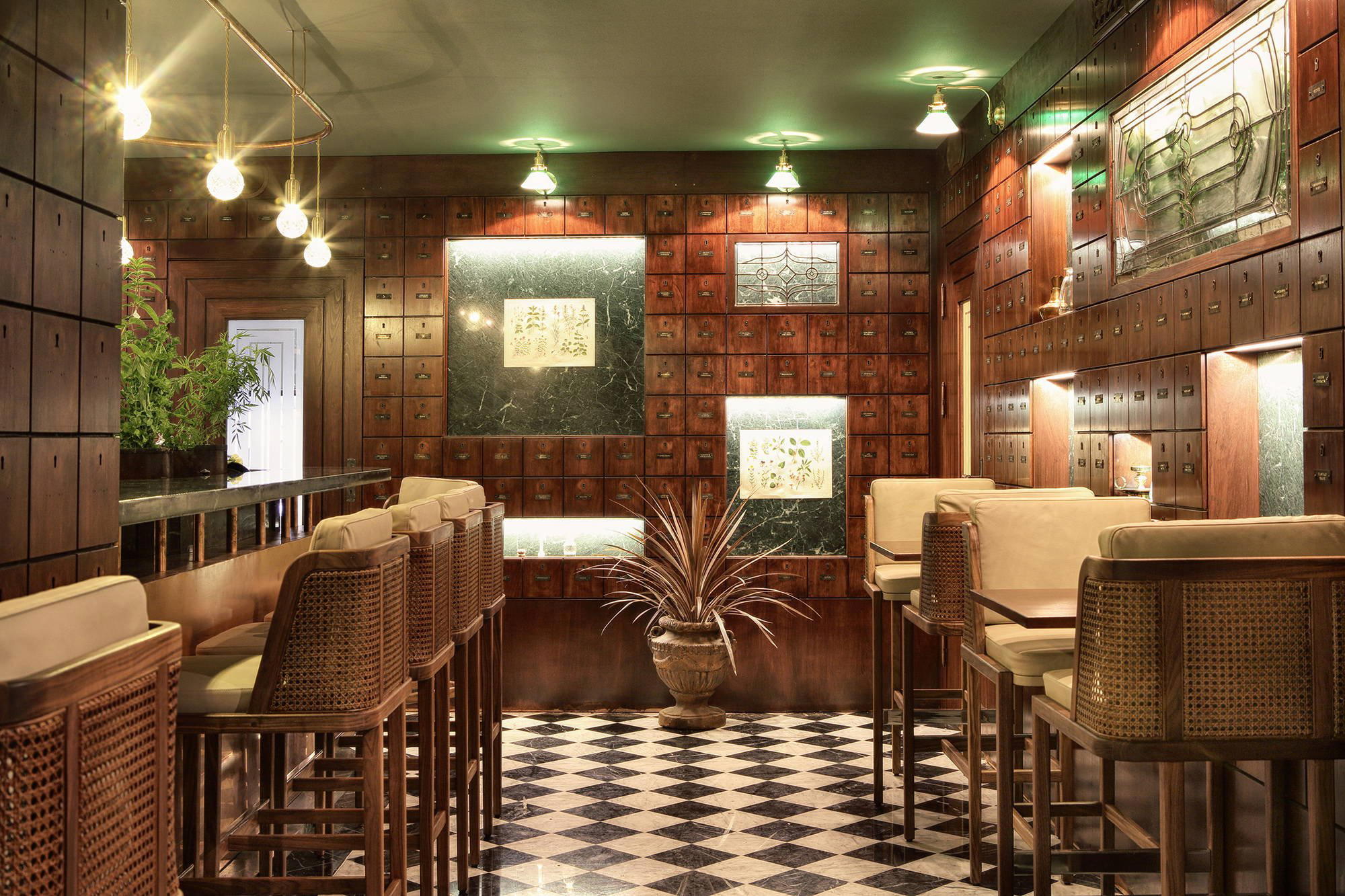
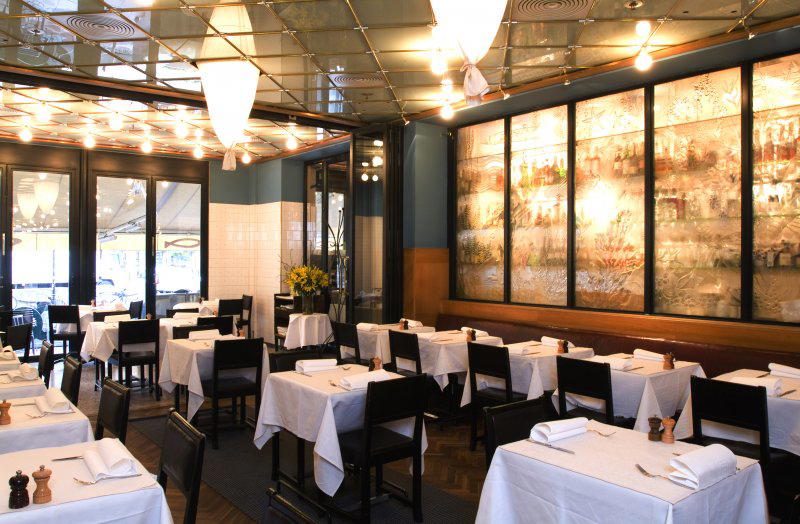
Cozy vaulted atmosphere with beautiful murals and artwork on the ceilings, evoking an elegant historic setting.