Our verdict
In Ku, Xinjiang, Shengshi 盛世三锅 draws on the region's exceptional raw materials — lamb from highland pastures, hand-pulled noodles, and the slow-cooked traditions that define northern Xinjiang cooking. The restaurant operates in one of China's most ingredient-rich corridors, where proximity to Central Asian supply routes shapes what lands on the table. For travelers moving through the region, it represents a direct encounter with Xinjiang's cooking culture at its most grounded.

Pearl is the En Primeur Club membership app — saves, bookings, and concierge access live there. Same editors, same standards.
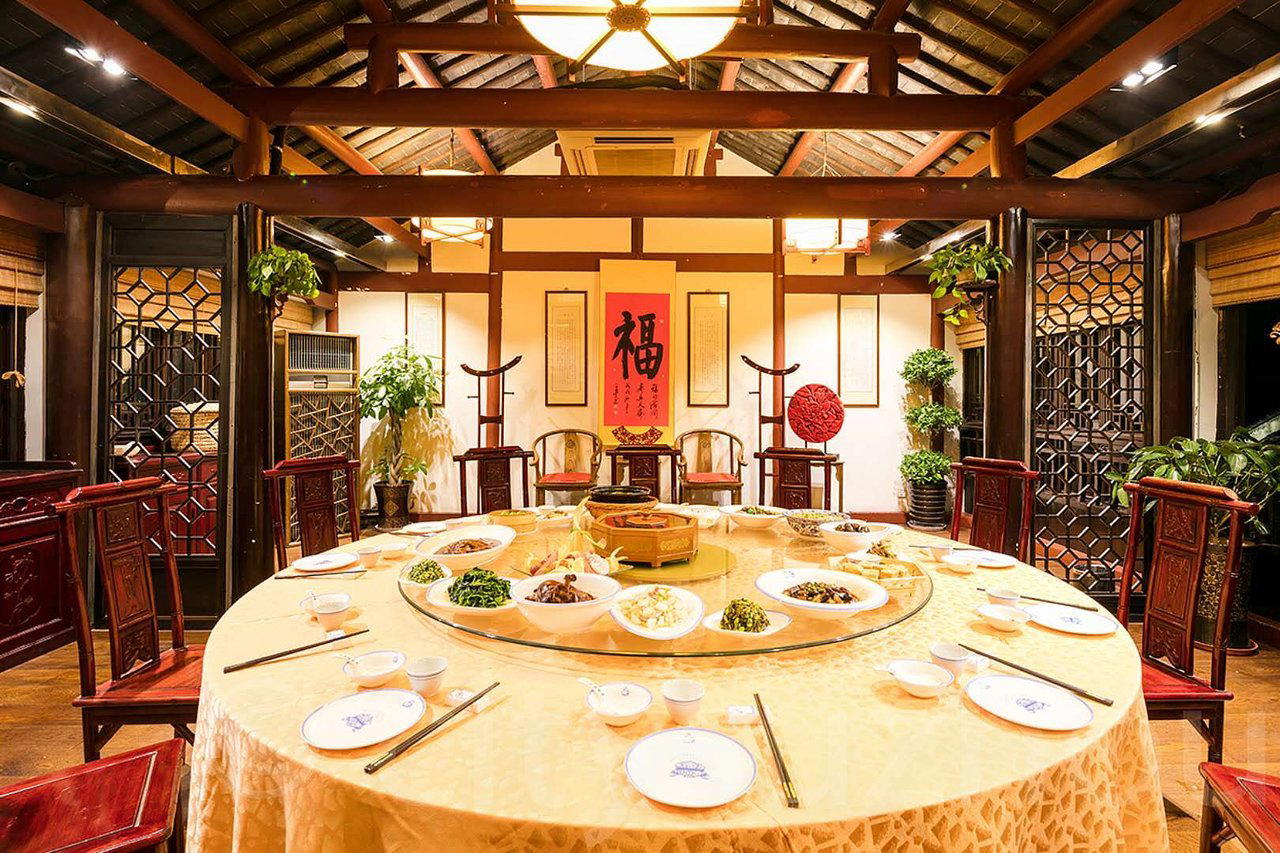
Where Xinjiang's Larder Meets the Table
Xinjiang is one of the few places in China where the provenance of ingredients is inseparable from the food's identity. The region produces some of the country's most documented agricultural output: Korla pears, Hami melons, Turpan raisins, and — most consequentially for its restaurant culture — lamb raised on the sparse, mineral-rich grasslands of the Tianshan foothills. Restaurants in cities like Ku operate within this supply context daily, and the cooking that results is shaped less by culinary fashion than by what the surrounding land provides and what the region's Uyghur, Kazakh, and Han communities have done with those ingredients across generations.
Shengshi 盛世三锅 sits inside this tradition. The name itself signals format: 三锅, or "three pots," is a structural reference to the layered, slow-cooked approach that characterises much of northern Xinjiang's communal eating culture. Dishes built around the pot, whether braised lamb, pilaf-adjacent rice preparations, or long-simmered stews, reflect a cuisine shaped by cold climates, pastoral economies, and the practical intelligence of cooking large cuts of meat until they yield rather than resist.
The Ingredient Logic Behind Xinjiang Cooking
To understand what a restaurant like Shengshi 盛世三锅 is working with, it helps to understand what Xinjiang's food system actually looks like. The region accounts for a significant share of China's lamb production, with breeds like the Altay fat-tailed sheep prized for the quality of their fat and the depth of flavour it contributes to slow cooking. That fat, rendered down through hours of heat, is the medium through which many Xinjiang dishes are built. It is not a background element; it is a structural one.
Xinjiang's position on historical overland trade routes also means its pantry carries Central Asian influence: cumin, dried fruits, flatbreads baked in clay ovens, and rice dishes with clear echoes of Uzbek and Kazakh cuisine. This is not fusion in the contemporary sense. It is the residue of centuries of movement, trade, and cultural overlap along corridors that predate modern nation-states. When a restaurant in Ku puts lamb and rice in a pot together with dried fruit and saffron-adjacent spicing, it is drawing on a culinary logic that runs deeper than any single cultural origin.
For diners accustomed to the cleaner, more refined registers of Chinese restaurant cooking in eastern cities, the tightly edited menus at places like Xin Rong Ji (Xinyuan South Road) in Beijing or the precision-led formats at 102 House in Shanghai, Xinjiang's cooking registers as fundamentally different in its relationship to fat, fire, and time. It is not less sophisticated; it is sophisticated in a different direction.
Ku as a Dining City
Ku (库车), historically known as Kucha, sits in the Tarim Basin and was once a significant stop on the Silk Road. That heritage still shows in the city's food culture, which carries a density of Central Asian influence that distinguishes it from Xinjiang's larger urban centres. The local restaurant scene runs on a different rhythm than Urumqi or Kashgar, smaller in scale, more embedded in daily life, less oriented toward outside visitors.
That context matters when thinking about where Shengshi 盛世三锅 fits. In a city of this size and character, restaurants tend to derive their standing from the quality and consistency of their core dishes rather than from ambient design or brand architecture. The competitive set is local, the clientele largely repeat, and the measure of quality is whether the lamb is sourced right and the cooking is done well. This is a different pressure system than the one operating at, say, Chef Tam's Seasons in Macau or Imperial Treasure Fine Chinese Cuisine in Guangzhou, where Michelin attention and international traveler traffic shape the offering. In Ku, proximity to the source is the credentialing system.
For travelers interested in how regional Chinese cooking operates outside the circuits of major-city fine dining, Ku offers a window that remains largely unmediated by the hospitality infrastructure of larger destinations. The experience at Local Old Town Home in Kashgar offers a parallel reference point further west in Xinjiang, where the same emphasis on sourcing and tradition plays out in a different urban context.
Comparing Registers Across Chinese Regional Cooking
Xinjiang cooking occupies a distinct position within the broader architecture of Chinese regional cuisine. It shares none of the sauce complexity of Cantonese kitchens, the kind visible at Dai Yuet Heen in Nanjing, and little of the numbing-spice logic of Sichuan, which drives the appeal of restaurants like Xin Rong Ji in Chengdu. What it does share with both traditions is an insistence on starting from good material. The difference is that in Xinjiang, the ingredient sourcing is so visible in the finished dish that there is almost nowhere to hide a shortcut.
That transparency is what makes the pot-based format significant. When a dish is built around long-cooked lamb in an open or clay vessel, the quality of the animal, the fat rendering, and the spicing balance are all exposed. There is no sauce reduction complex enough to recover a poor sourcing decision. In this way, Xinjiang's restaurant culture operates on a kind of enforced honesty that distinguishes it from more technically elaborate Chinese dining traditions. Restaurants elsewhere in China working at premium price points, like Ru Yuan in Hangzhou or Dingshan·Jiangyan (Xiangcheng) in Suzhou, can layer craft and technique to create complexity. In Ku, the craft is mostly in the sourcing and the fire management.
Planning a Visit
Ku is accessible from Urumqi by air or long-distance coach, and the city's restaurant culture is concentrated enough that finding Shengshi 盛世三锅 through local direction is a reasonable approach given the absence of an online booking infrastructure or published contact details. Mealtimes in Xinjiang follow a later rhythm than eastern China, a practical consequence of the region running on Beijing Standard Time despite being geographically two hours behind. Expect evening service to begin and run later than most visitors anticipate. Dress is informal; Xinjiang dining culture in cities of this scale is communal and unpretentious. For broader context on eating in the region and across China's premium dining circuit, see our full Ku restaurants guide.
Frequently asked questions
Is Shengshi 盛世三锅 good for families?
Hot pot formats are generally well-suited to groups and families — shared pots, communal pacing, and a range of dipping options mean the table can accommodate different appetites. Shengshi 盛世三锅 is located in Ku (库车), a city where communal dining is the norm rather than the exception, so the format fits the local eating culture.
Is Shengshi 盛世三锅 formal or casual?
The name references three pots (三锅), which signals a format built around the table rather than ceremony. Hot pot dining in Xinjiang cities like Ku is an inherently casual affair — arrival times are flexible, the meal unfolds at the group's pace, and dress codes are not a factor.
What does 'three pots' (三锅) mean at Shengshi 盛世三锅, and how does that shape the meal?
The 三锅 in the venue's name indicates a multi-pot structure, which in Xinjiang hot pot contexts typically means different broths or compartmentalised cooking vessels served simultaneously at the table. This format lets a group cook different proteins and vegetables at varying intensities within a single sitting. It is a practical expression of Xinjiang's ingredient diversity — lamb, local produce, and regional spicing can each be treated on their own terms rather than merged into a single broth.
What's the signature dish at Shengshi 盛世三锅?
The venue name translates loosely as 'prosperity three pots,' pointing to a multi-pot hot pot format as the structural centrepiece of the menu. Xinjiang hot pot typically draws on the region's pastoral larder: lamb raised on grasslands, locally grown vegetables, and spice profiles shaped by Central Asian trade routes.
Where is Shengshi 盛世三锅 in Ku?
Shengshi 盛世三锅 is located at Ku, 新疆, Ku.
Can I walk in to Shengshi 盛世三锅?
No phone number or booking platform is listed for Shengshi 盛世三锅, which in Ku's dining culture often means walk-ins are the primary access route. Hot pot restaurants in smaller Xinjiang cities typically operate on a first-come basis rather than a reservations system, though peak evening hours on weekends can mean a wait. Arriving before the main dinner rush is the practical approach.
What makes Shengshi 盛世三锅 worth seeking out?
Ku (库车) sits in the Tarim Basin and was historically the city of Kucha, a significant Silk Road hub whose food culture reflects centuries of Central Asian influence. That context gives Xinjiang hot pot here a different frame than the same format in eastern China — the ingredient supply chain, the spice vocabulary, and the communal eating culture are all shaped by that geography. Shengshi 盛世三锅 represents a way of eating that is specific to this corner of China and largely absent from restaurant scenes outside the region.
Fast Comparison
| Venue | Cuisine | Price | Awards | Notes |
|---|---|---|---|---|
| Shengshi 盛世三锅This venue — the venue you are viewing | Chinese Three-Pot Hotpot | Not listed | Not listed | Not listed |
| Fu He Hui | Modern Seasonal Vegetarian Fine Dining | $200–300 | 2 Michelin Stars · World's 50 Best #11 | Vegetarian |
| Aji | Asian Bistronomy (Nikkei Fusion) | $50–100 | 1 Michelin Star · Wine Spectator Best of Award of Excellence | Nikkei, Innovative |
| Five Foot Road | Modern Sichuan Fine Dining | Not listed | 1 Michelin Star · La Liste Top Restaurants | Sichuan |
| Jing | Modern French with Asian Influences | $300–500 | 1 Michelin Star · Black Pearl 1 Diamond | French Contemporary |
| Lai Heen | Michelin-Starred Cantonese | $50–100 | 1 Michelin Star · Forbes 5-Star | Cantonese |
Details
Casual and welcoming atmosphere