
Sépia sits on Nantes' Quai Turenne in the creative dining tier that has quietly made the city one of the Loire Valley's most interesting restaurant destinations. Holding a Michelin Plate and ranked among Opinionated About Dining's top restaurants in North America for consecutive years, it operates at the €€€ level where ambition and restraint tend to produce considered cooking.
Pearl is the En Primeur Club membership app — saves, bookings, and concierge access live there. Same editors, same standards.
- Address
- 1 Quai Turenne, 44000 Nantes, France
- Phone
- +33 2 51 82 71 59
- Website
- sepia-restaurant-nantes.com
- Directions
- Get directions
 Saves & bookings on Pearl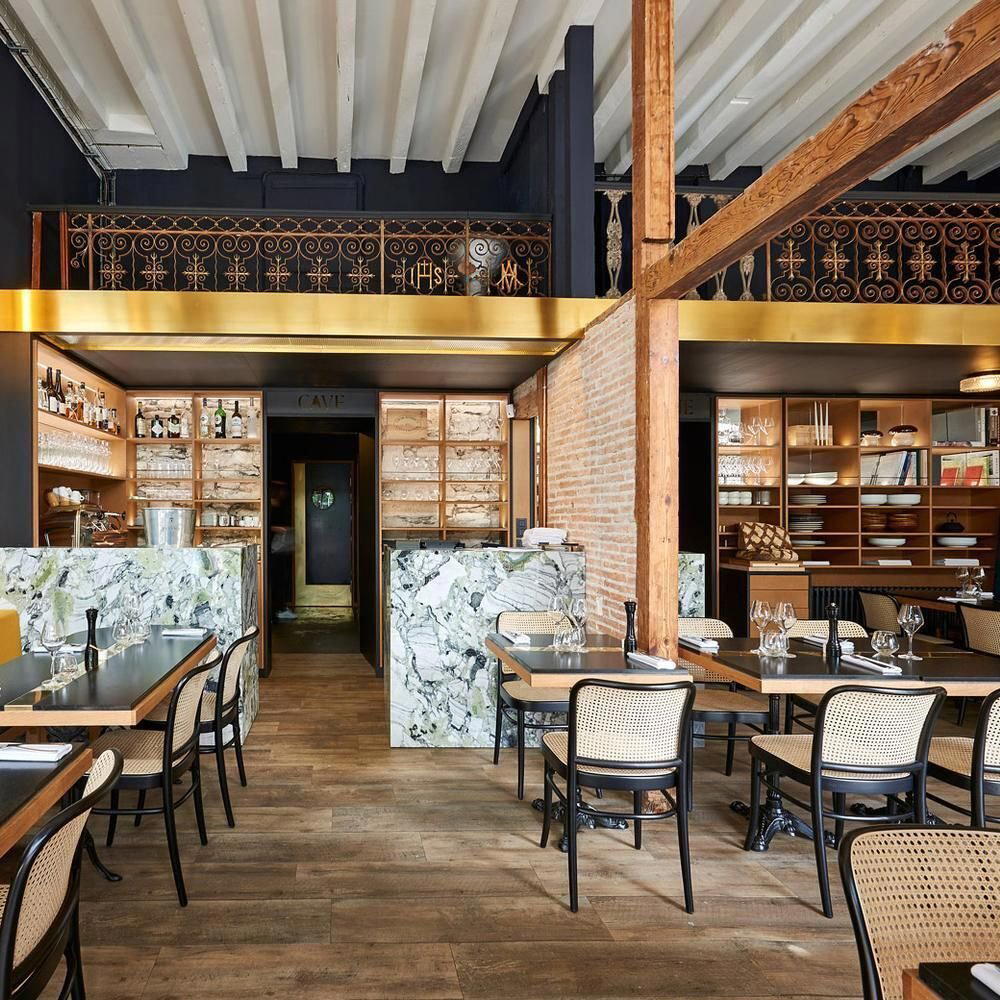
Where the Loire Meets Creative Cooking
Nantes occupies an odd position in France's culinary hierarchy: too far from Paris to attract the reflexive attention that city commands, too rooted in Atlantic and Loire produce to be dismissed as a provincial afterthought. The restaurants along Quai Turenne make that ambivalence productive. Sépia, at number 1 on that quayside address, sits within a dining culture that has been quietly building a case for Nantes as one of western France's more interesting cities for considered, creative cooking.
The quai itself frames the experience before you arrive at a table. The Loire runs wide here, and the light off the water does what estuary light does in this part of France: it shifts the mood of a room depending on the time of day and the season. That geographical specificity matters to creative kitchens operating in the €€€ tier, where the sourcing story and the sense of place are as load-bearing as technique.
Creative Cuisine and Its Place in Nantes' Dining Tier
French creative cuisine — as distinct from classical French technique or the bistronomy wave — occupies a particular position in the country's restaurant culture. It draws on classical foundations while refusing their constraints, applying global references, modern preservation and fermentation techniques, and a looser relationship with the traditional course structure. For cities outside Paris, the creative label can mean different things depending on the kitchen's comparable set.
In Nantes, that comparable set is worth mapping carefully. L'Atlantide 1874 - Maison Guého operates at the €€€€ level with a longer institutional history and a heavier classical inheritance. Freia and Omija represent the more recent creative cohort, as does Les Cadets and Le Manoir de la Régate. Sépia prices at €€€, which places it in the middle of the serious dining tier here, above the neighbourhood bistro but below the full-ceremony end of the spectrum. That bracket tends to produce energetic cooking in any city, because the kitchen has enough budget to execute properly without the institutional conservatism that sometimes settles over higher-priced rooms.
Chef Andrew Zimmerman's presence at Sépia carries weight that extends beyond local context. Appearing in that list at all signals a level of consistent execution that goes beyond neighbourhood recognition. Combined with the Michelin Plate awarded in 2025, the picture is of a kitchen with credentials in multiple evaluation frameworks.
The Cultural Roots of Creative Cooking at This Level
Creative cuisine as a category has its own intellectual history in France. The formal break from classical structure accelerated in the 1990s and 2000s, producing a generation of kitchens willing to treat technique as a tool rather than a doctrine. The Loire Valley contributed to that shift in a specific way: its produce diversity, from Atlantic fish and shellfish to river varieties, market garden vegetables, and the Muscadet and Anjou wine traditions, gave creative chefs a broader palette than almost any other French region. A kitchen on the Nantes quayside has access to ingredients that coastal and inland kitchens elsewhere in France must source from a distance.
That regional foundation is part of what distinguishes serious creative cooking in this part of France from the creative label applied in cities with thinner local supply chains. The Loire's culinary tradition runs alongside France's grandest tables: Troisgros - Le Bois sans Feuilles in Ouches and Bras in Laguiole have each built international reputations on a similarly deep relationship with regional produce. The approach at Sépia, at its price point and with its recognition profile, belongs to that broader French tradition of treating geography as the starting argument rather than the finishing touch.
Internationally, creative kitchens operating in this register have counterparts at Mirazur in Menton, Alléno Paris au Pavillon Ledoyen, Flocons de Sel in Megève, and beyond France at Enrico Bartolini in Milan and JAN in Munich. The shared characteristic across those kitchens is an insistence on place as argument: the menu is not a neutral document but a position on what the surrounding region produces and how it should be treated.
Paul Bocuse and the Long Shadow of French Haute Cuisine
It is impossible to write about creative cooking in France without acknowledging the institution that defined the reference point for every departure from it. Paul Bocuse - L'Auberge du Pont de Collonges in Collonges-au-Mont-d'Or represents the architectural peak of classical French ambition. Creative kitchens like Sépia do not compete with that tradition so much as work in dialogue with it, selectively inheriting the precision while discarding the ceremony. The Michelin Plate is not a star, but it represents the inspectorate's acknowledgment that the kitchen is cooking at a level worth recording.
Planning Your Visit
Sépia is located at 1 Quai Turenne in central Nantes, a short walk from the historic centre along the southern bank of the Loire. Reservations are essential, particularly for weekend services. The €€€ pricing positions dinner here comfortably below the city's most formal room at L'Atlantide but at a level where a full meal with wine will require a considered budget.
Recognition Snapshot
Comparable venues nearby, for context on price, style, and recognition.
| Venue | Cuisine | Price | Awards | Notes |
|---|---|---|---|---|
| SépiaThis venue — the venue you are viewing | Modern Mediterranean Bistro | $$$ | Michelin Plate | Not listed |
| Lamaccotte | Modern French Fine Dining | $$$ | Michelin Plate | quartier historique |
| Les Bouteilles | French Bistro with Wine Focus | $$$ | Michelin Plate | Talensac |
| Le Lion et l’Agneau | Modern French Bistro with South-West Accents | $$$ | Michelin Plate | Cité des Congrès |
| Les Chants d'Avril | French Bistronomy | $$ | Michelin Plate | Madeleine - Champ de Mars |
| Roza | Modern French Fine Dining | $$$ | Michelin Plate | Place de la Monnaie |
Recognition history
Dated appearances from independent guides and award organizations, with the underlying list record or original source where available.
Michelin Plate
Michelin
Continue exploring
More in Nantes
Restaurants in Nantes
Browse all →
Bars in Nantes
Browse all →
Hotels in Nantes
Browse all →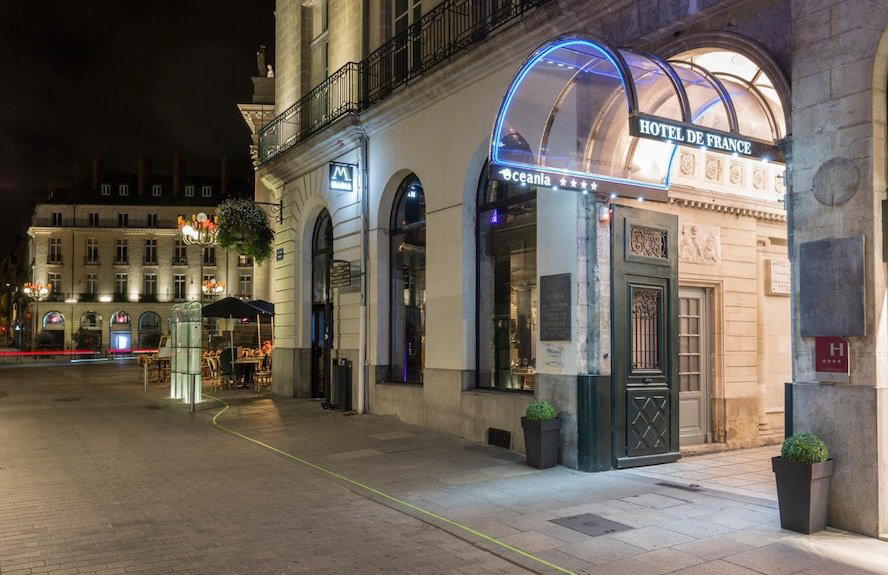

At a Glance
- Modern
- Elegant
- Intimate
- Cozy
- Date Night
- Special Occasion
- Celebration
- Open Kitchen
- Natural Wine
- Sommelier Led
- Beer Program
- Farm To Table
- Organic
- Local Sourcing
- Natural Wine
Current opening hours
- Monday
- Closed
- Tuesday
- 12:30–1:45 PM, 8–8:45 PM
- Wednesday
- 12:30–1:45 PM, 8–8:45 PM
- Thursday
- 12:30–1:45 PM, 8–8:45 PM
- Friday
- 12:30–1:45 PM, 8–9:45 PM
- Saturday
- 8–9:45 PM
- Sunday
- Closed
Hours can change for holidays and private events. Last verified .
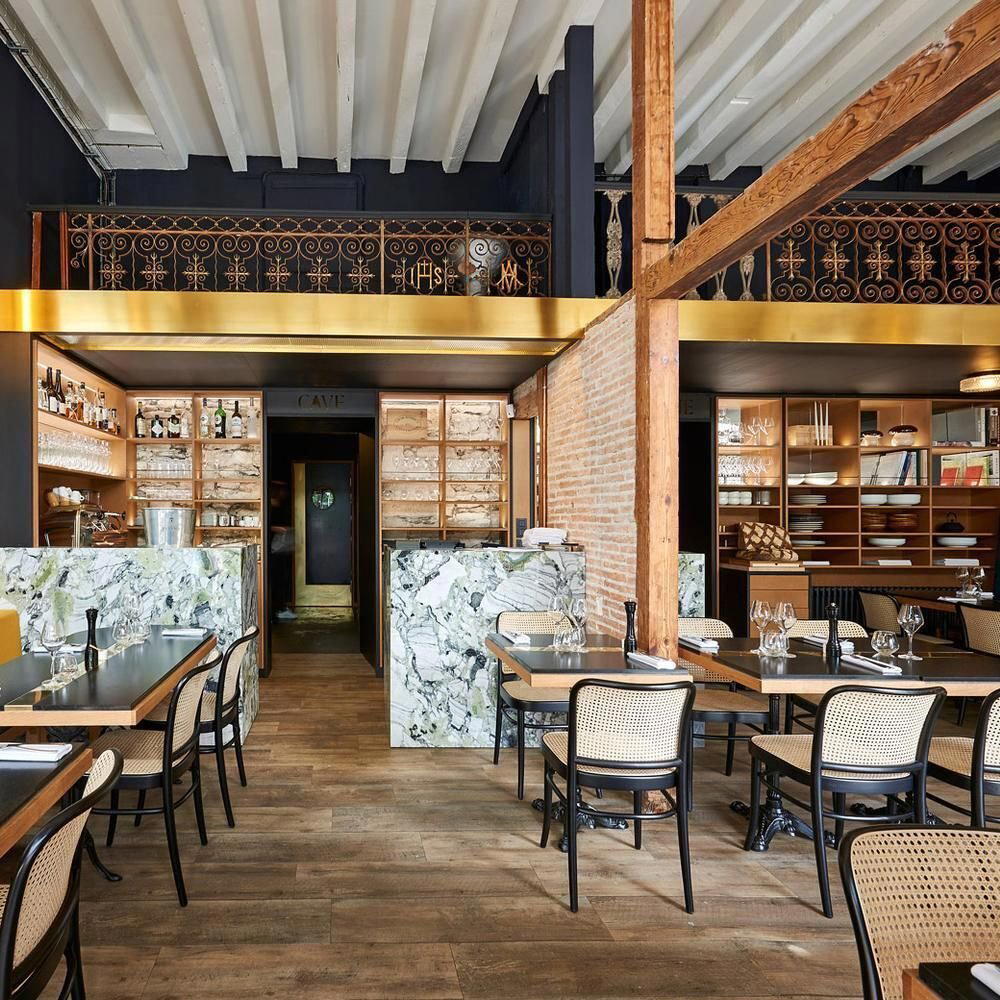
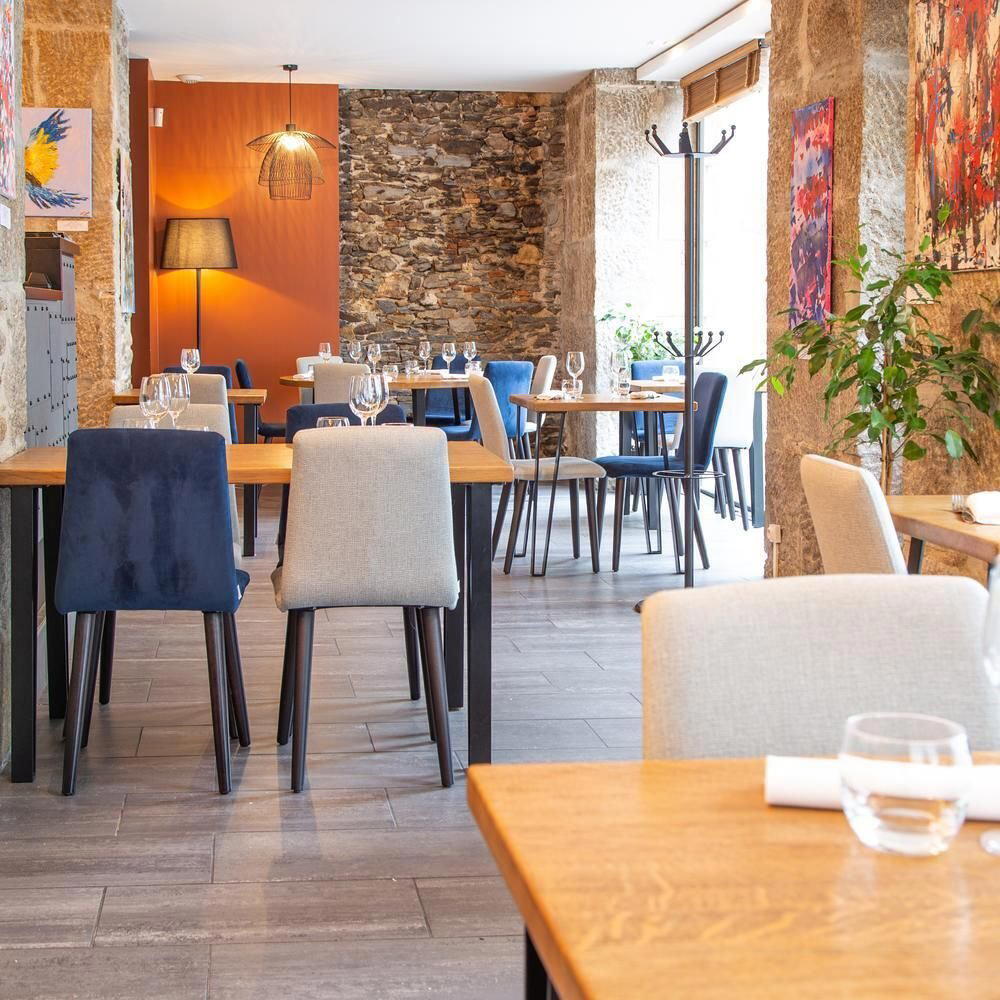
Bright, modern neo-bistro with beautiful stone walls, golden touches, and artisanal ceramics; luminous and welcoming with a relaxed, humorous service atmosphere.