
Tabelog 100 #85
Our verdict
Sendai’s beef culture has a quieter register than Tokyo’s steakhouse theatre, and Sendai Gyuu Yakiniku Hana Gyuu fits that mode: private-room yakiniku, tripe alongside Japanese barbecue cuts, and a drinks list spanning sake, shochu, and wine. Its repeated Tabelog 100 Yakiniku EAST selections place it in a serious regional bracket rather than the city’s casual grill lane.

Pearl is the En Primeur Club membership app, where members save venues, book tables and use the concierge.
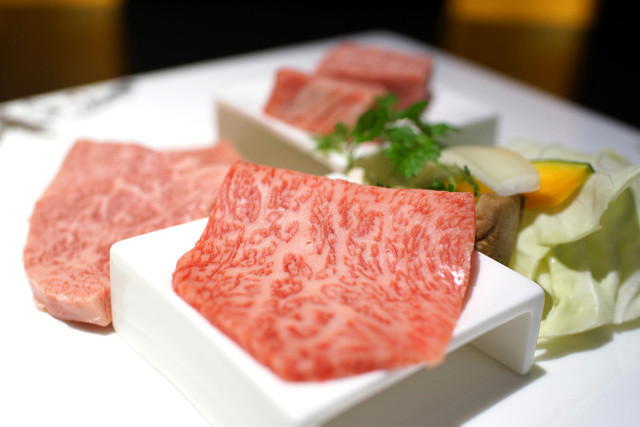
The menu
What to order
- Sendai beef yakiniku course
- Sendai beef sashimi
- Assorted yakiniku platter
Sendai gives the approach a polished city frame: urban edges, interior calm, and a dining room idea that trades street-market energy for contained heat, smoke discipline, and measured pacing. In Sendai, that matters. Yakiniku is not only about meat quality; it is about control, because the diner becomes part of the cooking process. The room has to support timing, conversation, and the small decisions that separate confident grilling from overhandling.
Sendai Gyuu Yakiniku Hana Gyuu belongs to the more focused end of the city’s beef circuit. The restaurant is listed for yakiniku and tripe, a pairing that says more than a long menu description would. Japanese barbecue often becomes a narrow conversation about marbling, but the better houses also understand offal, texture, and the sequencing of richer and leaner cuts. Tripe on the category line signals a kitchen format that does not treat beef as a single luxury object. It treats the animal as a range of textures, grill behaviours, and sauces.
Sendai beef culture, read through the grill
Tohoku dining is often framed through seafood, rice, and winter produce, but Sendai has a beef identity that sits beside those better-known signatures. Yakiniku here is less about spectacle than sourcing confidence and repeat local use. A restaurant does not need a chef mythology to make that point. The evidence is in category, format, and recognition: this venue is listed in the Tabelog Hyakumeiten source for 2025, with a Tabelog score of 3.66. That is a useful trust signal in a genre where outside coverage can be uneven beyond the largest cities.
The ingredient question is central. Yakiniku makes weak sourcing visible. Thin slicing cannot hide poor fat structure, and tripe demands careful handling before it reaches the table. The format also exposes buying discipline: diners compare cuts side by side, not buried under sauce or technique. Sendai Gyuu Yakiniku Hana Gyuu operates in that scrutiny-heavy lane, where the grill is both cooking tool and audit. This is why its reputation reads as a meat-house reputation first, not a general dining reputation with beef attached.
Against Sendai peers, the positioning is clear. Other Sendai dining rooms map different parts of the city’s dining range, while sou, Sushi Yui, Gout, Shinogi, and Murakamiya Mochi Ten show how quickly Sendai shifts from casual everyday eating to destination-driven meals. Hana Gyuu’s lane is narrower: beef-led, grill-led, and built for diners who want yakiniku to carry the evening rather than function as a quick stop.
Composed yakiniku changes the pace
The more composed structure is not a minor comfort detail. It changes the social grammar of yakiniku. Faster barbecue leans toward volume, turnover, and shared noise; a calmer meal can slow the evening down and make ordering more deliberate. For small groups and occasion-minded diners, that format suits Sendai’s less performative hospitality style. The experience is best read through the grill rather than through added claims about amenities that can change from one visit to the next.
Drinks and pacing should be approached practically rather than mythologised. Yakiniku’s seasoning range can move from salt-led cuts to sauce-driven plates and tripe, and richer beef needs enough flexibility around the table to stay balanced. The stronger meals do not force a single pairing ideology; they give diners enough structure to move between fat, char, and mineral snap without turning the table into a seminar.
Its Sendai setting is another clue to its current role. A city location places the restaurant within Sendai’s broader dining traffic, without converting it into a tourist-facing caricature. For travelers building a broader food itinerary, the city rewards contrast: beef one night, sushi or wagashi the next, then bars or cultural stops around the centre. Start with Our full Sendai restaurants guide, then cross-reference Our full Sendai hotels guide, Our full Sendai bars guide, Our full Sendai wineries guide, and Our full Sendai experiences guide for the rest of the trip architecture.
Where it fits in Japan's broader beef conversation
Japan’s beef restaurants split into several camps: sukiyaki specialists, steak counters, horumon shops, and yakiniku rooms where the guest controls the final seconds of heat. Hana Gyuu’s value is in that last category. It asks for attention but not ceremony. Compared with other beef-led dining elsewhere in Japan, the logic is less about simmered sweetness and more about direct heat. Compared with broader seafood-and-charcoal formats, the protein focus narrows, and the grill becomes a study of beef rather than a general charcoal idiom.
That specificity is the reason to go. Sendai has plenty of meals that can fill a schedule; this is for the night when beef is the point, not a supporting act. The restaurant’s Tabelog score of 3.66 and 2025 Tabelog Hyakumeiten recognition give external shape to what the format suggests: a serious regional yakiniku room with enough polish for occasion dining and enough category focus to satisfy diners who care about sourcing, cut selection, and how heat behaves at the table.
For wider Japan planning, the comparison web can stretch far beyond beef. Other dining rooms across Japan show how sharply regional dining categories can differ within one country, while Japanese drinking and casual-food ideas travel differently abroad. Hana Gyuu’s argument is more local: Sendai, handled through a yakiniku format, with enough recognition to make it a credible anchor meal rather than a fallback dinner.
Frequently asked questions
Where exactly is Sendai Gyuu Yakiniku Hana Gyuu?
Sendai.
Is Sendai Gyuu Yakiniku Hana Gyuu expensive?
Pricing at Sendai Gyuu Yakiniku Hana Gyuu is listed as Dinner: JPY 10,000 - JPY 14,999; Lunch: JPY 3,000 - JPY 3,999.
Is Sendai Gyuu Yakiniku Hana Gyuu reservation-only?
The public record provided here does not establish that it is reservation-only. Dinner pricing is listed at JPY 10,000 - JPY 14,999, while lunch is listed at JPY 3,000 - JPY 3,999. Check the venue's official channels for the latest details.
What has Sendai Gyuu Yakiniku Hana Gyuu built its reputation on?
Its clearest provided credential is inclusion in the 2025 Tabelog Hyakumeiten source, with a listed Tabelog score of 3.66. The restaurant is also defined by yakiniku and tripe in Sendai.
Do they accommodate allergies at Sendai Gyuu Yakiniku Hana Gyuu?
With a phone number provided, +81-22-266-7716, the practical move is to raise allergy needs before the visit. Check the venue's official channels for the latest details.
Comparable Spots, Quickly
Comparable venues by cuisine and price in the same metro.
| Venue | Cuisine | Price | Awards | Notes |
|---|---|---|---|---|
| Sendai Gyuu Yakiniku Hana GyuuThis venue (the venue you are viewing) | Sendai wagyu yakiniku in private rooms | $50–100 | Tabelog 100 #85 | Not listed |
| 松石 | Modern Chinese with Miyagi Ingredients | $50–100 | Tabelog Bronze #263 | Sendai |
| Yonezawa Gyuu Yakiniku Kotora Sendai ekimae ten | Premium Yonezawa Wagyu Yakiniku | $50–100 | Tabelog 100 #21 | Aoba-ku Chuo (Sendai Station area) |
| Shirayuki | Japanese Izakaya | $30–50 | Tabelog 100 #71 | Aoba Ward |
| Sushi Mino | Sushi Omakase | Not listed | Tabelog 100 #47 | Kokubuncho |
| Yoru no Yakizakana Chocho Musubi | Seafood-focused Japanese Izakaya | $30–50 | Tabelog 100 #28 | Aoba Ward |
Recognition history
Dated appearances from independent guides and award organizations, with the underlying list record or original source where available.
Tabelog 100 #85 · No. 85
Tabelog · Tabelog 100 - Yakiniku - EAST - 2025
Continue exploring
More in Sendai
Restaurants in Sendai
All restaurants in Sendai →
Hotels in Sendai
Browse all →
Wineries in Sendai
All wineries in Sendai →
Details
- Intimate
- Elegant
- Quiet
- Cozy
- Business Dinner
- Date Night
- Group Dining
- Special Occasion
- After Work
- Private Event
- Private Dining
- Standalone
- Extensive Wine List
- Local Sourcing
- A La Carte
- Set Menu
- Wine
- Beer
- Sake
Calm, refined atmosphere with fully private rooms that create a quiet, secluded feel suited to leisurely meals, business dinners, and special occasions.