
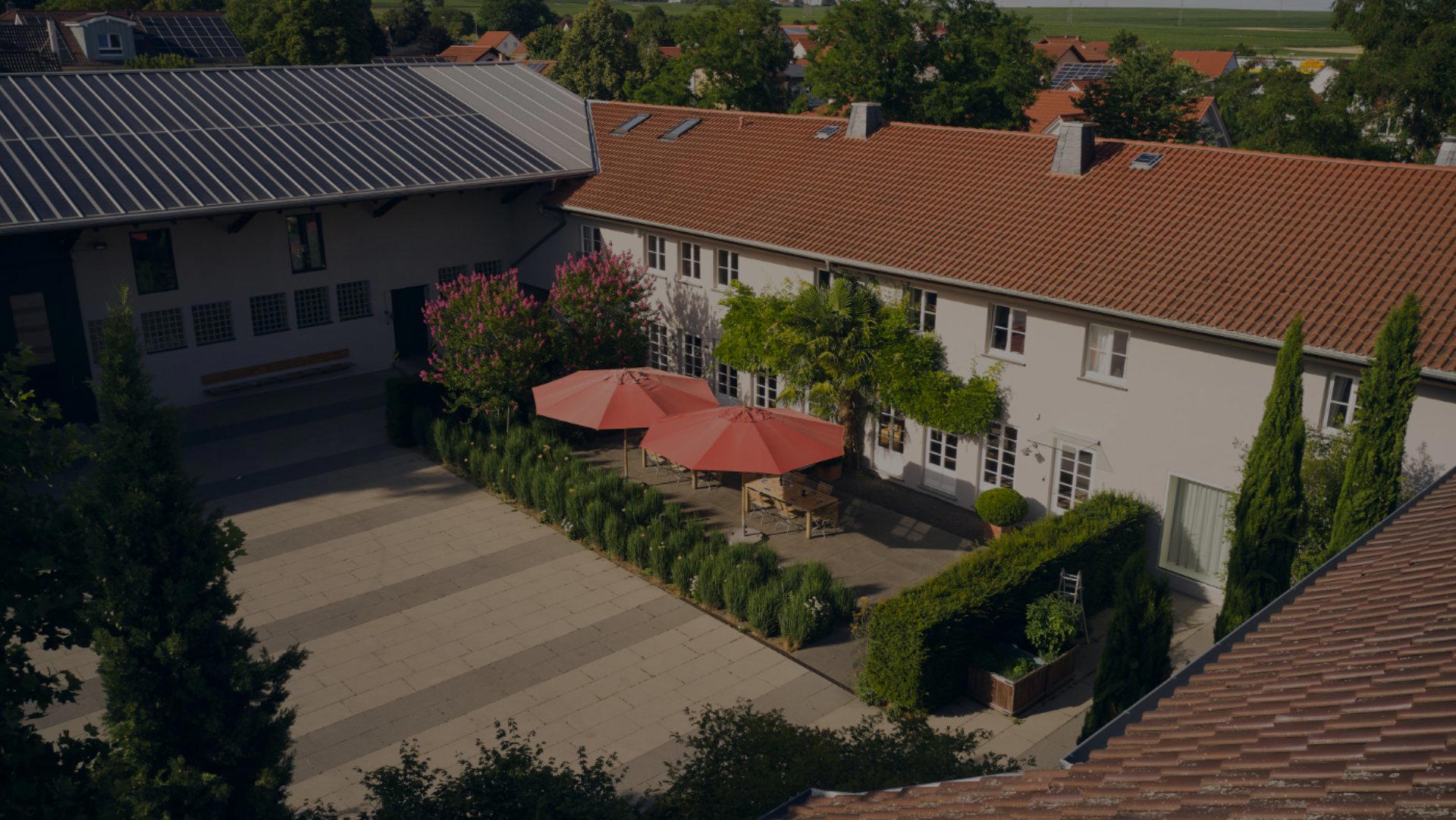
Schlosspark Restaurant by Tristan Brandt occupies a prime position beside Weinheim's castle park, where a terrace framed by historic greenery gives way to an interior that layers classical mouldings with contemporary design. The menu moves with unusual range, from afternoon Flammkuchen and cake through to caviar, truffle fries, Wiener schnitzel, and Tristan Brandt's own signature additions. It is one of the more considered addresses in the Bergstraße region's emerging fine dining conversation.
Pearl is the En Primeur Club membership app — saves, bookings, and concierge access live there. Same editors, same standards.
- Address
- Obertorstraße 9
- Phone
- +49 6201 7048404
- Directions
- Get directions
 Saves & bookings on Pearl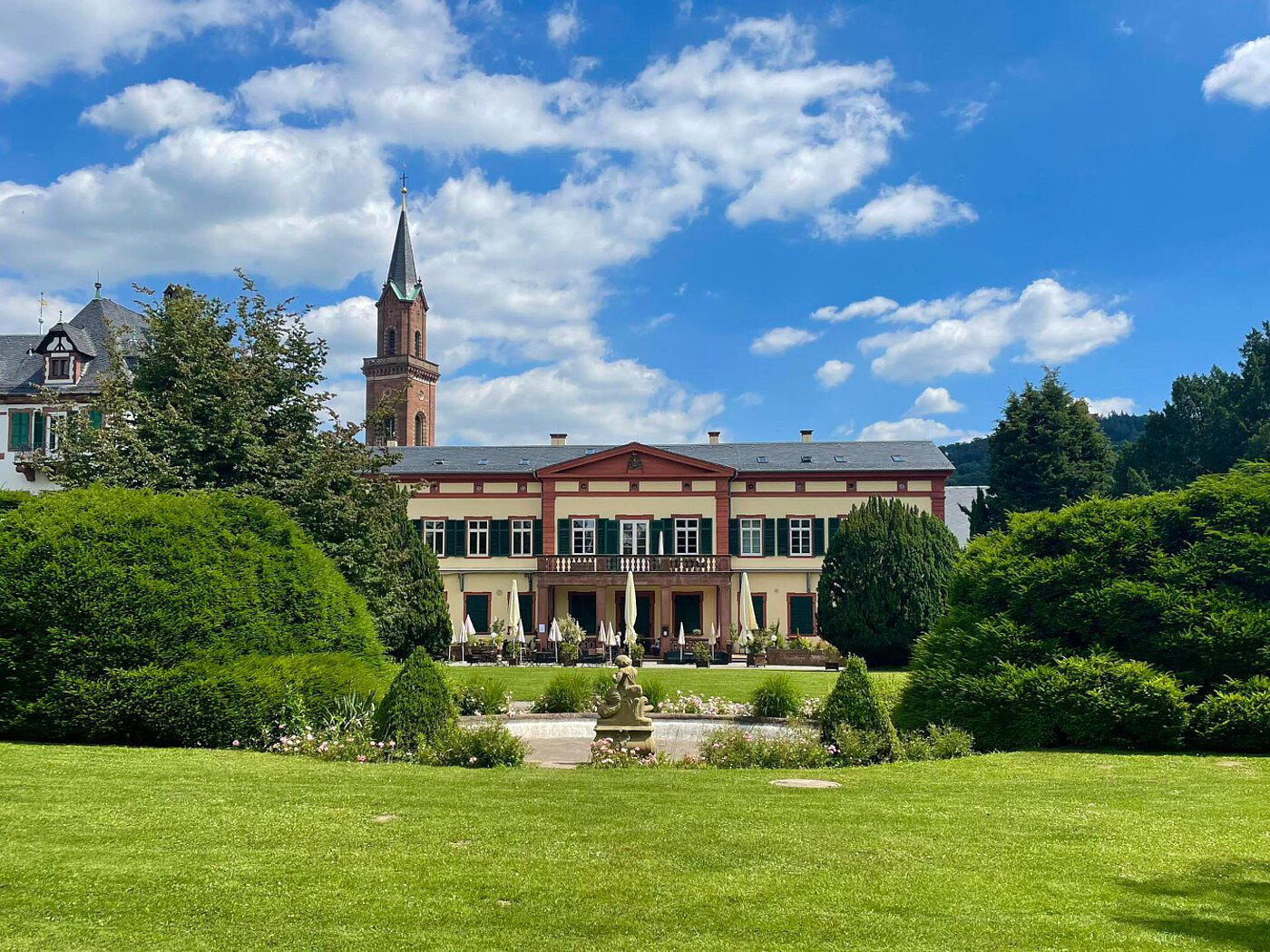
Castle Grounds, Open Table
Schlosspark Restaurant by Tristan Brandt is a restaurant in Weinheim at Obertorstraße 9, serving modern international fine dining with a smart casual dress code and recommended reservations. There are restaurants that earn their setting and restaurants that coast on it. Schlosspark Restaurant by Tristan Brandt, positioned directly beside the castle park at Obertorstraße 9 in Weinheim, appears to be making a serious case for the former. The approach through the park's perimeter sets an expectation of occasion, and the terrace carries that through: an outdoor space framed by century-old trees and castle architecture, where afternoon coffee and cake arrives in the same register as a caviar course later in the evening. That tonal range is part of the restaurant's distinct positioning within Germany's broader fine dining conversation.
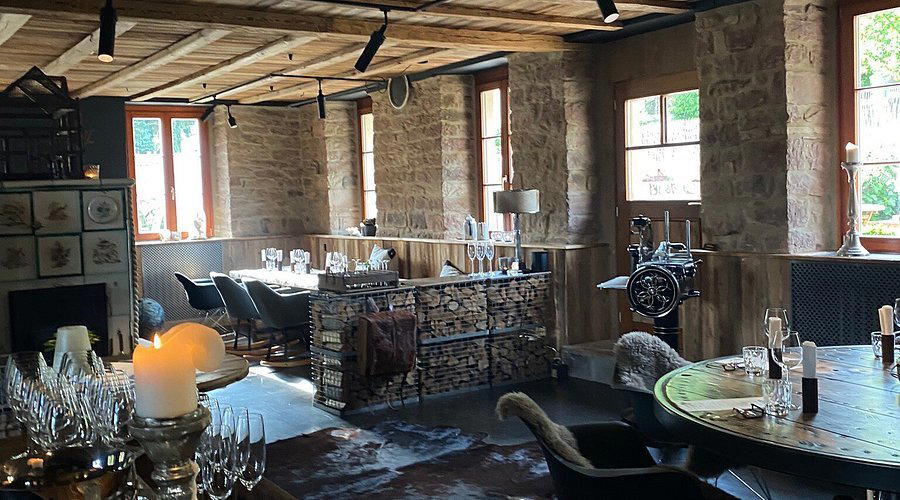
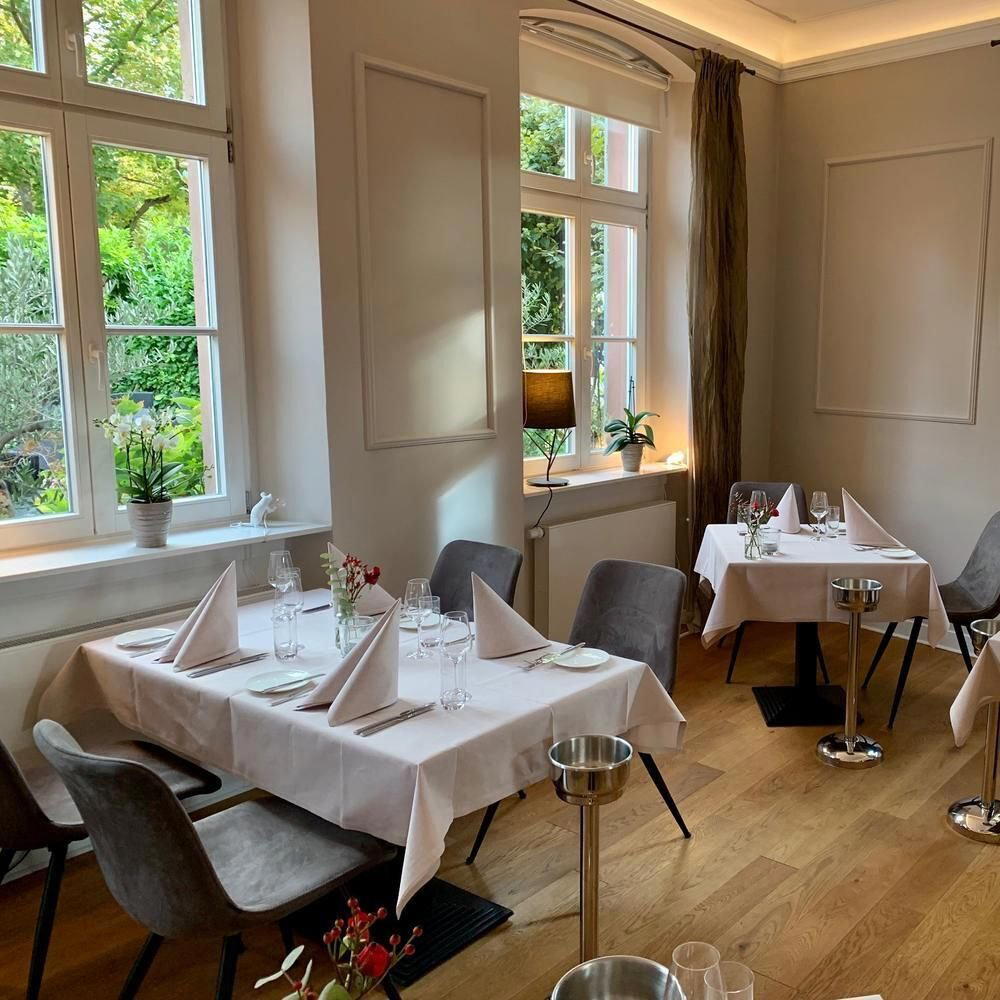
Inside, the dining room resolves what is often a difficult design negotiation in historic European buildings: classical architectural detail, here expressed through ornate mouldings, is held in tension with contemporary furnishings and finishes. The effect is a room that reads as chic without feeling anachronistic. For a region like the Bergstraße, this kind of interior investment signals intent.
A Menu Built for More Than One Occasion
The menu structure at Schlosspark Restaurant is one of the more honest expressions of how fine dining actually functions in mid-sized German cities. Rather than committing to a single prix-fixe format, the kitchen operates across registers. Afternoon service includes Flammkuchen and cake, the latter grounding the restaurant in a regional café tradition that has genuine cultural weight in the Rhine-Neckar corridor. By evening, the register shifts: truffle fries and caviar arrive as Tristan Brandt's own signature contributions, alongside classical main courses including Wiener schnitzel with warm potato salad and char alongside beef fillet.
This range matters. At Aqua in Wolfsburg or Schwarzwaldstube in Baiersbronn, the format is fixed and the commitment total. That model suits destinations where guests travel specifically to dine. Weinheim is a different proposition: a town with genuine architectural and viticultural character, where a restaurant needs to function for a local regulars' lunch, an afternoon terrace visit, and a special-occasion dinner. Schlosspark Restaurant addresses all three without the menu feeling incoherent.
The Sourcing Question on the Bergstraße
Any kitchen positioned this close to Germany's Bergstraße, one of the country's oldest and warmest wine and agricultural corridors, is operating with a particularly well-stocked larder nearby. The region sits between the Rhine plain and the Odenwald hills, and its microclimate is warm enough to support almonds, sweet chestnuts, figs, and early-harvest asparagus alongside more typical German produce. What that means for a kitchen emphasising ingredients like char, beef fillet, and seasonal accompaniments is access to produce of unusual specificity for this latitude.
Tristan Brandt's specials, the truffle fries and caviar in particular, are placed in a menu context that implies sourcing judgment rather than novelty. Truffle as a fine dining signifier carries risk of becoming a shorthand for aspiration rather than a genuine flavour argument. When it appears alongside warm potato salad and Wiener schnitzel, the implication is that it earns its place on flavour terms rather than price-tier signalling alone. The structural logic is sound.
For context on ingredient-led dining in the broader German fine dining scene, the comparison set is instructive. JAN in Munich and ES:SENZ in Grassau both operate with strong regional sourcing disciplines at the four-star price tier. Schanz in Piesport draws on Moselle valley produce as a structural part of its identity. Schlosspark Restaurant's version of this argument is less formally codified but no less geographically grounded, given where Weinheim sits relative to the agricultural and viticultural resources of the upper Rhine.
Where It Sits in Weinheim's Dining Options
Weinheim's restaurant scene is not large, but it is more considered than its size might suggest. Bistronauten represents the farm-to-table end of the local offer, while Ziegler operates in an international register. Schlosspark Restaurant occupies the premium tier, its castle-park address and Tristan Brandt's name functioning as the quality signal in a market that does not yet have a deep bench of fine dining competition. That position brings both advantage and responsibility: the restaurant is not competing against a dozen similar addresses for the same customer, but it is also operating with fewer local reference points to calibrate against.
For visitors building a broader Weinheim itinerary, the full Weinheim restaurants guide covers the current range of options across price tiers and styles. The Weinheim hotels guide, bars guide, wineries guide, and experiences guide round out the practical picture.
Planning a Visit
Schlosspark Restaurant sits at Obertorstraße 9, directly adjacent to the castle park, which makes it direct to combine with a walk through the grounds. The terrace is one atmospheric point of entry for a first visit, particularly in the warmer months when the castle architecture and mature trees frame the space at its most characteristic. Given the restaurant's position as the premium address in a town without a long queue of equivalent competitors, same-week bookings may be more available here than at destination fine dining addresses like Vendôme in Bergisch Gladbach or Victor's Fine Dining by Christian Bau in Perl, The multi-register menu format means the restaurant functions across visit lengths, from a terrace afternoon to a full dinner service, without requiring a single large commitment from the guest.
Comparable Spots, Quickly
Comparable venues nearby, for context on price, style, and recognition.
| Venue | Cuisine | Price | Awards | Notes |
|---|---|---|---|---|
| Schlosspark Restaurant by Tristan BrandtThis venue — the venue you are viewing | Modern International Fine Dining | $$$ | Michelin Plate | Not listed |
| bistronauten | Modern German Bistro | $$$ | Michelin Plate | Weinheim |
| esszimmer das Restaurant | Dining | Not listed | Michelin Plate | Weinheim |
| Ziegler | Modern German Fine Dining | $$ | Bib Gourmand | Weinheim center |
| Waid Lake Steakhouse & More | Steakhouse with Italian influences | $$$ | Not listed | Weinheim |
| Anders auf dem Turmberg | Modern Regional Tapas with Mediterranean Influences | $$$ | Michelin Plate | Durlach |
Recognition history
Dated appearances from independent guides and award organizations, with the underlying list record or original source where available.
Michelin Plate
Michelin · 2026 Michelin Plate
Continue exploring
More in Weinheim
Restaurants in Weinheim
Browse all →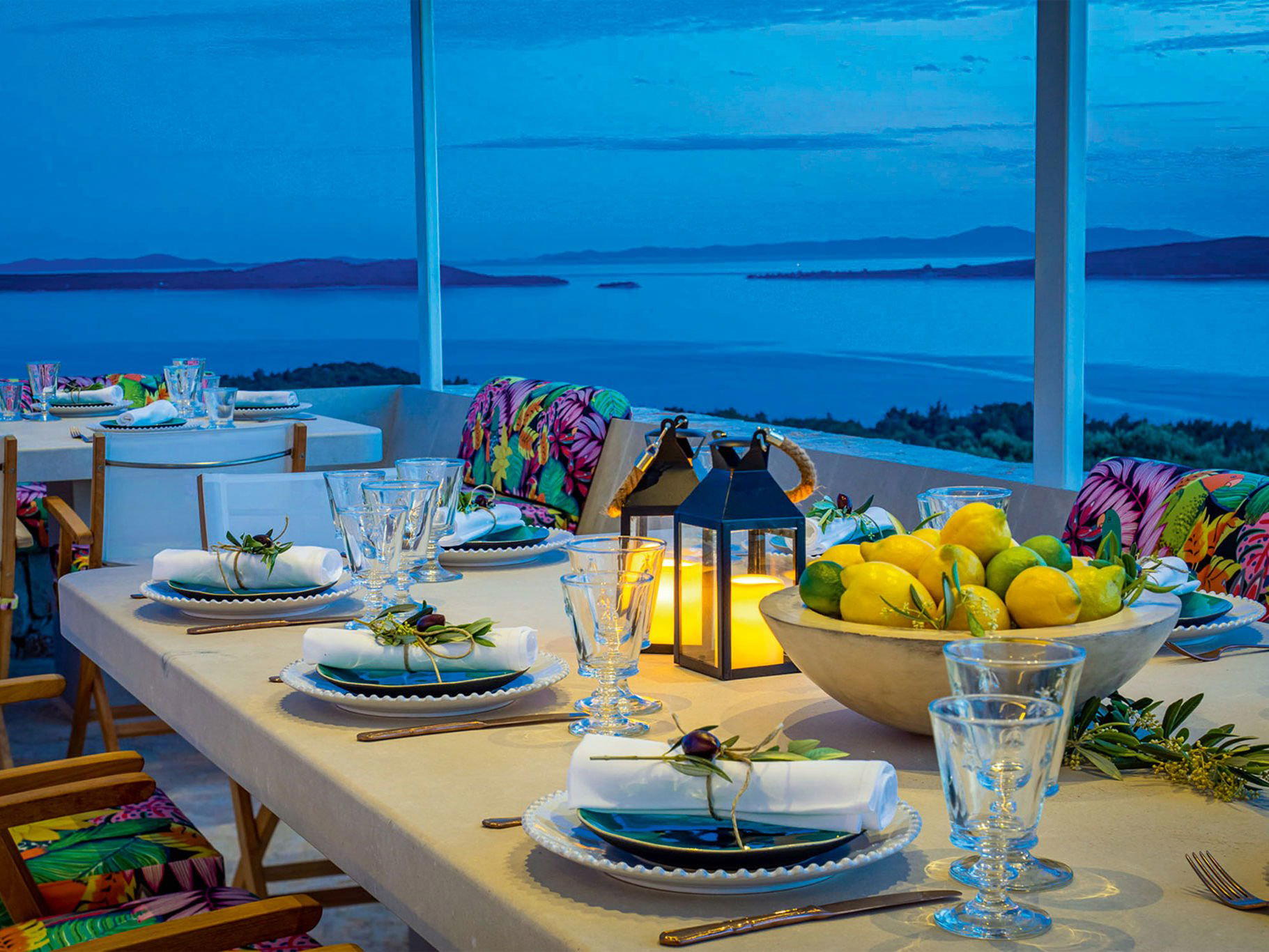
Bars in Weinheim
Browse all →
Hotels in Weinheim
Browse all →
At a Glance
- Elegant
- Modern
- Scenic
- Sophisticated
- Date Night
- Special Occasion
- Private Event
- Terrace
- Garden
- Historic Building
- Garden
Current opening hours
- Monday
- 12–10 PM
- Tuesday
- 12–10 PM
- Wednesday
- 12–10 PM
- Thursday
- 12–10 PM
- Friday
- 12–10 PM
- Saturday
- 12–10 PM
- Sunday
- 12–10 PM
Hours can change for holidays and private events. Last verified .
Chic interior blending mouldings with modern elements, idyllic terrace next to castle park.