Our verdict
In a city where Nicaraguan produce arrives at its most concentrated, Sapori d'Italia makes a case for Italian cooking rooted in local sourcing rather than import dependency. The setting reads as Matagalpa neighborhood fixture before it reads as foreign-cuisine outpost, and that positioning defines the experience. For travelers passing through Nicaragua's highland coffee country, it earns consideration alongside the broader Matagalpa dining scene.

Pearl is the En Primeur Club membership app — saves, bookings, and concierge access live there. Same editors, same standards.
- Address
- W3GM+933, Matagalpa, Nicaragua
- Phone
- +505 2772 5970
- Hours
- Mon 5–10 PMTue ClosedWed 5–10 PMThu–Sun 12–10 PM
- Directions
- Get directions
The menu
What to order
- Wood-fired pizza
- Bruschetta
Italian Cooking in the Coffee Highlands
Matagalpa sits at roughly 700 metres above sea level in north-central Nicaragua, and its elevation does something useful for food: the cooler temperatures that make the region one of Central America's most respected coffee-growing zones also support a broader range of vegetables, herbs, and dairy than the Pacific lowlands can reliably produce. That agricultural fact shapes the logic of any serious kitchen operating here. For a restaurant drawing on Italian culinary traditions, as Sapori d'Italia does, the question is never simply whether the food is Italian enough — it is whether the sourcing holds up, and whether highland Nicaragua can supply the raw material that makes the cuisine function at its intended register.
Italian restaurants operating outside Italy have always navigated a fundamental tension: the cuisine is ingredient-specific to a degree that few other traditions are. Pasta depends on flour and egg quality. Sauces built on tomato depend entirely on tomato character. In cities like New York or Hong Kong, that tension gets resolved through import supply chains — the same approach that allows restaurants like 8½ Otto e Mezzo Bombana in Hong Kong or Amber to operate with reference-grade European product. In Matagalpa, that calculus shifts. The practical ceiling on imported goods is lower, which redirects attention toward what the local growing environment actually offers.
What the Highlands Supply
Nicaragua's northern highlands have a food-production profile that is often underestimated by travelers moving through the country's more heavily toured routes. The department of Matagalpa produces coffee at altitude, but also sustains smallholder farming of root vegetables, fresh herbs, tomatoes, and corn-based staples that form the backbone of Nicaraguan domestic cooking. That supply base is not Italian by origin, but Italian cooking in its regional forms, particularly across Lazio, Umbria, and the Italian south, has always operated from a principle of making do with what the land gives, rather than adhering to a fixed ingredient list. The application of that principle in a Nicaraguan highland context is, in practice, what distinguishes kitchens like Sapori d'Italia from tourist-facing operations that attempt faithful replication without the logistics to support it.
For travelers calibrating expectations: the frame here is not the white-tablecloth formality of Arpège in Paris or the high-technique Italian-influenced cooking of Atelier Moessmer Norbert Niederkofler in Brunico. Those references operate in entirely different tiers of investment and sourcing infrastructure. The relevant comparison set for Sapori d'Italia is the wider Matagalpa dining scene, which you can survey through our full Matagalpa restaurants guide, and the handful of restaurants across Nicaragua attempting cuisines that travel, including Café de las Sonrisas in Granada, which operates with a socially driven model in a similarly non-cosmopolitan city context.
The Neighborhood Position
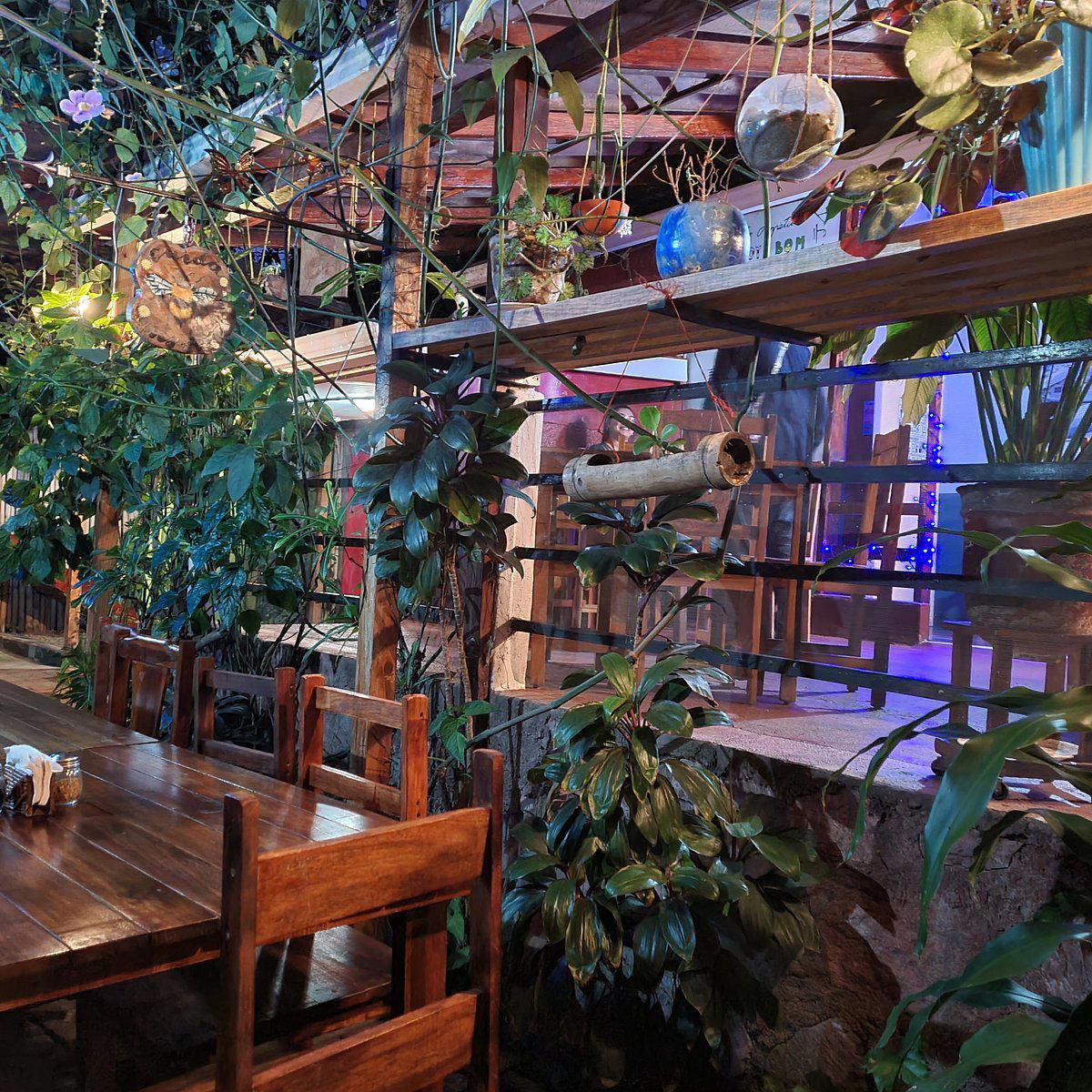
Sapori d'Italia is located at W3GM+933 in Matagalpa, a plus-code address that places it within the city's street grid rather than along any tourist-specific corridor. Matagalpa is not a city that organizes itself around dining districts in the way that Managua does along its main commercial axes, or that Granada does around the colonial centro. Restaurants here operate as neighborhood anchors for a local population, not as stops engineered for foreign itineraries. That positioning is worth understanding before arrival: the atmosphere reads as a functioning local fixture first, an Italian-cuisine offering second.
For Nicaraguan cities that do see consistent international traffic, cuisine variety is partly a function of the expat community and partly of local appetite for non-traditional food. Matagalpa, with its NGO presence and sustained coffee-industry contacts with European buyers, has historically supported slightly more varied restaurant formats than its size alone would suggest. Italian cooking fits that pattern: it is familiar enough to a European-adjacent audience to generate repeat custom, while being sufficiently different from the Nicaraguan everyday to register as a destination rather than a default.
Placing It in the Wider Nicaragua Picture
Across Nicaragua, the restaurant sector has developed unevenly since the early 2010s. Managua holds the concentration of higher-investment kitchens, including meat-focused formats like Porterhouse Steaks in Managua, which operate in a commercial dining register aimed at a domestic professional class and business travelers. Granada functions as the colonial tourism hub, with a denser cluster of options per capita. Matagalpa sits in a different category: a working city with a distinctive agricultural identity where food tourism is secondary to coffee tourism and where restaurants succeed on local repeat business rather than on travel-guide positioning.
That distinction matters for sourcing. A kitchen in Matagalpa that is buying from local markets is buying from the same supply network that feeds the city's households, fresh, short-supply-chain, and priced against local purchasing power rather than against import costs. For Italian cooking, that means working with what arrives seasonally and locally rather than specifying from an international catalogue. Kitchens that accept that constraint and cook accordingly tend to produce food with more actual character than those that attempt faithful imported replication and fall short on execution. The better Italian restaurants operating outside Western Europe in mid-tier cities have generally learned this: the cooking gets stronger when it adapts to place rather than resisting it.
The broader Michelin-tier Italian conversation, which runs through addresses like Alain Ducasse at Louis XV in Monte Carlo and the French-Italian overlap at Alléno Paris au Pavillon Ledoyen, is not the relevant register here. Nor is the progressive American framework that houses Alinea in Chicago or Le Bernardin in New York City. Sapori d'Italia is a neighborhood Italian restaurant in a Nicaraguan highland city, and it earns assessment within that frame, where the standard is consistency, sourcing intelligence, and whether the cooking reflects the environment it operates in.
Planning a Visit
Matagalpa is approximately 130 kilometres north of Managua by road, with journey times of two to three hours depending on traffic and route conditions. The city is served by intercity bus from Managua's Mayoreo terminal and by private transport, which is the more practical option for travelers arriving with luggage or continuing to coffee-country destinations further north. The plus-code address W3GM+933 is navigable via Google Maps offline, which is advisable given that street-level signage in Matagalpa's older quarters can be inconsistent. No booking platform or dress code information is confirmed.
Frequently asked questions
What kind of setting is Sapori d'Italia?
The venue sits within Matagalpa's urban street grid at address W3GM+933, away from the tourist corridors that concentrate along the city's main commercial strips. That positioning puts it in everyday neighbourhood territory rather than a resort or heritage-district showcase. The surrounding city sits at roughly 700 metres elevation, which gives the area a cooler, quieter character than Nicaragua's Pacific lowlands.
Why visit an Italian restaurant specifically in Matagalpa rather than Managua?
Matagalpa sits at the centre of Nicaragua's northern highland agricultural zone, a food-production area that remains less explored by travellers who pass through rather than stop. Sapori d'Italia is one of the few Italian-concept kitchens operating outside Managua, where the country's higher-investment restaurant sector is concentrated — making it a notable option for anyone already in the city for coffee-region travel or highland trekking.
What do regulars order at Sapori d'Italia?
What is known is that the restaurant operates within the Italian cuisine category in a highland city whose agricultural surrounds produce coffee, fresh produce, and dairy at elevation — ingredients that commonly appear in northern Nicaraguan kitchen contexts.
Comparable Spots, Quickly
Comparable venues nearby, for context on price, style, and recognition.
| Venue | Cuisine | Price | Notes |
|---|---|---|---|
| Sapori d'ItaliaThis venue — the venue you are viewing | Italian Pizza & Pasta | $1–10 | Not listed |
| Café de las Sonrisas | Nicaraguan Cafe | $1–10 | Centro |
| Shanghai China Bistro | Authentic Cantonese Chinese | Not listed | Managua |
| Pita Pita Fun Food | Middle Eastern | Not listed | Granada |
| Porterhouse Steaks | Premium Steakhouse | $30–50 | Las Colinas |
| NM Culinary | Mediterranean-inspired Farm-to-Table | $50–100 | historical center |
Details
- Cozy
- Rustic
- Intimate
- Family
- Casual Hangout
- Date Night
- Open Kitchen
- Terrace
- A La Carte
- Vegetarian Friendly
- Vegan Options
Current opening hours
- Monday
- 5–10 PM
- Tuesday
- Closed
- Wednesday
- 5–10 PM
- Thursday
- 12–10 PM
- Friday
- 12–10 PM
- Saturday
- 12–10 PM
- Sunday
- 12–10 PM
Hours can change for holidays and private events. Last verified .
Cozy and charming atmosphere with natural material decorations, abundant plants, and open-air patio seating.