Salt Lick
Our verdict
Salt Lick at DFW's Terminal A Gate A16 brings Central Texas barbecue tradition into one of the country's busiest transit hubs. The original Salt Lick in Driftwood, Texas has fed generations of Texans on post-oak-smoked brisket and beef ribs, and the airport outpost carries that sourcing identity forward. For travellers connecting through Dallas-Fort Worth, it offers a genuine regional anchor in an otherwise generic concourse environment.

Pearl is the En Primeur Club membership app — saves, bookings, and concierge access live there. Same editors, same standards.
- Address
- Gate A16 (Terminal A), DFW Airport, TX 76051
- Directions
- Get directions
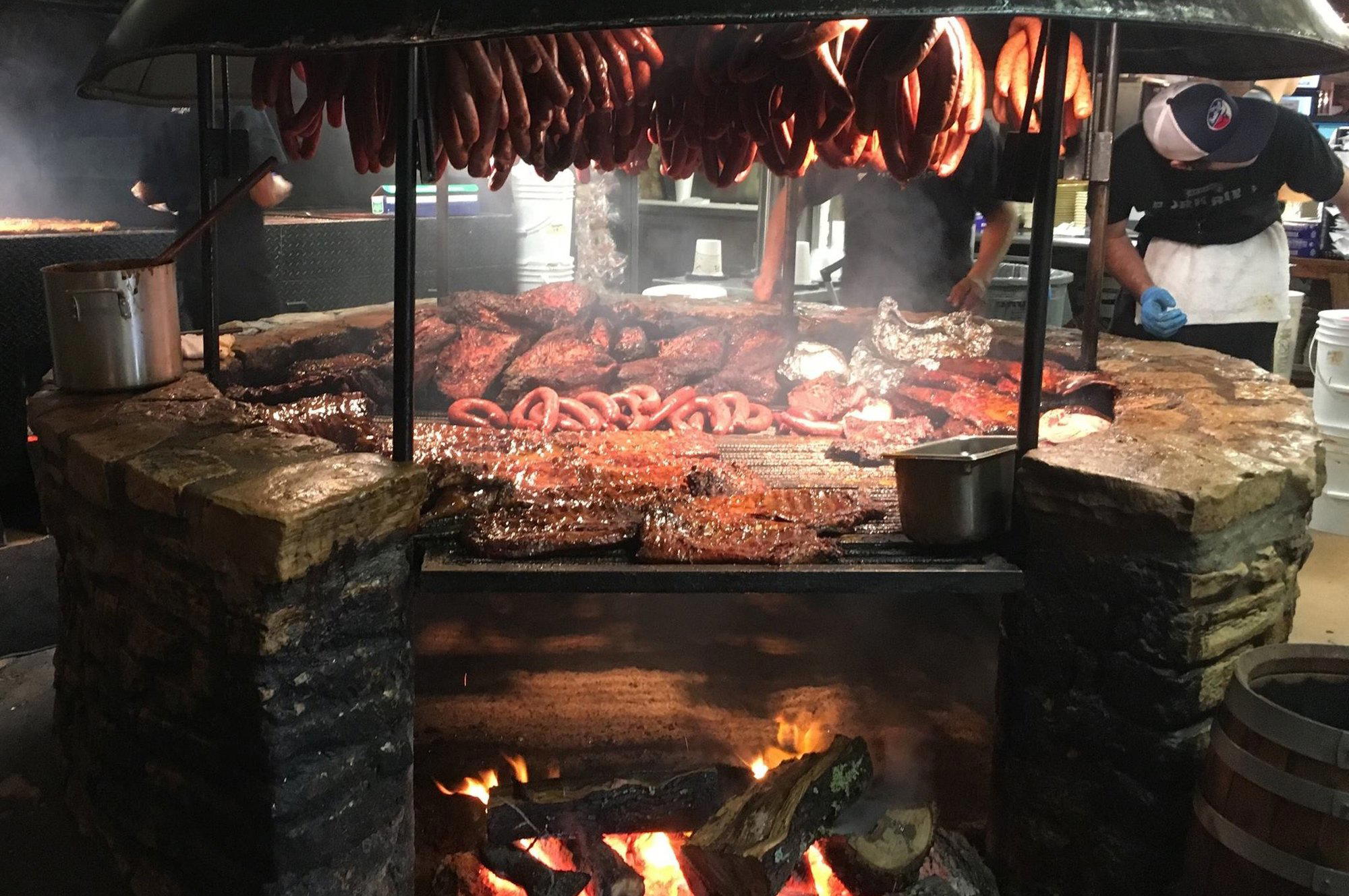
The menu
What to order
- Brisket
- Barbecue
Central Texas Smoke at 30,000 Feet of Altitude
Airport food courts rarely tell you anything about where you are. Salt Lick at Gate A16 in DFW's Terminal A is one of the exceptions. The smell of smoked meat registers before you see the signage, and in a concourse otherwise given over to familiar national chains, that specificity carries weight. Central Texas barbecue has a particular identity rooted in post-oak wood, minimal rub, and beef that speaks for itself, and Salt Lick, whose home base in Driftwood has operated for decades along those lines, represents that tradition more faithfully than most airport food manages to represent anything. For anyone passing through our full Dfw Airport restaurants guide, this is one of the concourse stops worth timing your gate assignment around.
Where the Food Comes From and Why That Matters
Central Texas barbecue's credibility has always lived in its sourcing specificity. Post-oak wood is not interchangeable with hickory or mesquite; it burns at a lower, more even heat and contributes a cleaner smoke signature that lets beef fat render without turning bitter. The Driftwood property, where the Salt Lick tradition was developed, sits in the Hill Country, a region whose German and Czech immigrant history shaped a barbecue style that was, from the beginning, about the meat rather than the sauce. Brisket is cut from the whole packer, ribs carry more fat than their Kansas City counterparts, and the open pit method the brand built its reputation on reflects a technique where fire management is the primary skill.
Ingredient sourcing in Texas barbecue also means thinking about beef grade and cattle provenance. The premium end of the American barbecue market, represented by operations like Blue Hill at Stone Barns in Tarrytown or the hyper-local sourcing frameworks at Single Thread Farm in Healdsburg, has pushed fine-dining audiences toward traceability as a baseline expectation. Texas barbecue arrived at a version of that conversation independently: the community of pitmasters in the Hill Country and around Austin has long understood that the quality of the animal determines the ceiling of what the smoke can do. Salt Lick's airport format operates within constraints that any concourse location imposes, but the lineage behind the brand reflects that sourcing sensibility.
What Sets This Apart from the Concourse Default
The airport barbecue format puts Salt Lick in a different competitive conversation than its Driftwood counterpart. At the original property, guests arrive, sit, and eat family-style in an environment designed around the experience of being in the Hill Country. At Terminal A, the format compresses into a counter-service model inside a travel corridor. That compression is worth acknowledging honestly: this is not the same as the full experience, and any traveller who has eaten at the Driftwood location will notice the difference in physical context.
What survives the compression, in principle, is the sourcing identity. The smoke flavour profile of Central Texas barbecue, when done correctly, is not easily replicated by operations without that regional grounding. Restaurants on the opposite end of the American dining spectrum, from Alinea in Chicago to Le Bernardin in New York City, achieve authority through precise technique applied to high-quality sourced ingredients. Salt Lick's version of that authority is different in register but not unrelated in logic: the wood, the beef, and the open-pit method are the technique, and they are inseparable from Central Texas geography.
For travellers who have eaten at Lazy Bear in San Francisco, The French Laundry in Napa, or Providence in Los Angeles, the register here is categorically different. Salt Lick at DFW is not in dialogue with tasting-menu culture. It is in dialogue with a regional food tradition that predates the modern fine-dining conversation entirely, and that is its legitimate claim to attention.
The Broader DFW Dining Context
Dallas-Fort Worth sits at the intersection of several distinct Texas food cultures: Gulf Coast seafood influence from Houston, Hill Country barbecue from the central corridor, and a metropolitan restaurant scene with strong steakhouse and Tex-Mex threads. The airport, as a transit point, has become one of the places where those regional identities get a chance to make a first or last impression. Operations like Bacchanalia in Atlanta and Addison in San Diego have demonstrated that regional identity can coexist with serious culinary ambition at destination-level restaurants. Salt Lick functions at a different scale and price point, but the underlying principle, that geography and sourcing practice should define what ends up on the plate, connects these operations across format and register.
Other airport terminals across the country have leaned into regional food identities with varying success. The challenge is always whether the sourcing integrity and preparation standards that define a regional tradition can survive the logistics of a high-volume concourse operation. At Terminal A Gate A16, Salt Lick's position as a brand with a documented regional history gives it more credibility in that argument than a generic barbecue concept would carry. Travellers connecting through DFW and curious about what the broader Texas food scene looks like can supplement this stop with research into destinations like Causa in Washington, D.C., ITAMAE in Miami, or Frasca Food and Wine in Boulder, all of which engage their own regional sourcing traditions at a different level of elaboration.
Planning Your Visit
Salt Lick is located at Gate A16 in Terminal A at DFW International Airport. Access requires a valid boarding pass for that terminal, so it is not an option for travellers departing from or arriving through other terminals without a connection routed through A. DFW is a major American hub with connections across North America and internationally, so a Terminal A routing is not unusual. The counter-service format means wait times scale with flight schedules, and peak boarding windows in the late morning and early afternoon tend to be the busiest periods. Arriving at the gate with thirty to forty minutes before boarding is a reasonable buffer if you want to eat without pressure. No reservation is possible or required.
Travellers who enjoy placing this kind of regional food stop in a wider culinary context may also want to look at Bruto in Denver, Atomix in New York City, The Inn at Little Washington, or 8 1/2 Otto e Mezzo Bombana in Hong Kong for a sense of what serious sourcing-driven cooking looks like across different price tiers and formats. Emeril's in New Orleans offers another useful reference point for how American regional food traditions translate into different dining formats.
Frequently asked questions
Would Salt Lick be comfortable with kids?
Salt Lick at Gate A16 in DFW's Terminal A is a counter-service barbecue format, which tends to work well for families with children — no formal pacing, no dress code friction, and the food is straightforward smoked meat. The airport setting means seating turns over quickly, so expect a more casual, cafeteria-style rhythm than a sit-down restaurant. Access requires a valid boarding pass for Terminal A, so the family needs to be traveling through that specific terminal.
What should I expect atmosphere-wise at Salt Lick?
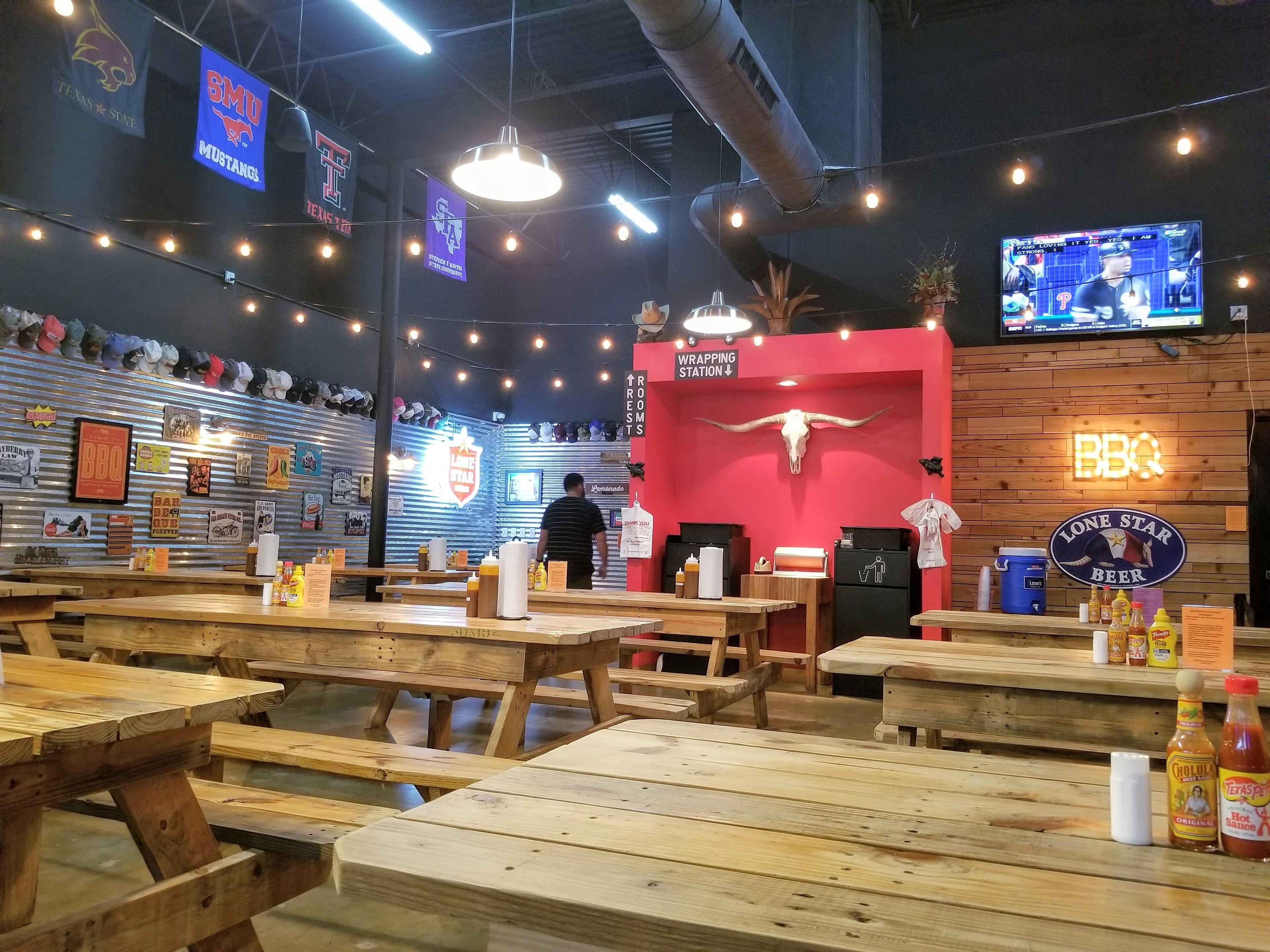
This is an airport concourse outpost, so the atmosphere is functional rather than atmospheric — the draw is the smell of smoke cutting through the usual terminal air and the credibility of the Salt Lick name behind the counter. Seating is shared and transient, geared toward travelers with a flight to catch rather than a leisurely meal. It occupies Gate A16 in Terminal A at DFW International, which shapes the pace and tone of every visit.
Is Salt Lick at DFW Airport accessible to non-travelers or day visitors?
No — Salt Lick at Gate A16 sits past security in Terminal A at DFW International Airport, which means access requires a valid boarding pass for that terminal. Travelers connecting through other DFW terminals would need to factor in a terminal transfer, since Gate A16 is specific to Terminal A's concourse. This is a meaningful logistical point that separates the airport location from the original Driftwood property, which operates as an open destination.
What should I order at Salt Lick?
Salt Lick's reputation across its Texas locations has always centered on Central Texas-style smoked meats, where the technique and wood selection — specifically post-oak — drive the outcome more than sauce. At a concourse location, the menu typically mirrors the core lineup that built the brand's following, focusing on brisket and ribs.
What's Salt Lick's location?
Salt Lick is located at Gate A16 (Terminal A), DFW Airport, TX 76051, Dfw Airport.
In Context: Similar Options
| Venue | Cuisine | Price | Awards | Notes |
|---|---|---|---|---|
| Salt LickThis venue — the venue you are viewing | Texas Barbecue | $20–30 | Not listed | Not listed |
| Le Bernardin | French Seafood Fine Dining | $300–500 | 3 Michelin Stars · World's 50 Best #13 | French, Seafood |
| Atomix | Modern Korean Tasting Menu | $300–500 | 2 Michelin Stars · World's 50 Best #7 | Modern Korean, Korean |
| Lazy Bear | Modern American Tasting Menu | Not listed | 2 Michelin Stars · World's 50 Best #25 | Progressive American, Contemporary |
| Alinea | Avant-Garde Molecular Gastronomy | $300–500 | 2 Michelin Stars · World's 50 Best #37 | Progressive American, Creative |
| Atelier Crenn | Contemporary French Fine Dining | $300–500 | 3 Michelin Stars · World's 50 Best #44 | Modern French, Contemporary |
Continue exploring
More in Dfw Airport
Restaurants in Dfw Airport
Browse all →
Bars in Dfw Airport
Browse all →
Hotels in Dfw Airport
Browse all →


Wineries in Dfw Airport
Browse all →
Details
- Classic
- Rustic
- Well Known
- Solo
- Casual Hangout
- A La Carte
Casual airport quick-service barbecue setting with a Texas BBQ identity rather than a formal dining atmosphere.