Our verdict
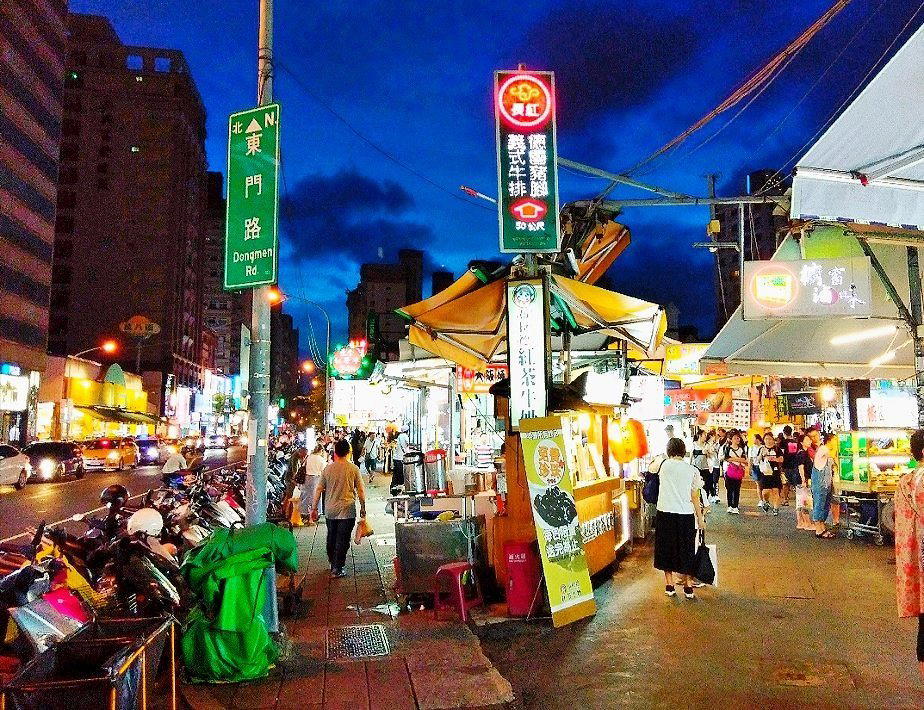
Rueifeng Night Market is one of Kaohsiung's most active street food circuits, drawing locals and visitors alike to its dense rows of vendor stalls across the northern districts. The market operates on a scale and variety that places it among Taiwan's significant night market destinations, where Taiwanese street cooking traditions meet the city's distinct southern palate and subtropical produce.

Pearl is the En Primeur Club membership app — saves, bookings, and concierge access live there. Same editors, same standards.
The menu
What to order
- Angel Fried Chicken Cutlets
- Shanghai Soup Buns
- Oyster Omelets
- German Pork Knuckles
- Z Paella
- Teppanyaki Steak
- Tako Balls
Where the City Eats After Dark
Arrive at Rueifeng Night Market on a weekend evening and the scene organises itself around you before you have a chance to plan it. The perimeter stalls send competing aromas into the humid southern Taiwan air; the crowd moves at a pace calibrated somewhere between purposeful and leisurely. This is not a tourist attraction that happens to sell food. It is a functioning neighbourhood institution — one that Kaohsiung residents use the way other cities use restaurant rows or food halls, returning weekly because the vendors rotate, the produce changes with the season, and the prices remain grounded in working-class logic rather than tourism economics.
Night markets as a format are embedded deeply in Taiwanese civic life, but they are not uniform. Taipei's Shilin occupies one end of the spectrum: massive, well-signposted, partly organised around international visitor expectations. Rueifeng sits closer to the other end — a market that scaled up organically, drawing its identity from the northern Kaohsiung districts it serves rather than from any civic tourism agenda. That distinction matters when choosing where to spend time. The gap between a market curated for visitors and one that exists primarily to feed its neighbourhood is felt immediately in the density of the crowd, the absence of English menus, and the fact that vendor popularity is determined entirely by repeat local custom rather than guidebook placement.
Southern Taiwan's Street Food Logic
Kaohsiung's street food tradition draws on a different set of references than Taipei's. The city's port history brought influences from across the Taiwan Strait and from Japan's five-decade colonial period, both of which left traces in the cooking. Braised pork rice here tends toward a richer, fattier interpretation than its central Taiwan counterparts. Oyster vermicelli carries a thicker sweet potato starch sauce. Grilled items lean on marinades that reflect the south's higher heat tolerance and its proximity to sugar cane cultivation, a product that shaped Tainan's cooking and radiates outward through the region.
The editorial angle that matters most at a market like Rueifeng is the intersection of inherited technique and local ingredient logic. Taiwan's night market food is not folk cooking frozen in amber. Vendors adopt equipment, fermentation methods, and flavour frameworks from multiple traditions, Japanese influence visible in fishcake preparations and skewer formats, Southeast Asian influence visible in certain braising spice profiles, while anchoring the result in Taiwanese produce and Taiwanese appetite. The scallion pancake folded around egg and preserved vegetable is both a street technology and a flavour system, and neither dimension can be separated from the other. This is the same logic operating at a larger institutional scale that drives Michelin-recognised kitchens elsewhere in Taiwan: at JL Studio in Taichung or logy in Taipei, the technique-meets-ingredient conversation happens across a tasting menu. At Rueifeng, it happens across a hundred vendor stalls, with no tasting notes required.
What the Market Covers
The stall range at a market of Rueifeng's size tends to follow a familiar Taiwanese structure: a core of savory staples, a substantial dessert and cold drink section, and a rotating edge of more experimental vendors responding to current food trends in the city. The savory core is where the market earns its reputation among Kaohsiung residents. Braised items, fried items, and noodle preparations form the backbone. The dessert section is where southern Taiwan's produce advantage becomes most visible, tropical fruit, douhua (tofu pudding) preparations, and shaved ice formats that shift their toppings according to what is in season. In summer, mango dominates. In cooler months, taro and sweet potato take over. The seasonal rhythm is not marketing; it is supply chain reality.
For visitors calibrating expectations against the city's wider dining range, it helps to know where Rueifeng sits in relation to Kaohsiung's table-service options. Restaurants like GEN (Cantonese), Haili (Modern Cuisine), and Sho (Japanese) represent the city's higher-investment dining tier, structured service, reservation systems, cuisine frameworks borrowed from fine-dining traditions. Rueifeng operates at the opposite end of that spectrum by price and format, but not necessarily by ingredient quality or cooking precision. A well-executed oyster omelet at a market stall that has been operating the same recipe for thirty years represents a different kind of culinary discipline than a tasting menu, but discipline it is. A Fung's Harmony Cuisine (Taiwanese) and Anchovy (European Contemporary) occupy the middle ground of Kaohsiung's dining range; Rueifeng anchors the accessible end. Our full Kaohsiung restaurants guide maps this range in detail.
The same technique-and-ingredient conversation that characterises Rueifeng connects to markets and producers across Taiwan. A Xia in Tainan works similar southern Taiwan produce at a more formal register. Chenggong Douhua in Chenggong shows what happens when a single street food speciality achieves institutional depth. Producers and food businesses across the island from Volcanic rock in Zhubei City to GARDENh in Yonghe District are working with the same underlying ingredient logic, just at different scales and formats.
Planning Your Visit
Rueifeng Night Market operates in Kaohsiung's northern districts and is most active from early evening into the late night hours. No reservation is required and no dress code applies, this is walk-in territory by definition, with vendor choice made on the spot by queue length and visual assessment of what is cooking. The most practical approach is to arrive hungry enough to graze across multiple stalls rather than committing to a single large portion early. Pricing across Taiwan's night markets remains among the lowest in East Asia for equivalent cooking quality, and Rueifeng is consistent with that market-wide reality. Going on a weekday evening reduces crowd density noticeably compared to Friday and Saturday, when the full footprint of the market is at capacity. First-time visitors unfamiliar with the format and vendor language can cross-reference with other Taiwan night market experiences, the format logic is transferable, but Rueifeng's specific vendor mix and southern-inflected flavour profile require time to read properly.
Frequently asked questions
How does Rueifeng Night Market differ from Kaohsiung's other night markets like Liuhe?
Rueifeng operates in Kaohsiung's northern districts and draws a predominantly local crowd, whereas Liuhe Night Market near the city centre is more frequently included on tourist itineraries. That geographic and demographic difference shapes the stall mix: Rueifeng skews toward everyday Kaohsiung eating habits rather than showcase dishes pitched at visitors. For a read on how the city's residents actually eat after dark, Rueifeng is the more representative option.
What should I eat at Rueifeng Night Market?
Rueifeng follows the standard Taiwanese night market structure: a core of savoury staples alongside a substantial dessert and cold drink section. Kaohsiung's port history adds a distinct southern Taiwan inflection to the stall mix, with seafood-leaning options sitting alongside the grilled, braised, and fried formats common across the island. Arriving without a fixed plan and eating in stages across the perimeter is the practical approach.
Can I walk in to Rueifeng Night Market?
Yes. Rueifeng Night Market operates as an open-access public market with no reservation system and no entry fee. Weekends draw larger crowds, so arriving early in the evening gives you room to move between stalls before peak congestion.
What is Rueifeng Night Market known for?
Rueifeng is one of Kaohsiung's major night markets and represents the city's street food culture rather than Taipei's more tourist-facing circuit. Its scale means a wide stall range operating across savoury, dessert, and beverage categories, drawing a local-heavy crowd on weekend evenings.
Can Rueifeng Night Market adjust for dietary needs?
Night market stalls operate independently with no centralised menu management, so dietary accommodation depends on the individual vendor. Vegetarian-friendly options are generally present across Taiwanese night markets, but communicating specific requirements directly to each stall in Mandarin or Taiwanese Hokkien will get you the most accurate answer.
Is Rueifeng Night Market overpriced or worth every penny?
Taiwanese night markets are structured around low per-item pricing, and Rueifeng is no exception. Individual dishes typically fall within the range standard to Kaohsiung street food, meaning a full evening of eating across multiple stalls costs a fraction of a sit-down restaurant meal in the city.
City Peers
| Venue | Cuisine | Price | Awards | Notes |
|---|---|---|---|---|
| Rueifeng Night MarketThis venue — the venue you are viewing | Taiwanese Street Food & International Fusion | $1–10 | Not listed | Not listed |
| Sho | Modern Japanese Kaiseki with Taiwanese Influences | $100–150 | 1 Michelin Star | Japanese |
| Papillon | Modern French Neo Bistro | $100–150 | Michelin Plate | French, French Contemporary |
| GEN | Modern Chinese Fine Dining | Not listed | 1 Michelin Star | Cantonese |
| Haili | Japanese-French Fusion Fine Dining | $100–150 | 1 Michelin Star · Star Wine List | Modern Cuisine |
| Beef Chief (Zihciang 2nd Road) | Taiwanese Beef Hot Pot | $10–20 | Michelin Bib Gourmand | Taiwanese |
Continue exploring
More in Kaohsiung
Restaurants in Kaohsiung
All restaurants in Kaohsiung →
Bars in Kaohsiung
All bars in Kaohsiung →


Details
- Lively
- Energetic
- Well Known
- Casual Hangout
- Group Dining
- Late Night
- Family
- Open Kitchen
- Local Sourcing
- A La Carte
- Counter Dining
- Bubble Tea
- Herbal Tea
- Vegetarian Friendly
Tantalizing aromas of sizzling street food fill the air with a lively, bustling atmosphere that captures the essence of authentic Taiwanese night market culture.