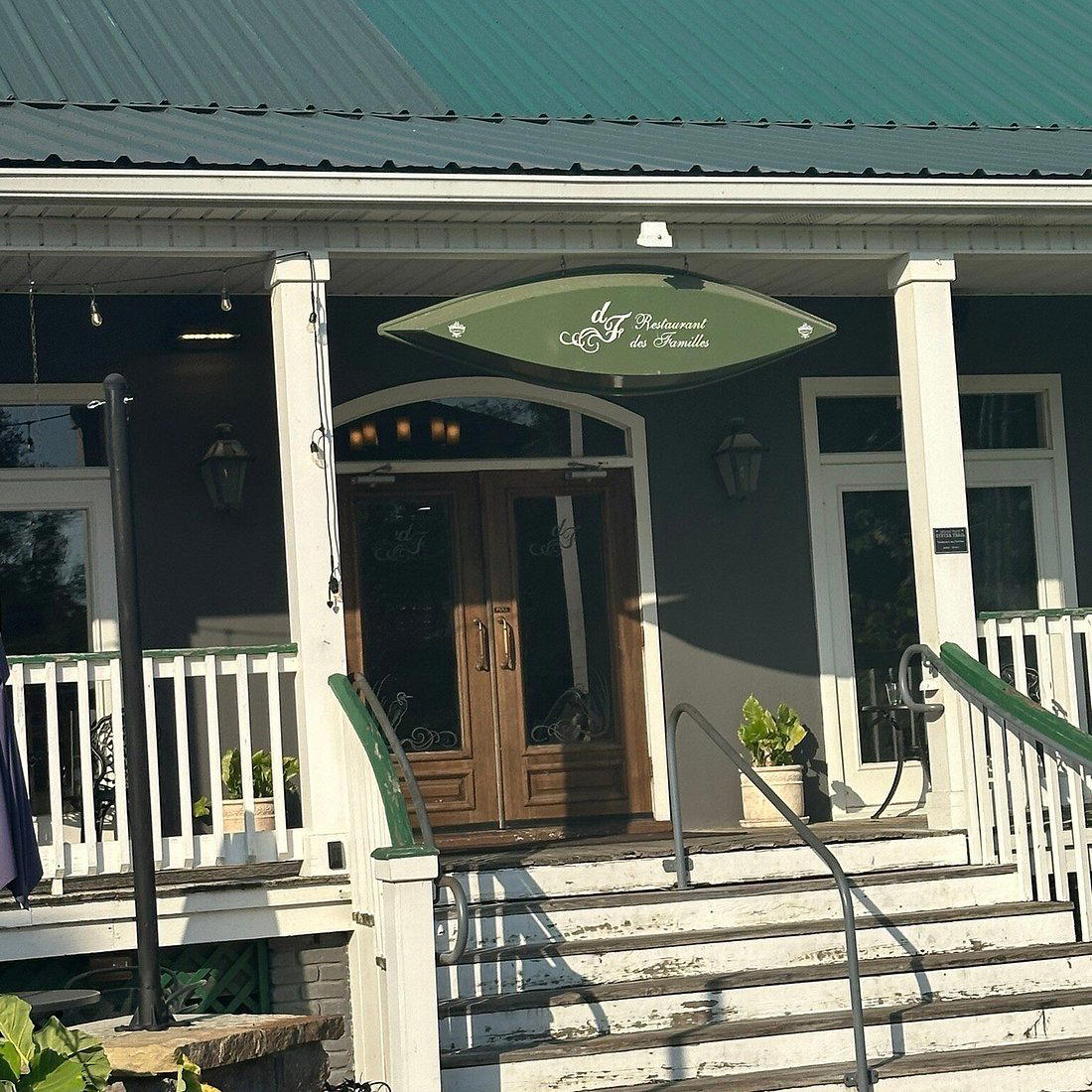
Restaurant des Familles
Our verdict
On the west bank of the Mississippi in Marrero, Louisiana, Restaurant des Familles sits within reach of the Barataria Preserve, a position that puts the wetland pantry of South Louisiana directly on the plate. The restaurant draws on a regional cooking tradition rooted in what the bayou and the Gulf provide rather than what commodity supply chains deliver. For readers tracing the sourcing-driven end of Louisiana's casual dining spectrum, this is a relevant stop.

Pearl is the En Primeur Club membership app — saves, bookings, and concierge access live there. Same editors, same standards.
The menu
What to order
- Alligator Stuffed Mushrooms with Alligator Sauce Piquant
- Crawfish Etouffee
- Seafood & Okra Gumbo
Where the Bayou Meets the Table
Drive south from New Orleans along Barataria Boulevard and the city gradually gives way to something older and quieter. By the time you reach Marrero's lower stretches, the skyline has been replaced by live oak canopy and the flat, reed-bordered horizon of Barataria Bay country. Restaurant des Familles sits at 7163 Barataria Blvd, at the edge of this terrain, and that geography is not incidental to understanding what the kitchen is doing. The Barataria estuary system, one of the most productive wetland ecosystems along the Gulf Coast, has historically supplied South Louisiana cooks with the raw materials that define the region's table: blue crab, redfish, speckled trout, crawfish, and the freshwater shrimp that rarely travel far from where they were caught.
In American dining more broadly, the conversation around ingredient sourcing has moved upstream, from farm-to-table declarations on urban menus to a more granular interrogation of place. Restaurants like Blue Hill at Stone Barns in Tarrytown and Single Thread Farm in Healdsburg have built their identities around the distance between land and plate. In coastal Louisiana, that philosophy predates the branding. Cooking from what the water gives you is not a marketing position here; it is the baseline assumption of a generations-old food culture built around seasonal availability, family preservation techniques, and the specific flavors that brackish-water ecosystems produce.
A Regional Tradition, Not a Trend
South Louisiana's Cajun and Creole traditions represent one of the most coherent regional food cultures in the United States, and the Barataria corridor sits firmly within the Cajun end of that spectrum. Where Creole cooking absorbed the urban, European, and African influences of New Orleans, Cajun cooking developed in rural parishes where French Acadian settlers adapted to a very specific ecological pantry. The holy trinity of onion, celery, and bell pepper; the dark roux that forms the backbone of a proper gumbo; the practice of using every part of what the land and water provide — these are not stylistic choices but practical inheritances from communities that cooked resourcefully within a circumscribed geography.
Restaurants operating in this tradition, whether in Lafayette, Breaux Bridge, or along the bayou communities of Jefferson and Plaquemines parishes, tend to be evaluated on the quality of their sourcing and the fidelity of their technique rather than on innovation. A crawfish étouffée is assessed against the benchmark of the cook who made it leading in memory, not against what a chef at Alinea in Chicago or Lazy Bear in San Francisco might do with the same ingredient. That cultural accountability is, for many diners, more demanding than a Michelin rubric.
The Marrero and Westwego stretch of the west bank has historically been less trafficked by visitors than the French Quarter or the Garden District, which means the dining here has developed without significant pressure to perform for an outside audience. The restaurants that have persisted in this corridor do so because of neighborhood loyalty and consistent execution, not because they appear in the same conversation as Emeril's in New Orleans or carry the kind of national profile that draws destination diners to places like The French Laundry in Napa or Providence in Los Angeles.
The Sourcing Context That Defines the Plate
The Barataria Preserve, managed by the Jean Lafitte National Historical Park and Preserve, lies just south of Marrero. Its wetlands represent a living larder that has sustained fishing and trapping communities for centuries. Gulf seafood sourced from these waters carries flavor profiles shaped by the brackish salinity gradients of the estuary: shrimp with a mineral sweetness, crab with more pronounced brine than their Atlantic counterparts, and finfish that reflect a diet of the estuary's own ecology.
For kitchens working in this corridor, proximity to that source is a practical advantage that restaurants in other markets work considerably harder to replicate. Places like ITAMAE in Miami and Addison in San Diego have built sourcing programs that reach deliberately toward regional producers. In Marrero, the supply chain is shorter by default, shaped by geography rather than procurement philosophy. That doesn't guarantee quality — execution still determines outcome, but it does mean the raw materials available to a kitchen here are, in season, among the most direct-from-source in the country.
Sourcing-focused dining in the American South has found institutional expression at restaurants like Bacchanalia in Atlanta, which operates its own farm, and at the farm-integrated programs of places like Brutø in Denver. In coastal Louisiana, the equivalent is not a curated farm program but a relationship with commercial fishermen, crawfish farmers, and crabbers whose operations have supplied the same communities for generations. The sourcing story here is social as much as agricultural.
Planning a Visit to Marrero
Marrero sits on the west bank of the Mississippi, accessible from New Orleans via the Crescent City Connection bridge or the Westbank Expressway. The drive from the French Quarter runs approximately fifteen to twenty minutes under normal traffic conditions, which puts Restaurant des Familles within realistic range of a New Orleans itinerary without requiring it to compete directly with the city's more prominent dining addresses. For readers already consulting our full Marrero restaurants guide, the west bank corridor rewards a half-day rather than a quick dinner run: the Barataria Preserve is walkable from the general area and pairs logically with a meal in this part of Jefferson Parish.
We recommend verifying directly before travel, particularly during Louisiana's major seasonal periods, crawfish season runs roughly late January through June, with peak availability in March and April, and that timing shapes menus and demand across the region's seafood-focused kitchens. The full range of reservation formats, pricing tiers, and current menu offerings should be confirmed with the restaurant ahead of your visit.
Frequently asked questions
Is Restaurant des Familles child-friendly?
The name itself signals the answer: Restaurant des Familles translates directly as 'Restaurant of Families,' and its location on Barataria Boulevard in Marrero places it in a residential, community-oriented part of the west bank rather than a high-end dining corridor. South Louisiana's Cajun and Creole table traditions have always been multigenerational by nature, making this an appropriate stop for families traveling with children.
What kind of setting is Restaurant des Familles?
The restaurant sits at 7163 Barataria Blvd in Marrero, a community south of New Orleans across the Mississippi on the west bank. The Barataria corridor here is defined by proximity to the Jean Lafitte National Historical Park wetlands rather than urban density, suggesting an informal, neighborhood-rooted setting rather than a formal dining room. Expect a room shaped by local regulars, not tourism traffic.
Is Restaurant des Familles a good option for experiencing authentic south Louisiana cooking near the Barataria Preserve?
Restaurant des Familles sits on Barataria Boulevard in Marrero, placing it along the same corridor that leads south to the Jean Lafitte National Historical Park and Preserve — one of the most intact wetland ecosystems in Louisiana. This geography has historically sustained the Cajun and Creole foodways that define the region's cooking, from freshwater crawfish to gulf seafood. For visitors approaching the preserve from New Orleans via the Westbank Expressway, the restaurant represents a locally rooted stop in a corridor shaped by that same culinary tradition.
What do people recommend at Restaurant des Familles?
Dishes tied to the wetland sourcing geography of the region — crawfish étouffée, fried seafood plates, gumbo — represent the category of cooking most associated with restaurants along this stretch of Barataria Boulevard.
Comparable Spots, Quickly
Comparable venues nearby, for context on price, style, and recognition.
| Venue | Cuisine | Price | Notes |
|---|---|---|---|
| Restaurant des FamillesThis venue — the venue you are viewing | Authentic Cajun & Creole | $20–30 | Not listed |
| Rosie's On The Roof | American Small Plates & Bar Bites | $20–30 | Arts District |
| Brewery Saint X | American Brew Pub | Not listed | Central Business District |
| Monday | American with Cajun & Creole | $20–30 | Mid-City |
| Cafe Malou | New Orleans-Inspired Cafe | Not listed | West Riverside |
| Baronne Bistro | Cajun & Creole Comfort | $20–30 | Arts District |
Continue exploring
More in Marrero
Restaurants in Marrero
All restaurants in Marrero →
Bars in Marrero
Browse all →
Details
- Rustic
- Cozy
- Scenic
- Family
- Group Dining
- Celebration
- Waterfront
- Waterfront
- A La Carte
- Vegetarian Friendly
- Gluten Free Options
Current opening hours
- Monday
- 11 AM–3 PM
- Tuesday
- 11 AM–3 PM
- Wednesday
- 11 AM–9 PM
- Thursday
- 11 AM–9 PM
- Friday
- 11 AM–9 PM
- Saturday
- 11 AM–9 PM
- Sunday
- 11 AM–3 PM
Hours can change for holidays and private events. Last verified .
Cozy atmosphere set among centurial live oaks with scenic bayou views, ideal for family outings and celebrations.