Restaurant de Tourrel

A Michelin-starred chef's table inside a 17th-century mansion on the edge of Saint-Rémy's old town, Restaurant de Tourrel sets modern Provençal cooking against exposed stone walls and a rooftop terrace with village views. Chef Quentin Lailler's open kitchen produces a menu grounded in regional ingredients, from Camargue bull to Isle-sur-la-Sorgue trout, at a price point that positions it among the town's most serious dining addresses.
 Discover on Pearl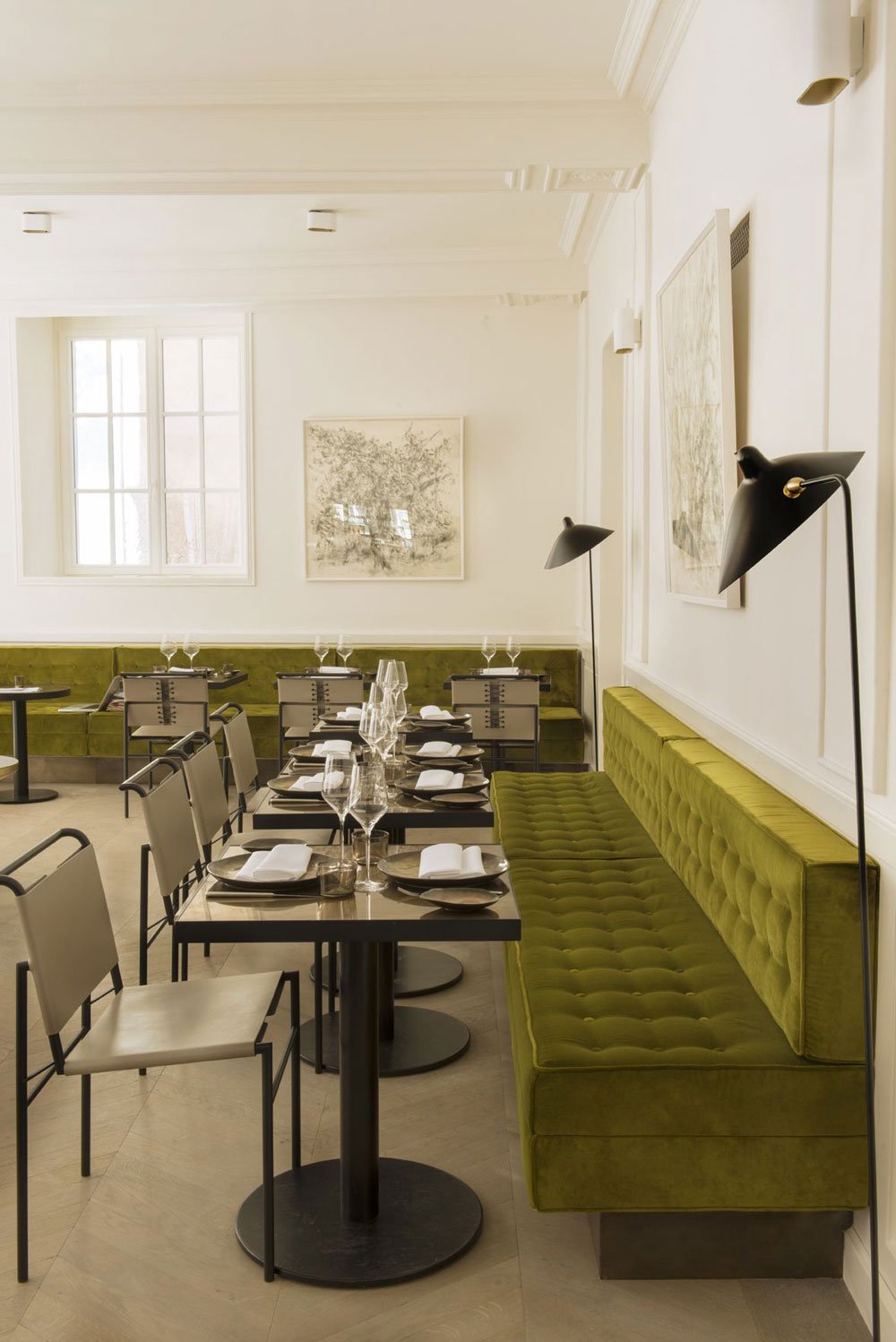
A 17th-Century Mansion on the Edge of Saint-Rémy's Old Town
Saint-Rémy-de-Provence occupies an unusual position in the French dining hierarchy. The town is small enough that most visitors arrive with a day-trip mentality, yet its concentration of serious restaurants puts it closer to a destination dining circuit than a stopover. The old town's narrow streets conceal addresses operating at a level you might expect in Lyon or Marseille, and Rue Carnot sits close to the centre of that tension. The building at number 5 is a 17th-century mansion whose connection to French cultural history runs deeper than its stonework suggests: it was here that composer Charles Gounod played the first bars of his opera Mireille for Frédéric Mistral, the poet whose work inspired the libretto. That particular intersection of Provençal literary tradition and artistic ambition now frames a dining room rather than a salon, and the fit is not accidental.
Inside, exposed stone walls and the proportions of a period building define the physical environment before any food arrives. The format is a chef's table orchestrated by Quentin Lailler, with an open kitchen that makes the cooking visible from the room. This is a format that has proliferated across European fine dining over the past decade, but the setting here gives it a different register than the purpose-built counters you find in urban restaurants. The architecture carries its own authority, and the cooking operates in dialogue with it rather than competing for attention.
The shortlist, unlocked.
Hard-to-book tables, cellar releases, and concierge-planned trips.
Get Exclusive Access →Where de Tourrel Sits in the Saint-Rémy Dining Tier
Saint-Rémy's leading restaurants cluster around two price tiers and two broad approaches. At one end, Chapeau de Paille - Bistrot Provençal holds the €€ bracket with direct regional cooking. A step up, Le V sits at €€€ with a modern cuisine approach. Restaurant de Tourrel and L'Auberge de Saint-Rémy, run by Fanny Rey and Jonathan Wahid, both occupy the €€€€ tier, making them the town's two most serious dining propositions. Both hold Michelin recognition. The relevant question for a visitor choosing between them is one of format and atmosphere rather than quality tier: L'Auberge operates in a different physical context, while de Tourrel leans on the intimate chef's table model inside a historic building.
That Michelin one star, awarded in the 2024 guide, locates Restaurant de Tourrel within a specific tier of French provincial fine dining. It is not the rarefied multi-star register of houses like Mirazur in Menton or Troisgros in Ouches, nor is it the institutionalised grandeur of Paul Bocuse in Collonges-au-Mont-d'Or or Auberge de l'Ill in Illhaeusern. It sits in a productive middle ground: a single star in a town where that distinction carries weight precisely because the competition is active and the guide's scrutiny is real. For context on how the South of France's starred cooking is currently developing, AM par Alexandre Mazzia in Marseille represents the more experimental end of the regional spectrum, while de Tourrel's approach remains grounded in Provençal produce and recognisable flavour references.
The Menu: Provençal Ingredients Through a Modern Kitchen
The cooking at Restaurant de Tourrel is Provençal in its ingredients and references without being a reconstruction of traditional dishes. This distinction matters across the whole category of modern French regional cooking. The Michelin notes describe the menu opening with a tartare of squilla mantis, a crustacean native to the Mediterranean that rarely appears in the starred dining context, and a reworked pissaladière using sardines and tapioca chips with marinated Camargue bull. Both dishes signal a kitchen that uses the region's larder as raw material for something more technically considered than a bistro interpretation.
The progression through the menu follows a logic of seasonal and local sourcing: Mediterranean mackerel with horseradish sauce and ground ivy emulsion, grilled leek with fig oil and hay sabayon, trout from Isle-sur-la-Sorgue with acacia flower beurre blanc. The geographic specificity in those sourcing notes matters. Isle-sur-la-Sorgue, a town roughly 25 kilometres from Saint-Rémy, is known for its clear spring-fed river and the quality of its freshwater fish. Camargue, the wetland delta to the south, produces a breed of semi-wild cattle with lean, flavourful meat. The menu reads less like an abstract exercise in modern technique and more like a disciplined tour of the Provençal watershed. For readers who follow how modern European kitchens are using hyper-local sourcing as a structural principle, the approach here has clear parallels with what houses like Flocons de Sel in Megève do for Alpine produce, or what Bras in Laguiole has long practised with the Aubrac plateau.
Chef's table format means the menu is prepared in full view of the room. In practice, this compresses the distance between kitchen and guest in a way that suits the intimacy of the space. The room is described as intimate and convivial in the Michelin entry, which in the context of a 17th-century mansion suggests a small number of covers and an experience closer to a private dinner than a full-service restaurant. This is a format where the pacing of the meal, the rhythm of dishes arriving from an open pass, becomes part of the event itself. Comparable approaches at urban scale can be found at Alléno Paris au Pavillon Ledoyen, or at the international level at Frantzén in Stockholm and FZN by Björn Frantzén in Dubai, though the Provençal context and the building's scale make de Tourrel a considerably less formal proposition.
The Rooftop and the Village Roofline
Mansion's rooftop terrace adds a dimension that few dining addresses in Saint-Rémy can match at this level. Dining outside in Provence is unremarkable across the price spectrum, but a terrace at rooftop height with views over the old town's rooflines is a specific asset that alters the character of an evening meal. The combination of outdoor dining with the technical seriousness of the kitchen inside positions de Tourrel as an address that works at multiple registers: it functions as a destination for a considered tasting menu, but the terrace gives it an ease that prevents it feeling like an exercise in formality.
Service runs Tuesday through Saturday from 7:30 PM, with a 9 PM last sitting, and the kitchen is closed Monday and Sunday. That schedule is consistent with how many single-star operations in small French towns structure their week, balancing quality control with the realities of sourcing and staffing. The address is 5 Rue Carnot, 13210 Saint-Rémy-de-Provence, in the centre of the old town and walkable from most accommodation within the village perimeter. Booking ahead is advisable given the intimate format; the number of covers in a chef's table operation of this kind typically means the room fills faster than its size might suggest.
Planning a Saint-Rémy Dining Visit
Restaurant de Tourrel works leading as part of a wider stay rather than a day-trip. Saint-Rémy's restaurant density at the upper end, combined with its proximity to the Alpilles and the Camargue, makes it a logical base for two or three nights. For the full picture of where de Tourrel sits among the town's dining options, our full Saint-Rémy-de-Provence restaurants guide maps the broader field. Accommodation context is covered in our Saint-Rémy hotels guide, and for those spending more time in the area, the bars guide, wineries guide, and experiences guide cover the rest of what the Alpilles corridor offers.
Frequently Asked Questions
- What do regulars order at Restaurant de Tourrel?
- The Michelin entry highlights several dishes that define the kitchen's approach: the tartare of squilla mantis as an opening salvo, the reworked pissaladière with sardines, tapioca chips, and marinated Camargue bull, and the trout from Isle-sur-la-Sorgue with acacia flower beurre blanc. Chef Quentin Lailler's Provençal-focused menu changes with the season, but these dishes represent the style of cooking that earned the restaurant its 2024 Michelin star: local, technically specific, and grounded in recognisable regional flavour references rather than abstraction.
A Minimal Peer Set
A compact peer snapshot based on similar venues we track.
| Venue | Notes | Price |
|---|---|---|
| Restaurant de Tourrel | This venue | €€€€ |
| L'Auberge de Saint-Rémy - Fanny Rey & Jonathan Wahid | Modern Cuisine, €€€€ | €€€€ |
| Chapeau de Paille - Bistrot Provençal | Provençal, €€ | €€ |
| Le V | Modern Cuisine, €€€ | €€€ |
Need a table?
Our members enjoy priority alerts and concierge-led booking support for the world's most difficult tables.
Get Exclusive AccessThe shortlist, unlocked.
Hard-to-book tables, cellar releases, and concierge-planned trips.
Get Exclusive Access →