Our verdict
Restaurant Blauer Pfau sits in Kreuztal, a Siegerland town in North Rhine-Westphalia where serious regional cooking operates well outside the usual fine-dining circuit. The address places it among Germany's quieter dining destinations, a category of restaurant that rewards research over proximity. Visitors making the trip to this part of Westphalia will find it worth cross-referencing against the broader regional picture before booking.

Pearl is the En Primeur Club membership app — saves, bookings, and concierge access live there. Same editors, same standards.
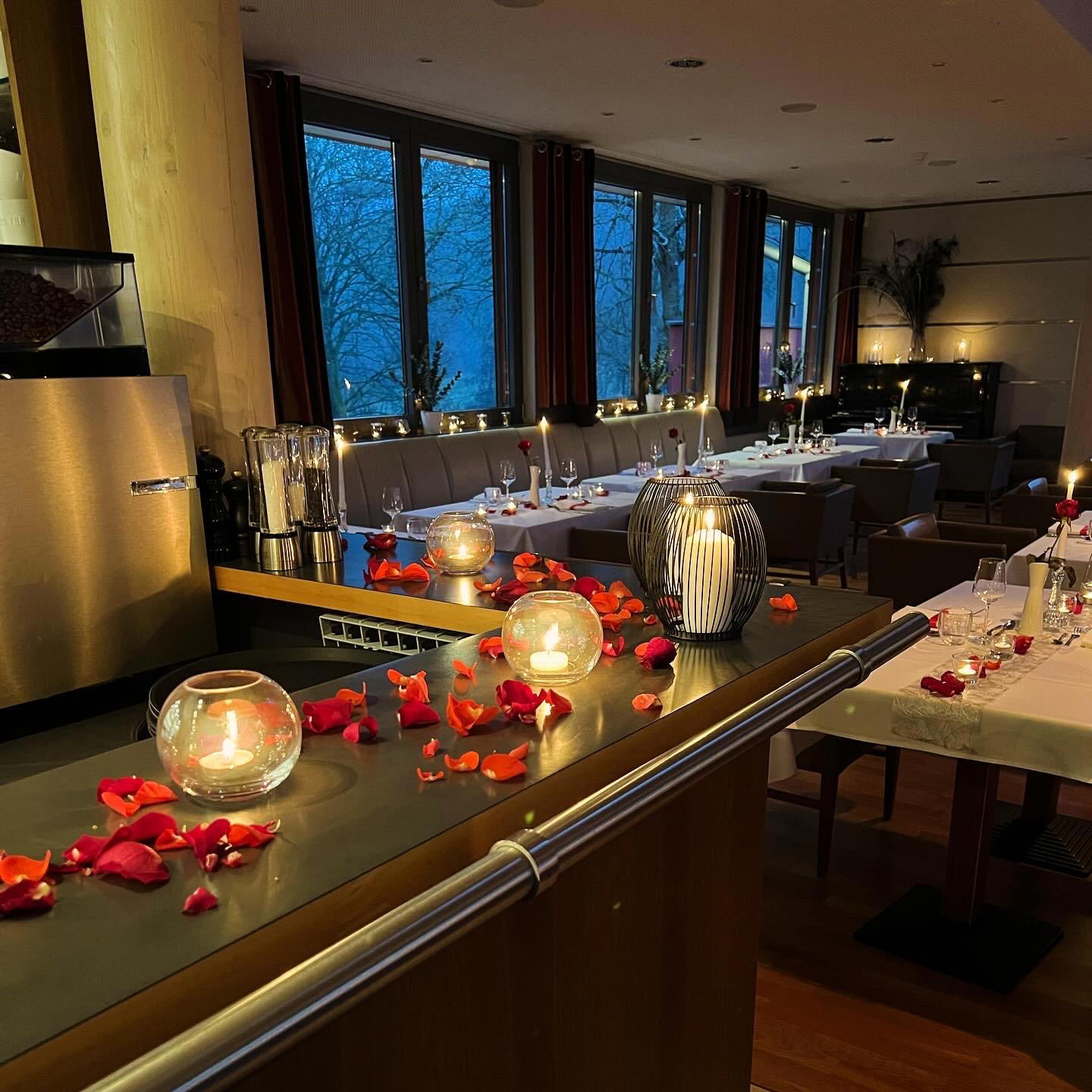
Dining Outside the Circuit: Kreuztal and the Siegerland Table
Germany's fine-dining geography clusters predictably around Munich, Hamburg, Berlin, and a handful of scenic outliers like Baiersbronn or the Moselle Valley. The Siegerland, the hilly industrial and forested region around Siegen and its satellite towns, sits conspicuously outside that circuit. Kreuztal, a town of around 30,000 people in North Rhine-Westphalia, does not appear on standard itineraries for serious eaters, which is precisely why a restaurant operating there occupies an interesting position. Restaurants that survive and develop identity in non-destination towns tend to draw from a different logic than those in cities competing for Michelin inspectors and food-press attention. The regulars matter more. The supply relationships with local farms and producers matter more. The room has to hold its own without the borrowed gravity of a famous address.
Restaurant Blauer Pfau, addressed on Berghäuser Weg in the 57223 postcode, is one such address. The venue data available through EP Club's research does not extend to cuisine type, chef credentials, pricing tier, or awards, which in itself signals something about where this restaurant sits relative to the documented fine-dining tier. That tier in Germany, tracked through Michelin recognition and 50 Best adjacency, runs through places like Aqua in Wolfsburg, Schwarzwaldstube in Baiersbronn, and Vendôme in Bergisch Gladbach. Blauer Pfau does not sit in that documented bracket. What it represents is something different: a local institution in a region where local institutions carry weight precisely because the alternatives are thin.
The Siegerland Ingredient Base
The sourcing logic for any serious kitchen in this part of Germany starts with geography. The Siegerland sits between the Rothaargebirge uplands to the northeast and the Westerwald to the south, producing a forested, cool-temperate terrain suited to game, foraged mushrooms, wild herbs, and upland dairy farming rather than the market-garden intensity of the Rhine plain or the wine-driven agriculture of the Mosel and Palatinate. Restaurants anchored here that cook with regional seriousness are working with venison, wild boar, trout from clear upland streams, rye and spelt from local mills, and a seasonal calendar that runs closer to the old rhythms of Central European forest farming than to the import-driven menus of urban fine dining.
This ingredient geography shapes what a restaurant like Blauer Pfau can credibly offer a visiting diner that a comparably priced restaurant in Cologne or Frankfurt cannot replicate without procurement effort. The argument for driving to a small-town Siegerland restaurant is not pedigree or tasting-menu architecture. It is proximity to the source. The same logic applies, at a higher documented price tier, to places like ES:SENZ in Grassau in the Chiemgau Alps, where Alpine sourcing is the editorial backbone of the kitchen's identity. Kreuztal offers a rougher, less curated version of the same argument.
What to Expect from a Westphalian Local Institution
Westphalian restaurant culture has its own internal logic. The tradition runs through substantial, protein-forward cooking: the region's historical association with cured pork, dark rye bread, and game-heavy seasonal menus has not disappeared, even as younger kitchens have introduced lighter techniques. A restaurant named for a peacock, operating in a wooded Siegerland town, sits plausibly within a category of established German Gasthaus-adjacent dining, where the format mixes regional cooking with a degree of occasion-dining ambition, the room is likely traditional in character, and the price point reflects local purchasing power rather than the premium tiers associated with destination restaurants.
Visitors approaching from outside the region should calibrate expectations accordingly. This is not the register of CODA Dessert Dining in Berlin or the conceptual precision of ATAMA by Martin Stopp in Sankt Ingbert. Nor does it belong to the documented upper tier of rural German fine dining represented by Waldhotel Sonnora in Dreis or Schanz in Piesport. The register here is likely closer to the serious but unpretentious regional table: the kind of cooking that German food culture has always valued but that international food media rarely documents unless it arrives attached to a star count.
Planning a Visit: Logistics in a Non-Destination Town
For a fuller picture of where Blauer Pfau fits within the local restaurant picture, see our full Kreuztal restaurants guide. Further reference across Germany's recognised fine-dining tier includes Victor's Fine Dining by Christian Bau in Perl, Restaurant Haerlin in Hamburg, and ammolite in Rust.
Frequently asked questions
Is Restaurant Blauer Pfau okay with children?
Blauer Pfau sits on Berghäuser Weg in Kreuztal, a residential address that typically signals a neighbourhood-rooted restaurant rather than a formal fine-dining room. Westphalian local institutions of this type tend to run multigenerational tables as standard. Without confirmed seating or menu policy on file, calling ahead to check capacity and timing for younger guests is the practical approach.
What kind of setting is Restaurant Blauer Pfau?
The address — Berghäuser Weg, Kreuztal — places the restaurant away from a main commercial strip, pointing toward a house-style or converted premises rather than a hotel dining room or city-centre space. Kreuztal sits within the Siegerland, a compact upland region between the Rothaargebirge hills and the Ruhr corridor, so the physical context is green, provincial, and unhurried. Expect a room that reflects the culture of the table in this part of Westphalia: substantive rather than theatrical.
Is Restaurant Blauer Pfau worth visiting if you are travelling from Siegen or Cologne?
Kreuztal is served by regional rail from Siegen, which connects into the Deutsche Bahn network via Cologne and Frankfurt, making the restaurant reachable without a car if you are already in the region. The case for the trip is the same one that applies to any serious Westphalian local institution: cooking grounded in a specific place and ingredient base that larger city restaurants rarely replicate at this proximity to source. Whether the current kitchen justifies the journey is best confirmed directly with the restaurant before booking.
What do people recommend at Restaurant Blauer Pfau?
What the broader Siegerland kitchen tradition does reliably produce is protein-forward cooking grounded in regional sourcing — pork, game, and freshwater fish feature across comparable local restaurants. For the current menu, the restaurant itself is the authoritative source.
In Context: Similar Options
Comparable venues nearby, for context on price, style, and recognition.
| Venue | Cuisine | Price | Awards | Notes |
|---|---|---|---|---|
| Restaurant Blauer PfauThis venue — the venue you are viewing | German Steakhouse | Not listed | Not listed | Not listed |
| Reef and Beef Düsseldorf | Steakhouse & Seafood | Not listed | Not listed | Pempelfort |
| Waid Lake Steakhouse & More | Steakhouse with Italian influences | Not listed | Not listed | Weinheim |
| The Lox | Modern Steakhouse | $50–100 | Star Wine List | Oberkassel |
| Reef and Beef | Steakhouse & Seafood | $50–100 | Not listed | Bayenthal |
| Ranch & Sea steak of the art | American Steakhouse & Barbecue | $50–100 | Not listed | Goethehaus |
Continue exploring
More in Kreuztal
Restaurants in Kreuztal
All restaurants in Kreuztal →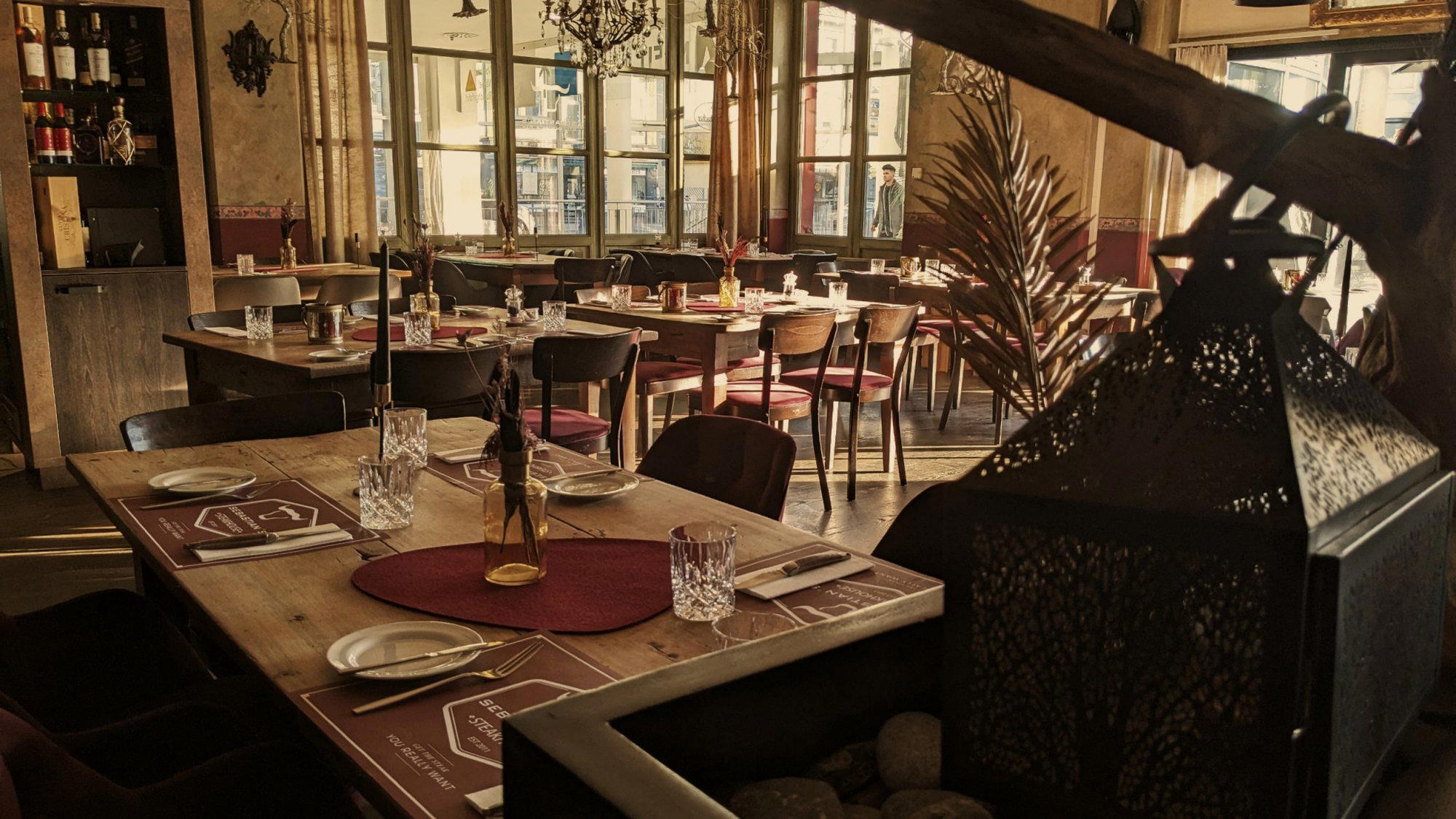
Hotels in Kreuztal
Browse all →
Details
- Classic
- Elegant
- Sophisticated
- Business Dinner
- Special Occasion
- Group Dining
- Standalone
- Craft Cocktails
- A La Carte
- Cocktails
Current opening hours
- Monday
- Closed
- Tuesday
- 12–8 PM
- Wednesday
- Closed
- Thursday
- 4–8 PM
- Friday
- 3–11 PM
- Saturday
- 12–11 PM
- Sunday
- 12–11 PM
Hours can change for holidays and private events. Last verified .
Sophisticated golf club setting with refined dining atmosphere suitable for special occasions and business entertaining.