Skip to Main Content
← Collection
Johannesburg, South Africa

Qunu at the Saxon Hotel


LocationJohannesburg, South Africa
World's Best Wine Lists Awards

<h2>A Hotel Dining Room That Sets Its Own Terms</h2><p>The approach to 36 Saxon Road in Sandhurst prepares you for a particular register of Johannesburg hospitality. The suburb sits in the northern arc of the city, where large properties behind mature hedges signal money that has had time to settle. The Saxon Hotel occupies one such property, and Qunu, its principal dining room, operates inside a residential-scale space that makes the transition from hotel lobby to dinner table feel deliberate rather than incidental. There is none of the atrium scale or open-plan noise common to hotel restaurants that are designed to feel accessible. The room reads as a considered enclosure, which frames everything served inside it differently from the start.</p><p>Hotel dining in Johannesburg has historically occupied an awkward position: good enough to keep guests in-house, rarely good enough to attract a destination following from the city at large. That division has narrowed in recent years as a number of hotel kitchens in the northern suburbs began building menus with formal architectural logic rather than broad hospitality caution. Qunu sits among that grouping. Its World of Fine Wine 3-Star Accreditation places it in a verified tier above standard hotel food-and-beverage, and that award is not primarily a wine designation: the World of Fine Wine star system assesses the full dining experience, including wine program integration, service, and food quality. Three stars within that framework represents a meaningful benchmark.</p><h2>How the Menu Positions Itself</h2><p>The editorial angle that matters most when reading Qunu's position in Johannesburg's dining structure is not which individual dishes appear on the menu but rather how the menu is assembled as an argument. South African fine dining has spent the last decade working out a more honest relationship between international technique and local ingredient identity. The more credible operations in this space, from <a href="https://www.enprimeurclub.com/restaurants/fyn-cape-town-restaurant">Fyn in Cape Town</a> to <a href="https://www.enprimeurclub.com/restaurants/wolfgat-paternoster-restaurant">Wolfgat in Paternoster</a>, have moved away from European-format tasting menus with South African garnishes and toward structures where local produce and regional cooking logic are load-bearing rather than decorative.</p><p>Hotel dining rooms tend to be slower to make that shift because their guest mix demands legibility across cultures and dietary expectations. The better ones solve this by building menus in tiers: an accessible register that reads clearly to an international visitor, and a more specific layer that rewards those who look for it. That architecture, when done with precision, is more technically difficult than a single-voice tasting menu because it must cohere across different reading levels simultaneously. The World of Fine Wine recognition implies Qunu has achieved that coherence at a level that holds up to structured external assessment, which is a different thing from popular approval.</p><p>Within Johannesburg, the most useful peer comparison is not against other hotel restaurants but against the city's contemporary fine dining independent operators: <a href="https://www.enprimeurclub.com/restaurants/aurum-johannesburg-restaurant">Aurum</a>, <a href="https://www.enprimeurclub.com/restaurants/embarc-johannesburg-restaurant">Embarc</a>, and <a href="https://www.enprimeurclub.com/restaurants/ethos-restaurant-johannesburg-restaurant">Ethos Restaurant</a> each occupy specific positions in that field. What distinguishes a hotel dining room like Qunu from those independents is not necessarily the food quality at the leading of the range but the structural constraint of operating within a broader hospitality offer. When a hotel kitchen performs at accredited fine dining level despite those constraints, the achievement is worth noting as a signal about the underlying kitchen and its standards.</p><h2>Wine Program Logic</h2><p>The World of Fine Wine accreditation framework weights the wine program as a primary criterion, which means Qunu's cellar and list-building approach has been assessed as part of the overall score. South Africa's wine industry offers hotel sommeliers a genuine opportunity: a production landscape that includes mature Stellenbosch Cabernet programs, precision-focused Swartland Chenin houses, and emerging production in the Hemel-en-Aarde corridor, all with strong vintage depth and competitive pricing relative to equivalent European wines.</p><p>Hotel wine lists in the premium segment often fail by either over-indexing on international names for status signaling or under-curating the domestic offer into a regional sampler without real selection logic. A 3-star result from a program that specifically evaluates this category suggests Qunu's list has avoided both failures. For those who approach this kind of restaurant as a window into South African wine at a serious level, that accreditation functions as a meaningful recommendation. Readers wanting to map the broader wine geography should consult <a href="https://www.enprimeurclub.com/wineries/johannesburg">our full Johannesburg wineries guide</a> alongside the Stellenbosch and Franschhoek references, including <a href="https://www.enprimeurclub.com/restaurants/delaire-graff-lodges-spa-helshoogte-pass-restaurant">Delaire Graff Lodges &amp; Spa in Helshoogte Pass</a> and <a href="https://www.enprimeurclub.com/restaurants/dusk-stellenbosch-restaurant">Dusk in Stellenbosch</a>, for a fuller picture of how wine-forward dining is currently developing across the country.</p><h2>Johannesburg's Northern Suburbs Fine Dining Context</h2><p>Sandhurst and its immediate neighbors Saxonwold and Hyde Park form the geographic concentration for Johannesburg's highest-end restaurants. The area's dining character differs from the more experimental energy found in Maboneng or Braamfontein: the northern suburbs format favors formal service structures, controlled environments, and a guest profile that skews toward corporate entertainment and special occasion dining rather than weeknight discovery. That context shapes what a restaurant like Qunu is built to do, and also what it will not be: it will not improvise at you or ask you to be adventurous. The architecture of the experience is designed for confidence rather than surprise.</p><p>That model has direct international parallels. The hotel dining rooms at properties like <a href="https://www.enprimeurclub.com/restaurants/ellerman-house-bantry-bay-restaurant">Ellerman House in Bantry Bay</a> operate from a similar position: formal property, formal room, a guest base with high expectations for consistency, and a kitchen that must deliver against that register every service. The format requires a different discipline than a creative independent, and the World of Fine Wine framework, which assesses exactly these kinds of operations, seems calibrated to recognize that discipline.</p><p>For travelers visiting Johannesburg with a broader dining agenda, Qunu fits most naturally into a sequence that also includes newer-format Joburg operators. <a href="https://www.enprimeurclub.com/restaurants/gigi-johannesburg-restaurant">Gigi</a> and <a href="https://www.enprimeurclub.com/restaurants/kl-izakhaya-johannesburg-restaurant">KŌL Izakhaya</a> represent the city's more informal contemporary energy. A Joburg dining week that moves between those registers and finishes with a formal hotel dining experience at the Saxon gives a reasonably complete map of where the city's food culture sits in 2024. <a href="https://www.enprimeurclub.com/restaurants/johannesburg">Our full Johannesburg restaurants guide</a> covers the wider field.</p><h2>Planning a Visit</h2><p>Qunu operates within the Saxon Hotel at 36 Saxon Road, Sandhurst, which situates it a short drive from Hyde Park Corner and within the northern suburbs cluster where most business and leisure visitors to Johannesburg tend to stay. The hotel-restaurant format means booking through the hotel's own channels is the most reliable route, and for formal dinners at accredited properties in this tier, advance reservations are standard practice rather than optional. Guests staying at the Saxon can in principle arrange dinner through the concierge, but walk-in availability at this level of operation is not something to assume. Those planning a multi-city South Africa itinerary that includes Johannesburg alongside Cape Town should note that the comparable accredited fine dining tier in Cape Town includes <a href="https://www.enprimeurclub.com/restaurants/le-quartier-franais-franschhoek-restaurant">Le Quartier Français in Franschhoek</a> and operates in a somewhat more competitive market, meaning the Joburg properties in this tier have a different positioning dynamic. For the broader Johannesburg picture, see also <a href="https://www.enprimeurclub.com/hotels/johannesburg">our full Johannesburg hotels guide</a>, <a href="https://www.enprimeurclub.com/bars/johannesburg">our full Johannesburg bars guide</a>, and <a href="https://www.enprimeurclub.com/experiences/johannesburg">our full Johannesburg experiences guide</a>.</p><h2>Frequently Asked Questions</h2><dl><dt>What's the signature dish at Qunu at the Saxon Hotel?</dt><dd>Specific menu items and signature dishes are not confirmed in available data for Qunu. What the World of Fine Wine 3-Star Accreditation does confirm is that the overall food quality and menu coherence meet a formal external standard. For current menu details, contacting the Saxon Hotel directly or checking the hotel's website is the reliable route, as menus at this level of fine dining are subject to seasonal revision.</dd><dt>Is Qunu at the Saxon Hotel reservation-only?</dt><dd>At a World of Fine Wine 3-Star accredited property operating within a five-star hotel in Johannesburg, advance reservations are the expected mode of access. Walk-in availability is not standard practice at this tier. Bookings are leading made through the Saxon Hotel directly, and for weekend or special occasion dining, securing a table well in advance is the practical approach in any comparable fine dining context.</dd><dt>What has Qunu at the Saxon Hotel built its reputation on?</dt><dd>Qunu's formal recognition rests on its World of Fine Wine 3-Star Accreditation, an assessment that evaluates the dining experience across food quality, wine program, and service. Within Johannesburg's northern suburbs dining environment, that accreditation places it in the city's upper tier of hotel dining, operating at a level that holds up against structured external benchmarking rather than relying solely on hotel guest volume or local popularity.</dd><dt>Can Qunu at the Saxon Hotel handle vegetarian requests?</dt><dd>Dietary accommodation policies are not confirmed in available data. Hotel dining rooms at the five-star level in Johannesburg typically manage dietary requirements as a standard service function, but specific policies for vegetarian or other dietary requests should be confirmed directly with the Saxon Hotel before booking. Contacting the hotel rather than assuming standard policies is the reliable approach for any specific dietary need.</dd><dt>How does Qunu at the Saxon Hotel compare to other South African fine dining destinations outside Johannesburg?</dt><dd>Qunu's World of Fine Wine 3-Star Accreditation places it in the same formal recognition framework as a number of South Africa's most assessed dining addresses. Properties like <a href="https://www.enprimeurclub.com/restaurants/fyn-cape-town-restaurant">Fyn in Cape Town</a> and <a href="https://www.enprimeurclub.com/restaurants/le-quartier-franais-franschhoek-restaurant">Le Quartier Français in Franschhoek</a> operate in Cape Town's more competitive fine dining market, while Qunu represents the hotel dining benchmark in Johannesburg's northern suburbs. For travelers assessing South African fine dining across cities, the 3-Star result provides a consistent external reference point regardless of geography.</dd></dl>

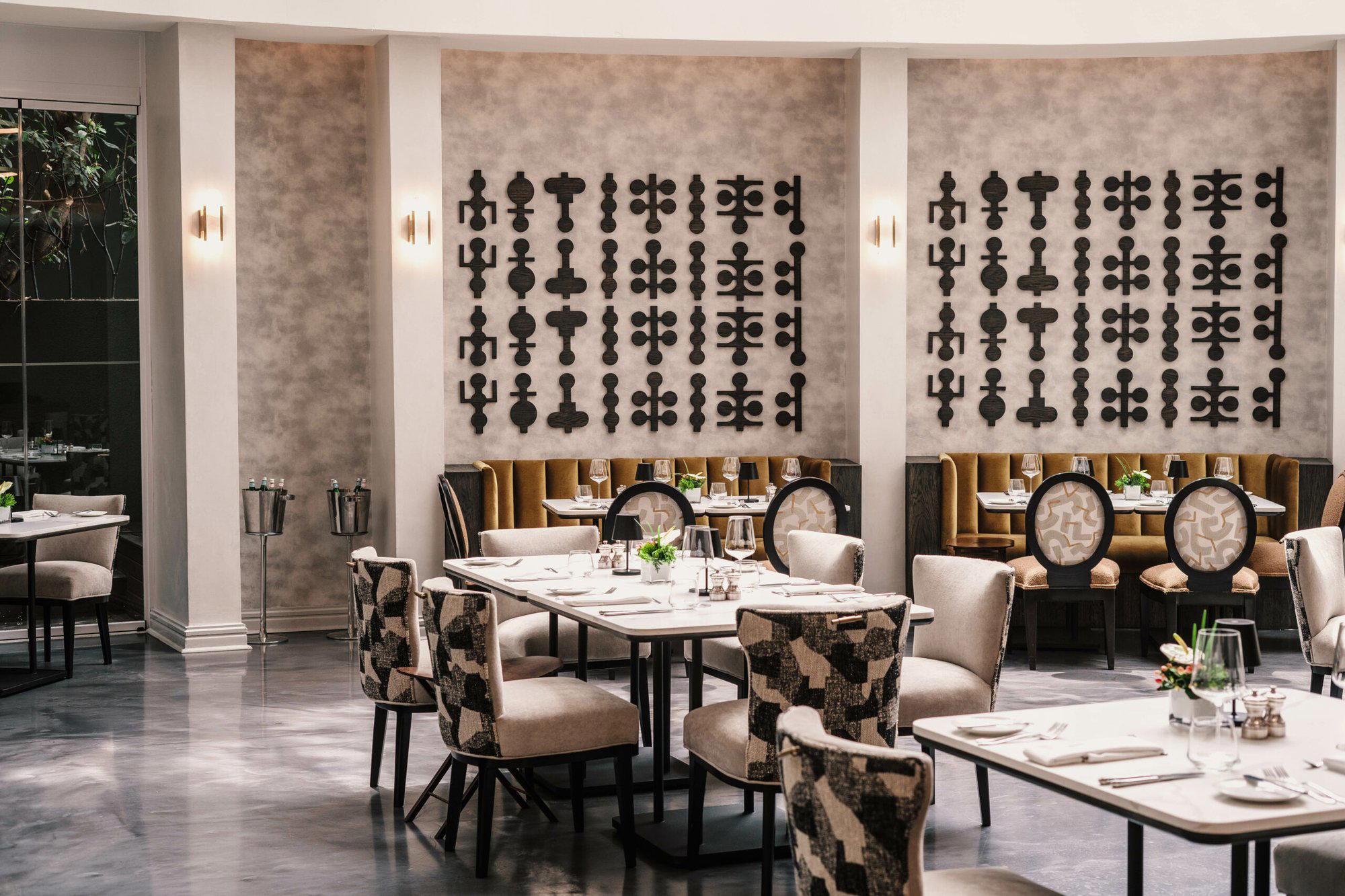
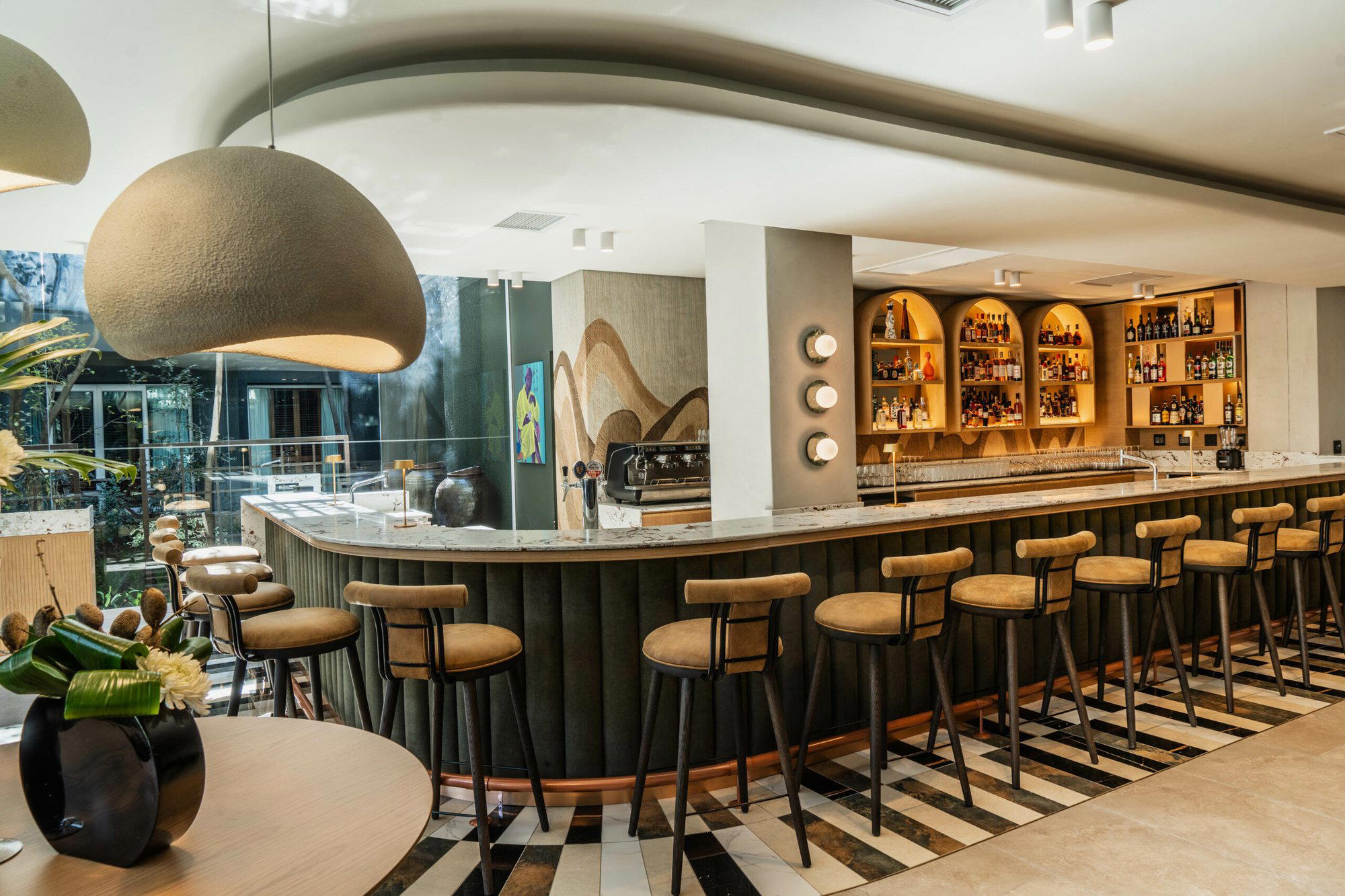
Qunu at the Saxon Hotel restaurant in Johannesburg, South Africa
About

A Hotel Dining Room That Sets Its Own Terms

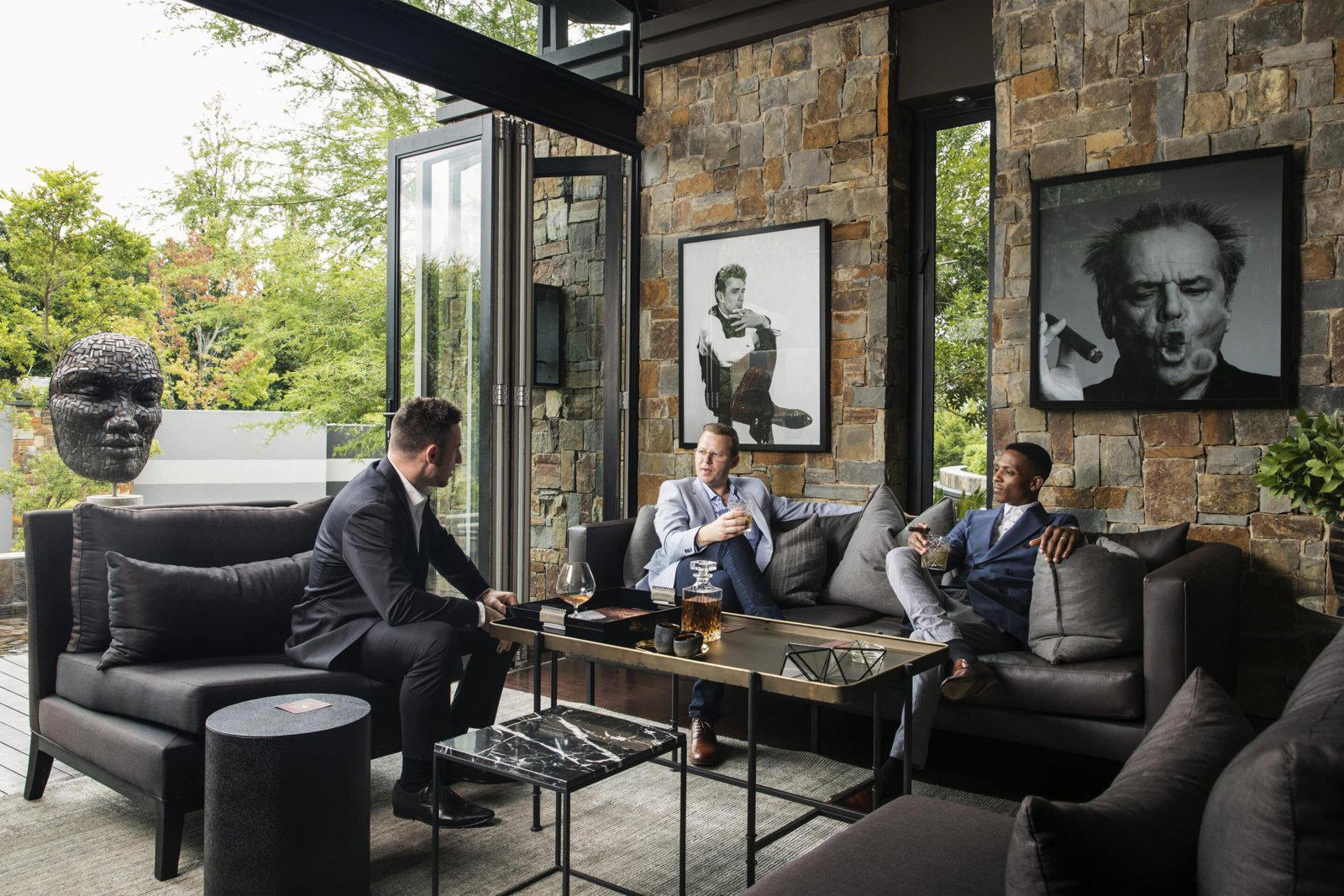
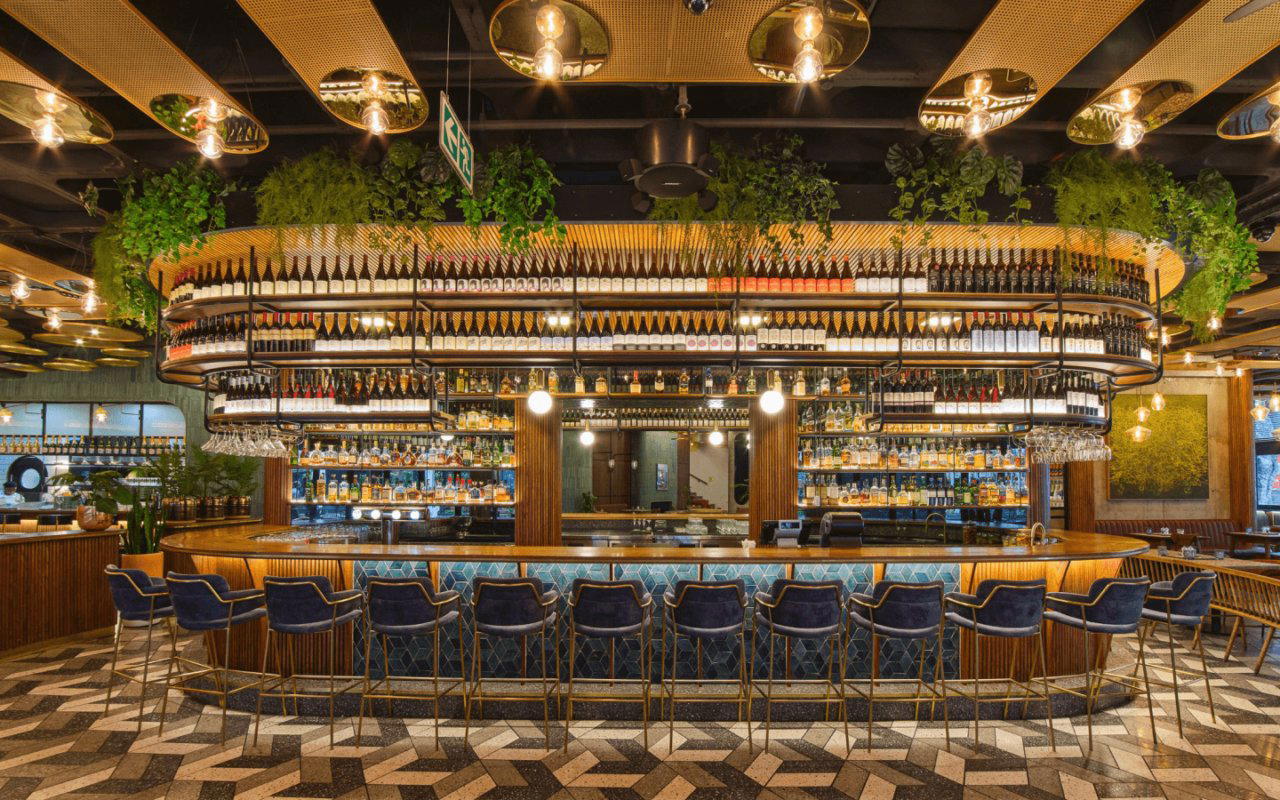
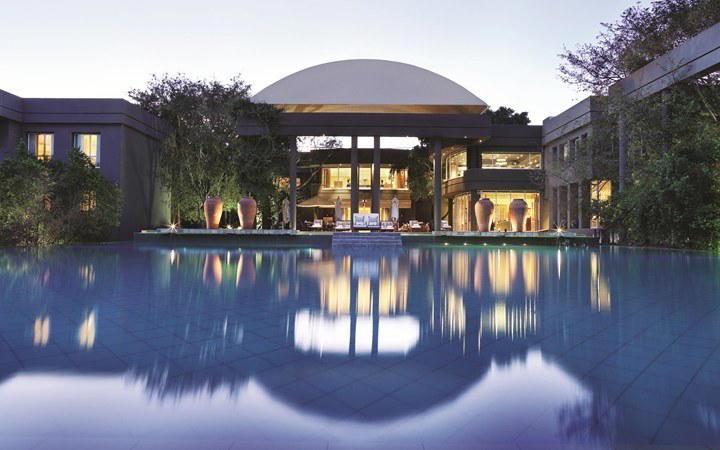
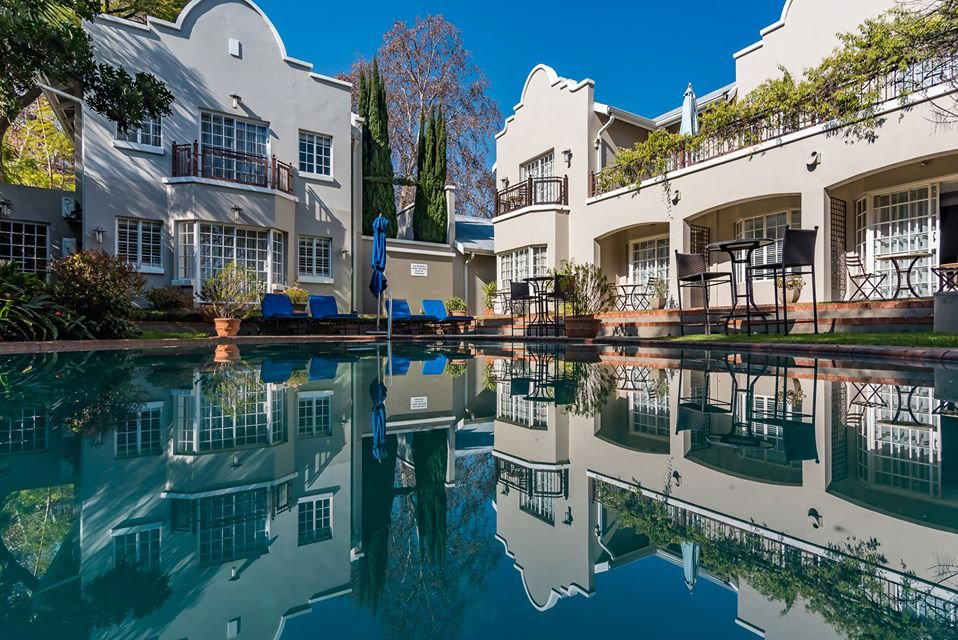
The approach to 36 Saxon Road in Sandhurst prepares you for a particular register of Johannesburg hospitality. The suburb sits in the northern arc of the city, where large properties behind mature hedges signal money that has had time to settle. The Saxon Hotel occupies one such property, and Qunu, its principal dining room, operates inside a residential-scale space that makes the transition from hotel lobby to dinner table feel deliberate rather than incidental. There is none of the atrium scale or open-plan noise common to hotel restaurants that are designed to feel accessible. The room reads as a considered enclosure, which frames everything served inside it differently from the start.

Hotel dining in Johannesburg has historically occupied an awkward position: good enough to keep guests in-house, rarely good enough to attract a destination following from the city at large. That division has narrowed in recent years as a number of hotel kitchens in the northern suburbs began building menus with formal architectural logic rather than broad hospitality caution. Qunu sits among that grouping. Its World of Fine Wine 3-Star Accreditation places it in a verified tier above standard hotel food-and-beverage, and that award is not primarily a wine designation: the World of Fine Wine star system assesses the full dining experience, including wine program integration, service, and food quality. Three stars within that framework represents a meaningful benchmark.

Members Only

The shortlist, unlocked.

Hard-to-book tables, cellar releases, and concierge-planned trips.

Get Exclusive Access →

How the Menu Positions Itself

The editorial angle that matters most when reading Qunu's position in Johannesburg's dining structure is not which individual dishes appear on the menu but rather how the menu is assembled as an argument. South African fine dining has spent the last decade working out a more honest relationship between international technique and local ingredient identity. The more credible operations in this space, from Fyn in Cape Town to Wolfgat in Paternoster, have moved away from European-format tasting menus with South African garnishes and toward structures where local produce and regional cooking logic are load-bearing rather than decorative.

Hotel dining rooms tend to be slower to make that shift because their guest mix demands legibility across cultures and dietary expectations. The better ones solve this by building menus in tiers: an accessible register that reads clearly to an international visitor, and a more specific layer that rewards those who look for it. That architecture, when done with precision, is more technically difficult than a single-voice tasting menu because it must cohere across different reading levels simultaneously. The World of Fine Wine recognition implies Qunu has achieved that coherence at a level that holds up to structured external assessment, which is a different thing from popular approval.

Within Johannesburg, the most useful peer comparison is not against other hotel restaurants but against the city's contemporary fine dining independent operators: Aurum, Embarc, and Ethos Restaurant each occupy specific positions in that field. What distinguishes a hotel dining room like Qunu from those independents is not necessarily the food quality at the leading of the range but the structural constraint of operating within a broader hospitality offer. When a hotel kitchen performs at accredited fine dining level despite those constraints, the achievement is worth noting as a signal about the underlying kitchen and its standards.

Wine Program Logic

The World of Fine Wine accreditation framework weights the wine program as a primary criterion, which means Qunu's cellar and list-building approach has been assessed as part of the overall score. South Africa's wine industry offers hotel sommeliers a genuine opportunity: a production landscape that includes mature Stellenbosch Cabernet programs, precision-focused Swartland Chenin houses, and emerging production in the Hemel-en-Aarde corridor, all with strong vintage depth and competitive pricing relative to equivalent European wines.

Hotel wine lists in the premium segment often fail by either over-indexing on international names for status signaling or under-curating the domestic offer into a regional sampler without real selection logic. A 3-star result from a program that specifically evaluates this category suggests Qunu's list has avoided both failures. For those who approach this kind of restaurant as a window into South African wine at a serious level, that accreditation functions as a meaningful recommendation. Readers wanting to map the broader wine geography should consult our full Johannesburg wineries guide alongside the Stellenbosch and Franschhoek references, including Delaire Graff Lodges & Spa in Helshoogte Pass and Dusk in Stellenbosch, for a fuller picture of how wine-forward dining is currently developing across the country.

Johannesburg's Northern Suburbs Fine Dining Context

Sandhurst and its immediate neighbors Saxonwold and Hyde Park form the geographic concentration for Johannesburg's highest-end restaurants. The area's dining character differs from the more experimental energy found in Maboneng or Braamfontein: the northern suburbs format favors formal service structures, controlled environments, and a guest profile that skews toward corporate entertainment and special occasion dining rather than weeknight discovery. That context shapes what a restaurant like Qunu is built to do, and also what it will not be: it will not improvise at you or ask you to be adventurous. The architecture of the experience is designed for confidence rather than surprise.

That model has direct international parallels. The hotel dining rooms at properties like Ellerman House in Bantry Bay operate from a similar position: formal property, formal room, a guest base with high expectations for consistency, and a kitchen that must deliver against that register every service. The format requires a different discipline than a creative independent, and the World of Fine Wine framework, which assesses exactly these kinds of operations, seems calibrated to recognize that discipline.

For travelers visiting Johannesburg with a broader dining agenda, Qunu fits most naturally into a sequence that also includes newer-format Joburg operators. Gigi and KŌL Izakhaya represent the city's more informal contemporary energy. A Joburg dining week that moves between those registers and finishes with a formal hotel dining experience at the Saxon gives a reasonably complete map of where the city's food culture sits in 2024. Our full Johannesburg restaurants guide covers the wider field.

Planning a Visit

Qunu operates within the Saxon Hotel at 36 Saxon Road, Sandhurst, which situates it a short drive from Hyde Park Corner and within the northern suburbs cluster where most business and leisure visitors to Johannesburg tend to stay. The hotel-restaurant format means booking through the hotel's own channels is the most reliable route, and for formal dinners at accredited properties in this tier, advance reservations are standard practice rather than optional. Guests staying at the Saxon can in principle arrange dinner through the concierge, but walk-in availability at this level of operation is not something to assume. Those planning a multi-city South Africa itinerary that includes Johannesburg alongside Cape Town should note that the comparable accredited fine dining tier in Cape Town includes Le Quartier Français in Franschhoek and operates in a somewhat more competitive market, meaning the Joburg properties in this tier have a different positioning dynamic. For the broader Johannesburg picture, see also our full Johannesburg hotels guide, our full Johannesburg bars guide, and our full Johannesburg experiences guide.

Frequently Asked Questions

What's the signature dish at Qunu at the Saxon Hotel?
Specific menu items and signature dishes are not confirmed in available data for Qunu. What the World of Fine Wine 3-Star Accreditation does confirm is that the overall food quality and menu coherence meet a formal external standard. For current menu details, contacting the Saxon Hotel directly or checking the hotel's website is the reliable route, as menus at this level of fine dining are subject to seasonal revision.
Is Qunu at the Saxon Hotel reservation-only?
At a World of Fine Wine 3-Star accredited property operating within a five-star hotel in Johannesburg, advance reservations are the expected mode of access. Walk-in availability is not standard practice at this tier. Bookings are leading made through the Saxon Hotel directly, and for weekend or special occasion dining, securing a table well in advance is the practical approach in any comparable fine dining context.
What has Qunu at the Saxon Hotel built its reputation on?
Qunu's formal recognition rests on its World of Fine Wine 3-Star Accreditation, an assessment that evaluates the dining experience across food quality, wine program, and service. Within Johannesburg's northern suburbs dining environment, that accreditation places it in the city's upper tier of hotel dining, operating at a level that holds up against structured external benchmarking rather than relying solely on hotel guest volume or local popularity.
Can Qunu at the Saxon Hotel handle vegetarian requests?
Dietary accommodation policies are not confirmed in available data. Hotel dining rooms at the five-star level in Johannesburg typically manage dietary requirements as a standard service function, but specific policies for vegetarian or other dietary requests should be confirmed directly with the Saxon Hotel before booking. Contacting the hotel rather than assuming standard policies is the reliable approach for any specific dietary need.
How does Qunu at the Saxon Hotel compare to other South African fine dining destinations outside Johannesburg?
Qunu's World of Fine Wine 3-Star Accreditation places it in the same formal recognition framework as a number of South Africa's most assessed dining addresses. Properties like Fyn in Cape Town and Le Quartier Français in Franschhoek operate in Cape Town's more competitive fine dining market, while Qunu represents the hotel dining benchmark in Johannesburg's northern suburbs. For travelers assessing South African fine dining across cities, the 3-Star result provides a consistent external reference point regardless of geography.

Recognition Snapshot

A compact comparison to help you place this venue among nearby peers.

Collector Access

Need a table?

Our members enjoy priority alerts and concierge-led booking support for the world's most difficult tables.

Get Exclusive Access
Members Only

The shortlist, unlocked.

Hard-to-book tables, cellar releases, and concierge-planned trips.

Get Exclusive Access →