Pocha
Our verdict
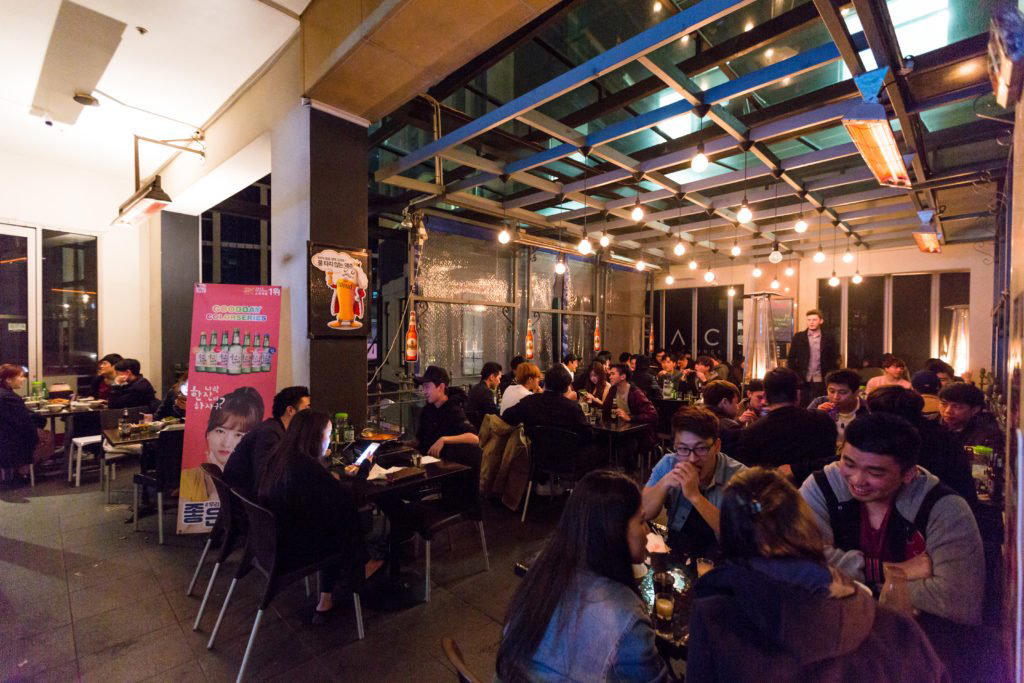
Pocha occupies a CBD address on Kitchener Street that places it squarely within Auckland's growing Korean street-food conversation. The pocha format, rooted in the tent-bar dining culture of Seoul's night markets, brings a distinct set of rituals and expectations to a city increasingly fluent in East Asian dining registers. For those tracking where Auckland's casual-but-serious dining is heading, this address warrants attention.

Pearl is the En Primeur Club membership app, where members save venues, book tables and use the concierge.
The menu
What to order
- Almond Krunch
- Honey Garlic Butter Chicken
- Grilled Pork Belly
- Spicy Rice Cake
- Korean Army Soup
- Pocha Bibimbab
The Ritual Before the Food
Korean pocha culture is defined less by what appears on the table than by the sequence in which it arrives and the social contract that governs the pace. In Seoul, the pojangmacha, the canvas-covered tent bars that gave the format its name, operate as pressure-release valves for the city's working population: cheap soju, shareable plates, and the kind of ambient noise that makes private conversation feel oddly possible. When that format migrates to a city like Auckland, the question is always how much of the ritual travels with it, and how much gets left at the border. At Pocha on Kitchener Street in the Auckland CBD, the address itself signals intent. Kitchener Street sits within walking distance of the city's theatre district and late-night foot traffic, which means the format lands in terrain where the pacing of dinner-as-event is already understood.
What the Format Demands of the Diner
Eating within a pocha framework is not the same as ordering from a standard Korean restaurant menu. The ritual moves through several distinct phases. Drinks arrive early and anchor the table before food does, typically because the social logic of the format treats alcohol as the organizing principle rather than an accompaniment. Anju, the food category designed specifically to pair with drinking, forms the core of the menu: fried chicken, tteokbokki, seafood pancakes, and various forms of skewered or grilled protein. These are not starter dishes that yield to a main; they are the meal, eaten communally and replenished according to appetite rather than a fixed progression.
This stands in deliberate contrast to the European-derived tasting menu format that dominates Auckland's upper tier, represented by venues like Ahi (Pacific Seafood) and Cocoro (Japanese Cuisine), where the kitchen controls the pace and the diner surrenders to sequence. At a pocha, the diner controls the pace, and that inversion of authority is part of what makes the format culturally specific. Knowing this before you arrive changes how the meal unfolds. Order wider than you think you need, share everything, and do not expect a natural stopping point to announce itself.
Pocha in Auckland's Korean Dining Context
Auckland's Korean dining scene has historically clustered in the suburbs, particularly around the Dominion Road corridor and the New North Road precincts, where established community restaurants have served both diaspora regulars and a gradually expanding non-Korean audience for decades. The CBD positioning of Pocha on Kitchener Street represents a different kind of ambition: a format that is deeply Korean in its logic but positioned where the foot traffic skews toward office workers, hotel guests, and the post-theatre crowd rather than the community regulars who anchor suburban Korean dining.
That positioning creates an interesting tension. For reference, Family House Korean Restaurant in Rotorua operates within a community-anchored model that serves a different audience with different expectations. Auckland's CBD Korean dining, by contrast, must function as both introduction and destination, serving diners who may be encountering the format for the first time alongside those who know exactly what they want and how to order it. The leading operators in this position manage both audiences without patronizing either.
How Auckland Compares to the Broader New Zealand Scene
The emergence of format-specific dining in Auckland's CBD reflects a pattern visible across New Zealand's larger cities. In Wellington, venues like Chameleon Restaurant in Wellington Central and Field and Green in Te Aro have pushed the capital's dining register toward greater specificity. The South Island equivalent of this movement shows in places like Aosta in Arrowtown and Amisfield in Queenstown, where format and setting carry as much weight as the menu itself. Even regionally, venues like Bistronomy and Vinotech in Napier South and Indigo in Napier signal that format-consciousness has moved well beyond the main cities.
Within Auckland specifically, the CBD dining tier has expanded to include more format-driven concepts alongside the established fine-dining addresses. Baduzzi anchors the Italian end of that spectrum, while Dante's Pizzeria by Enis Baçova and Cornelia each occupy clearly defined format positions. Pocha's Korean street-food format adds another distinct register to that set, and the Kitchener Street address gives it the foot-traffic exposure to function as a first point of contact for the format rather than a specialist destination reached by prior knowledge alone.
For those who have eaten their way through New York's Korean dining tier, from the barbecue houses of Koreatown to the refined presentation of Atomix, the pocha format will read as familiar but specifically calibrated. The New York analogy is useful because it frames the spectrum: at one end, the technical ambition of a venue like Le Bernardin sets a reference point for how a cuisine's higher registers can be formalized; at the other, the pocha tradition insists that the informal end of the spectrum carries its own discipline and integrity.
Practical Notes for Planning Your Visit
Pocha sits at 50 Kitchener Street in the Auckland CBD, which puts it within easy reach of the city's main transport corridors and hotel accommodation. The Kitchener Street address is compact, and given that the format is designed for communal eating across multiple rounds of food and drink, groups of three to six tend to get more from the experience than solo diners or couples working through a limited order. Those planning a broader Auckland dining itinerary can use our full Auckland restaurants guide to map Pocha against the city's wider options. For wellness-oriented travellers building a New Zealand itinerary around food and landscape, Aro Ha Wellness Retreat in Glenorchy and Kika in Wānaka represent the other end of the spectrum from pocha's late-night register. Cafe Istanbul in Tauranga offers another frame of reference for how format-specific international dining translates into smaller New Zealand cities.
Frequently asked questions
What's Pocha's location?
Pocha is located at 50 Kitchener Street, Auckland CBD, Auckland 1010, New Zealand, Auckland.
How does Pocha differ from a standard Korean restaurant in Auckland?
Pocha operates on a pojangmacha model, which structures the meal around drinking culture and sequential communal sharing rather than individual mains and starters. Most of Auckland's Korean dining options follow a conventional restaurant format concentrated in suburbs like Dominion Road; Pocha's CBD address at 50 Kitchener Street and its format-specific approach make it a distinct point of reference in that scene.
What should I eat at Pocha?
Pocha follows the pojangmacha format, meaning the menu is built around communal dishes designed to be shared across the table in sequence rather than ordered individually. The kitchen draws from Korean street-food tradition: fried, grilled, and braised plates that accompany drinks rather than replace them. Arriving with a group gives the format its intended shape.
What's the best way to book Pocha?
Pocha is located at 50 Kitchener Street in the Auckland CBD.
What is Pocha known for?
Pocha brings the Korean pojangmacha tradition to Auckland's CBD, a format centred on communal eating, drinks-first sequencing, and informal social ritual rather than conventional plated dining. It occupies a specific gap in Auckland's Korean dining scene, which has historically concentrated in suburban corridors like Dominion Road rather than the city centre.
Can Pocha adjust for dietary needs?
Korean pocha menus are typically built around meat, seafood, and fermented ingredients, which can make vegetarian or allergy-specific adjustments structurally limited.
Is a meal at Pocha worth the investment?
Pricing details for Pocha are not currently published, but the pojangmacha format traditionally sits at the accessible end of Korean dining, with the value weighted toward volume of shared dishes and the social experience rather than premium ingredients or tasting menus. For diners familiar with Auckland's Korean suburban options, the CBD location at 50 Kitchener Street adds convenience to a format that is otherwise underrepresented in the city centre.
Cuisine and Recognition
Comparable venues nearby, for context on price, style, and recognition.
| Venue | Cuisine | Price | Awards | Notes |
|---|---|---|---|---|
| PochaThis venue (the venue you are viewing) | Korean Restaurant & Bar | $20–30 | Not listed | Not listed |
| Moxie Restaurant | Modern New Zealand Contemporary | $50–100 | Not listed | Birkenhead |
| Bistro Saine | French-Mediterranean Bistro | Not listed | Michelin Bib Gourmand · Cuisine Good Food Guide Selection | Auckland CBD |
| Baduzzi | Modern Italian Farm-to-Table | $50–100 | Michelin Plate · Cuisine Good Food Guide 2 Hat | Auckland Central |
| Gerome | Modern Greek with Mediterranean Influences | $50–100 | Not listed | Parnell |
| Sidart | Dining | Not listed | The Best Chef One Knife | Ponsonby |
Continue exploring
More in Auckland
Restaurants in Auckland
All restaurants in Auckland →
Bars in Auckland
All bars in Auckland →

Details
- Lively
- Cozy
- Group Dining
- Late Night
- Casual Hangout
- Standalone
- Sake Program
- Beer Program
- A La Carte
- Soju
- Beer
- Vegetarian Friendly
Current opening hours
- Monday
- Closed
- Tuesday
- 11:30 AM–2:30 PM, 5 PM–12:30 AM
- Wednesday
- 11:30 AM–2:30 PM, 5 PM–12:30 AM
- Thursday
- 11:30 AM–2:30 PM, 5 PM–12:30 AM
- Friday
- 11:30 AM–2:30 PM, 5 PM–2:30 AM
- Saturday
- 11:30 AM–2:30 PM, 5 PM–2:30 AM
- Sunday
- 11:30 AM–2:30 PM, 5 PM–12:30 AM
Hours can change for holidays and private events. Hours as of .
Fun, lively, and busy, with a lively late-night atmosphere.