Our verdict
Pav bhaji is one of Maharashtra's most democratic street dishes, and Jalna has its own quiet version of the form. Pav Bhaji Panda operates from the second floor of Krishna Mall, placing a familiar format inside a mall-dining context that shapes how the city's younger crowd engages with the dish. For visitors passing through this central Maharashtra town, it offers a low-friction entry point into regional fast-casual eating.

Pearl is the En Primeur Club membership app — saves, bookings, and concierge access live there. Same editors, same standards.
Pav Bhaji in Maharashtra: What the Dish Tells You About the State
Few dishes in the Indian subcontinent carry as much geographic identity as pav bhaji. The combination of a spiced, buttered vegetable mash served with soft, griddle-toasted bread rolls originated in Mumbai's textile mill districts in the 1850s, designed as fast fuel for workers on a compressed lunch break. What makes it interesting as a category is how it has since migrated inward through Maharashtra, adapting to local tastes and supply chains as it moved away from the coast. In cities like Jalna, situated in the Marathwada region where the food culture leans toward drier, less coconut-heavy preparations than the coast, pav bhaji takes on a slightly different character — the spice blends sourced locally, the butter quantity often more assertive, the bread rolls shaped by wherever the nearest bakery sits in the supply chain.
That regional variation is the real story behind any pav bhaji counter in inland Maharashtra. The dish is simple enough that its quality is almost entirely determined by what goes into it: the quality of the tomatoes, the age and blend of the bhaji masala, the fat content and freshness of the butter, and whether the rolls arrive from a bakery with genuine pav-making traditions or from a generic bread supplier. In Marathwada specifically, the agricultural hinterland around Jalna produces onions and tomatoes that form the backbone of the bhaji's flavour profile, making ingredient sourcing less about artisan philosophy and more about proximity to fields that actually supply the region.
Krishna Mall, Second Floor: Mall Dining and What It Signals
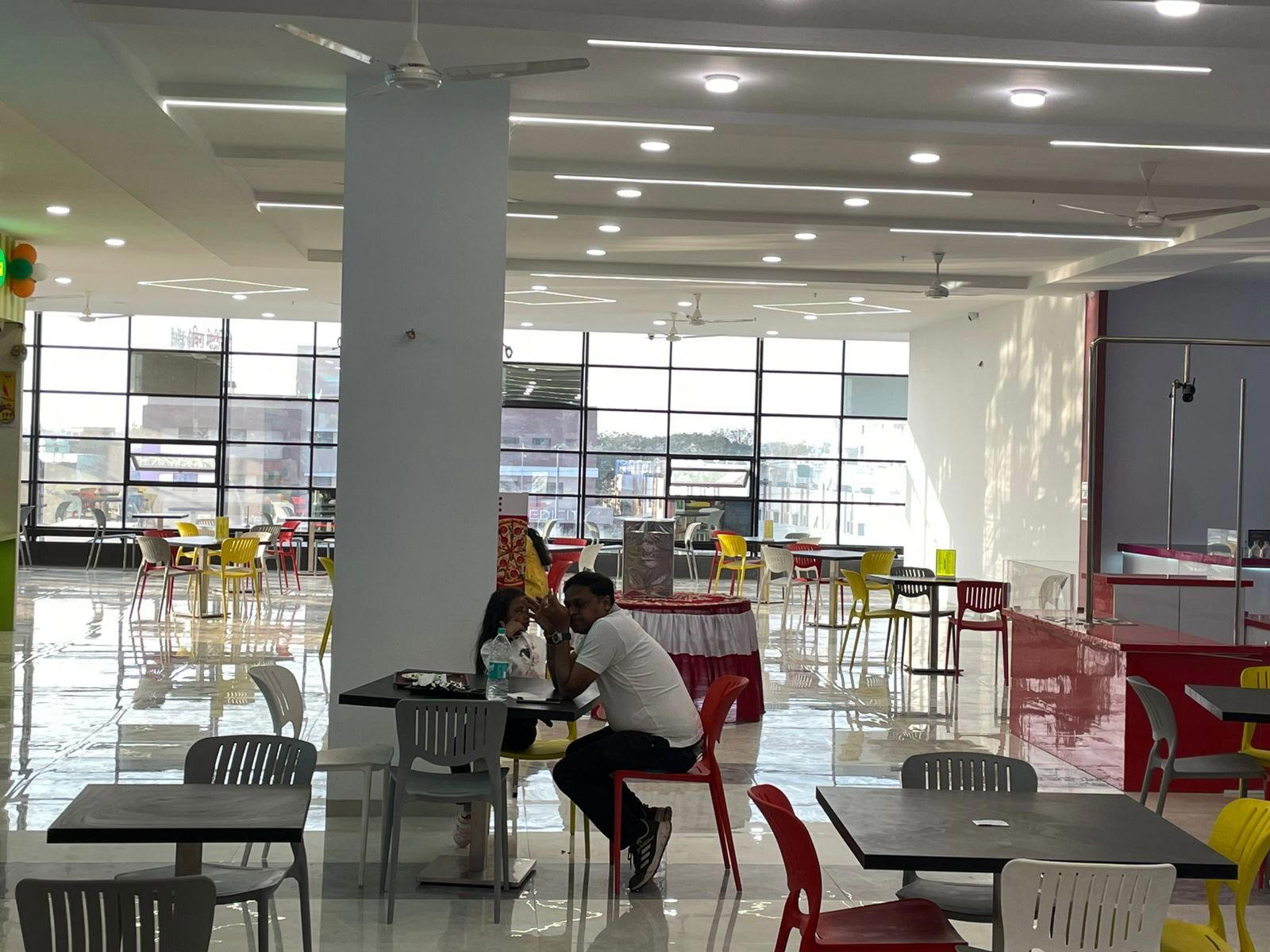
Pav Bhaji Panda occupies Shop No. 5 on the second floor of Krishna Mall in Jalna — a placement that immediately positions it within a specific tier of the city's dining ecosystem. Mall-based food counters in smaller Indian cities occupy an interesting middle ground: they serve a format that was originally street-level and informal, but they do so in an air-conditioned, fixed-address environment that appeals to families and younger diners who want predictability over the raw variability of a pavement stall.
This positioning matters for understanding who the venue is for and what kind of experience it delivers. In cities of Jalna's scale, a district headquarters with a population in the low hundreds of thousands, a mall food counter is not a downmarket concession. It is often where the middle-class dining conversation actually happens, particularly for dishes that have migrated from street-food into everyday casual eating. The format signals something about standardisation: a fixed premises implies a consistent recipe, regular supply relationships, and a degree of kitchen infrastructure that an open pavement setup cannot guarantee. For visitors to Jalna passing through on the way between Aurangabad and the eastern districts of Maharashtra, it represents a reliable, low-stakes stop. For context on how other Indian regional cities handle the relationship between street-food formats and formal dining infrastructure, our full Jalna restaurants guide maps the broader picture.
The Ingredient Geography of Marathwada's Pav Bhaji
The Marathwada region, of which Jalna is a part, sits on the Deccan Plateau in conditions that are markedly different from coastal Maharashtra. The agricultural output here runs toward pulses, oilseeds, and vegetables that thrive in semi-arid conditions, and the onion and tomato crops from surrounding districts feed into the region's food economy at a scale that keeps raw ingredient costs relatively low and freshness relatively high for local establishments. A well-run pav bhaji counter in this region benefits from that geography in a way that a comparable counter in, say, Delhi cannot replicate without logistical overhead.
The bhaji masala itself is worth considering as an ingredient category. Unlike standardised national brands, regional spice blends in Maharashtra's inland towns often reflect local sourcing of dried red chillies from Marathwada's own growing belt. The precise blend used at any given counter determines how the dish reads on the palate, whether it leads with heat, with tartness from dried mango powder, or with the rounder warmth of coriander and cumin. This is the kind of granular sourcing detail that separates a dish made with attention to local supply chains from one assembled from generic inputs. The editorial point here is not specific to this single venue but to what the category rewards when it is done with any seriousness: proximity to agricultural output in a region like Marathwada is an inherent advantage, and the leading versions of the dish in this part of Maharashtra tend to reflect that advantage directly in flavour.
For comparison against how other formats handle ingredient sourcing at different price tiers across India, Farmlore in Bangalore takes a formally documented farm-to-table approach at the premium end of the market, while Bukhara in New Delhi has built its reputation over decades on the specificity of its tandoor-based techniques rather than sourcing transparency. Pav Bhaji Panda operates at a categorically different price point and with a different set of expectations, but the underlying logic of ingredient proximity applies across tiers.
How It Fits Into Jalna's Dining Rhythm
Jalna is not a major culinary destination by the metrics that typically drive travel itineraries: it holds no major food awards, no Michelin-adjacent recognition, and the city does not appear in the national food press with any regularity. What it does have is a functional, everyday food culture shaped by its role as a regional agricultural and commercial hub. Restaurants and food counters here serve residents before they serve visitors, which tends to produce a more honest version of regional cooking than cities where the audience has shifted toward tourism. For those exploring the less-documented food geography of Maharashtra's interior, this distinction matters. Our coverage of other regional Indian dining contexts, from Dadi Ki Rasoi in Budaun to Dosa Crepes N More in Mehsana, reflects the same pattern: cities that serve locals first tend to produce food that earns its place on the plate rather than its place in a press release.
In that context, a pav bhaji counter on the second floor of Krishna Mall fits Jalna's dining rhythm accurately. It is not positioned as a destination. It is positioned as part of the city's daily eating infrastructure, which for a category like pav bhaji is exactly the correct register. Dishes of this type are evaluated by frequency of visit, not occasion. The question a regular asks is not whether the kitchen impressed them once, but whether it is worth returning to on a Thursday afternoon when nothing else is available. That is the competitive set that matters here, and it is a different one entirely from the tasting-menu tier represented by venues like Atomix in New York City or the fine-dining heritage of Le Bernardin.
Planning Your Visit
Pav Bhaji Panda is located at Shop No. 5, Second Floor, Krishna Mall, Jalna, Maharashtra 431203. The mall setting means the venue is accessible without navigating street-level congestion, which makes it a practical stop for those arriving in Jalna by road from Aurangabad, roughly 70 kilometres to the west. For broader context on what the city's dining scene offers across different formats and price points, the full Jalna restaurants guide provides additional reference. Readers interested in how Indian regional cooking performs at formally recognised restaurant tier may find Esphahan in Agra, Leela Kerala Terrace in Trivandrum, or Naar in Kasauli useful comparators for understanding how different contexts shape the same broad tradition.
Frequently asked questions
Is Pav Bhaji Panda suitable for children?
The mall setting at Krishna Mall, Jalna makes the venue inherently accessible for families. Pav bhaji as a dish — a buttered vegetable mash served with soft bread rolls — is a standard child-friendly staple across Maharashtra. The second-floor food court format typically offers seating and a relaxed environment with no age-specific barriers.
Is Pav Bhaji Panda better for a quiet night or a lively one?
Krishna Mall provides the ambient structure here: mall dining in a mid-sized Marathwada city like Jalna tends toward a sociable, family-crowd tempo rather than a late-night scene. Expect the busiest periods around evenings when the mall draws post-work foot traffic. It reads more as a communal snack stop than a venue for a quiet solo meal.
Is Pav Bhaji Panda a dine-in spot or mainly a takeaway counter?
Pav Bhaji Panda occupies Shop No. 5 on the second floor of Krishna Mall in Jalna, which suggests a fixed retail-unit format rather than a street-side takeaway stall. Mall-based food units in Maharashtra at this tier typically offer limited seating alongside counter service.
What's the best thing to order at Pav Bhaji Panda?
The name answers the question directly: pav bhaji is the reason to visit. In Marathwada, where the agricultural profile of the Deccan Plateau shapes local produce, the bhaji's spice balance and butter quotient are the telling details worth gauging.
Where do I go for Pav Bhaji Panda?
Pav Bhaji Panda is located at Shop No. 5, Second Floor, Krishna Mall, Jalna, Maharashtra 431203, India, Jalna.
A Quick Peer Check
Comparable venues nearby, for context on price, style, and recognition.
| Venue | Cuisine | Price | Awards | Notes |
|---|---|---|---|---|
| Pav Bhaji PandaThis venue — the venue you are viewing | Indian Street Food - Pav Bhaji | $1–10 | Not listed | Not listed |
| Dilli StreEAT | Indian Street Food | Not listed | Not listed | Indira Gandhi International Airport |
| Nand Di Hatti | Classic Punjabi Chole Bhature | $1–10 | Not listed | Sadar Bazar |
| Zing | World of Flavors Buffet - Asian, Italian, Indian & Maharashtrian | Not listed | Not listed | Chikalthana MIDC |
| Bukhara Restaurant | North West Frontier Tandoori | $30–50 | World's 50 Best #37 · La Liste Top Restaurants | Diplomatic Enclave |
| Green Park | Indian & International Garden Dining | $1–10 | Not listed | Fatehabad Road |
Details
- Casual
- Lively
- Casual Hangout
- After Work
- Solo
- Standalone
- A La Carte
- Vegetarian Friendly
Current opening hours
- Monday
- 11:30 AM–11 PM
- Tuesday
- 11:30 AM–11 PM
- Wednesday
- 11:30 AM–11 PM
- Thursday
- 11:30 AM–11 PM
- Friday
- 11:30 AM–11 PM
- Saturday
- 11:30 AM–11 PM
- Sunday
- 11:30 AM–11 PM
Hours can change for holidays and private events. Last verified .
Lively and casual street food atmosphere with a focus on quick, flavorful meals in a lively neighborhood setting.