Nile Valley Cafe
Nile Valley Cafe on Chapel Street sits within Edinburgh's South Side, where the city's student quarter meets a quieter residential grain. The cafe occupies a niche that Edinburgh's fine-dining circuit rarely addresses: North African and Nile region cooking presented without the fanfare of a tasting-menu format. For visitors charting a course through the city's food culture, it represents a deliberate counterpoint to the Modern European consensus.
Pearl is the En Primeur Club membership app — saves, bookings, and concierge access live there. Same editors, same standards.
- Address
- 6 Chapel St, Edinburgh EH8 9AY, United Kingdom
- Phone
- +44 131 667 8200
- Website
- nilevalleycafe.shop
- Directions
- Get directions
 Saves & bookings on Pearl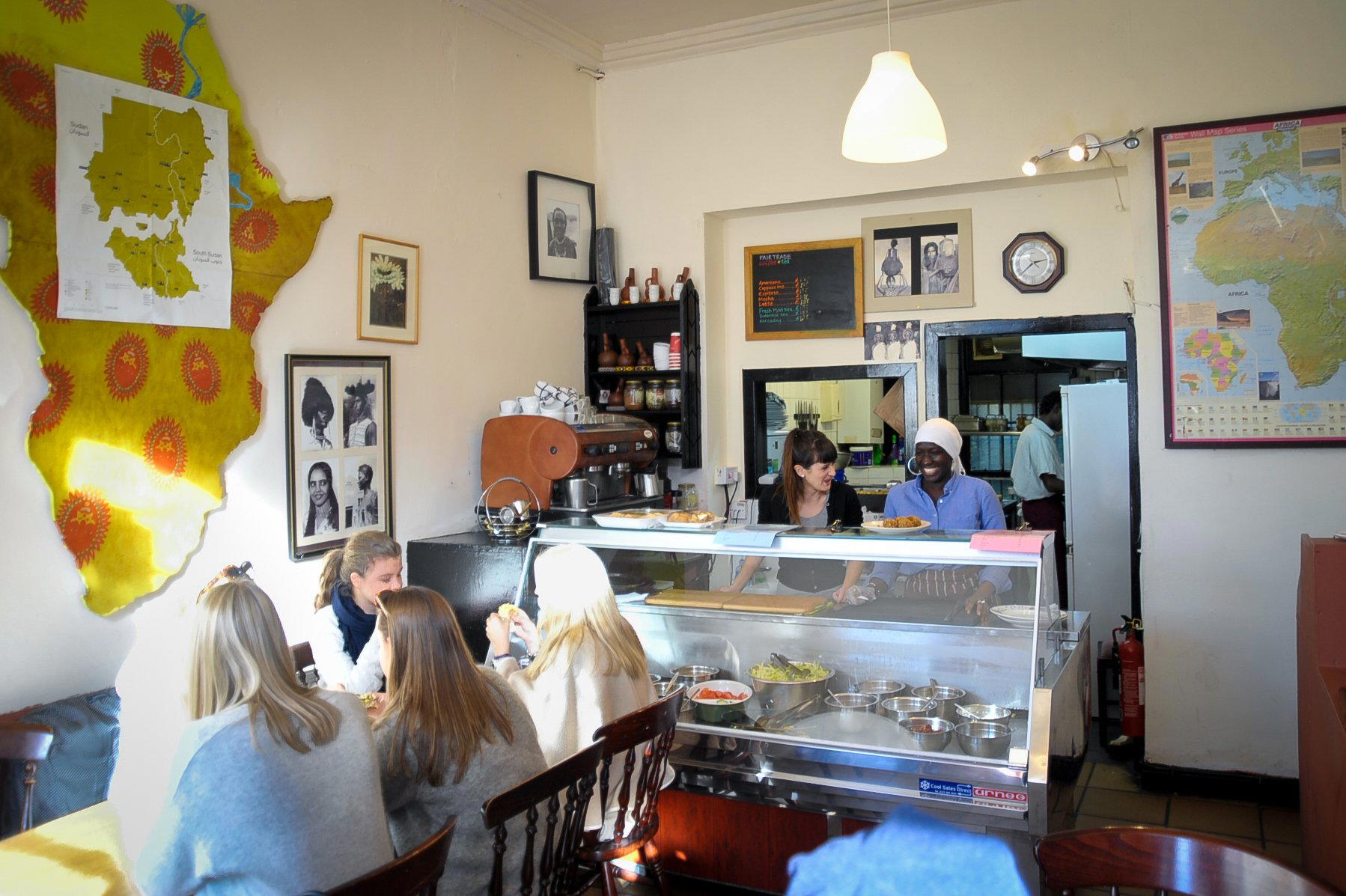
Chapel Street and the South Side's Changing Food Culture
Edinburgh's dining conversation tends to cluster around Leith, the New Town, and the Old Town's tourist corridor. The South Side operates differently. Anchored by the University of Edinburgh, the neighbourhood has historically run on convenience food and student budgets, but the decade since 2015 has seen a slower, more considered shift: independent cafes and restaurants with genuine culinary focus beginning to take root on streets that larger operators ignore. Chapel Street sits within that pattern. It is a short, residential-feeling stretch that connects the Meadows to the university's central buildings, and the food businesses that have settled there tend to reflect the neighbourhood's academic internationalism rather than the city's festival-driven tourist appetite.
Nile Valley Cafe, at number 6, belongs to that South Side evolution. Its address alone positions it differently from the Michelin-circuit venues that define Edinburgh's premium tier, places like Martin Wishart, The Kitchin, or Condita, each of which operates within a Modern European or contemporary British framework and targets a visitor-heavy clientele willing to spend at the ££££ bracket. Nile Valley Cafe does not compete in that tier, and that is precisely the point.
What the Nile Region Brings to a Scottish City
North African and East African cuisines remain among the least-represented food traditions in Edinburgh's restaurant culture. The city has built a credible portfolio of Modern British Nordic cooking through venues like Timberyard, and creative tasting-menu formats through AVERY, but the Nile corridor — spanning Egyptian, Sudanese, and broader East African culinary traditions — occupies a different register entirely. These are cuisines built around slow-cooked legumes, spiced stews, flatbreads that function as both plate and utensil, and an approach to vegetarian cooking that predates the trend-driven plant-based movement by centuries.
In cities with larger diaspora communities, such as London or Birmingham, this food culture has the critical mass to sustain a more visible restaurant scene. Edinburgh's version is smaller and, in some ways, more concentrated. A cafe format, rather than a full restaurant, is a rational response to the local market: it keeps overheads manageable and allows a focused menu rather than the sprawling coverage that a larger operation would require. That constraint tends to produce better food, because the kitchen is not spread across competing culinary directions.
For context on how specialist formats operate across the UK's fine-dining and independent spectrum, venues like Opheem in Birmingham demonstrate how non-European culinary traditions can reach Michelin-starred territory when a single cuisine is pursued with sufficient depth. The cafe format is a different proposition, but the underlying logic, focus produces quality, holds across the scale.
The Evolution of a Neighbourhood Cafe
Cafes at this level of the market tend to change slowly and without announcement. There are no press releases when a menu shifts, no relaunch campaigns when the kitchen changes direction. What the South Side food culture rewards instead is consistency of character: a place that knows what it is and does not drift toward whatever the broader Edinburgh market appears to want in any given season.
The most significant evolution for a cafe in this position is often not a dramatic reinvention but a gradual deepening. An opening menu that tests what a neighbourhood will accept becomes, over time, a more confident expression of the cuisine. Dishes that were tentative early on become the items regulars return for. The customer base shifts from curious walk-ins to people making deliberate decisions to return. That arc is harder to see from outside, but it is the mechanism by which a neighbourhood cafe either consolidates into a genuine institution or gradually loses coherence and closes. On Chapel Street, the evidence of continued operation in a competitive independent market is itself a signal of that consolidation.
Edinburgh's independent cafe sector has faced the same structural pressures as every other UK city: rising energy and ingredient costs, the post-pandemic reconfiguration of lunch and breakfast habits, and the competition from delivery platforms that have shifted casual eating further toward home. Cafes that survive that pressure do so by offering something a delivery platform cannot replicate: a specific room, a specific atmosphere, a specific reason to make a journey rather than an order.
Where Nile Valley Sits in Edinburgh's Broader Food Map
Edinburgh's food culture is easier to read if you think of it in tiers rather than as a single scene. At the leading, a cluster of destination restaurants, some Michelin-recognised, all operating at significant price points, compete for an audience that overlaps heavily with the city's festival visitors and corporate hospitality market. Below that, a mid-tier of neighbourhood bistros and wine-focused restaurants serves the city's resident professional population. Further down, the independent cafe sector operates on thinner margins with more localised, more regular customer bases.
Nile Valley Cafe sits in that third tier, which is not a comment on quality but on format and positioning. The same structural category contains some of the most interesting food in any city, precisely because it operates without the performance obligations that come with a tasting-menu format or a Michelin aspiration. The cooking at a cafe like this answers to its regular customers before it answers to a critic or a guide.
For visitors who want to understand Edinburgh's food culture beyond the venues that appear in every round-up, the South Side cafe circuit offers a more honest cross-section. The premium tier, venues comparable in ambition to Waterside Inn in Bray, CORE by Clare Smyth in London, or L'Enclume in Cartmel, is well documented. The independent cafe layer is less covered and, for a different kind of traveller, more revealing. Our full Edinburgh restaurants guide maps both tiers with equal attention.
Planning a Visit
Chapel Street is a ten-minute walk from Edinburgh Waverley station and sits just off the Meadows, making it accessible without requiring a taxi or transport connection. The South Side's pedestrian-friendly layout means Nile Valley Cafe works naturally as part of a longer afternoon on foot, combined with the Meadows themselves or the neighbourhood's bookshops and independent retailers. Contact details are most reliably found via a current search or map listing, as the cafe's direct web presence has not been confirmed through our standard verification process.
Continue exploring
More in Edinburgh
Restaurants in Edinburgh
Browse all →
Bars in Edinburgh
Browse all →
At a Glance
- Cozy
- Rustic
- Casual Hangout
- Byob
Current opening hours
- Monday
- 10 AM–9:30 PM
- Tuesday
- 10 AM–9:30 PM
- Wednesday
- 10 AM–9:30 PM
- Thursday
- 10 AM–9:30 PM
- Friday
- 10 AM–9:30 PM
- Saturday
- 10 AM–9:30 PM
- Sunday
- 10 AM–9:30 PM
Hours can change for holidays and private events. Last verified .
Bright yellow walls adorned with African art, festival flyers, and woven hangings create a welcoming, cluttered student cafe atmosphere.
Know Before You Go
- Getting there
- 6 Chapel St, Edinburgh EH8 9AY, United Kingdom