
Michelin Plate
Our verdict
The kitchen works in the modern European register at a mid-range price point, placing it in a different competitive bracket from the city's formal tasting-menu rooms. For the price tier, the Michelin consistency is difficult to match in Gdańsk.

Pearl is the En Primeur Club membership app, where members save venues, book tables and use the concierge.
The menu
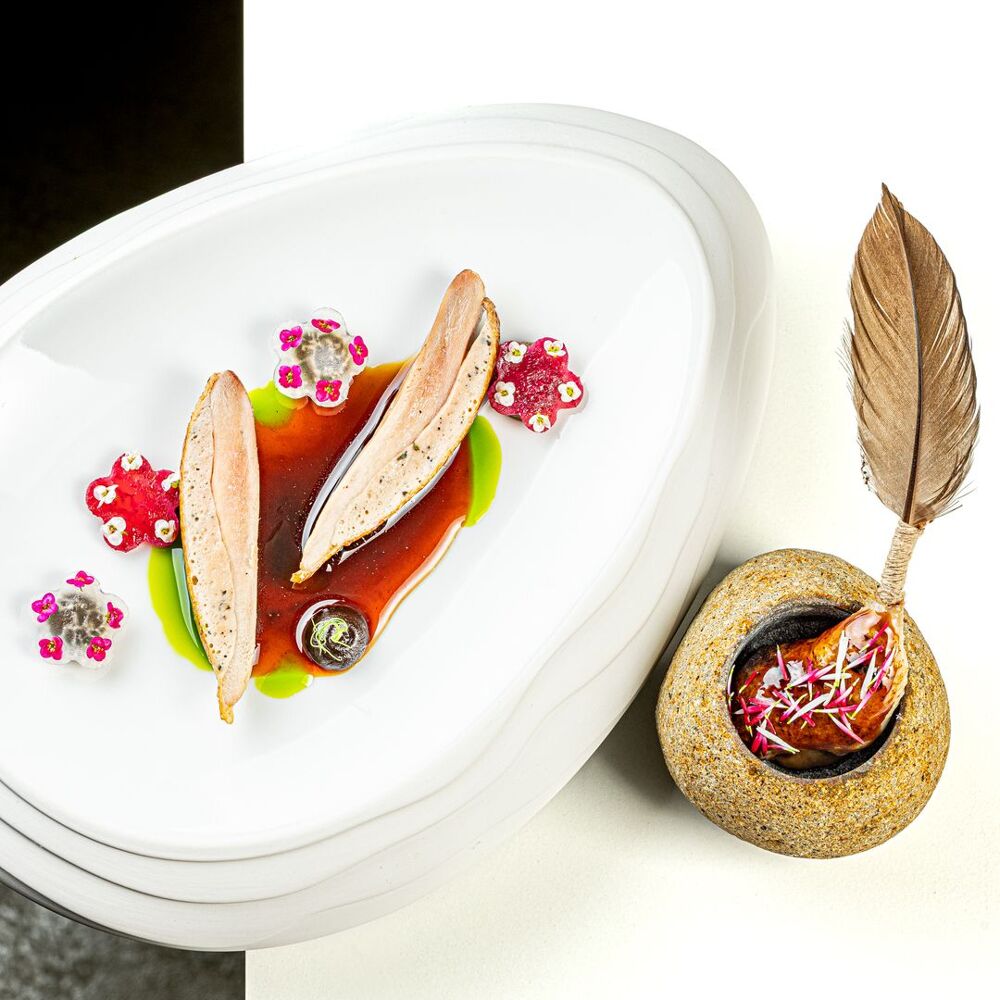
What to order
- Ceviche with scallops
- Stone Bass with roasted potatoes
- Risotto with wild garlic and morels
- Ribeye of dry-aged Black Angus beef
- Corn husk ice cream
Where Gdańsk's Old Town Meets Considered Modern Cooking
Mariacka Street arrives on you slowly. The amber merchants and Gothic doorways accumulate as you walk from the Motława waterfront, and the address at number 2/3 sits at the point where the street's medieval theatrics are most concentrated. This is one of the most visited pedestrian corridors in northern Poland, which makes what happens inside Niesztuka genuinely interesting: rather than coasting on footfall and location, the kitchen has twice earned a Michelin Plate, in 2024 and again in 2025, signalling that the cooking is being assessed against a national standard, not just a tourist one.
That geographic tension, between a high-traffic heritage address and a dining room operating with actual culinary ambition, defines the experience before you sit down. Gdańsk's restaurant scene has been developing a more serious upper tier over the past decade, driven partly by the city's growing status as a short-break destination for northern European visitors and partly by a local professional class with broader appetites. Niesztuka sits in the middle of that picture: priced in the accessible mid-range (€€), Michelin-recognised, and located where the city presents itself most directly to the world.
How the Menu Is Structured, and What It Signals
In the modern European kitchen, menu architecture tends to reveal the kitchen's actual priorities more honestly than any descriptor on the website. At Niesztuka, the approach sits within the broader Polish wave of modern cuisine that has been renegotiating the relationship between local ingredients and international technique since roughly 2015. That movement, visible across cities from Warsaw (see hub.praga in Warsaw) to Poznań (see Muga in Poznań), tends to organise menus around seasonal produce with technique applied in service of flavour rather than display.
Within Gdańsk specifically, the price-point spread across modern cuisine restaurants is instructive. Hewelke occupies the entry-level end (€), while Mercato sits at the higher bracket (€€€). Niesztuka's €€ positioning places it as a middle-market serious option: accessible enough to be a recurring choice for local diners, but priced above casual. The Michelin Plate at this price tier implies genuine kitchen discipline, Michelin's Plate designation recognises fresh ingredients and carefully prepared dishes, a meaningful floor rather than a ceiling.
Where the menu at this level typically distinguishes itself from cheaper competitors is in its structural logic: the sequencing of dishes, the way acidity and richness are balanced across courses, and whether the kitchen is cooking reactively to season or working from a fixed canon. In Gdańsk's culinary position, a Baltic city with access to North Sea fish, regional game, and a brassica-heavy agricultural hinterland, the ingredient pool is distinct from Warsaw or Kraków. Restaurants working in modern cuisine here have raw material to draw from that doesn't duplicate what's available inland. Compare this to similarly Michelin-recognised work elsewhere in Poland: Bottiglieria 1881 Restaurant in Kraków operates at a higher price tier and a more formal register, while Giewont in Kościelisko draws on mountain-region produce in a different idiom entirely.
Niesztuka in Gdańsk's Competitive Set
The city's upper restaurant tier is small enough that each serious room occupies a distinct position. Ritz and Fino represent other options within the dining quarter, while Eliksir approaches the scene from a different angle. Across the Tri-City area, 1911 Restaurant in Sopot provides a coastal counterpoint, operating in a resort context that shapes its format differently from an urban Old Town address.
A volume that size, at that score, across a tourist-heavy street suggests the kitchen is performing consistently for a mixed audience: international visitors arriving without context, alongside local regulars who return by choice. Maintaining Michelin recognition across two consecutive years while holding that public score across nearly 600 data points indicates a kitchen that has stabilised its output rather than peaking and regressing.
At the international scale of modern European cooking, the conversation about menu architecture in this register runs from Stockholm to Dubai. Frantzén in Stockholm and FZN by Björn Frantzén in Dubai represent the best of the Nordic-influenced modern European tier. Niesztuka is not competing in that price bracket or at that level of formal recognition, but its consistent Michelin acknowledgement places it in the same broad tradition: kitchens that treat menu construction as editorial, where the sequence of a meal carries meaning. Similarly, Acquario in Wrocław shows how modern European technique is being applied in other Polish cities outside the Warsaw-Kraków axis.
Planning Your Visit
Mariacka 2/3 puts Niesztuka within walking distance of the main tourist infrastructure of Gdańsk's Royal Road and the Motława waterfront. The address is a practical anchor point for anyone building a day in the Old Town. Given two consecutive Michelin Plate years and a 4.7 public rating, the dining room fills, advance booking is the sensible approach, particularly from late spring through summer when Gdańsk absorbs its largest tourist volumes and tables at serious restaurants compress quickly. The €€ price point means the bill sits comfortably within a day's travel budget for most European visitors, without requiring the planning horizon associated with the city's formal tasting-menu rooms. For anyone building a wider picture of where to eat and drink across the city, the full Gdańsk restaurants guide covers the range, while the Gdańsk bars guide, hotels guide, wineries guide, and experiences guide map the fuller range of the city's offer.
Frequently asked questions
What price level is Niesztuka?
Pricing at Niesztuka is listed as €€.
What's Niesztuka known for in terms of accolades?
Niesztuka has received recognition including: Michelin Plate (2025); Michelin Plate (2024).
What's the signature dish at Niesztuka?
The kitchen operates on a modern cuisine framework that typically rotates with the seasons, making a single fixed signature dish unlikely. The Michelin Plate recognition in both 2024 and 2025 points to consistent technical execution across the menu rather than one standout plate carrying the room.
Where do I go for Niesztuka?
Niesztuka is located at Mariacka 2/3, 80-833 Gdańsk, Poland, Gdańsk.
Do I need a reservation for Niesztuka?
Booking ahead is advisable. Contacting the venue directly before your visit is the safer approach.
What has Niesztuka built its reputation on?
Consecutive Michelin Plate recognition in 2024 and 2025 is the primary public credential, placing Niesztuka within Gdańsk's small tier of Michelin-assessed restaurants. At a mid-range price point (€€), it holds that standing without the cost barrier that accompanies starred rooms, which accounts for much of its sustained local and visitor following.
Same-City Peers
| Venue | Cuisine | Price | Awards | Notes |
|---|---|---|---|---|
| NiesztukaThis venue (the venue you are viewing) | Modern Neo-Bistro with South American Influences | $50–100 | Michelin Plate | Not listed |
| Arco by Paco Pérez | Mediterranean Fine Dining with Polish Ingredients | $150–200 | 1 Michelin Star · La Liste Top Restaurants | Spanish |
| Hewelke | Global Fusion with Pan-Asian Elements | $30–50 | Michelin Bib Gourmand | Modern Cuisine |
| Mercato | Modern Polish Fine Dining | $50–100 | Michelin Plate · Star Wine List | Modern Cuisine |
| Tygle | Modern Polish | $50–100 | Michelin Plate | Traditional Cuisine |
| Villa | Polish Fine Dining | $30–50 | Michelin Plate · Star Wine List | Modern French |
Recognition history
Dated appearances from independent guides and award organizations, with the underlying list record or original source where available.
Michelin Plate
Michelin
Full recognition history (3 entries)
Michelin Plate
Michelin
Michelin Plate
Michelin
Continue exploring
More in Gdańsk
Restaurants in Gdańsk
All restaurants in Gdańsk →
Details
- Intimate
- Elegant
- Modern
- Cozy
- Date Night
- Special Occasion
- Celebration
- Historic Building
- Standalone
- Sommelier Led
- Local Sourcing
- A La Carte
- Wine
- Vegetarian Friendly
- Vegan Options
- Gluten Free Options
Current opening hours
- Monday
- 2–10 PM
- Tuesday
- 2–10 PM
- Wednesday
- 2–10 PM
- Thursday
- 2–10 PM
- Friday
- 2–11 PM
- Saturday
- 1–11 PM
- Sunday
- 1–10 PM
Hours can change for holidays and private events. Hours as of .
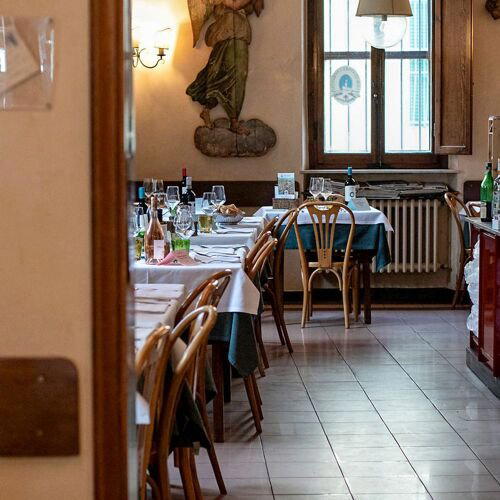
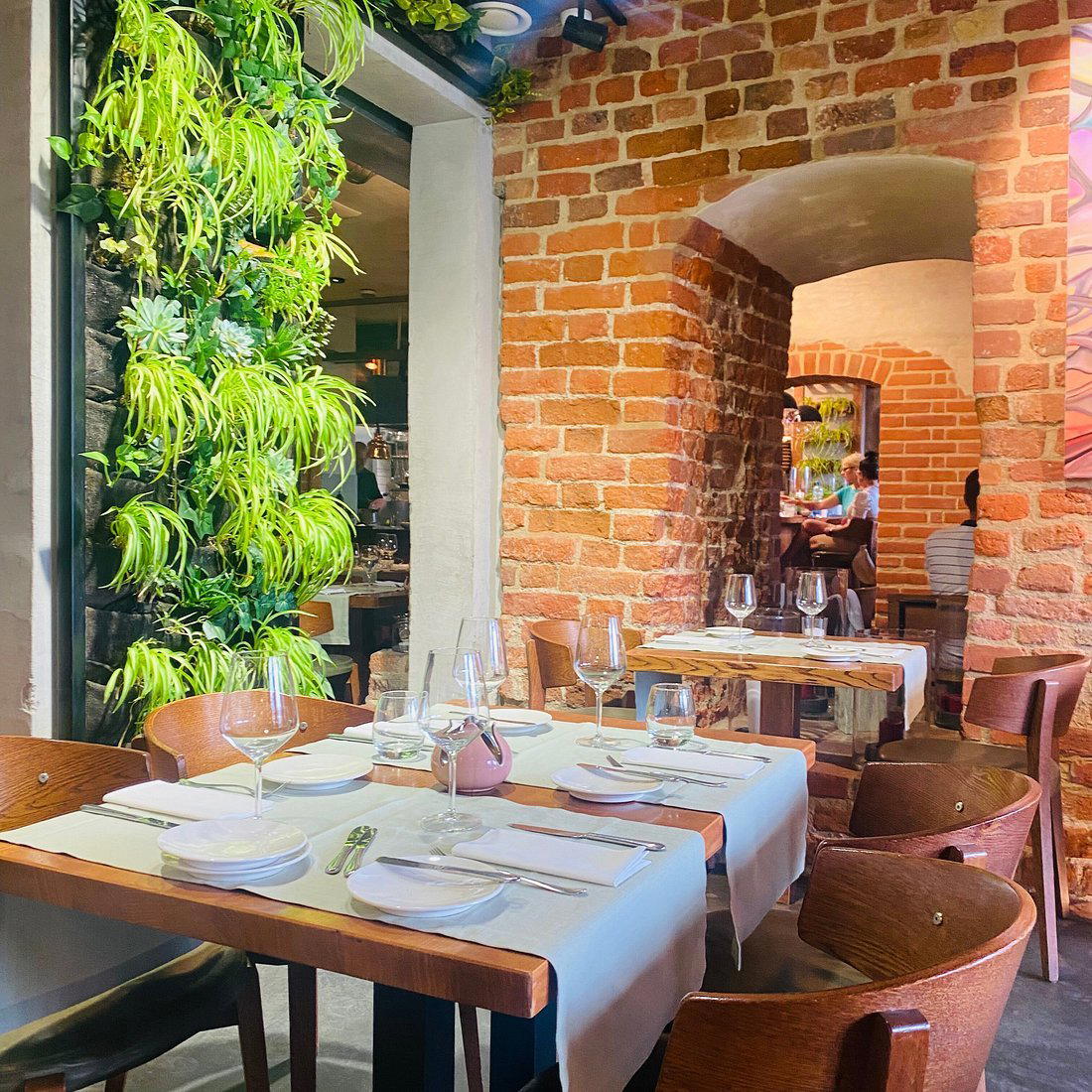
Mysterious and secretive atmosphere in a historic setting with lowly lit, quaint interiors featuring contemporary furnishings and modern soundtrack; ground floor has communal high-topped tables while first floor offers more privacy.