Morimoto Las Vegas


Wine Spectator Award of Excellence
Our verdict
Inside MGM Grand on the Las Vegas Strip, Morimoto Las Vegas brings the Japanese-Western culinary approach associated with chef Masaharu Morimoto to one of the world's most concentrated fine-dining corridors. The restaurant sits within a property that draws both destination diners and hotel guests, making it a reference point for Japanese-influenced cuisine at the upper end of the Strip's restaurant tier. Advance reservations are advisable, particularly on weekends.

Pearl is the En Primeur Club membership app, where members save venues, book tables and use the concierge.
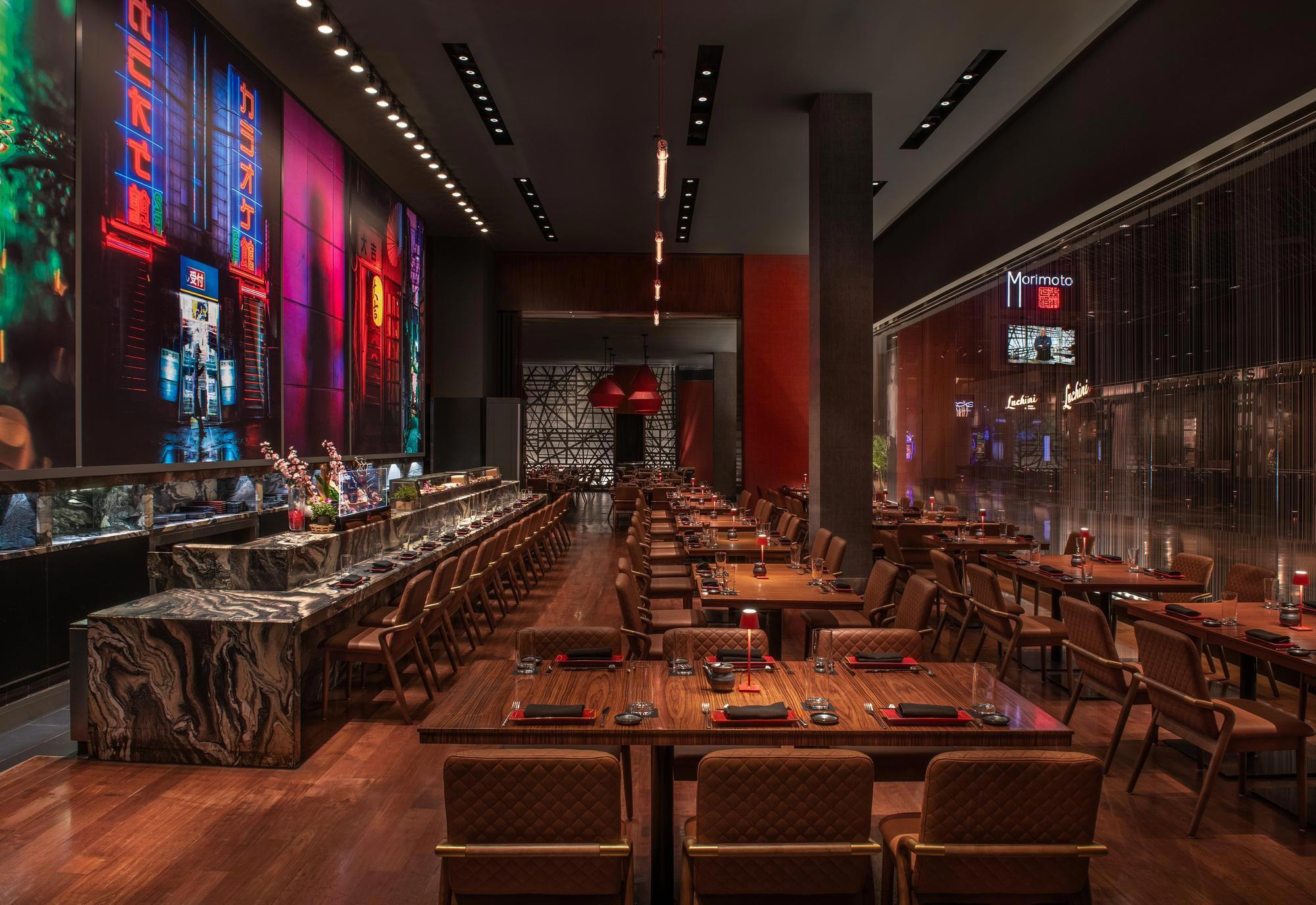
Where the Strip's Dining Theatre Meets Japanese Precision
The MGM Grand's restaurant corridor operates at a different register than most hotel dining in America. Alongside properties like Bouchon at The Venetian, the Strip has spent two decades assembling a collection of chef-driven rooms that would read credibly in any major city. Morimoto Las Vegas occupies that tier, bringing the Japanese-Western format that chef Masaharu Morimoto established across his broader restaurant group to a market where spectacle and substance are expected to coexist. The MGM Grand address at 3799 S Las Vegas Blvd places it within the densest concentration of high-volume fine dining in the United States, competing for the same reservation window as venues across the boulevard and up toward the northern end of the Strip.
The Architecture of the Meal
Japanese dining in the American fine-dining context follows a particular ritual logic that differs from its French-influenced counterparts. Rather than the build-to-a-climax arc of a tasting menu at somewhere like Alinea in Chicago or The French Laundry in Napa, a Morimoto-style meal tends to distribute attention more evenly across the table and across time. The pacing is lateral rather than linear: multiple preparations arrive at similar moments, each asking to be read on its own terms. This format rewards a slower approach to ordering and a willingness to let the kitchen sequence the meal rather than imposing a personal logic on it.
That ritual approach distinguishes Morimoto's format from the omakase model that has come to define premium Japanese dining in cities like New York, where Atomix and similar counter-format rooms have shifted expectations toward tightly controlled, chef-sequenced progressions. The Morimoto model retains an à la carte openness while still presenting dishes that reflect Japanese technique at their core. For the Las Vegas diner navigating a Strip where every restaurant competes for attention, that distinction matters: this is a room where engagement with the menu is an active exercise, not a passive one.
Japanese Technique in the Las Vegas Context
Las Vegas has a specific relationship with chef-branded restaurants that differs from how those formats work in their origin cities. What functions as a flagship operation in Philadelphia or New York arrives on the Strip as one of several expressions of the same culinary identity, competing within a market where the diner is often choosing between a dozen high-profile rooms in a single evening's walking distance. Morimoto's presence here should be read in that context: it belongs to the group of restaurants that brought nationally recognised chef names to the Strip in the 2000s and 2010s, alongside other celebrity-chef formats that populate the MGM Grand and neighbouring properties.
That cohort is meaningfully different from the approach taken by longer-standing American fine dining institutions. A room like Le Bernardin in New York City or Providence in Los Angeles operates as a single-location, mission-driven enterprise where the menu evolves around one kitchen's sustained focus. The Strip's chef-branded model involves a different trade-off: the cooking tradition and technique are real, but the format is designed to scale and to perform across a high-volume hotel environment. Understanding that distinction helps set appropriate expectations and, importantly, helps identify what Morimoto Las Vegas does particularly well within its category.
Placing Morimoto Within the Strip's Upper Tier
Within the Paradise dining corridor, Morimoto Las Vegas occupies a middle-upper position in the price and formality spectrum. Restaurants in this tier, including 3131 Las Vegas Blvd S and 3355 S Las Vegas Blvd, reflect the Strip's tendency to concentrate serious dining within hotel footprints rather than in standalone neighbourhood locations. More casual options like Craft + Community and Della's Kitchen occupy a different register entirely, serving the hotel guest who wants quality without the ceremony of a full tasting format.
Morimoto's position is also notable for what it represents geographically: Las Vegas is one of the few American markets where a diner can access Japanese-Western cooking at this level without travelling to a coastal city. The comparison set for the style of cuisine on offer would otherwise require visits to rooms in San Francisco, New York, or Los Angeles. In that sense, the MGM Grand address functions as a point of access to a culinary format that remains concentrated in coastal markets, even if the execution context here is firmly hotel dining rather than standalone destination restaurant. For a fuller picture of what Paradise's dining tier currently offers, our full Paradise restaurants guide maps the range across price points and cuisine types.
How to Approach the Reservation and the Room
The MGM Grand's position on the southern Strip places Morimoto Las Vegas within the cluster of major hotel properties that concentrate the highest volume of reservation demand on Friday and Saturday evenings. Diners planning weekend visits should expect to book at least two to three weeks ahead during peak periods, which on the Strip effectively means any major convention week, holiday weekend, or summer month from June through August. Weeknight availability is generally more accessible, and the experience of the room shifts noticeably without the weekend crowd volume.
The dining ritual here is leading approached with time to spare. Rushing through a Morimoto menu to make a show or a late reservation elsewhere compresses exactly the elements that distinguish the format: the considered ordering, the unhurried arrival of dishes, the chance to engage with preparations that benefit from attention. The Strip's scheduling culture, where dinner is often treated as pre-theatre rather than the event itself, works against this. Diners who treat the meal as the main event rather than a precursor will find the format rewards that commitment.
For context on how this style of chef-branded hotel dining performs at its ceiling internationally, the reference points are properties like 8 1/2 Otto e Mezzo Bombana in Hong Kong, where a comparable hotel-restaurant model operates at Michelin three-star level. Closer to home, the contrast with destination-only formats like Blue Hill at Stone Barns in Tarrytown or Single Thread Farm in Healdsburg clarifies what the Strip format offers and what it does not attempt.
Frequently asked questions
Where is Morimoto Las Vegas located?
Morimoto Las Vegas is located at Mgm Grand, 3799 S Las Vegas Blvd, Las Vegas, NV 89109, Paradise.
How does Morimoto Las Vegas compare to other Japanese restaurants on the Las Vegas Strip?
The Strip's Japanese dining options span a wide range, from ramen counters in casino food halls to reservation-only omakase rooms charging well above $200 per person. Morimoto at MGM Grand, 3799 S Las Vegas Blvd, sits closer to the structured à la carte and prix-fixe end of that spectrum rather than the intimate counter format. That places it alongside other chef-branded hotel restaurants in Paradise where the room size and service model allow for larger parties and walk-in business that a true omakase counter could not accommodate.
What's the best thing to order at Morimoto Las Vegas?
Without current menu documentation, pinpointing a single dish is speculative, but Morimoto's broader restaurant group has built its reputation on Japanese-Western crossover preparations, particularly raw fish applications and wagyu formats. At the MGM Grand location on the southern Strip, the higher-ticket composed plates tend to reflect that signature range. Ask the server which preparations are prepared tableside or finished to order, as those typically represent the kitchen's current focus.
Should I book Morimoto Las Vegas in advance?
MGM Grand's restaurant corridor draws consistent volume from both hotel guests and visitors moving between the southern Strip properties, which compresses walk-in availability on weekends and during convention periods in Paradise. Reservations are advisable for Friday and Saturday evenings, and during major events at the MGM or T-Mobile Arena. Weekday lunches and early-week dinners typically carry more flexibility.
What's Morimoto Las Vegas best at?
Morimoto Las Vegas occupies a middle-upper position in the MGM Grand's dining lineup, sitting between casual hotel fare and the Strip's most formal tasting-menu formats. The restaurant's strongest credential is the translation of Japanese knife and presentation discipline into a format accessible to a broad dining audience, without the full omakase commitment required at comparable Japanese rooms in New York or Los Angeles. That positioning makes it a reliable choice when a group needs consensus on a serious dinner in Paradise.
What It’s Closest To
Comparable venues nearby, for context on price, style, and recognition.
| Venue | Cuisine | Price | Awards | Notes |
|---|---|---|---|---|
| Morimoto Las VegasThis venue (the venue you are viewing) | Modern Japanese Fusion | $100–150 | Wine Spectator Award of Excellence | Not listed |
| Yellowtail Japanese Restaurant & Lounge | Modern Japanese with Sushi and Omakase | $150–200 | Not listed | The Strip |
| Zuma Las Vegas | Modern Japanese Izakaya | $150–200 | Wine Spectator Best of Award of Excellence | The Strip |
| Nobu Restaurant Las Vegas | Japanese-Peruvian Fusion | $200–300 | Not listed | The Strip |
| Picasso | New American | Not listed | Not listed | The Strip |
| Della's Kitchen | Farmhouse American Comfort | Not listed | Not listed | The Strip |
Recognition history
Dated appearances from independent guides and award organizations, with the underlying list record or original source where available.
Opinionated About Dining Top Restaurants in North America Recommended
Opinionated About Dining
Wine Spectator Award of Excellence
Wine Spectator
Continue exploring
More in Las Vegas
Restaurants in Las Vegas
All restaurants in Las Vegas →
Bars in Las Vegas
All bars in Las Vegas →
Details
- Modern
- Elegant
- Sophisticated
- Well Known
- Date Night
- Special Occasion
- Business Dinner
- Open Kitchen
- Hotel Restaurant
- Sake Program
- Craft Cocktails
- A La Carte
- Omakase
- Small Plates
- Vegetarian Friendly
- Vegan Options
- Gluten Free Options
Current opening hours
- Monday
- 5–9:30 PM
- Tuesday
- 5–9:30 PM
- Wednesday
- 5–9:30 PM
- Thursday
- 5–9:30 PM
- Friday
- 5–10 PM
- Saturday
- 5–10 PM
- Sunday
- 5–9:30 PM
Hours can change for holidays and private events. Hours as of .
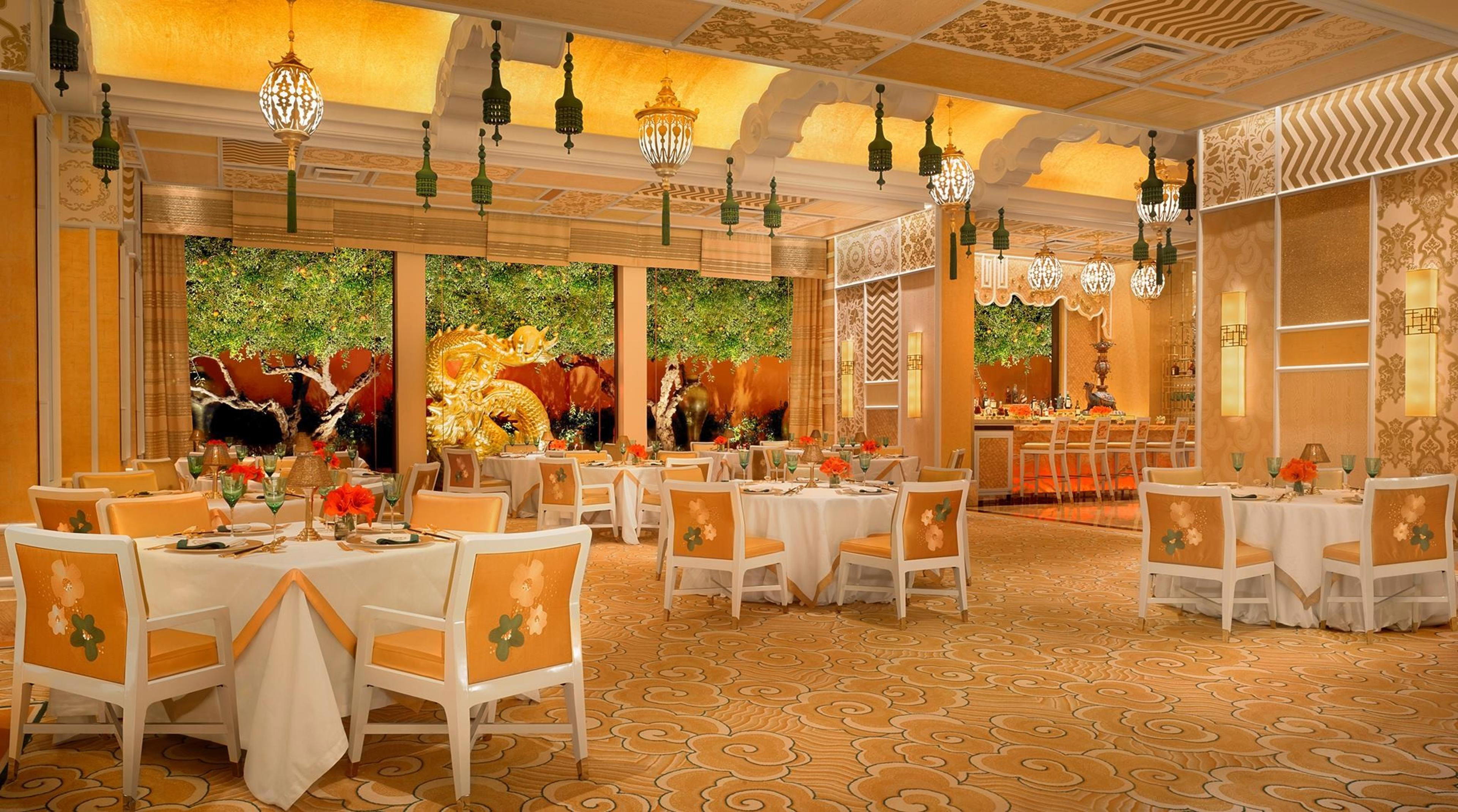
Sleek and stylish with contemporary Japanese design featuring delicate elegance and exotic photography, creating a dramatic and swanky atmosphere.