
Tabelog 100 #94
Our verdict
Tai Kichi Nakakechou ten belongs to Sendai’s compact, station-side sweets culture, where taiyaki and obanyaki function as quick purchases rather than dessert-course theatre. Its Tabelog 100 selection for Japanese traditional sweets and sweets cafes in East Japan in 2023 gives the shop a clear credential inside a category usually judged by texture, filling balance, and turnover rather than ceremony.

Pearl is the En Primeur Club membership app, where members save venues, book tables and use the concierge.
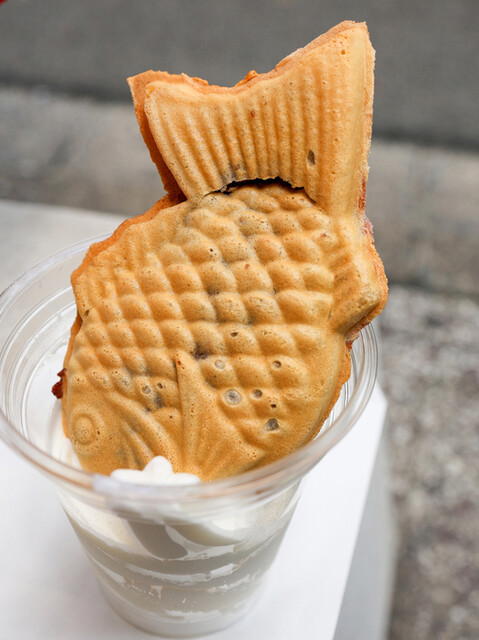
Sendai’s retail streets are built for short stops: commuters moving through central shopping areas, office workers cutting across the city, and visitors looking for something local that does not require a full meal. In that setting, taiyaki and obanyaki make sense. They are portable, inexpensive, and deeply tied to Japan’s everyday wagashi culture, where batter, bean paste, griddle timing, and turnover matter more than tableware or dining-room choreography.
Tai Kichi Nakakechou ten sits squarely in that tradition. The relevant distinction is not luxury but discipline: a narrow sweets format, easy stop-in use, and a category recognition that places it within a stronger Japanese sweets conversation. Its 2023 Tabelog Hyakumeiten recognition gives the shop a useful signal in a field where national visitors can struggle to separate routine snacks from places with sustained local traction.
Sendai's sweets culture rewards speed, heat, and repeat customers
Sendai’s central dining scene often splits between quick food and longer evening meals. Beef tongue, sushi, izakaya counters, and cocktail bars tend to dominate visitor planning, but the city’s sweets stops carry a different kind of intelligence: they reveal how locals eat between appointments, trains, and shopping errands. Taiyaki and obanyaki belong to that rhythm. They are made for immediate consumption, but the craft sits upstream in ingredient handling and consistency rather than elaborate presentation.
That is where balance becomes relevant. In Japanese sweets, filling is not a decorative afterthought. Bean paste and other common variations depend on sweetness calibrated against the shell, because the format has little room for correction once it leaves the iron. A shop in this category earns regulars through small tolerances: batter that holds shape, filling that does not overwhelm, and production paced closely enough to demand. The appeal is less about novelty than repetition done cleanly.
Compared with Sendai’s sit-down categories, this is a different purchase decision. A meal at Senrei Zushi JR sendai eki 3 kai ten or yakiniku at Yonezawa Gyuu Yakiniku Kotora Sendai ekimae ten asks for time, appetite, and a larger spend. BAR ANDANTE belongs to the later-evening circuit. Taiyaki occupies the opposite end of the day: a low-commitment stop that can be folded into a short walk or a broader city itinerary. Within that group, ankoya Ekimae ten is the natural Sendai comparison for visitors mapping sweets rather than full restaurants.
Why a Tabelog selection matters more here than ceremony
Japan’s prestige dining vocabulary often leans toward tasting menus, omakase counters, and chef-led narratives. Wagashi counters and griddle sweets work by another measure. Recognition from Tabelog Hyakumeiten in 2023 is valuable because it comes from a field where casual formats, repeat local use, and product focus carry weight. Tai Kichi Nakakechou ten was also rated 3.64 on Tabelog, a meaningful number in a platform where scores tend to be conservative.
Its place in Sendai matters in a central commercial environment where small food businesses face constant pressure from rent, footfall, and changing routines. Longevity claims are less useful than the current signal: a narrow-format sweets shop with a clear product identity and outside category recognition. The format is stripped of the signals that define premium restaurants. That absence is part of the point. The reader is not buying ambience; the reader is testing a local expression of wagashi through a product that has to work in the hand.
Sendai’s broader food map helps frame the stop. For a fuller day of eating, the city can move through other dining rooms, casual Japanese meals, and tea-led sweets culture without treating every stop as a formal restaurant. In that company, Tai Kichi Nakakechou ten is not competing as a restaurant for the evening. It is a precise daytime addition, useful because it captures a different register of the city’s eating habits.
How to place it in a Sendai itinerary
The right way to use this stop is as a punctuation mark rather than the centre of a schedule. Pair it with time in Sendai, a larger food route, or a simple break between other plans. Visitors building a broader plan should start with Our full Sendai restaurants guide, then match the day around lodging from Our full Sendai hotels guide and later drinks from Our full Sendai bars guide. For wider planning, Our full Sendai wineries guide and Our full Sendai experiences guide place food stops inside the city’s travel rhythm.
For readers comparing Japanese casual formats beyond Sendai, the useful thread is specialization. A focused sweets counter in Miyagi has more in common with tightly defined everyday-food specialists than with destination dining rooms. That same logic runs through unnamed grilled, seafood, cafe, curry, and casual Japanese formats in other cities. Outside Japan, similar single-category Japanese formats show how a narrow idea can translate when the audience changes.
The editorial verdict is simple: this is a small-format Sendai sweets stop with a credible recognition signal, low-friction use, and a product category where ingredient balance does the heavy lifting. It belongs in a food-focused itinerary when the goal is to understand how the city eats between meals, not only where it dines at night.
Frequently asked questions
What should I budget for a meal at Tai Kichi Nakakechou ten?
Pricing at Tai Kichi Nakakechou ten is listed as - JPY 999.
What's the address for Tai Kichi Nakakechou ten?
Sendai.
Should I book Tai Kichi Nakakechou ten in advance?
For a sweets stop in Sendai, check the venue’s official channels or call ahead if timing matters.
What has Tai Kichi Nakakechou ten built its reputation on?
Its profile rests on taiyaki and obanyaki, plus Tabelog Hyakumeiten recognition in 2023. That recognition places it among notable sweets addresses in Sendai.
Can Tai Kichi Nakakechou ten accommodate dietary restrictions?
The public record provided here does not confirm a dedicated dietary programme. For any restriction tied to ingredients or preparation, the listed phone number, +81-22-224-7233, is the practical check before going in Sendai. Check the venue's official channels for the latest details.
Side-by-Side Snapshot
Comparable venues by cuisine and price in the same metro.
| Venue | Cuisine | Price | Awards | Notes |
|---|---|---|---|---|
| Tai Kichi Nakakechou tenThis venue (the venue you are viewing) | Japanese Taiyaki & Obanyaki Shop | Not listed | Tabelog 100 #94 | Not listed |
| Una Ki | Traditional Japanese Unagi | $30–50 | Tabelog 100 #33 | Kokubuncho |
| 鮨德 | Japanese Restaurant | Not listed | Tabelog 100 #73 | Sendai |
| Yonezawa Gyuu Yakiniku Kotora Sendai ekimae ten | Premium Yonezawa Wagyu Yakiniku | $50–100 | Tabelog 100 #21 | Aoba-ku Chuo (Sendai Station area) |
| Bon Kura | Japanese shaved ice & soba | $20–30 | Tabelog 100 #46 | Aoba Ward |
| Sendai Chuka Soba Meiten Kaichi Kokubuncho ten | Traditional chicken-based ramen (chuka soba) | $10–20 | Tabelog 100 #63 | Kokubuncho |
Recognition history
Dated appearances from independent guides and award organizations, with the underlying list record or original source where available.
Tabelog 100 #94 · No. 94
Tabelog · Tabelog 100 - Japanese traditional sweets / Japanese sweets cafe - EAST - 2023
Continue exploring
More in Sendai
Restaurants in Sendai
All restaurants in Sendai →
Hotels in Sendai
Browse all →

Wineries in Sendai
All wineries in Sendai →
Details
- Casual Hangout
- Solo
- Late Night
- Standalone
- A La Carte