
Mesa in Croutelle sits in the rural Poitiers orbit, where ingredient-led cooking reads differently from big-city tasting-menu performance. The address carries the memory of La Chênaie, and its interest lies in how a countryside table can frame Nouvelle-Aquitaine produce with more restraint than ceremony.
Pearl is the En Primeur Club membership app — saves, bookings, and concierge access live there. Same editors, same standards.
- Address
- 3 Champs de la Montée, lieu-dit La Berlanderie, Croutelle, Nouvelle-Aquitaine, 86240, FRA
- Phone
- +33 5 49 57 11 52
- Website
- guide.michelin.com
- Directions
- Get directions
 Saves & bookings on Pearl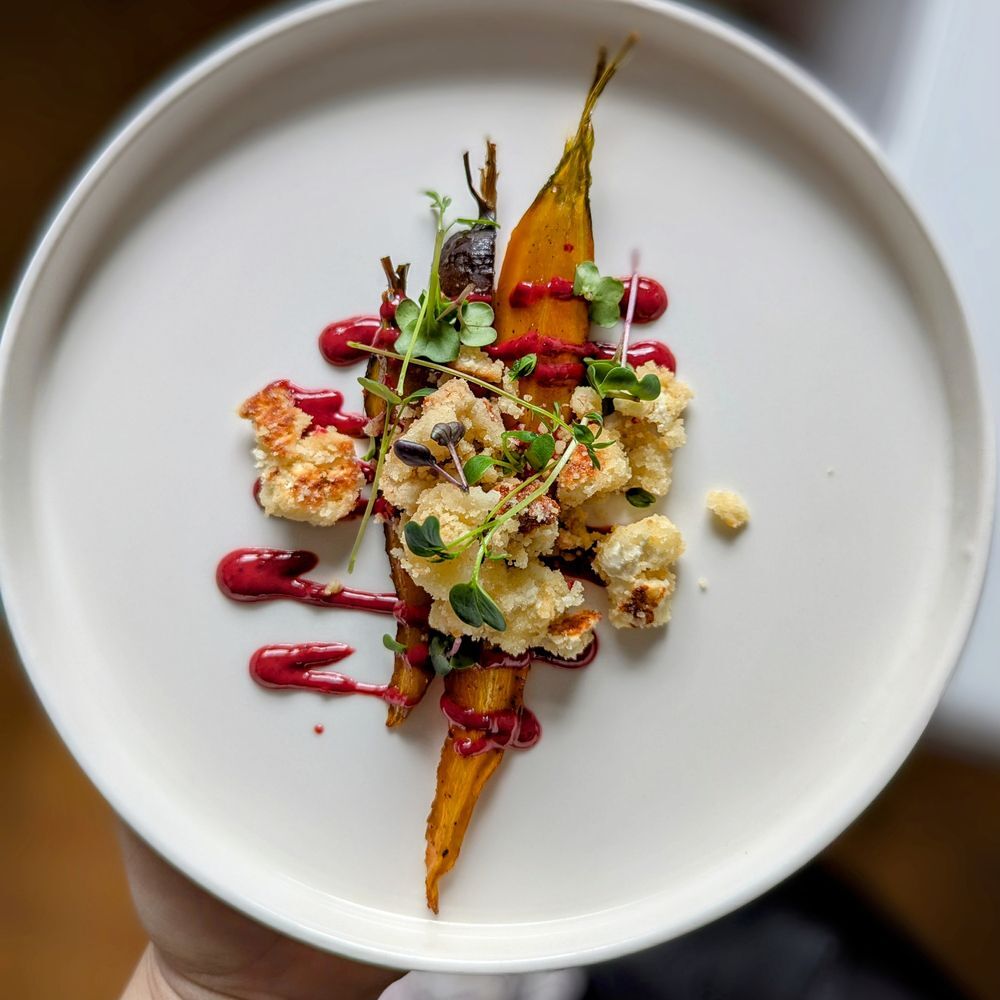
Approaching Mesa means leaving usual city-restaurant signals behind: fewer shopfronts, less pavement theatre, more of the quiet pressure rural French dining places on sourcing. In Croutelle, on the edge of Poitiers rather than in a grand dining district, a restaurant must make its case through produce, pacing and confidence in a meal anchored to place.
That matters because Nouvelle-Aquitaine is not a neutral pantry. The region brings together Atlantic fish and shellfish, Poitou-Charentes dairy, Limousin beef, goat cheeses, walnuts, orchard fruit and the market-garden logic of towns still cooking close to their supply lines. Ingredient sourcing is not decoration here; it separates a serious country table from a generic French dining room.
Croutelle's country-table logic is about supply lines, not spectacle
Small-town restaurants near Poitiers compete differently from Paris dining rooms or resort addresses. The room, menu and rhythm have less reason to perform luxury through excess. The useful question is narrower: does the kitchen make the surrounding region legible on the plate without turning local produce into nostalgia?
Mesa is interesting in that context because the site carries a dining memory familiar to local regulars. The former La Chênaie was long associated with this Croutelle address, giving the room more weight than a blank new opening. For readers comparing the local scene, La Chênaie (Traditional Cuisine) remains the reference point: traditional French cooking, a moderate bracket and a village setting rather than a metropolitan one.
The broader Croutelle restaurant map is compact, so comparisons need care. A city with a handful of notable tables does not segment like Lyon, Bordeaux or Paris. Here, the dividing lines are practical: traditional versus modern cooking, destination meal versus neighbourhood habit, and whether the kitchen treats local ingredients as sourcing discipline or menu language. For a wider read on that small ecosystem, Our full Croutelle restaurants guide gives the local dining frame.
Ingredient-led cooking has a different meaning outside the metropolis
In major French cities, ingredient-led restaurants often signal themselves through named producers, tasting menus and a shorter distance between chef and dining room. In the countryside, the same idea can be quieter. The market, butcher, dairy route and seasonal vegetable calendar may shape the meal without becoming a manifesto. That is the lens for Mesa: not a personality-driven restaurant, but part of a regional tradition where proximity still has consequences.
Nouvelle-Aquitaine rewards kitchens that know when not to overwork a product. Goat cheese from the Poitou area, river fish, orchard fruit, seasonal asparagus, butter-rich sauces and careful roasting all belong to the regional grammar. None needs theatrical plating to register. It needs judgement: enough technique to clarify flavour, enough restraint to avoid flattening the ingredient into a standard fine-dining template.
Croutelle’s scale works in the restaurant’s favour. A rural or peri-urban address cannot rely on passing tourist volume like a central Paris dining room. It must satisfy diners who notice repetition, seasonality and value over time. That pressure can be healthy, pushing clarity and consistency over novelty for its own sake.
French dining outside the largest cities also exposes weak sourcing quickly. If produce is ordinary, there is less room to hide behind concept, décor or a famous address. If handled well, the meal can feel more connected to its region than a higher-priced urban tasting menu built around imported luxury ingredients. Mesa belongs in that conversation: its appeal is not scale, but whether the table makes Croutelle and its surrounding agricultural territory present.
How to place Mesa within a wider French itinerary
Travellers building a route through France should treat Mesa as a regional stop rather than a trophy reservation. The pleasure of this kind of meal is tied to context: the area’s pace, proximity to Poitiers, and contrast between countryside dining and the more codified formats of palace hotels, Alpine resorts and large-city brasseries.
That contrast is clear beside other French addresses. 114, Faubourg in Paris belongs to the capital’s polished luxury-hotel idiom, while 1920 in Megève sits in a mountain-resort register shaped by altitude, winter travel, season, clientele and service expectations. 1217 in Bagnols and 1899 in Tourgeville belong to another category: destination dining attached to properties where the meal forms part of a broader stay.
Croutelle is quieter than those frames, and that is the point. The decision is less about ceremony than whether a regional table fits the journey. Diners crossing western France, staying near Poitiers or tracing Nouvelle-Aquitaine food culture will read the address differently from someone chasing capital-city grandeur. Nearby planning matters too: Our full Croutelle hotels guide, Our full Croutelle bars guide, Our full Croutelle wineries guide and Our full Croutelle experiences guide help turn the meal into a coherent local stop rather than an isolated booking.
For readers comparing across France, useful references are not only geographic. 1387 in Strasbourg reflects an Alsatian urban-hotel register; 14 Avenue in La Baule points toward Atlantic resort dining; 16âme in Le Monêtier-les-Bains carries a mountain-village context; 1860 Le Palais in Marseille belongs to a Mediterranean civic setting. Even smaller-format addresses such as.... Et la Fourmi in Nantes or [S] Corner in Courchevel show how much surrounding place changes a meal’s meaning.
The editorial verdict is measured but clear: Mesa is strongest as a countryside dining proposition for travellers who care more about regional sourcing and local continuity than grand-restaurant theatre. It should be read alongside Croutelle’s earlier traditional table culture, not against Paris or resort luxury. For an international counterpoint, the contrast with compact specialist formats such as Jōdo Saké Bar in Los Angeles or Onigiri Time in Pasadena underlines the point: format matters, but place determines what a restaurant can honestly say.
Side-by-Side Snapshot
Comparable venues by cuisine and price in the same metro.
| Venue | Cuisine | Price | Awards |
|---|---|---|---|
| Mesa | L’ancienne Chênaie, longtemps dirigée... | This venue | Not listed |
| La Chênaie | Traditional Cuisine | €€ | Traditional Cuisine, €€ |
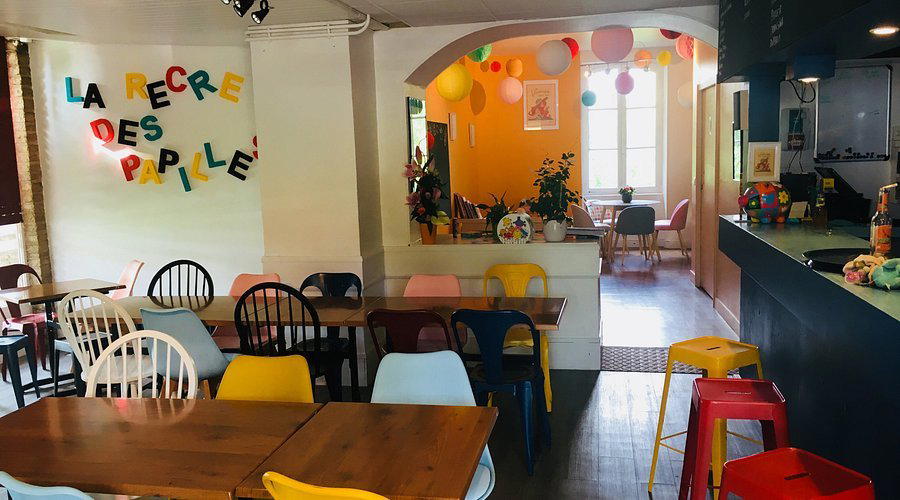
| Papilles | Modern Cuisine | €€ | Modern Cuisine, €€ |
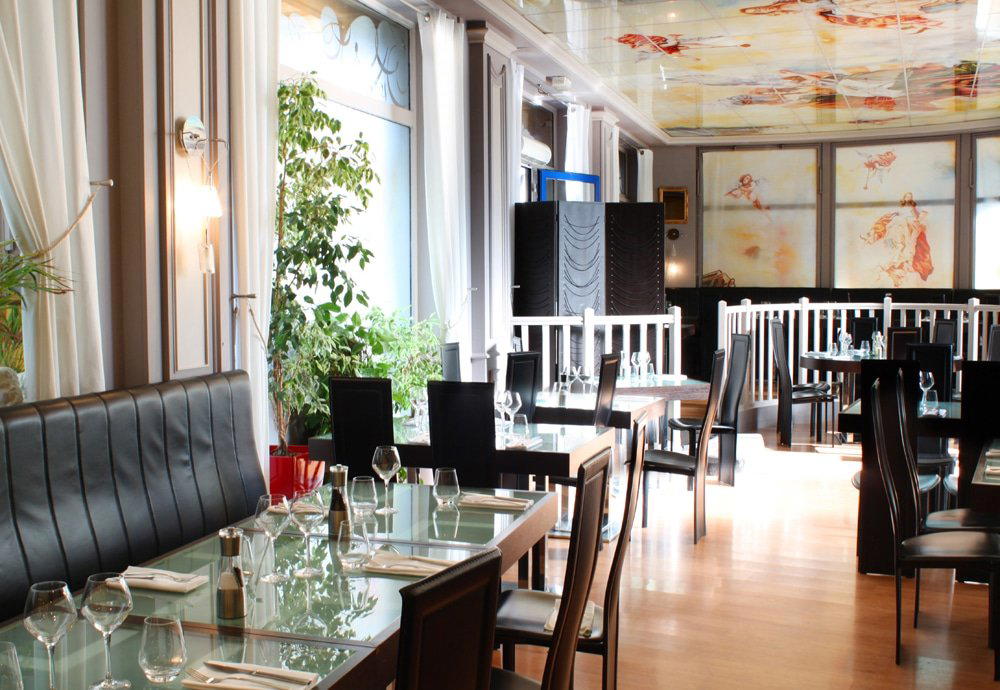
| L'Ouvrière | Modern Cuisine | €€€ | Modern Cuisine, €€€ |
Recognition history
Dated appearances from independent guides and award organizations, with the underlying list record or original source where available.
Michelin Plate
Michelin
Continue exploring
More in Croutelle
Restaurants in Croutelle
Browse all →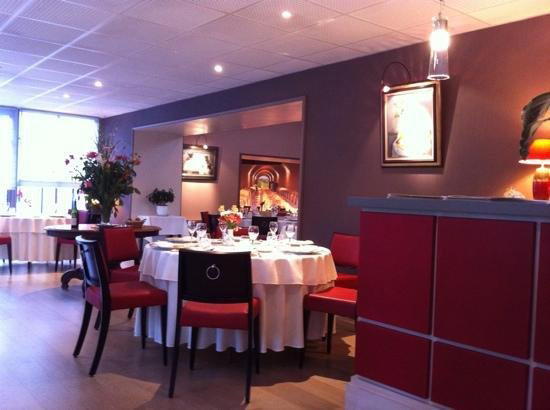
Hotels in Croutelle
Browse all →
At a Glance
- Modern
- Elegant
- Cozy
- Romantic
- Date Night
- Special Occasion
- Business Dinner
- Group Dining
- Family
- Garden
- Terrace
- Design Destination
- Standalone
- Extensive Wine List
- Local Sourcing
- Farm To Table
- Garden
Refined and modern but warmly decorated dining room overlooking a green park, with a relaxed yet elegant atmosphere suited to leisurely gastronomic meals.