Matbakhi

Open since spring 2024, Matbakhi has established itself as a serious dining address inside The Avenues, Kuwait's largest mall. The menu centers on Palestinian and Levantine cooking, moving from traditional breakfast dishes through charcoal grills, mezze, and meat-filled pastries. It draws a devoted local following that has little to do with the surrounding retail.
 Discover on Pearl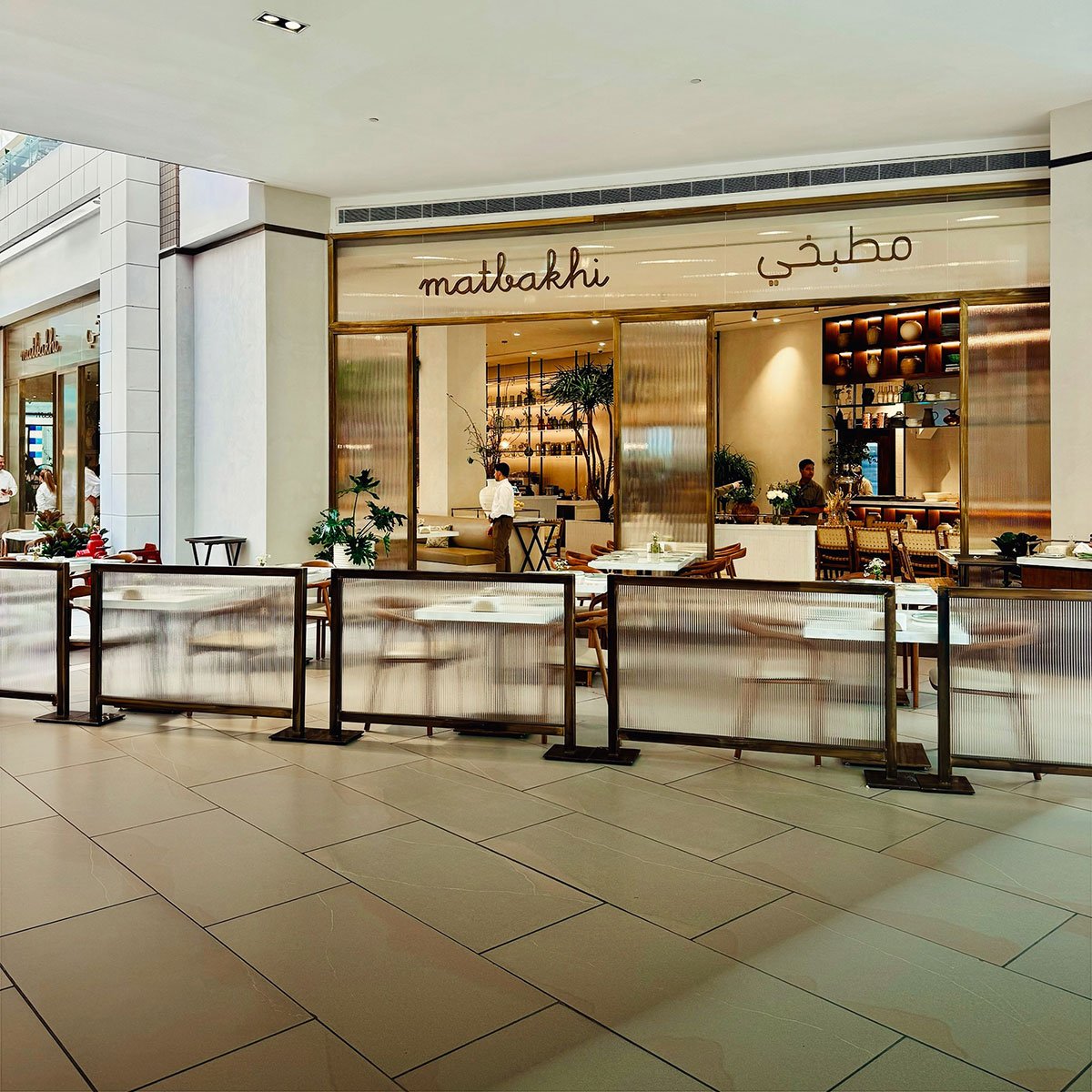
Where Mall Footfall Meets Levantine Craft
The Avenues is not the kind of place that typically produces a serious dining conversation. Kuwait's largest and most visited retail complex runs to a scale that prioritizes throughput over depth, and its food options historically followed that logic. What has changed since spring 2024 is that a cluster of higher-ambition restaurants has begun treating the mall's enormous footfall as an opportunity rather than a compromise. Matbakhi sits at the sharper end of that shift: a restaurant drawing a devoted following not because it is convenient to the car park, but because it is cooking Palestinian and Levantine food with enough care and consistency to make it a destination in its own right.
The address is Sheikh Zayed Bin Sultan Al Nahyan Road, Surra, inside The Avenues complex. For practical purposes, that means arriving through the mall rather than off a street, which shapes the approach in ways worth understanding before you go. The Avenues runs across multiple phases and wings, so knowing your specific entry point saves time. Once inside, the restaurant's position in a high-traffic section of the mall means the room carries energy regardless of the hour, with the noise level and pacing reflecting a crowd that ranges from families to professionals settling in for a serious meal.
The shortlist, unlocked.
Hard-to-book tables, cellar releases, and concierge-planned trips.
Get Exclusive Access →Palestinian and Levantine Cooking in a Gulf Context
Levantine cuisine has been present in the Gulf for generations, carried by Palestinian, Lebanese, and Syrian communities who shaped both the domestic kitchen and the restaurant culture of cities like Kuwait City, Dubai, and Doha. What shifts over time is how that tradition gets represented at the table. For much of the restaurant sector's development in the Gulf, Levantine food was either casual and takeaway-oriented or locked into a Lebanese-restaurant format that prioritized breadth of mezze over depth of execution. The more recent movement, visible across Beirut, Amman, and now increasingly in the Gulf, reframes these same ingredients and techniques through a contemporary lens without abandoning the dishes that define the tradition.
Matbakhi operates inside that contemporary Levantine register, with a menu that covers the arc from morning to evening. Traditional breakfast dishes anchor one end of the offering, a segment of Gulf dining that has its own serious cultural weight: the communal breakfast in the Arab world is not an abbreviated meal but a full social occasion, and restaurants that treat it seriously command loyalty from regulars who return weekly. From there, the menu extends through mezze, charcoal grills, and meat-filled pastries. The charcoal grill is a meaningful signal in this context; fire-cooked meat and vegetables carry a specific flavor profile and kitchen discipline that separates genuine commitment from the kind of grill mention that means a gas range with grill marks. Meat-filled pastries, whether fatayer, sambousek, or related forms, represent some of the most technically demanding items in the Levantine canon, requiring dough work and filling balance that rewards attention to detail.
Palestinian cooking specifically occupies a distinct position within the Levantine family. It draws on a range of olive groves, za'atar-covered hillsides, and coastal fisheries, with dishes like musakhan (roasted chicken over flatbread with caramelized onion and sumac) and maqluba (an inverted rice and vegetable dish) representing a regional identity that is increasingly visible in fine dining contexts globally. In the Gulf, Palestinian cuisine's representation has historically been filtered through broader Levantine menus rather than foregrounded as a distinct culinary tradition. Restaurants that bring Palestinian dishes to the front of the menu, rather than as a footnote to Lebanese-dominant offerings, are making an editorial choice that connects to a wider global recognition of Palestinian food culture, visible in cities from London to New York, at restaurants that have drawn coverage in publications including Le Bernardin's peer publications and earned recognition alongside contemporaries like Atomix in New York City in critical conversations about how a specific cultural tradition gets represented at the table.
A Devoted Following, Built Quickly
Opening in spring 2024, Matbakhi accumulated a loyal regular base within months rather than years. That pace of audience-building is worth noting because it does not typically happen to restaurants that are merely convenient. In a city where dining options are numerous and consumers are comparatively well-travelled, consistency and specificity tend to drive repeat visits more than novelty. The fact that both a devoted following and a premium positioning have coexisted this early suggests the kitchen is delivering on both counts: quality high enough to justify the destination decision, and a menu coherent enough to bring people back for different occasions.
The Levantine breakfast crowd and the evening grill and mezze crowd are not always the same people, and restaurants that serve both well are threading two different service models through one kitchen. That range, from morning dishes through full evening dining, is common to the broader Gulf dining culture, where the distinction between meal periods is less rigid than in European or American contexts. Restaurants in Kuwait City often run continuous service from late morning through midnight, reflecting a social rhythm shaped by climate, prayer times, and a dining culture that treats late evenings as the primary meal occasion during cooler months.
How Matbakhi Fits the Kuwait City Dining Picture
Kuwait City's restaurant sector has developed rapidly over the past decade, with international brands and homegrown concepts competing across a range of formats and price points. Within the homegrown tier, contemporary takes on regional cuisines have gained ground, with diners showing increasing interest in Kuwaiti and broader Gulf cooking presented at a premium standard. Matbakhi enters this context with a specifically Palestinian and Levantine focus, which positions it in a different lane from the Kuwaiti-heritage restaurants on one side and the international fine dining options on the other.
For a broader picture of where Matbakhi sits within the city's dining scene, see our full Kuwait City restaurants guide. Visitors planning a longer stay will also find our full Kuwait City hotels guide, our full Kuwait City bars guide, our full Kuwait City wineries guide, and our full Kuwait City experiences guide useful for building out an itinerary. For context on what a similarly positioned contemporary restaurant looks like in another Gulf-adjacent market, Cantina offers a useful comparison point within Kuwait City itself.
For international reference points on how regional traditions get reframed at a contemporary table, the conversation spans everything from Arzak in San Sebastián encoding Basque identity through modern technique, to Aponiente in El Puerto de Santa María reworking Andalusian coastal ingredients, to DiverXO in Madrid pulling from a wider cultural archive. The principle is the same whether the tradition is Basque, Andalusian, or Palestinian: specificity and cultural grounding produce more interesting food than genre-blending for its own sake. Matbakhi's commitment to Palestinian and Levantine specificity, rather than a generically Middle Eastern positioning, places it on the right side of that argument.
Planning Your Visit
Matbakhi is located within The Avenues mall on Sheikh Zayed Bin Sultan Al Nahyan Road, Surra. Given the restaurant's quick accumulation of regulars since its spring 2024 opening, securing a table for peak periods, particularly weekend evenings and Friday mornings when the breakfast occasion draws heavily, is worth attending to in advance. The mall location means parking is direct by Kuwait City standards, though The Avenues can see significant vehicle congestion on weekend afternoons. Arriving by early evening on a weekday offers the most relaxed access to both the restaurant and the broader complex.
The shortlist, unlocked.
Hard-to-book tables, cellar releases, and concierge-planned trips.
Get Exclusive Access →Frequently Asked Questions
Pricing, Compared
A fast peer set for context, pulled from similar venues in our database.
Need a table?
Our members enjoy priority alerts and concierge-led booking support for the world's most difficult tables.
Get Exclusive AccessThe shortlist, unlocked.
Hard-to-book tables, cellar releases, and concierge-planned trips.
Get Exclusive Access →