Our verdict
Lovački rog sits on Zagrebačka ulica in Karlovac, a city shaped by four rivers and a tradition of inland Croatian cooking rooted in game, freshwater fish, and forest produce. The name, Croatian for 'hunting horn', signals its orientation toward the Kordun and Karlovac hinterland, where sourcing from woodland and river has defined the local table for generations. It occupies a distinct register from the coastal dining scene that dominates Croatian food coverage.

Pearl is the En Primeur Club membership app, where members save venues, book tables and use the concierge.

The menu
What to order
- Venison salami
- Wild boar steak
- Roe deer medallions
- Veal cordon bleu
Karlovac's Inland Table: Where the Forest Meets the River
Croatia's dining conversation tilts heavily toward the Adriatic. Michelin-starred addresses cluster along the coast and islands, from Agli Amici Rovinj in Rovinj to Pelegrini in Sibenik to Restaurant 360 in Dubrovnik. But inland Croatia operates under a different set of culinary rules, one shaped not by Adriatic seafood traditions but by forests, game, river fish, and a central European inheritance that owes as much to the Austro-Hungarian pantry as to the Mediterranean. Karlovac sits precisely at that crossroads: a river city where the Korana, Kupa, Mrežnica, and Dobra converge, and where the surrounding Kordun region has sustained a hunting and foraging culture for centuries.
It is in this context that Lovački rog makes sense. The name translates directly as 'hunting horn,' a deliberate signal of the culinary territory the kitchen occupies. This is not a restaurant reaching toward coastal fashion or international fine-dining templates. It belongs to a tradition of inland Croatian cooking in which the sourcing story begins in woodland and ends on the plate with relatively little distance between the two.
Ingredients as Argument: The Kordun Sourcing Tradition
In the Karlovac region, the argument for eating inland rather than coastal is made primarily through ingredients. The Kordun and Gorski Kotar hinterlands surrounding the city are among the most intact forested zones in central Croatia, supporting populations of deer, wild boar, and hare that have historically supplied local tables. Freshwater fish, carp, pike, catfish, from the four rivers add a distinct protein strand that coastal menus simply cannot replicate. This is sourcing with genuine geographic logic behind it, not the kind of farm-to-table framing that functions as marketing shorthand elsewhere.
Restaurants operating in this inland tradition, of which Lovački rog is a representative example in Karlovac, draw on a supply chain rooted in the region's hunting culture. Game meat in Croatia carries regulatory and seasonal frameworks: the hunting season shapes what is available and when, meaning a menu built around it is structurally seasonal in ways that even conscientiously sourced coastal menus are not. The result is a dining calendar tied directly to the land rather than to a chef's creative rotation.
The comparable dynamic plays out at places like Korak in Jastrebarsko, a short drive northwest of Karlovac, where inland Croatian traditions are treated with similar seriousness. Boskinac in Novalja represents another pole entirely, demonstrating how Croatia's island interior can generate its own terroir-anchored cooking, distinct from both coastal seafood and continental game traditions. The inland-versus-coastal split is one of the more underappreciated structural features of Croatian gastronomy.
The Setting on Zagrebačka Ulica
Lovački rog occupies an address on Zagrebačka ulica, the main artery connecting central Karlovac to the Zagreb road. This is a functional, lived-in part of the city rather than its historic Baroque core, and that positioning is consistent with a restaurant whose identity is built around substance over atmosphere-engineering. Karlovac's old star-shaped fortress town sits closer to the river confluences, while Zagrebačka ulica runs through a more quotidian commercial and residential fabric. Approaching the venue on this road, the city reads as a working Croatian market town rather than a curated destination, which is precisely the register in which places like Lovački rog tend to operate.
Within Karlovac's dining scene, the restaurant occupies a different niche from Castle Bistro, which works closer to the historic centre, or Kalvarija and Konoba Kostanjac, each of which represents a different angle on the city's local cooking traditions. Together, these addresses suggest a small city with more dining range than its size implies, particularly for visitors arriving from Zagreb's more developed restaurant scene, where venues like Dubravkin Put represent a more polished urban fine-dining standard.
Inland Croatia in the Wider National Context
The coastal premium in Croatian tourism has meant that inland restaurants have historically operated without the international media attention that drives reservation pressure at Adriatic addresses. That imbalance is beginning to shift. As Croatian gastronomy has drawn wider coverage, built on the recognition of places like Nebo by Deni Srdoč in Rijeka, LD Restaurant in Korčula, Alfred Keller in Mali Lošinj, and Krug in Split, there is growing appetite for what lies beyond the coastline. Inland addresses in cities like Karlovac occupy a position in that expanding interest that coastal restaurants cannot fill: they offer a genuinely different sourcing geography and culinary grammar.
The emphasis on sustainability that has reshaped the evaluation of restaurants internationally, at venues from Le Bernardin in New York City to Atomix in New York City, has an analogue in Croatia's inland tradition that is often overlooked. Game sourced from regulated hunts in the Kordun, freshwater fish from rivers with low industrial pressure, and foraged forest produce represent a supply chain with a smaller geographic footprint than the imported seafood and produce that sustains many coastal menus out of season. The argument for inland Croatian cooking is, among other things, an argument about sourcing integrity. Sustainable approaches rooted in local hunting culture and river fishing, as seen at venues like BioMania Bistro Bol in Bol and Bodulo in Pag, speak to this growing interest in provenance-led dining across Croatia.
Planning a Visit
Karlovac sits roughly fifty kilometres south of Zagreb on the A1 motorway, making it a realistic day trip from the capital or a logical stop on a drive toward the Dalmatian coast. The city is small enough to cover on foot, and Zagrebačka ulica is accessible by car with parking available along the road. Visitors arriving from Zagreb will find Karlovac a notable shift in pace and culinary register. Because Lovački rog operates within the conventions of a Croatian konoba-adjacent format rather than a reservation-led fine-dining model, the approach to planning is less rigid than at coastal destination restaurants, though arriving with a clear intent to eat in the Croatian inland tradition, game, river fish, strong winter preparations, will yield a more coherent experience than arriving without context. Autumn and winter are the seasons when the game-forward menu is at its most complete, corresponding to hunting season in the region. For a fuller picture of what Karlovac's dining scene offers beyond this address, the EP Club Karlovac restaurants guide maps the city's key options across registers.
Frequently asked questions
What's the address for Lovački rog?
Lovački rog is located at Zagrebačka ul. 146, 47000, Karlovac, Croatia, Karlovac.
Is Lovački rog a good stop between Zagreb and the Dalmatian coast?
Karlovac sits directly on the A1 motorway corridor that connects Zagreb to Split and the Dalmatian coast, placing Lovački rog at Zagrebačka ul. 146 on a logical route south. For travellers making the drive, it represents one of the few opportunities to eat in the inland Croatian tradition before the coastal seafood focus takes over. The region's game and river fish offer a contrast that coastal menus rarely replicate.
What should I order at Lovački rog?
Lovački rog sits within the Kordun and Gorski Kotar sourcing tradition, meaning the menu draws on inland staples: game, freshwater fish from the rivers around Karlovac, and forest forage. Specific current dishes are best confirmed directly with the restaurant on arrival, as the kitchen works with seasonal and regional availability rather than a fixed international menu.
How far ahead should I plan for Lovački rog?
Karlovac is roughly fifty kilometres south of Zagreb on the A1, making Lovački rog a realistic same-day decision for Zagreb visitors. That said, contacting the restaurant in advance is advisable, particularly for larger groups or weekend visits, as local Croatian restaurants at this address level can fill quickly without holding a visible online booking system.
Comparable Spots, Quickly
Comparable venues nearby, for context on price, style, and recognition.
| Venue | Cuisine | Price | Notes |
|---|---|---|---|
| Lovački rogThis venue (the venue you are viewing) | Croatian Game & European | Not listed | Not listed |
| Castle Bistro | Modern Croatian Bistro | $20–30 | Dubovac |
| Konoba Kostanjac | Croatian Seafood & Grill | $20–30 | North-central Karlovac, near Kupa river |
| Kalvarija | Croatian Mediterranean | Not listed | Vučjak |
| Restoran Terasa | Traditional Croatian & Czech | $20–30 | Julijev park |
| Petro | Croatian Barbecue & Grill | $20–30 | Rastoke |
Continue exploring
More in Karlovac
Restaurants in Karlovac
All restaurants in Karlovac →
Bars in Karlovac
Browse all →

Hotels in Karlovac
Browse all →
Details
- Rustic
- Cozy
- Scenic
- Family
- Group Dining
- Casual Hangout
- Terrace
- Garden
- Extensive Wine List
- A La Carte
- Vegetarian Friendly
Current opening hours
- Monday
- Closed
- Tuesday
- 10 AM–9 PM
- Wednesday
- 10 AM–9 PM
- Thursday
- 10 AM–9 PM
- Friday
- 10 AM–9 PM
- Saturday
- 10 AM–10 PM
- Sunday
- 10 AM–9 PM
Hours can change for holidays and private events. Hours as of .
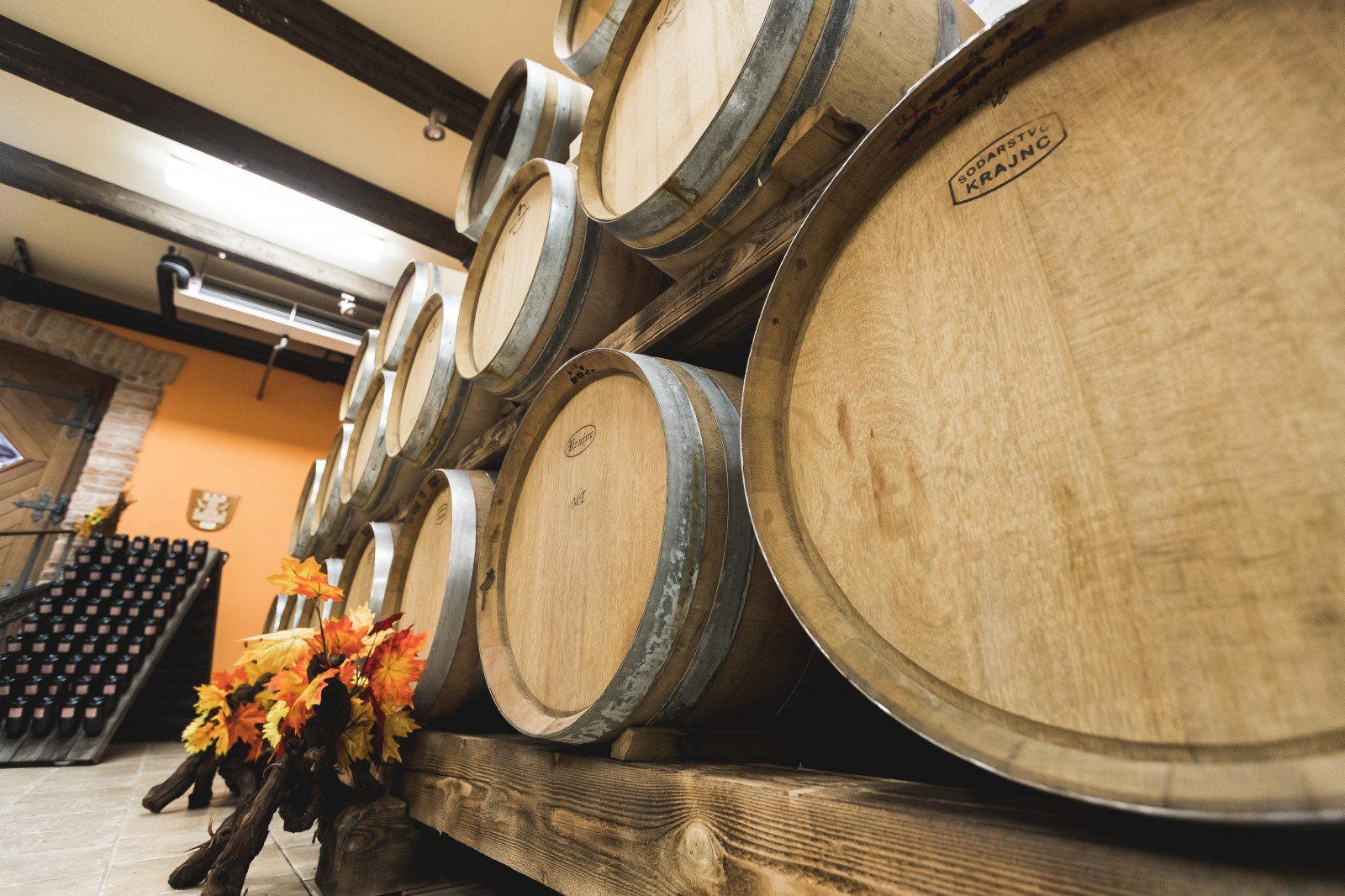
Relaxing forest setting with tranquil woods, spacious garden terrace, and cozy indoor spaces including a winter garden.