
On Rua de São Pedro de Alcântara, Las Dos Manos positions itself at the intersection of Mexican heat, Japanese precision, and Portuguese produce. Chef Kiko Martins runs a Michelin Plate-recognised kitchen across an à la carte menu and an extended tasting format, at a price point that sits well below Lisbon's Michelin-starred tier.
Pearl is the En Primeur Club membership app — saves, bookings, and concierge access live there. Same editors, same standards.
- Address
- R. de São Pedro de Alcântara 59, 1200-459 Lisboa, Portugal
- Phone
- +351 300 601 041
- Website
- lasdosmanos.pt
- Directions
- Get directions
 Saves & bookings on Pearl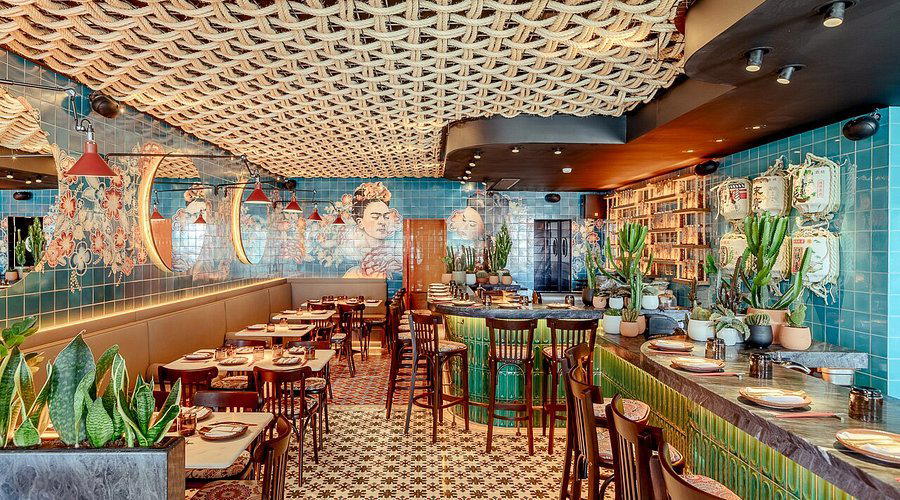
The Corner of São Pedro de Alcântara That Keeps Drawing People Back
Rua de São Pedro de Alcântara runs through one of Lisbon's most storied miradouro neighbourhoods, where early-evening light catches the tiled facades and the city spreads below. Restaurants here compete not just against each other but against the view itself. Las Dos Manos, at number 59, earns its place in that contest through a kitchen logic that is harder to replicate than a good terrace: a fusion of Mexican and Japanese influences grounded consistently in Portuguese ingredients, and recognised by Michelin's Plate designation in both 2024 and 2025.
That Michelin Plate places Las Dos Manos in a specific tier of Lisbon dining. It sits below the city's starred houses, but it carries enough critical weight to attract diners who want something beyond the casual. The €€ price point is a meaningful part of its identity: you are paying for a coherent creative programme without the ceremony costs that come with the Bairro Alto starred tier.
What the Regulars Know
6 drawn from 1,892 reviews is not the product of a single viral moment. In Lisbon's restaurant market, where tourist traffic can inflate scores briefly before regression sets in, that kind of rating across that volume of data indicates a stable base of repeat custom. The people who return to Las Dos Manos are returning because the kitchen produces consistent results across a format that offers genuine choice.
That format is two-track: an à la carte menu and a tasting menu built from selections drawn from that same à la carte. The structure matters because it lets first-timers explore at their own pace while giving regulars a route into the kitchen's current thinking without committing to a single prescribed sequence. That flexibility is less common than it sounds. Many tasting formats are closed systems; here, the relationship between the two menus is transparent, which is partly why the room fills with people who know how to use it.
The culinary triangle that defines the menu, Mexico, Japan, and Portugal, is not a casual combination. It requires a clear hand to prevent the flavours from cancelling each other out. Mexican acidity and heat, Japanese restraint and umami depth, Portuguese produce anchoring both: when that balance holds, the cooking has a logic that regulars recognise across visits even as specific dishes change. For the broader context of how fusion kitchens operate across Europe, Ajonegro in Logroño and Arkestra in Istanbul offer useful comparisons for how different cities have approached the same structural challenge.
The Tasting Menu as the Regulars' Route In
Lisbon's mid-tier fusion scene has grown significantly in the past several years, partly because the city's ingredient supply, strong Alentejo olive oils, Atlantic fish, excellent seasonal vegetables, gives creative kitchens something to anchor unconventional flavour combinations. The restaurant uses that supply within a framework that has enough international reference points to feel cosmopolitan without losing its Portuguese grounding.
The tasting menu format at this price tier is a practical proposition for repeat visitors. Coming back to try the à la carte more broadly over multiple visits, or letting the kitchen's selection do the work through the tasting format, are both viable strategies. That kind of menu architecture keeps regulars engaged across seasons rather than exhausting the experience on a single visit.
Where Las Dos Manos Sits in Lisbon's Creative Dining Field
Lisbon's creative restaurant sector has split in a recognisable pattern over the past decade. On one side: the Michelin-starred flagships, tasting-menu-only formats, and prestige addresses in Bairro Alto and Belém that function partly as destination dining for international visitors. On the other: a growing layer of Michelin Plate and Bib Gourmand recognised addresses that operate with more flexible formats, accessible pricing, and a local clientele that can sustain week-to-week footfall. The restaurant belongs clearly to the second group, and that positioning is commercially and creatively coherent.
Within that second tier, the specific combination of cuisines at the restaurant is not widely replicated in the city. The Mexican-Japanese axis, applied to Portuguese produce, gives the kitchen a distinct competitive identity that does not overlap directly with the Portuguese-creative tradition represented by addresses like 2Monkeys or the city's more classically rooted modern Portuguese kitchens. For Portuguese fine dining elsewhere in the country, Il Gallo d'Oro in Funchal and The Yeatman in Vila Nova de Gaia represent the starred tier in Madeira and the Douro.
Planning Your Visit
The restaurant is located at Rua de São Pedro de Alcântara 59, in the Chiado-Bairro Alto corridor, within walking distance of the Príncipe Real neighbourhood and the Elevador da Glória. The address puts it among Lisbon's most concentrated stretch of restaurants and bars, which means the surrounding streets are active most evenings. The €€ price range positions a full dinner, across the à la carte or tasting format, at a level accessible for most mid-range travel budgets without sacrificing the quality signals the Michelin Plate recognition implies. Booking in advance is advisable given the volume of reviews that points to consistent demand. For the fullest experience of what the kitchen offers, the tasting menu provides the structured route into the Mexican-Japanese-Portuguese framework that defines the cooking here.
Nearby-ish Comparables
Comparable venues nearby, for context on price, style, and recognition.
| Venue | Cuisine | Price | Notes |
|---|---|---|---|
| Las Dos ManosThis venue — the venue you are viewing | Innovative | $$ | Not listed |
| Âmago | Modern European Contemporary | $$$ | Bairro Alto |
| Oven | Modern Indian-Nepalese Tandoor | $$ | Baixa |
| Fidalgo | Portuguese Tapas & Wine Bar | $$ | Chiado |
| Boubou's | Modern International Tasting Menu | $$$ | Rato |
| CLUBE ROYALE. LISBOA | Café & Vintage Retail Hybrid | $$ | Bairro Alto |
Recognition history
Dated appearances from independent guides and award organizations, with the underlying list record or original source where available.
Michelin Plate
Michelin
Michelin Plate
Michelin
Michelin Plate
Michelin
Continue exploring
More in Lisbon
Restaurants in Lisbon
Browse all →
Bars in Lisbon
Browse all →
Hotels in Lisbon
Browse all →

At a Glance
- Lively
- Modern
- Trendy
- Sophisticated
- Date Night
- Casual Hangout
- Group Dining
- After Work
- Standalone
- Design Destination
- Craft Cocktails
Current opening hours
- Monday
- 12–11 PM
- Tuesday
- 12–11 PM
- Wednesday
- 12–11 PM
- Thursday
- 12–11 PM
- Friday
- 12–11 PM
- Saturday
- 12–11 PM
- Sunday
- 12–11 PM
Hours can change for holidays and private events. Last verified .
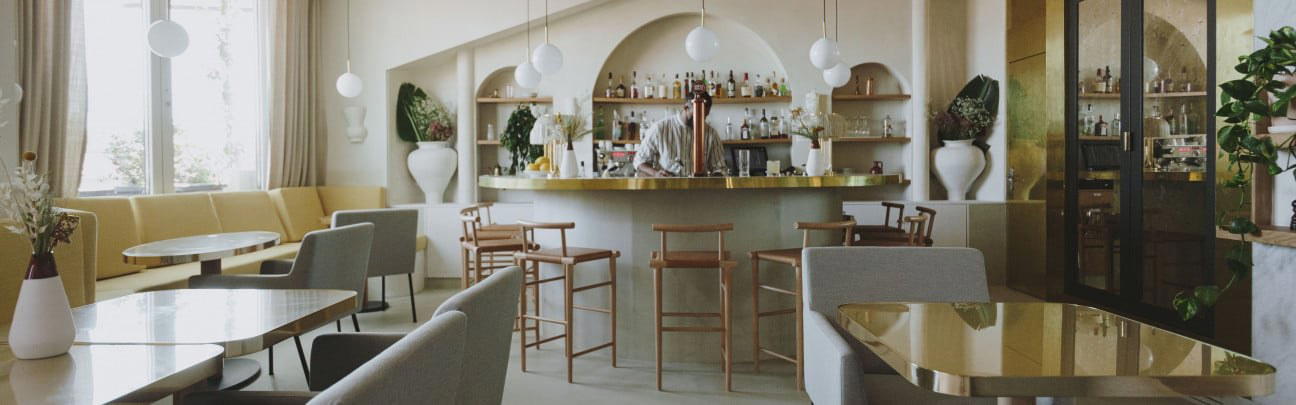
Lively and contemporary, with an energetic fusion-restaurant atmosphere in a central Lisbon area near São Pedro de Alcântara and Príncipe Real.