Michelin Plate
Our verdict
Jin holds consecutive Michelin Plate recognition for 2024 and 2025, making it one of Munich's few dedicated sushi addresses to register on the guide's radar. Operating out of Kanalstraße in the Lehel district under chef Taicho Sato, it runs a tight evening-focused schedule that signals intent rather than volume. Against Munich's broader fine-dining tier, Jin occupies an accessible price point without conceding on technical seriousness.

Pearl is the En Primeur Club membership app, where members save venues, book tables and use the concierge.

Sushi in Munich: A Niche That Earns Its Place
German cities have historically been slow ground for serious Japanese dining. The country's fine-dining conversation has long been anchored by French technique and Central European produce, with properties like Tantris and Atelier setting the standard in Munich at the two-star level, and Tohru in der Schreiberei representing the more recent, critically decorated intersection of German and Japanese thinking at three stars. Within that context, a standalone sushi address earning consecutive Michelin Plate recognition in 2024 and 2025 is not a minor footnote. It signals that the city's most authoritative dining guide is paying attention to a category it has traditionally passed over.
Jin, at Kanalstraße 14 in Munich's Lehel district, occupies that position. The Michelin Plate, awarded for kitchens producing food of good quality, is the guide's entry-level mark of recognition, below star level but above the noise. Two consecutive years of that recognition, in a city where dedicated sushi counters are scarce at any serious price point, positions Jin as the reference address for the format in Munich.
The Lehel Setting and What It Signals
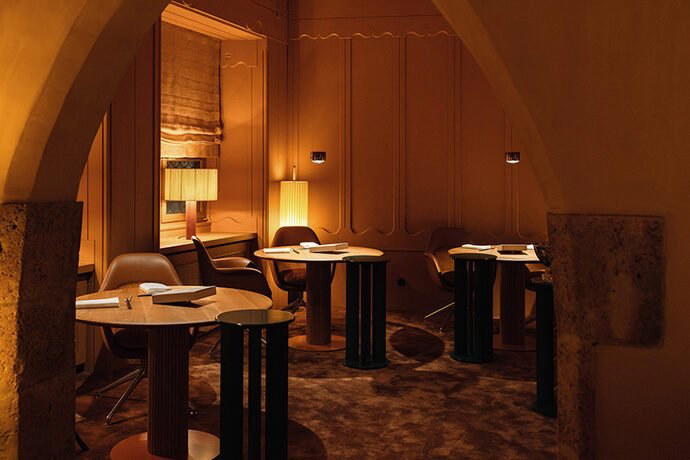
Lehel is one of Munich's older, quieter residential neighbourhoods, east of Maximilianstraße and within walking distance of the Isar. It is not a dining district in the way that Schwabing or the Altstadt operate. A restaurant choosing to anchor itself there, rather than chasing foot traffic in a more commercial zone, typically does so because the format relies on reputation and reservation rather than passing trade. That operating logic aligns with how serious Japanese dining tends to work globally: a contained room, a focused menu, and a clientele that arrives with specific intent.
For a city accustomed to the grand gestures of Alois - Dallmayr Fine Dining or the creative ambition of JAN, Jin represents a different register entirely. The address is residential in character, and the experience scales accordingly: this is not a venue built around spectacle or a grand dining room, but around the discipline of the form itself.
Chef Taicho Sato and the Sushi Counter Tradition
The broader sushi counter model that defines serious Japanese dining operates on a logic of compression: fewer seats, tighter service windows, higher technical demand per cover. The format forces a kitchen to commit to quality at every station because there is nowhere to hide volume behind. Jin runs under chef Taicho Sato, and the restaurant's hours reflect that operational model precisely. Dinner runs Tuesday through Saturday from 7 to 10 pm. Friday and Saturday add a lunch service from 1 to 2:30 pm. Monday and Sunday are closed. That schedule, roughly 17 to 18 service hours per week, is narrow even by the standards of specialist Japanese addresses in Europe.
Comparable formats elsewhere in Germany, addresses like Aqua in Wolfsburg or Schwarzwaldstube in Baiersbronn, operate at higher star levels but within similarly constrained service windows. The constraint is a signal, not a limitation: it indicates a kitchen calibrating output to what it can execute at the level it intends. At the international end of the sushi spectrum, venues like Atomix in New York City demonstrate what that discipline looks like at its most decorated. Jin operates a tier below that, at a price point marked €€, but the structural logic is shared.
Consecutive Recognition and What It Implies
Munich's fine-dining tier is densely credentialed for a city of its size. Tohru in der Schreiberei holds three Michelin stars. Tantris and Atelier hold two each. Alois - Dallmayr Fine Dining holds two. Against that backdrop, Jin's Michelin Plate recognition for two consecutive years carries a specific meaning: the guide has identified this kitchen as producing food worth seeking out, without yet awarding it a star. That is either a statement about ceiling or a statement about trajectory, and for a sushi address in a city where the format has historically been underrepresented in Michelin's Munich selections, the latter reading is the more interesting one.
Across Germany more broadly, kitchens with sustained Plate recognition that then progress to star level are not uncommon. CODA Dessert Dining in Berlin and Restaurant Haerlin in Hamburg illustrate the range of formats Michelin is willing to credential within the German market. Jin's category, specialist sushi, mid-price, tight service window, has fewer peers in the guide's current German selections, which makes its continued presence on the Michelin radar more notable than the Plate designation alone would suggest.
Google's provides a corroborating signal from a different direction. Volume and critical consensus rarely align in Munich's dining scene without a kitchen that is genuinely consistent across covers.
Positioning Within the Munich Japanese Dining Scene
The closest category peer in Munich's Michelin-tracked Japanese tier is Tohru in der Schreiberei, but the two venues are not in direct competition. Tohru operates at the €€€€ price tier with a Modern German-Japanese format and three stars; it is a fundamentally different proposition in terms of both price and ambition. Jin's €€ positioning places it in a different access tier entirely, closer to a specialist neighbourhood counter than to a grand tasting menu address.
That gap in the market is precisely where Jin's sustained recognition becomes editorially significant. Munich does not have a dense roster of serious sushi addresses at any price. A venue that has earned back-to-back Michelin attention in that category, at an accessible price point, occupies territory with very few direct competitors. For readers exploring the full range of what Munich's dining scene offers beyond its French-technique and creative fine-dining tier, Jin represents a different kind of argument: that Japanese dining, done with discipline and without the infrastructure of a larger dining group, can earn critical notice in a city not historically associated with the format. Browse the full Munich restaurants guide for broader context on how Jin sits within the city's dining tiers, or explore Munich hotels, bars, wineries, and experiences to plan a fuller visit.
Planning Your Visit
Jin operates a deliberately narrow schedule: dinner runs Tuesday through Saturday (7 to 10 pm), with a Friday and Saturday lunch sitting from 1 to 2:30 pm. Monday and Sunday are dark. With no phone or website listed publicly through EP Club's data, the most reliable approach is to contact the restaurant directly at Kanalstraße 14, 80538 München. Given the tight service hours and the format's tendency toward limited covers, booking well ahead of your intended date is the sensible approach, particularly for weekend sittings. The €€ price range sits well below the city's star-level competition, making it one of the more accessible serious dining options in Munich's Japanese category.
Frequently asked questions
Can I bring kids to Jin?
Jin's format is a compact sushi counter with dinner sittings running until 10 pm and a narrow operating window of five days a week. The counter-style service and precision-focused environment are better suited to older diners who can engage with the progression of a structured meal. Younger children are unlikely to find the format comfortable.
Is Jin formal or casual?
Jin sits at a mid-register: Michelin Plate recognition and a focused counter format signal a considered dining experience, but the price range (€€) places it well below the black-tie tier of Munich's three-star rooms. Treat it as you would any serious neighbourhood counter, presentable, but not ceremonial.
What distinctions does Jin have?
Jin has received recognition including: Michelin Plate (2025); Michelin Plate (2024).
What's the must-try dish at Jin?
Jin's menu specifics are not publicly detailed, and listing individual dishes without current confirmation would be guesswork. Given chef Taicho Sato's sushi-counter format and two consecutive Michelin Plate recognitions (2024 and 2025), the through-line is the nigiri sequence itself, arriving for the full dinner sitting on any evening Tuesday through Saturday is the most direct way to experience the counter at its intended pace.
How would you describe the cuisine at Jin?
Compact Comparison
| Venue | Cuisine | Price | Awards | Notes |
|---|---|---|---|---|
| JinThis venue (the venue you are viewing) | Chinese | Not listed | Michelin Plate | Not listed |
| Tantris | Modern French Fine Dining | $300–500 | 2 Michelin Stars · World's 50 Best #73 | Modern French, French Contemporary |
| Tohru in der Schreiberei | Modern Japanese-European Fusion Fine Dining | $300–500 | Michelin Plate · La Liste Top Restaurants | Modern German - Japanese, Modern Cuisine |
| Alois - Dallmayr Fine Dining | Modern Bavarian Fine Dining with French and Nordic Influences | $300–500 | 2 Michelin Stars · La Liste Top Restaurants | Creative |
| Atelier | Charcoal-Grilled French Tasting Menu with Oita Wagyu | $100–150 | Tabelog 100 #51 | Creative French |
| Acquarello | Modern Italian Fine Dining | $100–150 | 1 Michelin Star | Italian - Mediterranean, Italian |
Recognition history
Dated appearances from independent guides and award organizations, with the underlying list record or original source where available.
Michelin Plate
Michelin
Opinionated About Dining Newly Added European Restaurants
Opinionated About Dining
Full recognition history (5 entries)
Opinionated About Dining Top Restaurants in Europe Recommended
Opinionated About Dining
Michelin Plate
Michelin
Michelin Plate
Michelin