
Jarana brings Spanish cooking to Xinyi District, earning a Michelin Plate in 2024 and holding. Set on a quiet alley off Zhongxiao East Road, it occupies a distinct niche in Taipei's fine-dining scene: European regional cooking that draws on Iberian tradition rather than French or Japanese frameworks. The price tier sits a step below the city's starred Spanish competitor, making it an accessible point of entry into the category.
Pearl is the En Primeur Club membership app — saves, bookings, and concierge access live there. Same editors, same standards.
- Address
- No. 8號, Alley 46, Lane 553, Section 4, Zhongxiao E Rd, Xinyi District, Taipei City, Taiwan 110
- Phone
- +886 2 2756 8858
- Website
- instagram.com
- Directions
- Get directions
 Saves & bookings on Pearl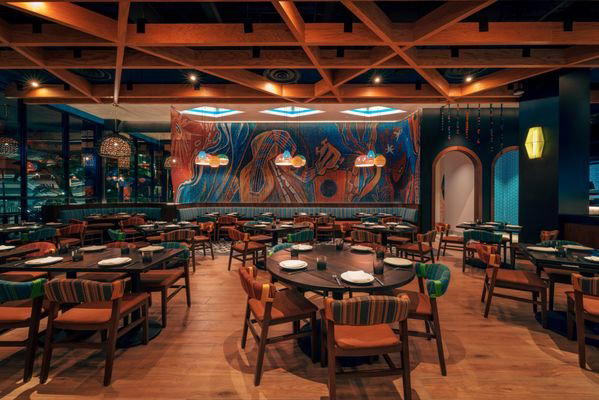
Spanish Cooking in a City That Has Learned to Take It Seriously
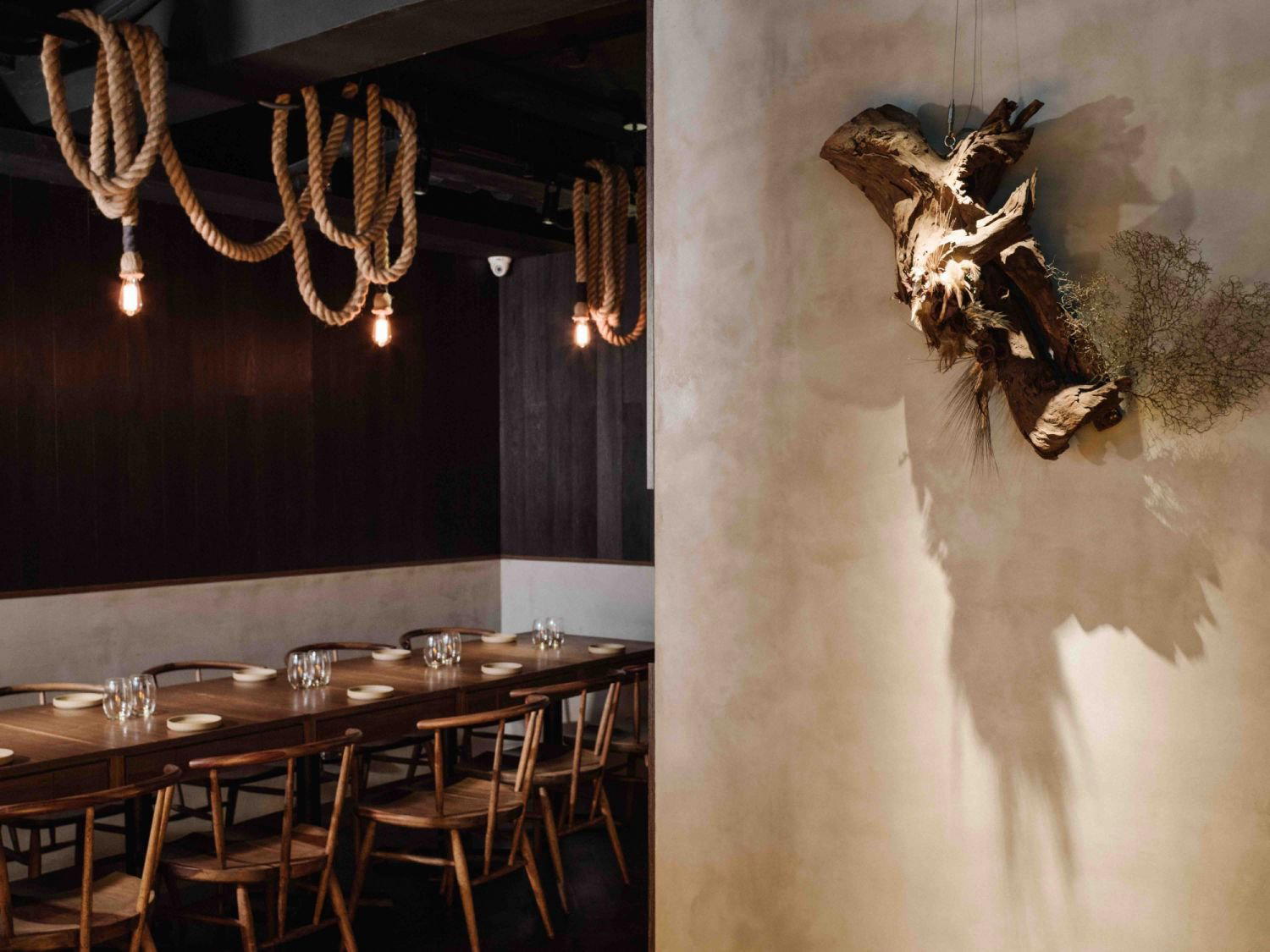
Jarana is a Spanish tapas restaurant in Taipei's Xinyi District, with. The approach to Jarana along Alley 46 off Section 4 of Zhongxiao East Road sets up a particular kind of contrast. The Xinyi District around it operates at Taipei's loudest register, department stores, refined walkways, the glass towers of the financial district, but the alley cuts away from all that into something quieter. Inside, the room signals European intent without the grand-café theatre that characterises many Western imports into Asia: the atmosphere suggests a restaurant that treats its cuisine as the point, not the staging.
Spanish cooking has arrived in Taipei in two distinct registers. At the higher end, Molino de Urdániz operates a Michelin-starred contemporary Spanish program that competes directly with the city's French and Japanese fine-dining tier. Jarana holds a different position: a Michelin Plate recognition in 2024 and a price point at $$$ rather than $$$$, which places it as the more accessible Spanish address in town.
What Catalan Cooking Looks Like Away From Home
To understand what a Spanish kitchen means in this context, it helps to understand what Catalan cooking actually is on its home ground. The Catalan tradition is built around a handful of structural ideas: the mar i muntanya principle of pairing seafood with meat or game in the same dish; suquet, the dense fisherman's stew that concentrates broth with potato and saffron; romesco and picada as finishing sauces that add depth through ground nuts, bread, and dried pepper; and the specific restraint of crema catalana, which predates its French cousin by most accounts and carries a burnt-sugar crust over a custard that stays looser than crème brûlée.
These are not decorative traditions. They describe a cooking logic rooted in the geography between the Pyrenees and the Mediterranean, a kitchen that used what the mountains and the coast provided in the same pot. When Spanish cooking transplants to Asia, the question is always how much of that logic survives the supply chain and the local palate, and how much becomes a cosmetic version of itself. Michelin's Plate recognition signals that Jarana is operating above the cosmetic tier: a Plate indicates cooking worth attention, not simply cooking with a Spanish accent on the menu header.
The Taipei dining scene provides useful calibration. The city's most decorated European tables, logy with its two Michelin stars in Modern European cooking, L'Atelier de Joël Robuchon with its French pedigree, and Taïrroir applying French technique to Taiwanese ingredients, all operate at $$$$ and carry starred recognition. Jarana's $$$ positioning means it sits between the mid-market and the starred tier, which in Taipei's current market is a competitive space: restaurants here are expected to deliver technical seriousness even when they are not chasing a star.
Where Spanish Cooking Sits in the City's Wider Map
Taipei's European dining scene has diversified considerably since the early 2010s, when French and Italian cooking dominated the Western category and Spanish food remained niche. The growth of Michelin Guide Taipei, first published in 2018, accelerated the formalisation of that diversity, creating a reference system that Spanish restaurants could compete within rather than alongside. Jarana's 2024 Plate puts it on that map at a moment when the Spanish category in the city is more established than it has ever been.
The Xinyi address matters for practical reasons beyond atmosphere. Xinyi District contains the highest concentration of international fine-dining addresses in Taipei, which means the competition is visible and the diner walking in has probably compared options. That context tends to sharpen kitchens. It also means transport is direct: the area is well-served by the MRT, and the alley location provides separation from street-level noise without requiring a taxi-and-GPS exercise to find the door.
For Spanish cooking in Asia more broadly, the precedent set by addresses like ZURRIOLA in Tokyo shows what sustained ambition looks like in the category, Basque cooking applied with discipline to Japanese supply chains and earning Michelin recognition in the process. Jarana occupies a parallel position in a smaller and less densely competitive market. The comparison is instructive rather than diminishing: what it takes to earn Michelin recognition for Spanish cooking in an Asian city is a recognisable set of conditions, and the Plate indicates those conditions are being met.
Planning a Visit
Jarana sits on Alley 46, Lane 553, Section 4, Zhongxiao East Road in Xinyi District. The Xinyi/Anhe MRT station places the restaurant within easy walking distance. Pricing at $$$ positions a meal here roughly in line with a mid-range fine-dining experience in the city, a step below the tasting-menu spend at starred addresses like Le Palais, and accessible enough that it works as a standalone dinner rather than a special-occasion commitment. Booking ahead is advisable given the recognition it has received; reservations are recommended.
Recognition Snapshot
Comparable venues nearby, for context on price, style, and recognition.
| Venue | Cuisine | Price | Awards | Notes |
|---|---|---|---|---|
| JaranaThis venue — the venue you are viewing | Authentic Spanish Tapas | $$$ | Michelin Plate | Not listed |
| Longtail | Modern Asian Fusion Fine Dining | $$$ | Michelin Plate | Huxiao |
| Shi | Seasonal Contemporary Taiwanese | $$$ | Michelin Plate | Heng'an |
| Dasuke | Modern Niigata-inspired Japanese Izakaya | $$$ | Michelin Plate | Huxiao |
| 44 SV | Modern Taiwanese Juan-Cun Bistro | $$$ | Michelin Plate | Checeng |
| JUNTO | Modern Cantonese | $$$ | Michelin Plate | Guangfu |
Recognition history
Dated appearances from independent guides and award organizations, with the underlying list record or original source where available.
Michelin Plate
Michelin
Continue exploring
More in Taipei
Restaurants in Taipei
Browse all →
Bars in Taipei
Browse all →
Hotels in Taipei
Browse all →
Wineries in Taipei
Browse all →
At a Glance
- Cozy
- Modern
- Lively
- Elegant
- Date Night
- Special Occasion
- Group Dining
- Open Kitchen
- Sake Program
Current opening hours
- Monday
- Closed
- Tuesday
- 5:30–10:30 PM
- Wednesday
- 5:30–10:30 PM
- Thursday
- 5:30–10:30 PM
- Friday
- 5:30–10:30 PM
- Saturday
- 5:30–10:30 PM
- Sunday
- Closed
Hours can change for holidays and private events. Last verified .
Bright modern decor with a balance of bustle and intimacy, gentle hum of conversation, and a lively yet cozy atmosphere.