Our verdict
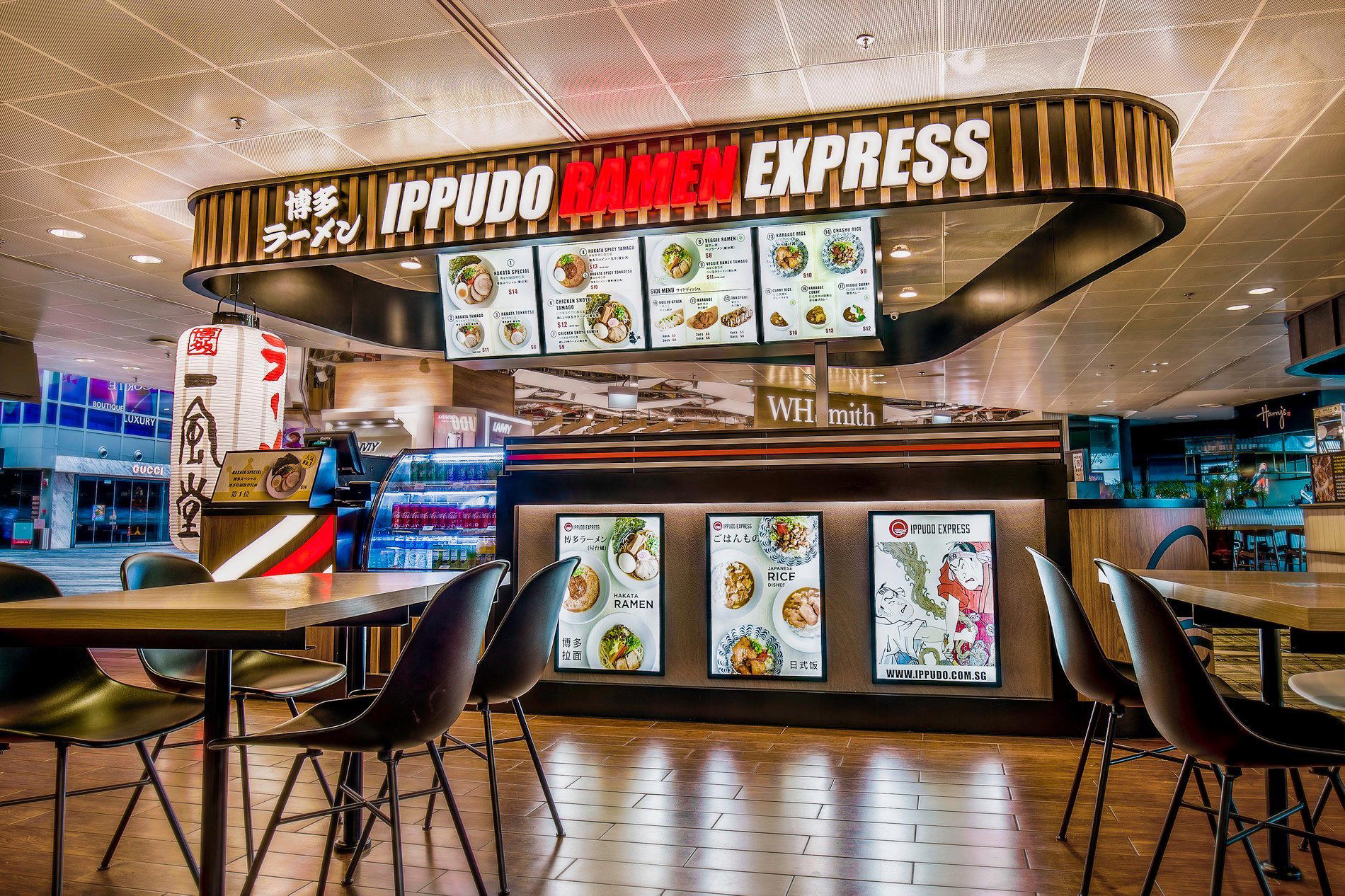
Ippudo Express at Changi Airport Terminal 3 brings the Japanese ramen chain's streamlined format to one of Asia's busiest transit hubs. For travellers moving between gates or catching a late departure, it offers a familiar bowl of tonkotsu in a setting designed for speed rather than ceremony. Singapore's airport dining scene has expanded considerably, and this outpost sits within that broader shift toward recognisable brands anchoring terminal food halls.

Pearl is the En Primeur Club membership app, where members save venues, book tables and use the concierge.
The menu
What to order
- Aka Tonkotsu Ramen
- Shiro Tonkotsu Ramen
- Hakata Ramen
Ramen at 30,000 Feet (Before Takeoff)
Changi Airport Terminal 3's food and beverage floor operates on a logic that few transit hubs have managed to replicate: enough variety to feel like a neighbourhood, enough familiarity to reassure the time-pressed traveller. Within that ecology, express-format ramen fits neatly. A bowl arrives in minutes, requires no cutlery beyond chopsticks and a spoon, and satisfies the specific hunger that arrives somewhere between check-in and boarding. Ippudo Express, positioned inside T3, belongs to this category of airport dining that prizes efficiency without entirely abandoning the conventions of its source cuisine.
The Ippudo name carries weight in ramen circles. The parent brand, founded in Fukuoka in 1985, helped bring Hakata-style tonkotsu ramen to international attention through a global expansion that now spans dozens of cities. That lineage matters in context: when a traveller at Changi sits down to a bowl here, they are touching a format that traces back to the pork-bone broth traditions of Kyushu, where long-simmered milky broths and thin straight noodles define the regional style. The express format abbreviates the ritual, but the culinary reference point remains.
The Ritual, Compressed
In a traditional Hakata ramen shop, the dining sequence follows a particular rhythm. You order quickly, menus are short, decisions are binary, the bowl arrives fast, and the expectation is that you eat without lingering. Noodles are added in increments called kaedama, where a diner signals for a fresh batch to be dropped into remaining broth. The meal is transactional by design, not because hospitality is absent, but because the format was built for the working lunch rather than the extended dinner. An airport express format takes this template and compresses it further, stripping even the kaedama ritual in favour of a self-contained bowl sized for one sitting.
That compression is worth understanding rather than lamenting. The ramen counter in its original Fukuoka incarnation was not designed for contemplation any more than a Milanese espresso bar was designed for a ninety-minute breakfast. Speed is embedded in the tradition, and an airport express version is arguably more faithful to that ethos than a full-service ramen restaurant that adds starter courses and reservation windows. For the traveller with forty minutes before boarding, the format delivers exactly what the source culture intended.
Airport Dining in Singapore: A Broader Frame
Changi has positioned itself as more than a transit point for over a decade, and its food and beverage programme reflects that ambition. The airport now houses everything from hawker-style local staples to sit-down restaurants that would hold their own in the city proper. Singapore's dining culture, which spans everything from the three-Michelin-starred rooms of Odette and Les Amis to the intensely competitive hawker centre circuit, has inevitably shaped what airport operators believe travellers expect. The bar for terminal food in Singapore is higher than in most comparable hubs.
Within that context, recognisable chain formats serve a specific function. They offer a known quantity to the traveller who cannot afford a disappointing meal at 6am before an eleven-hour flight. Ippudo Express operates in this register: it is not the reason someone books a trip to Singapore, but it is a reasonable answer to the question of what to eat when time is short and the alternative is a packaged sandwich from a convenience kiosk. For those who want to explore Singapore's wider dining range, the city's full restaurant scene, documented in our full Singapore restaurants guide, offers considerably more range, from the progressive European work at Zén and Jaan by Kirk Westaway to the innovative tasting menus at Meta.
Neighbourhood Counterparts Across the Island
Singapore's ramen scene extends well beyond the airport. The city has absorbed Japanese noodle culture deeply enough that dedicated ramen shops now operate in most major districts, from Orchard to Kallang. Travellers who have time in the city before heading to the terminal might consider the wider options available: the local dining corridor around 大巴窟93筋粿 in Kallang reflects the kind of neighbourhood food culture that Singapore sustains alongside its high-end restaurant tier. Elsewhere, spots like Fu He Delights in Rochor and KTMW chicken rice tea-cafe in Bedok illustrate how the city's most characterful eating happens in residential and commercial streets rather than purpose-built food halls. For a longer sit-down meal before airport transfer, Béni in Orchard and Imperial Treasure Fine Chinese Cuisine in the Downtown Core both offer formats that reward an unhurried approach. Other options across the city include Etna Restaurant in Outram, Haidilao Hot Pot at Sun Plaza in Sembawang, Asian Twist by 365 Food in Queenstown, Du Du Shou Shi in Jurong West, and Little Italy - Katong in Marine Parade.
For those connecting through Singapore from international routes, the airport itself functions as a small city. Terminal 3 in particular has enough food options that the decision of where to eat can feel like a minor destination choice in its own right. In that frame, a bowl of tonkotsu ramen from an established brand is a coherent choice: familiar enough to be reliable, rooted enough in a real culinary tradition to carry some meaning beyond mere sustenance.
Planning Your Visit
Ippudo Express operates within Terminal 3's airside and landside food corridors, making it accessible both to departing passengers past security and to those meeting arrivals or simply passing through the public areas of Changi. Because the format is counter-service and designed for speed, queuing rather than reservations governs access, peak periods around major departure banks, typically mid-morning and early evening, tend to see the longest waits. Travellers on tight connections should account for this. For reference points beyond Singapore, the Ippudo network has locations across Asia, Europe, and North America; the New York dining scene offers its own parallel conversation about ramen's place in a competitive food city, which intersects with the restaurant discussions at Le Bernardin and Atomix in terms of how global food cities absorb and adapt Japanese dining formats.
Frequently asked questions
Where do I go for Ippudo Express?
Ippudo Express is located at Changi Airport T3, Singapore.
Is Ippudo Express at Changi Airport accessible to non-travelling visitors or only to departing passengers?
Ippudo Express at Terminal 3 operates across both landside and airside corridors, meaning the venue is reachable without a boarding pass. Singapore's Changi Airport has structured its retail and dining floors to allow public access to landside areas, so the ramen counter is an option for visitors not flying. Airside access requires a valid same-day boarding pass and cleared security.
What's the signature dish at Ippudo Express?
Ippudo built its global reputation on Hakata-style tonkotsu ramen, and the Express format at Changi Airport Terminal 3 carries that same core identity. The richly reduced pork-bone broth is the throughline across all Ippudo outlets worldwide.
Should I book Ippudo Express in advance?
Ippudo Express at Changi Airport Terminal 3 operates as a walk-in counter format by design, serving both airside and landside passengers on an ad-hoc basis. No reservation infrastructure is documented for this location. Timing your visit outside peak departure windows, mid-morning or early afternoon, is the practical way to avoid a wait.
What do critics highlight about Ippudo Express?
Coverage of Ippudo Express specifically at Changi Terminal 3 is sparse in major publications, though the broader Ippudo brand has earned consistent recognition since Shigemi Kawahara opened the original Fukuoka shop in 1985. The airport outpost is generally framed as a reliable execution of a proven format rather than a destination in its own right. Singapore's overall Changi food programme, within which Ippudo Express sits, has drawn repeated editorial attention for raising the bar on transit dining in Asia.
How does Ippudo Express handle allergies?
Tonkotsu ramen contains pork and typically gluten, making it a difficult category for guests with common dietary restrictions. Guests with serious allergies should speak directly with counter staff before ordering, as ingredients and preparation methods can vary by site.
Style and Standing
Comparable venues nearby, for context on price, style, and recognition.
| Venue | Cuisine | Price | Awards | Notes |
|---|---|---|---|---|
| Ippudo ExpressThis venue (the venue you are viewing) | Hakata Tonkotsu Ramen | $1–10 | Not listed | Not listed |
| Ikkousha Ramen Chijmes | Hakata Tonkotsu Ramen | $20–30 | Not listed | CITY HALL |
| Soon Wah Fishball Kway Teow Mee | Teochew Fishball Noodles | $1–10 | Not listed | Newton Circus |
| Hup Kee Fried Oyster Omelette | Singaporean Fried Oyster Omelette | $1–10 | Michelin Guide Bib Gourmand · Michelin Plate | NEWTON CIRCUS |
| Heap Seng Leong | Traditional Singaporean Kopitiam | $1–10 | Not listed | Crawford |
| Cheese Wonder (pop-up) | Viral Hokkaido frozen cheesecake pop-up | $10–20 | Not listed | Orchard |
Continue exploring
More in Singapore
Restaurants in Singapore
All restaurants in Singapore →
Bars in Singapore
All bars in Singapore →
Details
- Modern
- Solo
- Casual Hangout
- Sake Program
- A La Carte
- Vegetarian Friendly
Casual, quick-service airport dining with a practical, food-hall-like atmosphere designed for speed rather than ceremony.