iOda


A vegetable rotisserie in the heart of Saint-Gilles, iOda puts fire and smoke behind plant-based cooking in a format the neighbourhood had not seen before. Holding a Michelin Plate for two consecutive years, it sits at the affordable end of the local dining spectrum while operating with the seriousness of a concept restaurant.
Pearl is the En Primeur Club membership app — saves, bookings, and concierge access live there. Same editors, same standards.
- Address
- Rue de la Victoire 23, 1060 Saint-Gilles, Belgium
- Phone
- +32 2 315 62 08
- Website
- ioda.be
- Directions
- Get directions
 Saves & bookings on Pearl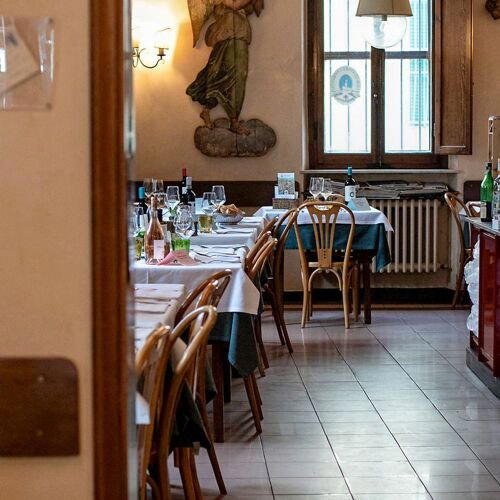
Fire, Smoke, and the Case for Vegetables at the Centre
Walk along Rue de la Victoire on a weekday evening and the smell reaches you before the sign does. Rotisserie cooking carries a particular aromatic weight, the kind that has anchored neighbourhood streets across Europe for generations. What stops you at number 23 is the realisation that there is no meat here. The technique is the same, the sensory pull is the same, but the raw material is entirely vegetable. That dissonance is the point, and it is what has made iOda one of the more discussed addresses in Saint-Gilles.
The rotisserie as a format has deep roots in French and Belgian bistro culture, where it signals a certain democratic directness: fire, fat, time, and flavour without ceremony. Applying that framework to vegetables is not a new idea in the abstract, but it remains rare in practice, particularly at this price point. iOda sits around €45 per person, placing it alongside neighbourhood spots rather than the higher-spend modern cuisine tables like La Buvette or the grills at Colonel Louise. The combination of a low price ceiling and a format commitment this deliberate is what gives it its particular position in the local scene.
What Vegetarian Cooking Looks Like When the Grill Runs the Show
The global tradition of serious vegetarian cookery is older and broader than European fine dining tends to acknowledge. Japanese shojin ryori, the temple cuisine codified by Buddhist monks over centuries, built an entire aesthetic around restraint, seasonality, and the extraction of deep flavour from vegetables, tofu, and mountain plants without any animal product. Indian vegetarian cooking, in its many regional forms, developed spice logic and fermentation techniques that produce intensity no meat course is required to deliver. Ethiopian vegetarian traditions, built around fasting-day injera spreads, demonstrate that communal eating without protein can be structurally generous rather than merely abstemious.
What these traditions share is a refusal to treat vegetables as supporting cast. The rotisserie format at iOda operates on the same principle: heat applied directly and with patience to raw vegetable material produces caramelisation, char, and textural contrast that repositions the ingredient entirely. We're Smart, the Belgian green gastronomy guide, has singled out iOda with recognition that underlines this point.
For a broader sense of how ambitious vegetarian restaurant concepts translate at the fine dining level, Fu He Hui in Shanghai and Lamdre in Beijing show what happens when Chinese Buddhist culinary philosophy meets contemporary tasting menu formats. iOda is not operating in that register, but it belongs to the same broader argument: that vegetable cookery, when it has a clear technical identity, does not read as a concession.
Saint-Gilles as Context
Saint-Gilles is especially densely populated municipality in Belgium, a compact urban commune immediately south of Brussels' Pentagon that has developed one of the capital region's more interesting mid-range dining clusters over the past decade. The neighbourhood runs from the Art Nouveau grandeur of the Parvis de Saint-Gilles down through residential streets where independent restaurants have replaced older commercial formats. The dining range is deliberately international and varied: ANJU works Korean contemporary, Dolce Amaro handles Italian, and Flamme covers country cooking. iOda sits inside that plurality, but its format gives it a different competitive reference point: it is not primarily competing with other vegetarian restaurants in the neighbourhood, because there are few direct comparisons. It competes with neighbourhood restaurants in general, on the grounds that its food is interesting enough to be chosen on merit rather than dietary default.
That positioning matters. A restaurant that vegetarians visit because they have to is a different proposition from one they visit because they want to, and one that omnivores visit because the cooking is worth it.
Michelin Recognition and What It Signals in This Context
Michelin awarded iOda a Plate in both 2024 and 2025. The Plate designation, often underread, means that Michelin's inspectors found cooking of sufficient quality to merit attention even in the absence of star-level complexity or ambition. In a city that hosts starred addresses including Bozar Restaurant in Brussels, and in a country with benchmark fine dining operations like Hof van Cleve, Boury, Zilte, Willem Hiele, and Bartholomeus, a Plate at a single-euro-sign neighbourhood restaurant is not a minor outcome. It places the cooking inside the range that Michelin considers worth the reader's time, which for a vegetable rotisserie concept at accessible prices is a substantive credential.
The cooking places vegetables explicitly in the lead role. That is, in the current Belgian dining scene, not a default position. Belgian cuisine has a deeply rooted relationship with meat-heavy preparations, and the local bistro tradition has historically been reluctant to treat vegetables as anything other than accompaniment. iOda's format is a departure from that, and the combination of external recognition from two different validation systems, Michelin and We're Smart, suggests the departure is working.
Planning Your Visit
iOda is at Rue de la Victoire 23 in Saint-Gilles, 1060 Brussels. The address sits within a walkable cluster of neighbourhood restaurants. Reservation is essential, particularly for weekends.
Accolades, Compared
Comparable venues nearby, for context on price, style, and recognition.
| Venue | Cuisine | Price | Awards | Notes |
|---|---|---|---|---|
| iOdaThis venue — the venue you are viewing | Creative Vegetarian Rotisserie | $$$ | Michelin Plate | Not listed |
| Atelier Acqua e Sale | Authentic Italian Trattoria | $$$ | Michelin Plate | Saint-Gilles |
| Tero | Organic Farm-to-Table Belgian Vegetarian | $$$ | Bib Gourmand | Saint-Gilles |
| Flamme | Wood-Fired Country Cooking | $$ | Michelin Plate | Saint-Gilles |
| La Buvette | Modern French Bistro | $$ | Michelin Plate | Saint-Gilles |
| La Charcuterie | French Bistro with Mediterranean Influences | $$ | Bib Gourmand | Saint-Gilles |
Recognition history
Dated appearances from independent guides and award organizations, with the underlying list record or original source where available.
Michelin Plate
Michelin
Michelin Plate
Michelin
We're Smart World 3 Radishes
We're Smart World
Michelin Plate
Michelin
Continue exploring
More in Saint-Gilles
Restaurants in Saint-Gilles
Browse all →
Bars in Saint-Gilles
Browse all →
Hotels in Saint-Gilles
Browse all →

Wineries in Saint-Gilles
Browse all →
At a Glance
- Trendy
- Modern
- Intimate
- Date Night
- Special Occasion
- Celebration
- Open Kitchen
- Standalone
- Natural Wine
- Beer Program
- Sommelier Led
- Farm To Table
- Organic
- Local Sourcing
- Natural Wine
Current opening hours
- Monday
- Closed
- Tuesday
- Closed
- Wednesday
- 7–10 PM
- Thursday
- 7–10 PM
- Friday
- 7–10 PM
- Saturday
- 7–10 PM
- Sunday
- Closed
Hours can change for holidays and private events. Last verified .
Trendy and buzzy interior with vintage details, untreated materials, retro Brussels-style tiling, bare bricks, and LED lights above the bar; rock and roll playlist creates an energetic yet intimate atmosphere.