
Michelin Plate
Our verdict
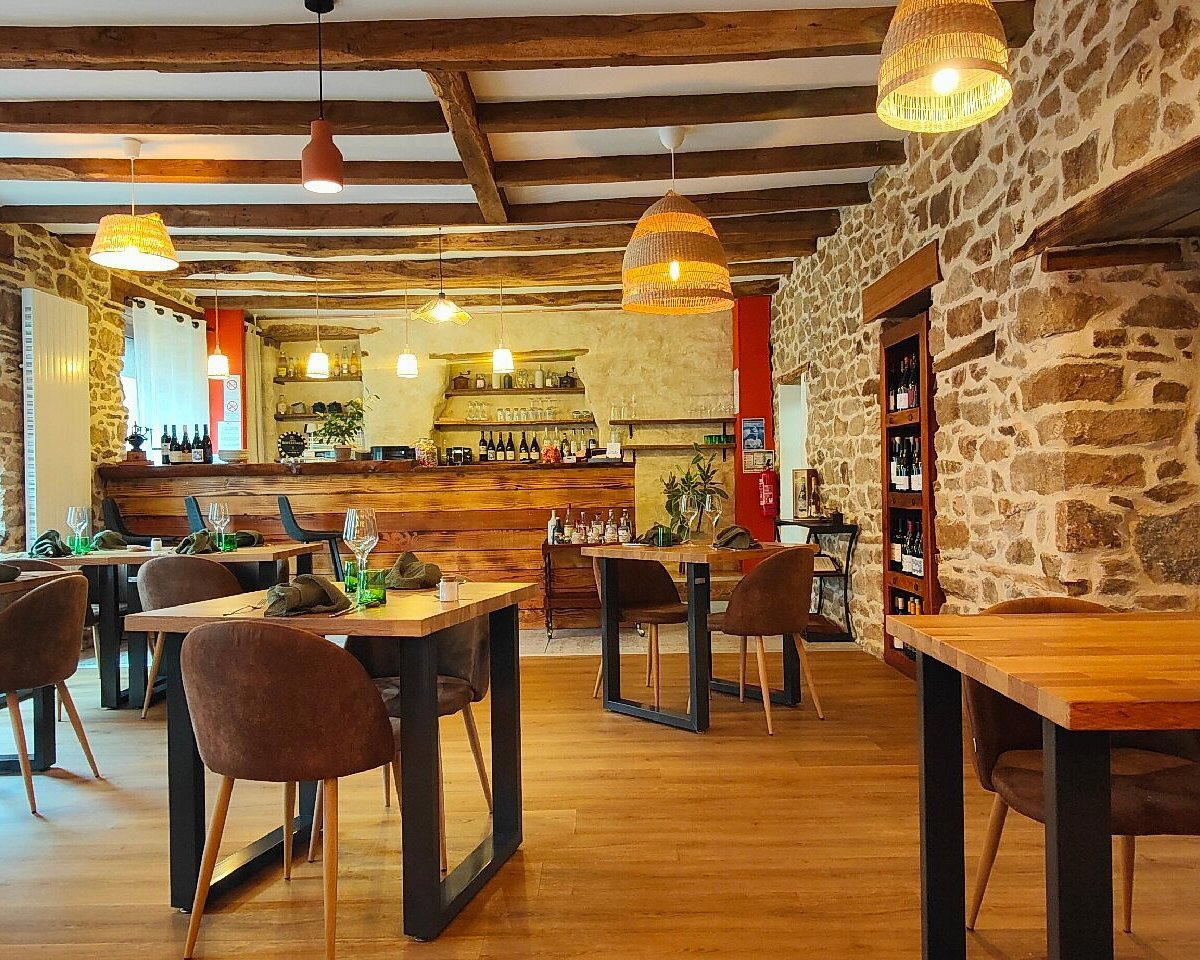
A former crêperie in the village of Ploubezre, Inseme pairs Breton coastal produce with Mediterranean technique in a room of exposed stone and warm timber. Chef Laure-Marie Darteyron and pastry chef François Spenlehauer run the kitchen and floor as a two-person operation, producing dishes such as house-made pasta with spider crab and pollack with fregola sarda. The name, Corsican for 'together', captures the ethos precisely.

Pearl is the En Primeur Club membership app, where members save venues, book tables and use the concierge.
The menu
What to order
- Pâtes maison à la chair d’araignée
- Carpaccio de Saint-Jacques aux agrumes
Stone Walls, Coastal Produce, and a Kitchen Facing Two Seas
The village of Ploubezre sits a few kilometres south of Lannion in the Côtes-d'Armor, in a part of Brittany where the fishing heritage is functional rather than decorative. The restaurants that work here tend to do so by earning the confidence of a local clientele before anyone else notices them. Inseme, at 8 rue Jean-Marie-le-Foll, occupies the shell of a former crêperie: exposed stonework, wooden furnishings, a room that reads as settled rather than designed. The transition from crêperie to contemporary table is visible in the bones of the space, and that continuity is part of the point.
Where the Ingredients Begin
Brittany's position as a sourcing region for the rest of French gastronomy is well established. The coastline produces spider crab, scallop, sea bass, and pollack of a quality that supplies tables considerably more decorated than this one, including multi-starred addresses such as Mirazur in Menton and Flocons de Sel in Megève, both of which draw on French regional coastal and mountain produce as foundational to their cooking. The difference at Inseme is proximity: the kitchen is operating within the supply chain rather than at the end of it.
Spider crab from the Breton coast appears in house-made pasta, which positions the dish at a register that is neither traditional Breton nor straightforwardly Italian but something assembled from both. Scallop carpaccio is finished with citrus, a technique that draws on acidity to open rather than cook the protein, preserving the texture of scallop that reaches the kitchen within a short distance. Pollack, a species that has moved from overlooked to sought-after as MSC-certified stocks have made it a more responsible choice, is cooked with fregola sarda, the toasted Sardinian pasta that shares a textural register with couscous. The addition of Breton curry, a spice blend that has existed in Brittany's port cities since the nineteenth century as a trace of maritime trade routes, adds a historical dimension to what could otherwise read as simple fusion.
The pattern across those dishes is consistent: Breton primary ingredients, technique or accompaniment drawn from Mediterranean or Atlantic-island traditions, and enough restraint to let the sourcing speak. This is not a kitchen overloading a plate with context. For further context on how French kitchens at different price tiers handle regional produce, see the approaches taken at Bras in Laguiole and Auberge du Vieux Puits in Fontjoncouse, both of which have built their identities on hyperlocal sourcing at the starred level.
The Two-Person Model and What It Implies
Small restaurants run by two-person partnerships have a specific dynamic. Chef Laure-Marie Darteyron handles the kitchen; François Spenlehauer, whose background is in pastry, manages both the patisserie work and the front of house. That combination places the entire guest experience inside a single creative and operational decision-making unit. There is no brigade insulating the table from the kitchen's choices, and no floor manager interpreting food for guests at a remove from the people who cooked it.
At the top end of the French dining spectrum, tables such as Alléno Paris au Pavillon Ledoyen or Assiette Champenoise in Reims operate with large, structured teams where the guest experience is engineered at scale. The two-person village format is a different proposition entirely: what you gain is directness and coherence; what you accept is variability and limited capacity. The Corsican name Inseme, meaning 'together', names that operational philosophy as a value rather than a constraint.
The Brittany Village Restaurant Context
Eating well in inland Brittany at the village scale requires more local knowledge than eating well in Rennes or Saint-Malo. The coastal cities have concentrated their good tables along tourist circuits and city centres. The villages have not. Ploubezre is not a stop on any standard itinerary, and Inseme is not pitched at passing trade. That insularity is precisely what makes the kitchen's sourcing credibility easier to maintain: the produce arriving here does not need to travel far, and the restaurant does not need to perform for an audience that expects spectacle. For those planning time in the area, our full Ploubezre restaurants guide covers the wider dining context, and our guides to hotels, bars, wineries, and experiences in Ploubezre provide additional planning resources.
Planning a Visit
Inseme sits at 8 rue Jean-Marie-le-Foll in Ploubezre, south of Lannion. Given the two-person operation and the likely limited covers, booking ahead is the sensible approach: walk-ins at a full room leave no margin. Lannion is accessible by TGV from Paris Montparnasse via Guingamp, making a dedicated trip feasible from Paris in a day, though an overnight in the Trégor area makes the journey more comfortable. The room's warm, unfussy character suits a range of occasions, a working lunch, a leisurely dinner, a table with older children who can sit through a proper meal, without requiring any particular formality from guests.
Frequently asked questions
Is Inseme a family-friendly restaurant?
The setting, a former crêperie with exposed stonework and wooden furnishings at 8 rue Jean-Marie-le-Foll in Ploubezre, is informal and unhurried. The two-person operation runs without ceremony, which makes the room accessible rather than pressured. Families comfortable with coastal produce and a relaxed pace should find the atmosphere workable.
What's the vibe at Inseme?
Warm and rooted in its village context. The original crêperie bones, stone walls and timber, are intact, and the room feels like it belongs in Ploubezre rather than imported from a city. Chef Laure-Marie Darteyron runs the kitchen while François Spenlehauer handles pastry and the floor, so the dynamic is collaborative rather than hierarchical.
Does Inseme have a Michelin star or similar recognition?
Inseme has received recognition including: In a village south of Lannion, this former crêperie has been taken over by chef Laure-Marie Darteyron and pastry chef François Spenlehauer, who also runs the show front of house. The Corsican name of this place means "together", and the own….
What's the signature dish at Inseme?
The kitchen returns consistently to house-made pasta with spider crab, scallop carpaccio with citrus, and pollack with fregola sarda and Breton curry. These dishes define the venue's core approach: Breton coastal ingredients reframed through Mediterranean and Atlantic-island technique rather than classical French preparation.
What's the address for Inseme?
Inseme is located at 8 rue Jean-Marie-le-Foll, Ploubezre.
What's the best way to book Inseme?
Given the small scale of a two-person operation, arriving without a reservation carries real risk, particularly on weekends.
What makes Inseme worth seeking out?
Few restaurants operating at the village scale in inland Brittany hold this specific angle: direct access to Côtes-d'Armor coastal produce combined with a kitchen applying Mediterranean and Corsican-influenced technique to it. The name itself, Corsican for 'together', signals the collaborative model, and the cooking reflects that coherence between kitchen and floor.
Comparable Spots, Quickly
Comparable venues nearby, for context on price, style, and recognition.
| Venue | Cuisine | Price | Awards | Notes |
|---|---|---|---|---|
| InsemeThis venue (the venue you are viewing) | Modern French Bistronomic | $30–50 | Michelin Plate | Not listed |
| Le Bélouga | Modern French with Breton influences | $50–100 | Michelin Plate | Perros-Guirec |
| Le Bon Abri | Bistronomique French with Celtic Products | $30–50 | Michelin Bib Gourmand | Hillion |
| Agora | Cuisine moderne française | $50–100 | Michelin Plate | Centre ville |
| La Maison Alyette - Domaine de Locguénolé | Traditional French Bistrot | Not listed | Michelin Plate | Kervignac |
| La Ferme de l'Odet | Modern French-Breton Fusion | $50–100 | Michelin Plate | Baie de Kérogan |
Recognition history
Dated appearances from independent guides and award organizations, with the underlying list record or original source where available.
Michelin Plate
Michelin
Continue exploring
More in Ploubezre
Restaurants in Ploubezre
All restaurants in Ploubezre →
Bars in Ploubezre
Browse all →
Details
- Cozy
- Rustic
- Intimate
- Elegant
- Date Night
- Special Occasion
- Standalone
- Extensive Wine List
- Local Sourcing
- A La Carte
Current opening hours
- Monday
- Closed
- Tuesday
- Closed
- Wednesday
- 12–1:30 PM, 7:15–9 PM
- Thursday
- 12–1:30 PM, 7:15–9 PM
- Friday
- 12–1:30 PM, 7:15–9 PM
- Saturday
- 7:15–9 PM
- Sunday
- 12–1:30 PM
Hours can change for holidays and private events. Hours as of .
Warm and convivial atmosphere with exposed stones and wood, cozy decor.