
Michelin Plate
Our verdict
Good Hunan Cuisine brings the bold, chile-driven cooking of China's Hunan province to Tainan's West Central District, earning a Michelin Plate in 2024.

Pearl is the En Primeur Club membership app, where members save venues, book tables and use the concierge.
The menu
What to order
- Spicy Pork Belly
- Crawfish in Chili Sauce
- Peasant-style Fried Pork
- Ground Pork with Fermented String Beans
A Different Kind of Heat in Tainan's West Central District
Tainan's food identity is built on precision and restraint: beef soup taken early morning, rice cakes dressed with minimal condiments, oyster vermicelli that has barely changed in generations. The city's relationship with spice is selective, not reflexive. That makes Wufei Street in the West Central District an instructive address for a Hunanese restaurant. Hunanese cooking runs hot and smoky in a way that sits at an angle to Tainan's default register, and the fact that Good Hunan Cuisine
Hunan cuisine, for readers less familiar with the regional distinctions within Chinese cooking, relies on fresh chiles and fermented black beans rather than the numbing Sichuan pepper that defines its western neighbour. The heat is direct and savoury rather than anaesthetic. Smoked and cured meats, particularly pork, appear frequently. Seasonal vegetables are treated simply, often braised or stir-fried with enough aromatics to dominate the palate. It is cooking designed to generate appetite rather than to showcase technical refinement, and at the mid-range price point, comparable to Tainan's better sit-down Taiwanese restaurants, marked at the $$ tier, the format fits the city's preference for substantive food over ceremony.
Where Good Hunan Cuisine Sits in Tainan's Dining Picture
Tainan's restaurant scene organises itself into a few recognisable tiers. At the bottom, the city's famous small-eats culture: stalls and storefronts serving dishes priced in the low-single-digit dollar range, like those at A Cun Beef Soup (Baoan Road), A Wen Rice Cake, A Hai Taiwanese Oden, and A Ming Zhu Xing (Baoan Road). Above that, a mid-range layer of sit-down restaurants, where Good Hunan Cuisine operates, followed by a modest high-end tier that has grown gradually, with European-leaning rooms and contemporary fine dining beginning to establish a foothold. Good Hunan Cuisine's $$ positioning aligns it with mid-range Taiwanese restaurants like Amei, placing it in a competitive bracket where value and flavour intensity determine loyalty rather than setting or prestige signals.
Within that peer group, the 2024 Michelin Plate is a meaningful differentiator. The Plate designation, Michelin's signal for a restaurant delivering good cooking without reaching starred territory, gives the kitchen credibility within the city's growing number of food-aware visitors. Taiwan's Michelin coverage has expanded across multiple cities, and Tainan has attracted increasing inspector attention as the island's culinary depth becomes better understood internationally. For context on where the broader Taiwanese fine-dining conversation sits, JL Studio in Taichung and logy in Taipei define the upper register; GEN in Kaohsiung and Akame in Wutai Township show how indigenous and regional cooking has found serious critical recognition. Good Hunan Cuisine belongs to a different story: a regional Chinese cuisine maintaining a distinct identity inside a city that has its own powerful culinary tradition.
Hunanese Cooking in the Diaspora: A Broader Pattern
Hunanese restaurants operating outside the mainland have a particular challenge. The cuisine's identity depends on fermented and smoked ingredients with deep provenance in specific Hunan valleys, and sourcing those outside of China requires either strong supply relationships or local substitution. In cities with established Hunanese dining scenes, Beijing, for instance, where Furong and In Love (Gongti East Road) operate in a market saturated with the cuisine, the reference points are clear. In Hong Kong, Café Hunan (Western District) demonstrates how the cuisine translates within a Cantonese-dominant dining culture. Tainan presents a different test: a city with minimal Hunanese precedent, a public that knows its own food deeply, and a mid-range price point that leaves little room for shortcuts.
The volume of sustained positive reviews across more than 3,100 responses suggests the kitchen has found an approach that reads as authentic to a locally food-literate audience. In a city where mediocrity in cooking is noticed quickly and word of mouth moves efficiently through the community, a 4.8 average at that volume is not an accident of novelty.
On the Question of Beverage Pairing with Hunanese Food
The editorial angle of wine and beverage curation matters differently here than it does at Tainan's European-influenced rooms like L'herbe or Príncipe, where sommeliers operate wine programs as a core part of the experience. Hunanese food, with its smoked pork, fermented black bean preparations, and fresh-chile heat, pairs well with cold, light lagers; Taiwan Beer remains the functional default at this category. High-acid whites, a crisp Riesling or an Alsatian Pinot Gris, can work structurally with the fermented funk of preserved meats, but at the $$ price point in a Taiwanese neighbourhood restaurant, an elaborate wine list is not part of the proposition and should not be expected. What the kitchen does with tea service and non-alcoholic accompaniments would follow standard practice for Taiwanese mid-range dining, where oolong variants and barley tea are common table staples.
Visitors who have come from wine-program-forward experiences elsewhere in Taiwan, including Volando Urai Spring Spa & Resort in Wulai District, which operates in a resort context with different expectations, should arrive at Good Hunan Cuisine for the cooking rather than the cellar.
Planning a Visit
Good Hunan Cuisine sits on Wufei Street in the West Central District, a neighbourhood that functions as one of Tainan's denser restaurant corridors. The address at No. 203 Wufei Street is accessible from the city's main transit points without significant difficulty. For more detail on planning across Tainan's wider food and hospitality options, see our full Tainan restaurants guide, our full Tainan hotels guide, our full Tainan bars guide, our full Tainan wineries guide, and our full Tainan experiences guide. For a fuller picture of Tainan's small-eats tradition before or after dinner, A Hsing Congee represents the kind of late-night, low-cost cooking that defines the city's other register entirely.
Frequently asked questions
What's Good Hunan Cuisine's location?
Good Hunan Cuisine is located at No. 203號, Wufei St, West Central District, Tainan City, Taiwan 700, Tainan.
What kind of recognition has Good Hunan Cuisine received?
Good Hunan Cuisine has received recognition including: Michelin Plate (2024).
What's the signature dish at Good Hunan Cuisine?
EP Club does not publish specific dish descriptions without verified sourcing, so no single plate is confirmed here. Hunanese cooking at Michelin-recognised level typically builds around fermented black beans, dry-cured meats, and chilli preparations distinct from Sichuan's numbing heat. The cuisine's profile at this address is consistent with that tradition, set within a $$-priced format that keeps the focus on the food rather than ceremony.
Is Good Hunan Cuisine more mid-range or high-end?
Pricing at Good Hunan Cuisine is listed as $$.
Can I walk in to Good Hunan Cuisine?
No reservation contact or booking platform appears in public records for this address on Wufei Street, which points to walk-in as the standard method of access. The 2024 Michelin Plate recognition tends to increase foot traffic at venues in this price range, so arriving early or at off-peak hours is advisable. Confirming current hours directly on arrival is recommended, as no published schedule is available.
What is Good Hunan Cuisine known for?
It occupies a distinct position in a city whose food identity leans toward Taiwanese small-eats tradition, offering a regional Chinese alternative that has attracted sustained critical attention. The Michelin Plate places it in a tier above the general restaurant corridor on Wufei Street.
In Context: Similar Options
Comparable venues nearby, for context on price, style, and recognition.
| Venue | Cuisine | Price | Awards | Notes |
|---|---|---|---|---|
| Good Hunan CuisineThis venue (the venue you are viewing) | Authentic Hunan Cuisine | $10–20 | Michelin Plate | Not listed |
| Jyu Dim | Hong Kong-style Dim Sum | $10–20 | Michelin Plate | East District |
| A-Yu Beef Shabu Shabu (Kunlun Road) | Taiwanese Beef Noodle Soup | Not listed | Michelin Plate | Rende District |
| Wang Jia Smoked Lamb | Traditional Taiwanese Smoked Lamb | $10–20 | Michelin Plate | Longqi District |
| A Cun Beef Soup (Baoan Road) | Traditional Tainan Beef Soup | $10–20 | Michelin Plate | West Central District |
| Chuan Chia Congee | Taiwanese Milkfish Congee | $10–20 | Michelin Plate | Anping District |
Recognition history
Dated appearances from independent guides and award organizations, with the underlying list record or original source where available.
Michelin Plate
Michelin
Full recognition history (2 entries)
Michelin Plate
Michelin
Continue exploring
More in Tainan
Restaurants in Tainan
All restaurants in Tainan →
Bars in Tainan
All bars in Tainan →

Details
- Industrial
- Cozy
- Casual Hangout
- Group Dining
- Family
- Standalone
- Local Sourcing
- A La Carte
- Family Style
- Allergy Accommodating
Current opening hours
- Monday
- 11:30 AM–3 PM, 5:30–10 PM
- Tuesday
- 11:30 AM–3 PM, 5:30–10 PM
- Wednesday
- 11:30 AM–3 PM, 5:30–10 PM
- Thursday
- 11:30 AM–3 PM, 5:30–10 PM
- Friday
- 11:30 AM–3 PM, 5:30–10 PM
- Saturday
- 11:30 AM–3 PM, 5:30–10 PM
- Sunday
- 11:30 AM–3 PM, 5:30–10 PM
Hours can change for holidays and private events. Hours as of .
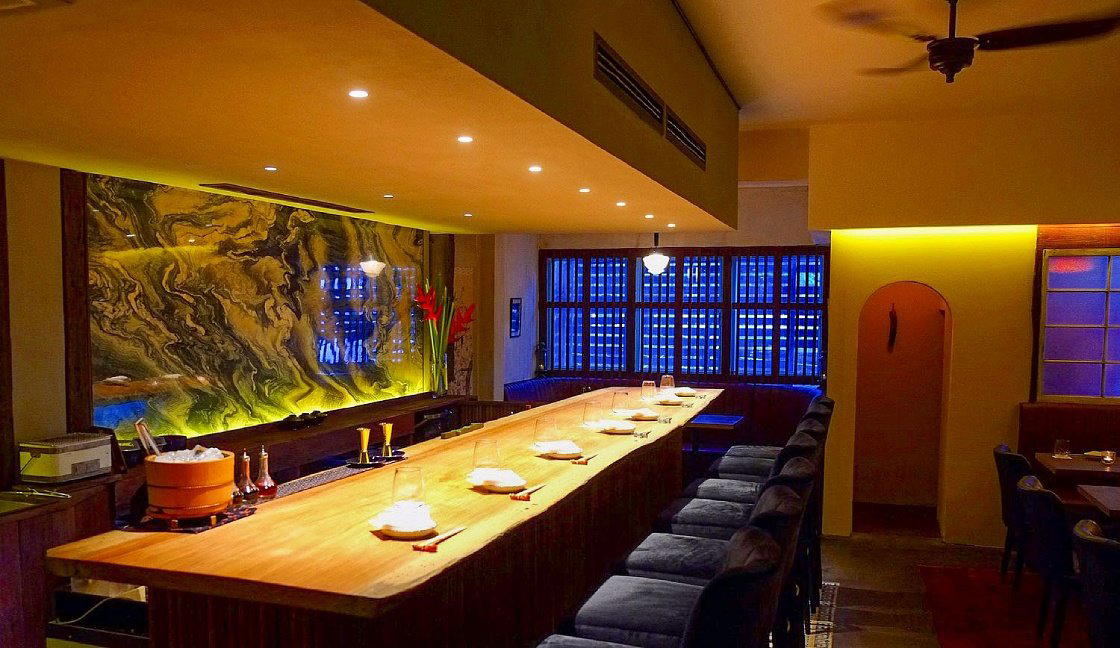
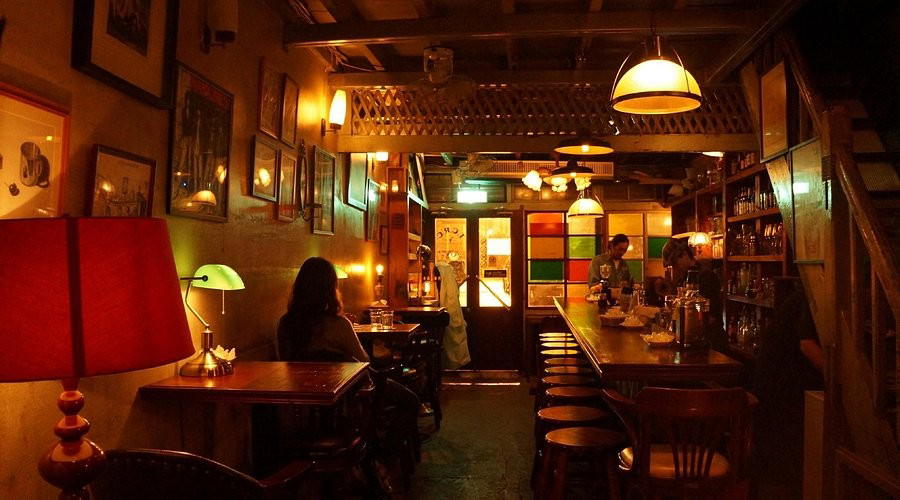
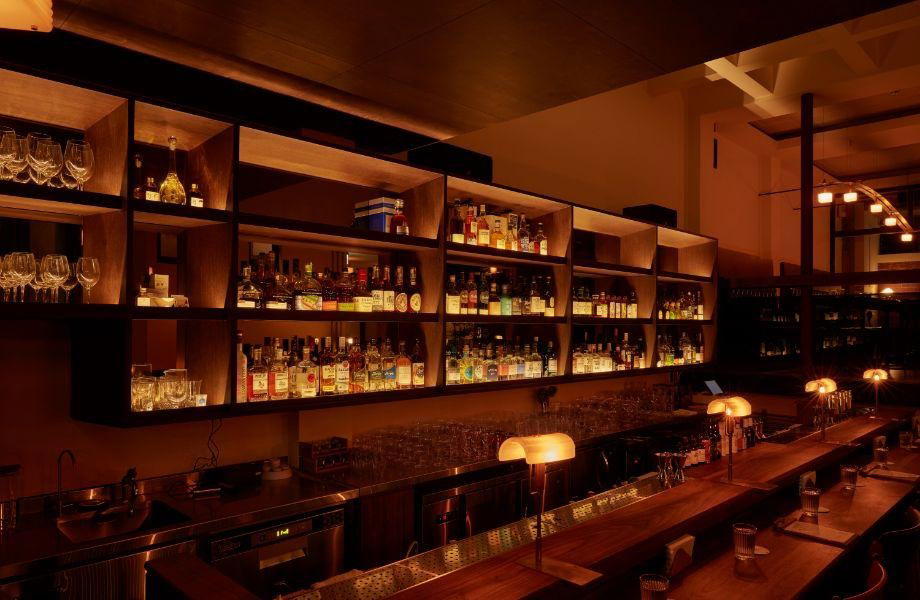
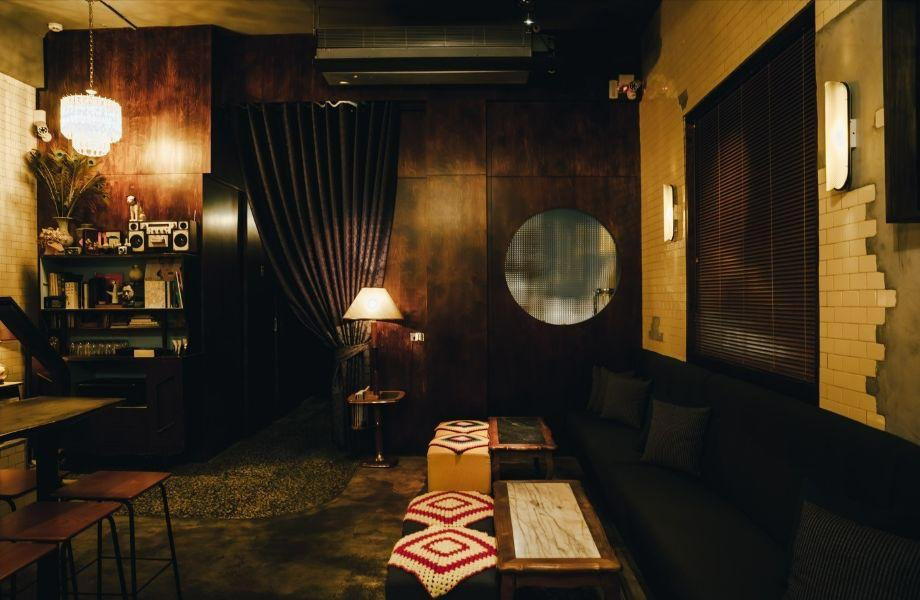
Concrete walls and moody lighting create an industrial atmosphere that contrasts with the warm, welcoming service and comfortable dining experience.