
Tabelog 100 #71
Our verdict
Soneta Yakitoriya gives Yamagata a compact, smoke-and-counter expression of yakitori rather than a polished destination-dining script. Its Tabelog 100 Yakitori EAST selections in 2023, 2024, and 2025 place it within a serious regional conversation, while the format remains grounded in skewers, sake, wine, and a casual room near the station district.

Pearl is the En Primeur Club membership app — saves, bookings, and concierge access live there. Same editors, same standards.
- Address
- 1 Chome-18-8 Kasumicho, Yamagata, 990-0039, Japan
- Phone
- +81 23-622-8453
- Hours
- Mon–Sat 5:30–9 PMSun Closed
- Website
- tabelog.com
- Directions
- Get directions
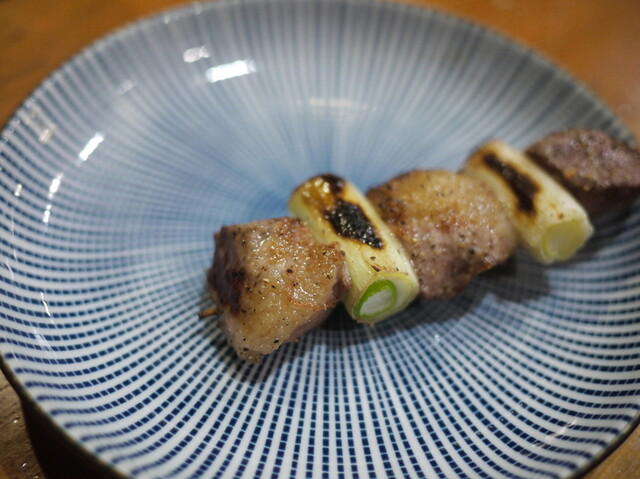
The appeal of a Yamagata yakitori meal starts before the first skewer arrives: the grill, the rhythm of a focused room, and smoke that makes the meal feel less like a restaurant category than a working craft. In a city better known nationally for ingredient-led regional eating, yakitori plays a different role. It is direct, disciplined through repetition, and dependent on heat rather than decorative technique. Soneta Yakitoriya belongs to that tradition, with recognition from Tabelog 100 Yakitori EAST in 2025 giving a Yamagata restaurant a place in the broader yakitori conversation.
Travelers often misread yakitori as casual drinking food with a grill attached. At serious specialists, the reverse is closer: the drink is the companion, while the craft sits in butchery, sequencing, seasoning, and timing. Chicken skewers expose handling quickly because there is little room to hide behind sauce or plating. The category rewards places that understand texture across cuts, from leaner pieces to fattier sections, and keep smoke, salt, and tare balanced through service. That is why a yakitori-specific selection matters more here than a broad restaurant accolade; it measures the room against other specialists, not unrelated fine-dining formats.
Yamagata yakitori with a sourcing-first logic
Yamagata’s food identity is unusually ingredient-led. The prefecture has a strong agricultural reputation and a dining culture that prizes clear seasonal product over theatrical presentation. Yakitori fits that temperament when handled seriously: pleasure comes not from novelty, but from close reading of a narrow set of ingredients. A yakitori specialist asks whether the chicken is handled cleanly, the fire is controlled, and the cook knows when fat, skin, cartilage, or lean meat needs salt, sauce, or restraint.
That focused frame explains why Soneta Yakitoriya sits apart from a broader izakaya crawl. In Yamagata, a traveler could build an evening around the wider drinking-room culture at Izakaya Denshichi, move toward other regional cooking, or treat other local dining as a separate main event elsewhere in the city. Yakitori narrows the field. It takes one protein family and asks the grill to create variation through cut, seasoning, and heat. That narrower format is the point.
The drink signals matter too. Yamagata’s local table culture can support a practical range of drinks without needing a formal pairing structure. Smoke, salt, fat, and tare give the meal enough flexibility to feel generous without becoming ornate. The result is not fusion; it is a straightforward expression of what grilled chicken skewers can support.
A counter format that suits solo diners and close reading
The focused format is central to how this meal works. Yakitori is better when the guest can follow the sequence, watch pacing, and understand the difference between a quick-grilled piece and one needing more careful heat management. A group can make the meal social; a close reading of the grill work makes it legible. For solo diners, that matters. The format gives the evening structure without tasting-menu ceremony or a group order built around shared plates.
Recognition also places the restaurant in a useful price and ambition band within Yamagata. Tachinomi En operates in a different drinking-snack register, while Eigyoku Do and Yamada Ya speak more to low-cost local eating. Izakaya Denshichi and Yakiniku Meisho Yamagyu Yamagata ten carry different expectations around group dining and meat-focused ordering. Soneta Yakitoriya occupies a narrower middle: specialist craft, accessible spend, limited ceremony, and an award trail that makes the restaurant more than a convenient Yamagata stop.
That middle position matters for Yamagata travel planning. The city rewards visitors who resist treating it as a single-meal destination. A strong itinerary might pair noodles, sweets, drinks, and grilled chicken across different days rather than chase one grand dinner. For a broader city map, Our full Yamagata restaurants guide gives the restaurant context alongside other Yamagata dining rooms. Travelers building a longer stay can also use Our full Yamagata hotels guide, Our full Yamagata bars guide, Our full Yamagata wineries guide, and Our full Yamagata experiences guide to keep the meal inside a regional plan rather than as an isolated booking.
Where it fits in a Japan-wide skewer conversation
Japan’s casual dining strength lies in specialization. Across the country, small-format restaurants can carry serious culinary intent without luxury signals, whether the focus is grilled food, noodles, sweets, or another narrow craft. Yakitori belongs in that lineage. It is democratic in price structure, but demanding in execution.
That comparison is useful because Soneta Yakitoriya should not be judged by tasting-menu grammar. Its seriousness comes from repetition and heat management rather than elaborate presentation. In that sense, it has more in common with compact specialists than with broader contemporary dining rooms. Travelers reading across Japan can use the same specialization instinct as a guide: narrow formats reveal quality fast, especially when seasoning and timing have nowhere to hide.
The editorial case for this restaurant is not that it transforms yakitori into fine dining. It does something more useful for Yamagata: it keeps yakitori close to its everyday drinking-room roots while earning specialist recognition beyond the city. For travelers who care about direct cooking and how little intervention grilled chicken skewers need when grill work is disciplined, that is the reason to place it in the Yamagata plan.
Frequently asked questions
Does Soneta Yakitoriya work for a family meal?
Soneta Yakitoriya reads more naturally as a focused yakitori meal than a broad family outing. It is best approached by diners who want grilled chicken skewers in Yamagata at JPY 2,000 - JPY 2,999 per person.
Is Soneta Yakitoriya formal or casual?
It is casual in format and centered on yakitori in Yamagata. The Tabelog 100 Yakitori EAST 2025 selection adds standing, but the room is best understood as plain-spoken rather than formal.
How much does it cost to eat at Soneta Yakitoriya?
Pricing at Soneta Yakitoriya is listed as JPY 2,000 - JPY 2,999.
When can I go to Soneta Yakitoriya?
Current opening hours are not provided here; check directly with Soneta Yakitoriya before going.
What part of town is Soneta Yakitoriya in?
Yamagata.
Side-by-Side Snapshot
Comparable venues by cuisine and price in the same metro.
| Venue | Cuisine | Price | Awards | Notes |
|---|---|---|---|---|
| Soneta YakitoriyaThis venue — the venue you are viewing | Traditional Yakitori | $20–30 | Tabelog 100 #71 | Not listed |
| Eigyoku Do | Traditional Japanese wagashi & dorayaki cafe | Not listed | Tabelog 100 #57 | Yamagata |
| Chuka Soba Dokoro Konpiraso | Yamagata Chuka Soba | $10–20 | Not listed | Sanze |
| Kanazawa Ya Gyuniku Ten | Traditional Yamagata beef sukiyaki & shabu-shabu | $50–100 | Tabelog 100 #52 | Nanokamachi |
| レストラン横倉 | Yoshoku and Ski Resort Comfort Food | $10–20 | Not listed | Zao Onsen |
| Yakiniku Meisho Yamagyu Yamagata ten | Yamagata Beef Yakiniku | $30–50 | Tabelog 100 #22 | Hatagomachi |
Recognition history
Dated appearances from independent guides and award organizations, with the underlying list record or original source where available.
Tabelog 100 #71 · No. 71
Tabelog · Tabelog 100 - Yakitori - EAST - 2025
Continue exploring
More in Yamagata
Restaurants in Yamagata
Browse all →

Hotels in Yamagata
Browse all →
Wineries in Yamagata
Browse all →
Details
- Cozy
- Lively
- Intimate
- Classic
- After Work
- Solo
- Casual Hangout
- Date Night
- Chefs Counter
- Standalone
- Sake Program
- Extensive Wine List
- Beer Program
- A La Carte
- Counter Dining
- Small Plates
- Sake
- Beer
- Wine
Current opening hours
- Monday
- 5:30–9 PM
- Tuesday
- 5:30–9 PM
- Wednesday
- 5:30–9 PM
- Thursday
- 5:30–9 PM
- Friday
- 5:30–9 PM
- Saturday
- 5:30–9 PM
- Sunday
- Closed
Hours can change for holidays and private events. Last verified .