Dominick's Real Italian
Tucson's northwest side has a specific appetite for Italian done without compromise, and Dominick's Real Italian on Thornydale Road addresses that appetite directly. The name carries a declaration rather than a suggestion: this is Italian cooking positioned against the kind of red-sauce approximation that fills suburban strip malls across the American Southwest. For Tucson diners who cross town for a credible pasta or a wine list with actual thought behind it, Dominick's occupies a distinct position in the local conversation.
Pearl is the En Primeur Club membership app — saves, bookings, and concierge access live there. Same editors, same standards.
- Address
- 8330 N Thornydale Rd #170, Tucson, AZ 85741
- Phone
- +15207442002
- Website
- dominicksrealitalian.com
- Directions
- Get directions
 Saves & bookings on Pearl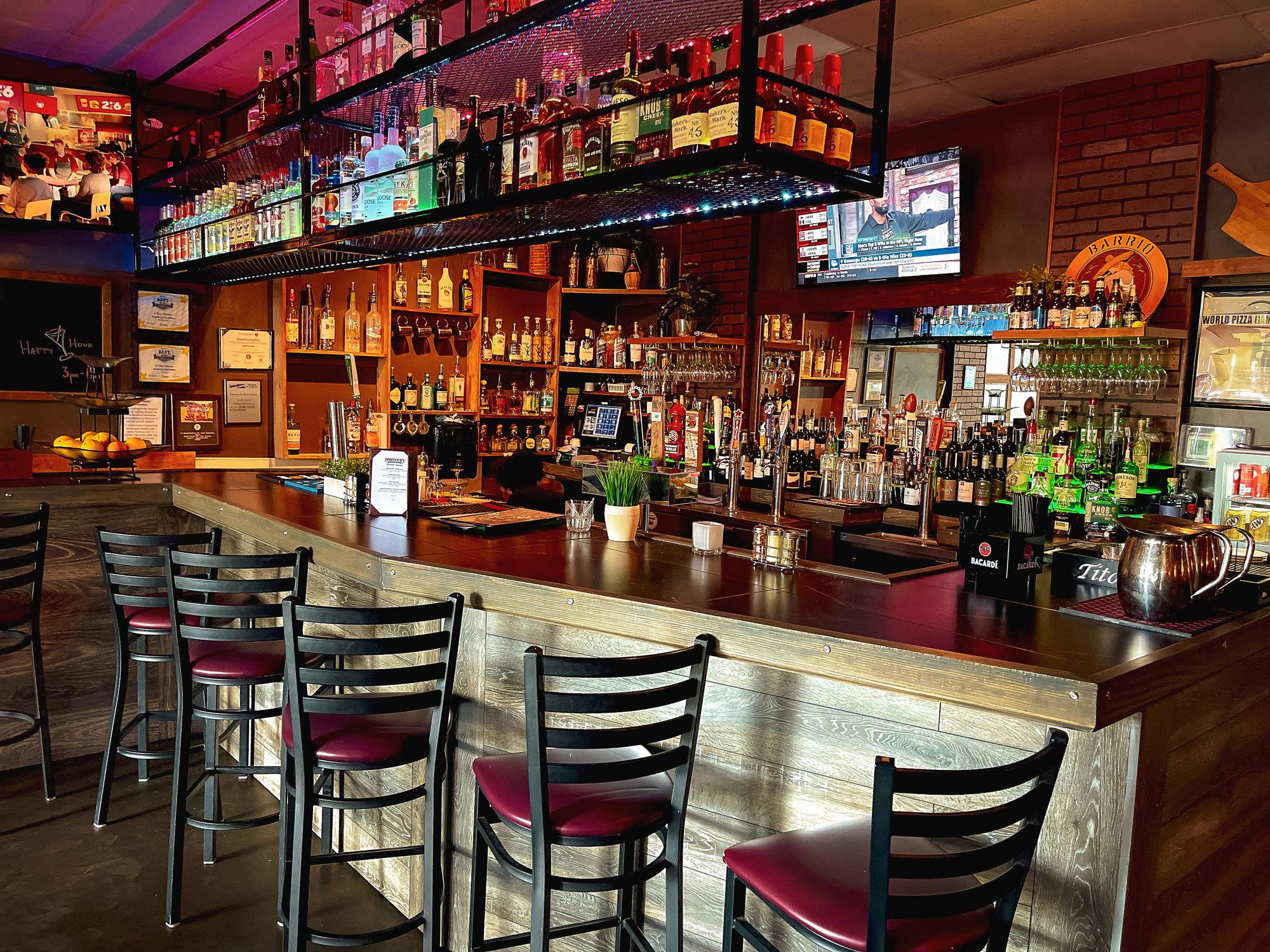
Italian Ambition on the Northwest Side
Strip-mall Italian in American cities follows a familiar script: booths in burgundy vinyl, a Chianti bottle as decor, and a menu that hasn't changed since the Clinton administration. Tucson's northwest corridor, anchored by the retail and residential sprawl along Thornydale Road, has its share of that template. Dominick's Real Italian at 8330 N Thornydale Rd announces a departure from that pattern through its name alone. The word "real" is a provocation in the casual-dining context, a promise that invites scrutiny and sets a higher bar than the neighborhood might otherwise demand.
The address places Dominick's within a cluster of dining options that serve a predominantly suburban, family-oriented catchment. That context matters because it shapes what a serious Italian restaurant has to do to hold its position: it has to earn repeat visits from diners who have other options nearby and could easily drift toward the familiar. The fact that Dominick's has established itself in this environment, rather than in the more conspicuous dining corridors around 4th Avenue or the University District, says something about the loyalty it has generated in its immediate community.
The Wine Question: What "Real" Italian Demands
Any restaurant that frames itself around authenticity in Italian cooking eventually confronts the wine list as a test of that claim. Italian cuisine is inseparable from Italian wine culture in a way that, say, contemporary American cooking is not. A credible Italian table in the United States has to make decisions about how far to go: does it lean into the regionalism that defines Italian viticulture, stocking Vermentino alongside Verdicchio and Aglianico alongside Barolo, or does it stay closer to the approachable international tier that suburban diners recognize?
The answer to that question defines much about a restaurant's identity. The wine lists at destination-level American restaurants, places like Le Bernardin in New York City, The French Laundry in Napa, and Providence in Los Angeles, are built around sommelier programs with cellar depth measured in thousands of labels and decades of vertical inventory. That is a different category of operation from a neighborhood Italian restaurant in Tucson. But the principles that separate a thoughtful Italian wine list from a cynical one apply at every price point: Does the list reflect the regional diversity of Italy's twenty wine zones? Are there bottles that reward the curious diner who moves past Pinot Grigio and Chianti? Is there glass pours that match the food rather than just fill a price bracket?
What can be said is that the category of restaurant Dominick's represents, the independently operated Italian with a genuine commitment to the cuisine, tends to be where regional Italian wine curiosity survives in American cities. The chains and the tourist-trap trattorias stock what moves fastest. The independents are where you find Nero d'Avola from Sicily, Sagrantino from Umbria, or a Soave that actually tastes like the limestone hills it came from.
Tucson's Italian Position in the Southwest Dining Scene
Tucson's dining identity has historically been defined by its extraordinary depth in Mexican regional cooking, a heritage recognized when the city became a UNESCO Creative City of Gastronomy in 2015, the first American city to receive that designation. Restaurants like BOCA by Chef Maria Mazon and Amelia's Mexican Kitchen sit within that primary tradition, and they make a strong case for why the city's food culture punches beyond its size.
Italian cooking occupies a secondary but persistent lane in that same city. The demographic history of the American Southwest includes Italian immigrant communities whose influence on local food culture has been consistently underreported. In Tucson specifically, Italian restaurants that operate outside the chain model compete less against each other and more against the gravitational pull of the Mexican and Southwestern cooking that defines the city's culinary self-image. Places like 5 Points Market and Restaurant and Cafe Desta illustrate how Tucson's independent dining scene sustains genuine diversity across culinary traditions without defaulting to novelty or fusion for its own sake.
Dominick's occupies a specific position in that secondary Italian lane: the neighborhood anchor, operating in a part of the city where restaurant choices tend toward the practical rather than the exploratory. To hold that position with a name that promises authenticity rather than convenience is a deliberate editorial choice on the part of the operation.
How the Room Works
Italian restaurants in the suburban American format tend to organize around two competing pressures: the warmth and conviviality that Italian dining culture implies, and the throughput logic of a high-traffic strip-mall location. The better operators resolve that tension through kitchen discipline rather than decor spend. A room that fills consistently on a Tuesday night, where the pasta water is already at temperature before the first order arrives, where the garlic and olive oil register in the air as you walk in from the parking lot, that is a room with the operational confidence to back up an authenticity claim.
Families are part of the equation in a northwest Tucson location, and Italian cooking at its most honest is genuinely family-oriented. The multi-course structure of a traditional Italian meal, antipasto through dolce, maps naturally onto a table that spans multiple generations and multiple appetite levels. Whether Dominick's formats its menu around that progression or adapts to the American expectation of single-course entrée dining is a question leading answered by calling ahead or checking current availability directly with the restaurant.
Planning Your Visit
Dominick's Real Italian is located at 8330 N Thornydale Rd, Suite 170, in the northwest Tucson retail corridor. For current hours, booking availability, and menu details, contact the restaurant directly. Weeknight visits may offer more room flexibility than Friday and Saturday evenings.
For a broader map of where Dominick's sits within Tucson's independent dining scene, the full Tucson restaurants guide provides coverage across neighborhoods and culinary traditions. Those comparing the Italian category against the wider American fine-dining tier might also find reference points in operations like Smyth in Chicago, Addison in San Diego, or Blue Hill at Stone Barns in Tarrytown, not as direct comparators, but as illustrations of what serious independent restaurant ambition looks like at different scales and price points across the American market. For Southwest regional context, Emeril's in New Orleans offers a useful reference for how a regional American dining identity and Italian influence can coexist in a single strong independent operation.
Comparable Venues
Comparable venues nearby, for context on price, style, and recognition.
| Venue | Cuisine | Price | Notes |
|---|---|---|---|
| Dominick's Real ItalianThis venue — the venue you are viewing | Real Italian Pizza & Pasta | $$ | Not listed |
| HUMO COCINA MEXICANA | Modern Sonoran Mexican | $$ | Northwest Tucson |
| CORE Kitchen & Wine Bar | Contemporary American with Sonoran Influences | $$$$ | Marana |
| Persian Room - Tucson | Traditional Persian Fine Dining | $$$ | Northwest Tucson |
| Penelope Pizza | Wood-Fired Neapolitan & New York Pizza | $$ | Downtown Tucson / East Side |
| Giuseppe's | Homemade Italian | $$ | Oro Valley |
At a Glance
- Cozy
- Classic
- Intimate
- Family
- Date Night
- Casual Hangout
- Live Music
- Open Kitchen
Current opening hours
- Monday
- 11 AM–8 PM
- Tuesday
- 11 AM–8 PM
- Wednesday
- 11 AM–8 PM
- Thursday
- 11 AM–8 PM
- Friday
- 11 AM–9 PM
- Saturday
- 11 AM–9 PM
- Sunday
- 11 AM–8 PM
Hours can change for holidays and private events. Last verified .
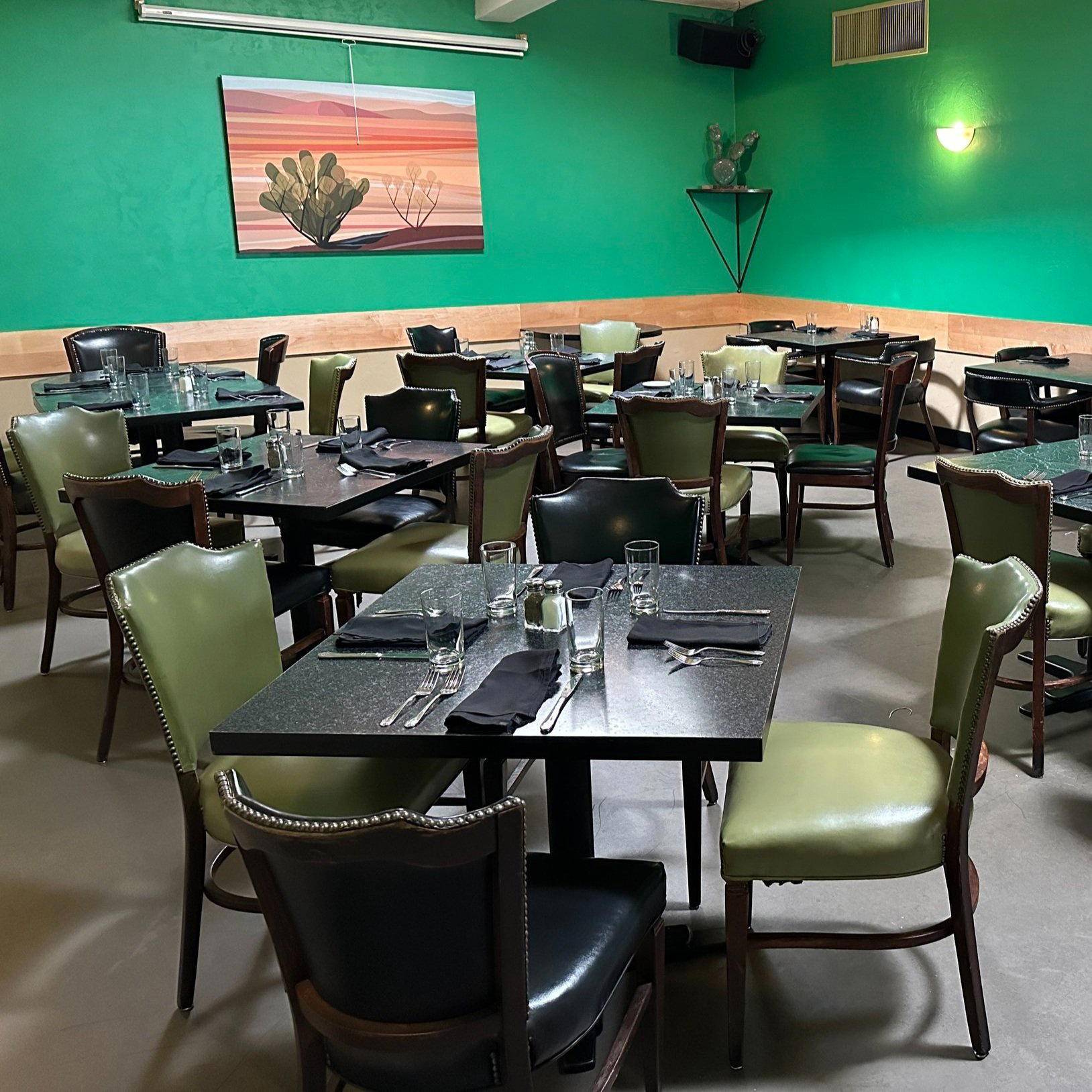
Cozy New York-inspired dining room with checkered tablecloths, casual neighborhood feel, and moderate noise level.