Deane House occupies a heritage building in Calgary's Inglewood neighbourhood, one of the city's oldest communities, positioning it within a dining scene that increasingly rewards restaurants with a strong sense of place. The address alone puts it in conversation with Calgary's broader shift toward locally grounded, context-aware dining, drawing comparisons to some of Canada's most thoughtful regional tables.
Pearl is the En Primeur Club membership app — saves, bookings, and concierge access live there. Same editors, same standards.
- Address
- 806 9 Ave SE, Calgary, AB T2G 0S2, Canada
- Phone
- +1 403-264-0595
- Website
- deanehouse.com
- Directions
- Get directions
 Saves & bookings on Pearl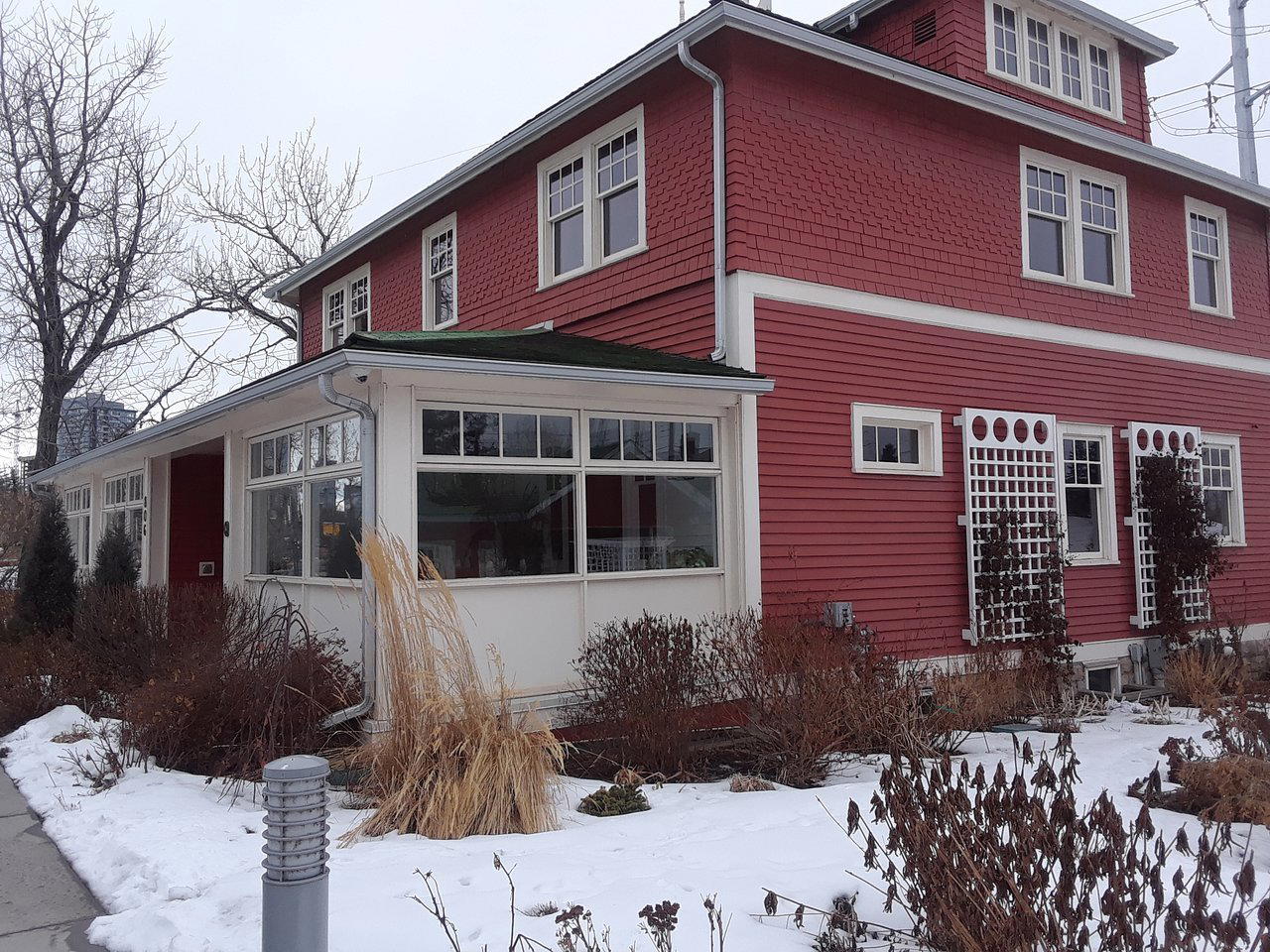
Where the River Meets the Table: Inglewood's Anchor Address
Calgary's Inglewood neighbourhood sits at the confluence of the Bow and Elbow rivers, and the built environment around 9th Avenue SE reflects more than a century of the city's layered history. Heritage buildings here are not decorative gestures — they carry the weight of the district's character, and the restaurants that occupy them inherit both the obligation and the advantage of that context. Deane House, at 806 9 Ave SE, sits on land with deep historical ties to the North-West Mounted Police and the earliest decades of the city's settlement, placing it in a category of Calgary dining addresses where the building itself is part of the editorial argument for going.
Inglewood has developed into one of Calgary's most coherent neighbourhood dining corridors, attracting restaurants that read as place-specific rather than interchangeable. That specificity is increasingly the differentiator in Canadian fine dining. Compare the trajectory here to what has happened in other cities: in Toronto, Alo and its peers operate from heritage commercial buildings in the Fashion District, extracting architectural credibility from their surroundings. In Quebec City, Tanière³ built an entire identity around subterranean historical setting. The pattern across Canadian fine dining is clear: the most distinctive restaurants treat their physical context as a primary ingredient, not a backdrop.
The Inglewood Setting and What It Demands
Approaching Deane House from 9th Avenue, the heritage architecture signals a different register than the glass-and-steel blocks that define much of downtown Calgary's dining scene. Inglewood has resisted the homogenisation that tends to follow rapid urban development, retaining a street-level character defined by independent operators and older building stock. This gives restaurants in the area a natural advantage: the neighbourhood does some of the atmosphere-building before a guest even reaches the door.
That advantage also sets expectations. Diners who make the short trip from downtown Calgary — Inglewood sits just east of the Elbow River, roughly a fifteen-minute walk from the central business district, are not arriving by accident. They have sought out a destination, which tends to produce a more intentional dining room energy than restaurants that rely on foot traffic from hotel lobbies or convention centres. Restaurants in Calgary's inner-city heritage corridors occupy a different competitive bracket than the downtown hotel dining market, and Deane House's address places it firmly in the former category.
For context on Calgary's broader restaurant geography, our full Calgary restaurants guide maps the city's dining neighbourhoods and the distinctions between them. The pattern that emerges is that Inglewood and its adjacent communities have developed a coherent identity around independent, place-rooted dining that sits apart from the more corporate feel of some downtown addresses.
Calgary's Heritage Dining Tier
Calgary has a small but notable cohort of restaurants that operate from historically significant buildings, and this cohort tends to attract a guest profile willing to treat dinner as a deliberate cultural act rather than a convenience. A Certain Flair Catering at Lougheed House represents another node in this network, anchoring the heritage dining tier at a different address and with a different operational model. The two venues are not direct competitors in format, but they share the characteristic of drawing meaning from their physical surroundings in a way that most Calgary restaurants cannot replicate simply by improving their menus.
The heritage building tier in Canadian dining operates somewhat like the château system in European hospitality: the address carries independent value, and the culinary program sits inside a frame that was built by something other than restaurant ambition. This creates both an asset and a constraint. The asset is distinctiveness and a ready-made sense of occasion. The constraint is that the space itself must be respected, heavy-handed modernisation tends to break the spell that makes these buildings worth dining in.
Peer restaurants in Calgary's broader independent dining scene, including Alloy and Annabelle's Kitchen Downtown, operate from different spatial contexts and pitch to different guest moods. Alforno Eau Claire and Aloha Modern Kitchen represent the city's range further: from neighbourhood bakery-café culture to casual Pacific-inflected cooking. Deane House's heritage positioning places it above that casual tier without necessarily competing in the same register as the city's most formal tasting-menu addresses.
The Broader Canadian Context
The appetite for place-specific, historically grounded dining has been building across Canada for over a decade. Eigensinn Farm in Singhampton and Fogo Island Inn Dining Room in Joe Batt's Arm represent the most extreme expression of this tendency, restaurants where the physical and ecological setting is inseparable from the food being served. Restaurant Pearl Morissette in Lincoln and AnnaLena in Vancouver operate at different scales but share the same orientation toward rootedness. Even internationally, the pattern recurs: Lazy Bear in San Francisco built its reputation partly on the tension between communal format and fine-dining content, while Le Bernardin in New York City has for decades made the argument that a dining room's atmosphere and intent can be as defining as its menu.
Deane House sits in this broader conversation as Calgary's contribution to a national shift away from restaurants that could theoretically exist anywhere. The Inglewood address, the heritage building, and the neighbourhood's accumulated identity all function as editorial commitments, they say something about what kind of dining experience is being offered before a single dish arrives. That specificity is increasingly what separates the most talked-about Canadian tables from the capable-but-interchangeable middle.
For readers tracking this trend across regions, Narval in Rimouski, Jérôme Ferrer - Europea in Montréal, and The Pine in Creemore each illustrate how Canadian restaurants are anchoring their identities to geography and setting in ways that reward guests willing to seek them out. Busters Barbeque in Kenora makes a similar argument from the opposite end of the formality spectrum.
Know Before You Go
- Address: 806 9 Ave SE, Calgary, AB T2G 0S2
- Neighbourhood: Inglewood, east of the Elbow River
- Getting There: Approximately 15 minutes on foot from Calgary's central business district; street parking available on 9th Avenue SE
- Context: Heritage building with significant historical ties to early Calgary; the setting is part of the experience
- Booking: Reservations are advisable given the destination nature of the address and limited heritage-building capacity typical of this building type
Side-by-Side Snapshot
A small set of peers for context, based on recorded venue fields.
| Venue | Cuisine |
|---|---|
| Deane HouseThis venue — the venue you are viewing | Not listed |
| Pigeonhole | New Canadian |
| Ten Foot Henry | New Canadian |
| The River Café | Tuscan |
Continue exploring
More in Calgary
Restaurants in Calgary
Browse all →
Bars in Calgary
Browse all →

Hotels in Calgary
Browse all →
Wineries in Calgary
Browse all →
At a Glance
- Historic
- Elegant
- Cozy
- Romantic
- Date Night
- Special Occasion
- Brunch
- Historic Building
- Farm To Table
- Local Sourcing
Current opening hours
- Monday
- Closed
- Tuesday
- 11:30 AM–10 PM
- Wednesday
- 11:30 AM–10 PM
- Thursday
- 11:30 AM–10 PM
- Friday
- 11:30 AM–10 PM
- Saturday
- 10 AM–10 PM
- Sunday
- 10 AM–9 PM
Hours can change for holidays and private events. Last verified .
Gorgeously decorated historic rooms with distinct character, surrounded by greenery on river banks, offering elegant and charming atmosphere.
Know Before You Go
- Getting there
- 806 9 Ave SE, Calgary, AB T2G 0S2, Canada